
Your Facebook CPA is the one number that decides whether your ad account makes money or quietly bleeds it. Push it above what your margins can absorb, and every extra sale costs you. Get it under control, and Meta becomes your cheapest growth channel.
Here's what a healthy CPA looks like in 2026, by objective, plus five concrete fixes for when yours climbs.
What is Facebook CPA?
Facebook CPA (Cost Per Acquisition, or Cost Per Action) tells you how much you spend for one conversion. That conversion could be a purchase, a lead form fill, an app install, or a trial signup.
Meta tracks this inside Ads Manager under "Cost per Result." It's the number that shows whether your spend converts.
This is different from Certified Public Accountant, which appears in search results sometimes. In ad performance marketing, CPA only means your cost to acquire one action.
A low CPA means your audience likes your creative, offer, and targeting. A high CPA means something broke somewhere in your funnel, which could be creative, targeting, tracking, or your landing page.
How to calculate Facebook CPA
You can calculate Facebook CPA by dividing total ad spend by total conversions over the same period.
The Facebook CPA Formula
CPA = Ad Spend ÷ Conversions
Say you sell leather boots online. Over 30 days, you spend $5,000 and generate 125 purchases.
- Total Ad Spend: $5,000
- Total Purchases Generated: 125
Your CPA: $40 per purchase.
Now check that math against your margins. Your AOV is $120, product cost $30, and shipping and payment processing $40. That leaves $50 gross profit per unit before ad spend ($120 − $30 − $40). Subtract your $40 CPA, and you keep $10 net profit per sale.
Push CPA to $55 without raising AOV, and you're now losing $5 on every single sale. Check this math regularly. A "profitable" campaign can flip into a money loser if you aren’t paying attention.
What's a good Facebook CPA in 2026?
A blended, platform-wide average CPA tells you almost nothing useful. A $45 CPA is a huge win for a SaaS company closing $1,000 contracts, but that same $45 CPA could bankrupt a brand selling $60 sneakers.
Median e-commerce CPA across all industries is around $38 in 2026. This is useful as a sanity check, but fairly useless as a target. Segment by conversion type and category before you judge your own numbers.
CPA by campaign objective: leads vs. purchases vs. app installs
Meta's auction charges different prices for different conversion events. Compare your CPA to the right category:
- E-commerce purchases: The average for Apparel is about $10.98, beauty is about $25.49, fitness is $13.29, and home improvement is $44.66.
- Lead generation: Native Meta Lead Forms beat external landing pages on cost, since off-platform drop-off kills conversion rates. According to WordStream by LocaliQ, the average cost per lead is around $27.66, ranging from $3.16 (restaurants) to $76.71 (dentists). Compare against your own industry.
- App installs: Installs cost $1 to $5 in low-competition categories like lifestyle apps and rise higher in finance and sports.
iOS averages roughly 3x Android's cost, thanks to Apple's tracking limits and higher-value iOS users. Getting someone from install to in-app purchase costs far more. Budget off your own funnel data here.
Why average CPA numbers mislead you
Relying on platform averages sets you up to misread your own account. Three factors explain why:
- Average Order Value (AOV) Variance: Higher AOV buys you a higher acceptable CPA. A $200 product supports a $60 CPA, while a $40 product loses money at $25.
- Gross Profit Margin Differences: Your margin sets your real CPA ceiling. An 80% margin gives you room to bid aggressively, but a 30% margin shrinks your target fast.
- Blended Channel Effects: Meta often assists conversions that Google Search or email ends up claiming credit for. If you judge Ads Manager numbers in isolation, you'll misread your real acquisition cost.
Calculate your own max CPA: AOV, minus product cost, minus your target profit. That's the number your ads need to hit.
Why your Facebook CPA might be rising
CPA spikes rarely happen at random. Spikes point to specific breakdowns in your ad account, auction dynamics, or what happens after the click.
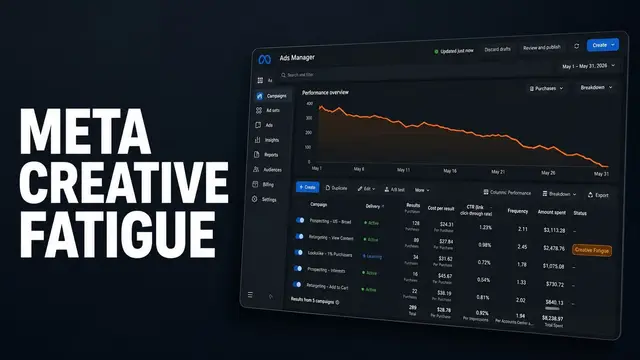
- Creative Fatigue: Showing the same ad variations to your audience for too long drops CTRs and causes CPMs to climb. When user engagement tanks, Meta charges more to serve your ads.
- Auction Competition: Seasonal demand shifts, like Q4 or holiday promos, flood the platform with competitor ad spend. More competition means higher CPMs, across every vertical.
- Ad Performance Decline: Small drops in landing page conversion rates or ad relevance scores compound quickly, inflating your end-of-funnel conversion costs.
- Targeting Saturation: Oversaturating small custom or lookalike audiences forces the algorithm to serve ads to the same users repeatedly, causing audience fatigue and higher costs.
- Signal Loss: A broken Pixel or missing CAPI parameters mean Meta misses real conversions. Your reported CPA looks worse than reality.
If you notice a sudden drop in returns across your campaigns, read our guide on Facebook ad performance decline causes and fixes. In many cases, old creative assets drive up acquisition costs. Learn how to spot and fix creative burnout in our breakdown of Meta creative fatigue diagnosis and fixes.
5 ways to lower your Facebook CPA
Five levers control your Facebook CPA. If you pull the right one, costs stabilize. Pull the wrong one, though, and you waste a week.
1. Fix your targeting
Your targeting decides how fast Meta finds real buyers.
- Advantage+ Audience: Move top-of-funnel campaigns here. Meta uses your creative as the targeting signal itself, finding buyers outside the demographics you'd have picked manually. Meta's own Advantage+ Audience page covers exactly how the expansion works.
- Custom Audiences: Build these from high-intent groups: 180-day site visitors, 50%+ video watchers, and past customers for cross-sell.
- Lookalike Audiences: Seed 1% to 3% lookalikes off your best customers (top 20% LTV or repeat buyers). This is better than targeting your entire email list.
2. Fix your creative
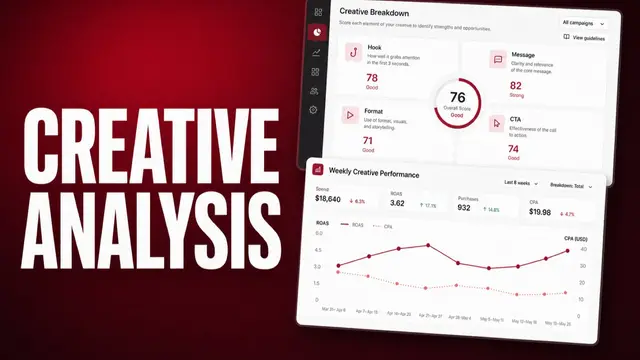
Creative decides whether Meta's algorithm has anything good to work with.
Ship 3 to 5 new variations weekly. Watch CTR, frequency, and CPM together. Falling CTR plus rising frequency and CPM means your creative is dying.
AI creative tools speed this up. Check our reviews of the best AI tools for scaling Meta ad performance and specialized AI tools for Facebook ads optimization.
3. Choose the right bid strategy
Match your bid strategy to your goal, or the auction will happily overspend for you.
| Bid Strategy | Best Use Case | Operational Risk |
|---|---|---|
| Highest Volume (formerly Lowest Cost) | Account scaling and full budget distribution | Uncontrolled CPA spikes during high auction competition |
| Cost Per Result Goal (formerly Cost Cap) | Holding your average cost near a target once you know your unit economics | Under-delivery if your target sits below market clearing price |
| Bid Cap | Hard cost control once you have reliable historical CPA data to set the ceiling correctly | Stalled or zero delivery if the cap sits below what auctions require |
Most accounts default to Highest Volume and never touch anything else. That's fine, until CPA drifts up for two straight weeks. That's your cue to test Cost Per Result Goal. Meta's official bid strategy guide breaks down when to use each option.
4. Fix your tracking and attribution
Run Meta Conversions API (CAPI) alongside your Pixel. Server-side events survive ad blockers, browser restrictions, and network drops that kill browser-only tracking.
Set your attribution window to 7-day click and 1-day view. Pass hashed email, phone, and city through CAPI for full match quality.
5. Fix your landing page and funnel
Your ad's only job is getting the click, and it’s your landing page that does the converting.
Match your headline to your ad's hook, word for word if you can. Get mobile load time under two seconds. Cut lead form fields to the essentials, and put your CTA button above the fold.
How to monitor CPA without guessing
Waiting for a weekly Ads Manager report means you find out about a Facebook CPA spike after the budget's already gone.
Atria's AI ads creative strategist, Raya, flags declining creative before it drags your ROAS down, instead of waiting for you to notice in a report. Her ad grader, Radar, tells you exactly what to fix. Auto-scale and auto-pause shift spend toward winners and away from decliners automatically.
Ready to start catching CPA spikes before they drain your budget? Try Atria free, no credit card required, or book a demo to see Raya in action on your own ad account.
Frequently asked questions
What's the difference between CPA, CPC, and CPM?
The difference between CPA, CPC, and CPM comes down to what you're paying for. CPM charges per 1,000 impressions, CPC charges per click, and CPA charges per completed conversion. CPM measures reach, CPC measures interest, and CPA measures whether any of it actually worked.
Is CPA a campaign objective or a performance metric on Facebook?
CPA is a performance metric on Facebook, not a campaign objective. Meta Ads Manager doesn't let you pick "CPA" as an objective. You pick Sales, Leads, or App Promotion instead. Meta then reports your CPA under "Cost per Result," based on whatever conversion event you chose.
Is Cost Per Action the same as Cost Per Acquisition?
Cost Per Action and Cost Per Acquisition are related, but not identical. Marketers use both terms interchangeably, though the strict difference matters. Cost Per Action covers any conversion, which means video views, signups, and link clicks. Cost Per Acquisition specifically means a paying customer or subscriber.
What is a good Facebook CPA in 2026?
A good Facebook CPA in 2026 sits below your own industry's median and inside your margin, not below some universal number. Median e-commerce CPA across all industries runs around $38. Apparel can run as low as $20. Supplements can climb to $70. Both are "good" for their category.
How do you lower your Facebook CPA?
You lower your Facebook CPA by fixing whichever lever broke: targeting, creative, bid strategy, tracking, or your landing page. Most spikes trace back to creative fatigue or signal loss. Check those two first, then move to targeting and bid strategy if CPA still hasn't recovered.