Somebody upstairs decides the brand needs to be "more visible," and suddenly you're running ads with no purchase to point at. Welcome to brand awareness ads.
I've bought a lot of media, and awareness is the budget line people trust the least, because it doesn't hand back a clean ROAS number the way a conversion campaign does.
But reach, recall, and branded search are real, they're measurable, and they feed every conversion campaign you run later. Without the awareness stage, your retargeting pools slowly starve.
By the end of this, you'll know when awareness is the right call, how to run one on Meta, and how to prove if it worked.
What are brand awareness ads?
A brand awareness ad is any paid placement bought to put your brand in front of the right people and keep it top of mind. Reach and recall are the metrics that count here.
Awareness ads often focus on 1 or more of these 3 jobs:
- Maximize reach: Get in front of the widest slice of your target audience.
- Build recall: Show up often enough that people remember the name when they’re ready to buy.
- Introduce something new: Launch a brand, a product, or a fresh position in the market.
It helps to know which flavor of awareness you’re chasing. Top-of-mind awareness is the first brand you name in a category.
Unaided recall means you can name it without a prompt, and brand recognition means you know it when you see the logo. Recognition is the easy win, but top-of-mind is often the harder and more valuable one to earn.
Awareness work happens early in the funnel, and it’s not a vanity exercise. 74% of people surveyed said they use Meta technologies to discover brands or products online, compared with 41% who discover them on the brand’s own website.
Discovery happens across Meta apps, and paid ads help you reach people beyond your existing audience.
How to run brand awareness ads on Meta
To set one up in Meta Ads Manager:
- Pick the Awareness objective.
- Choose the performance goal that matches the job (below).
- Set your frequency, or use target frequency with Reach or ThruPlay on a lifetime budget.
- Set up a brand lift study before the ad sets you want to measure go live.
- Build 9:16 vertical video with sound on and the key message in the first 3 seconds.
How Meta’s awareness objective works
In Meta Ads Manager, you pick the Awareness objective, then choose a performance goal.
The goal changes who sees your ad and how often, so here’s what each one does and when to reach for it:
- Maximize reach: Shows your ad to as many unique people as possible. Best for launches and big top-funnel pushes.
- Maximize impressions: Shows your ad as many times as possible, including repeat views. Useful when repeated exposure is the point.
- Maximize ad recall lift: Optimizes toward people likely to remember seeing the ad. This is the one to pick when the whole job is memory.
- Maximize ThruPlay: Serves video to people likely to watch at least 15 seconds, or the whole video if it's shorter. This is a good choice for story-driven video.
- Maximize 2-second continuous video views: Serves video to people likely to watch at least two continuous seconds. Better suited to quick brand flashes than stories that need longer viewing.
Frequency matters a lot, because it decides whether an ad builds memory or just annoys people. Target frequency only works with Reach or ThruPlay, and only for lifetime budgets.
With cold top-funnel audiences, rising frequency is my cue to check for creative fatigue, especially if results are getting worse.
Video earns its place in awareness campaigns, and adding video increased the likelihood to buy 79% of the time, with an average 12% lift in intent (26% among new buyers).
The goals above come from Meta Ads Manager. LinkedIn, Google, and video platforms each have their own versions, which the channels section below covers.
💡 Tip: Running Meta campaigns? See which tools can help you run and optimize them in our guide to AI tools for Meta ads.
7 brand awareness ad examples
All 7 of these examples come from Meta’s published success stories, and each one reports lift from a brand lift study run in Meta’s own tools.
Meta publishes these itself, so I treat each number as advertiser-reported. A “point” is one percentage point of difference in survey answers between people who saw the ads and a comparison group.
See the examples below:
1. Park Holidays UK
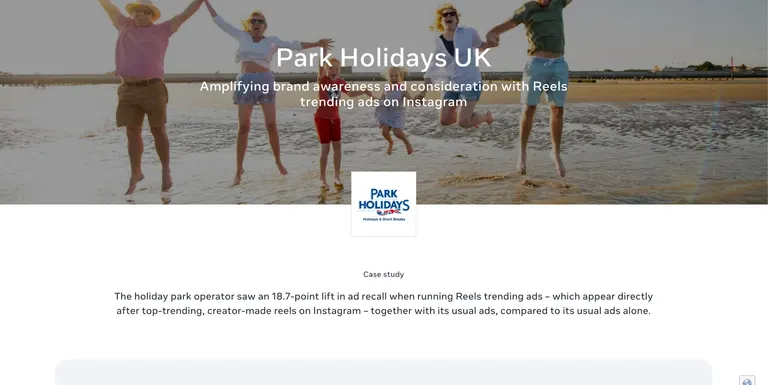
Park Holidays UK ran Reels trending ads (ads that play right after top-trending creator reels on Instagram) next to its usual ads from May 19 to June 11, 2026. The team picked the travel topic category, targeted UK adults 25 and over, and built vertical 9:16 videos with sound on and a Book now button.
A brand lift test compared the usual ads alone against the usual ads plus Reels trending ads. The combined setup reported an 18.7-point lift in ad recall, a 15-point lift in standard brand awareness, and a 14.4-point lift in consideration.
The test design is the useful part. Running the usual campaign in one cell and the usual campaign plus awareness ads in the other isolates what the awareness layer added.
2. Veuve Clicquot South Korea
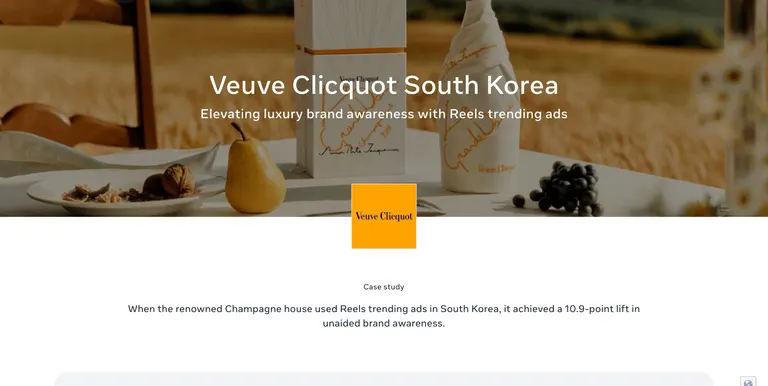
Veuve Clicquot used Reels trending ads in South Korea ahead of the La Grande Dame 2018 launch with fashion designer Simon Porte Jacquemus.
The campaign ran photo ads, video ads, and Reels from March 26 to April 30, 2026. The creative followed the wine from a vineyard to the South of France and invited people to a pop-up in Seoul.
A brand lift study reported a 10.9-point lift in unaided brand awareness and a 5.3-point lift in standard ad recall. Unaided awareness means respondents named the brand with no prompt, so that first number reflects memory alone.
3. Lemon Square
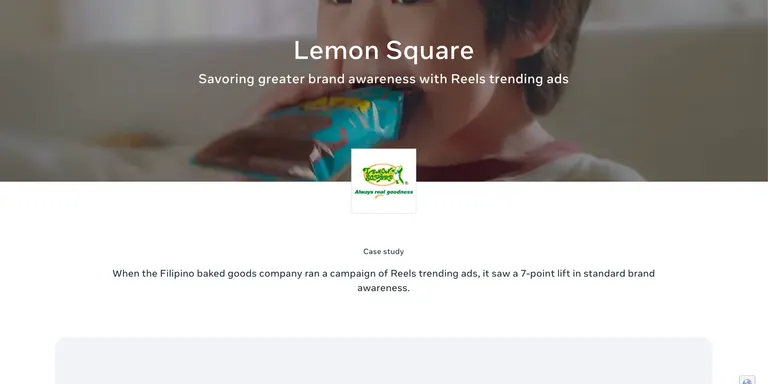
Lemon Square wanted top-of-mind awareness for Whatta Tops, its cupcake brand, among Gen Z and Millennial snackers in the Philippines. The team built three new 9:16 videos with sound on, framed the cupcake as the fix for small disappointments like a dying phone battery, and ran them as Reels trending ads.
A lift study from March 27 to May 26, 2026 reported a 7-point lift in standard brand awareness and a 3.5-point lift in ad recall. The choice that stands out to me is the creative. The team built fresh videos in the native format and skipped reworking older ads made for traditional channels.
4. Turkish Airlines
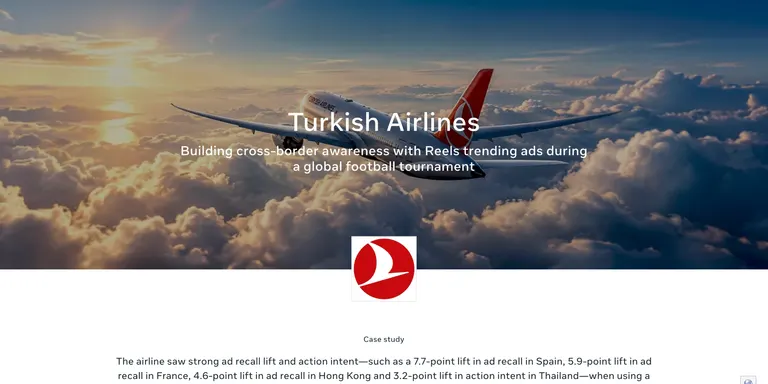
Turkish Airlines ran brand-focused Reels trending ads and creator partnership ads during a global football tournament, from June 9 to July 21, 2026.
The team picked the event-specific topic category, worked with sports and digital art creators, and showed ads to adults 18 and over in six markets. One video showed a passenger watching a match on board and getting transported to the stadium, and every ad carried a Book now button.
Single-cell brand lift tests in each market reported these results:
- Spain: 7.7-point lift in ad recall
- France: 5.9-point lift in ad recall and 4.4-point lift in action intent
- Italy: 5.7-point lift in ad recall and 2.3-point lift in action intent
- Hong Kong: 4.6-point lift in ad recall
- Taiwan: 3.4-point lift in ad recall
- Thailand: 5.4-point lift in standard brand awareness and 3.2-point lift in action intent
Ad recall lift ranged from 3.4 points in Taiwan to 7.7 in Spain, so I’d read lift market by market and skip averaging it.
5. Lipton Ice Tea Saudi Arabia
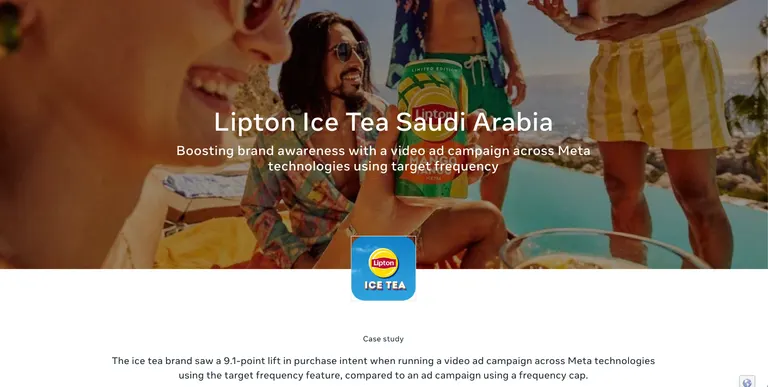
Lipton Ice Tea tested Meta’s target frequency feature for the launch of its Mango Tango flavor. It ran video ads across Facebook and Instagram Feed, Stories, and Reels to Saudi adults 18 to 44 from October 14 to December 29, 2025.
The team set a frequency of 2 exposures per week and compared that cell against a cell using a frequency cap, which limits the maximum impressions per person.
The target frequency cell reported a 4.8-point lift in ad recall and a 9.1-point lift in purchase intent. Among ages 18 to 24, the lifts were 5 points in ad recall and 9.4 points in purchase intent. Lipton also reported beating its planned KPIs on a lower budget than earlier campaigns.
Those numbers compare two delivery settings, so they show what aiming for a set frequency added over a cap and say nothing about awareness versus no ads.
Target frequency aims for a set number of exposures per person, so I’d test it when memory is the goal.
6. Joy
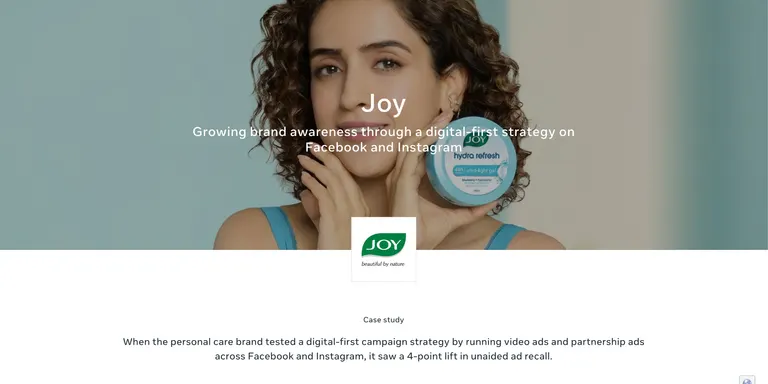
Joy, a personal care brand in India, reworked its television ads for mobile and ran them as video ads and creator partnership ads on Facebook and Instagram, including Reels. Its brand lift test ran from March 26 to May 25, 2026.
The team used 9:16 vertical video with sound on, kept text inside the safe zone, and put the key message in the first 3 seconds. It targeted women 22 to 44 interested in skincare, with a regional focus and ads tailored to local languages.
A brand lift test in Ads Manager reported a 4-point lift in unaided ad recall. Partnership ads also run from the creator’s handle, so they reach the creator’s audience on top of the brand’s.
One metric from one test is thin evidence, so I’d use Joy as a creative-adaptation example and look to the others for proof of lift.
7. Purina Italia
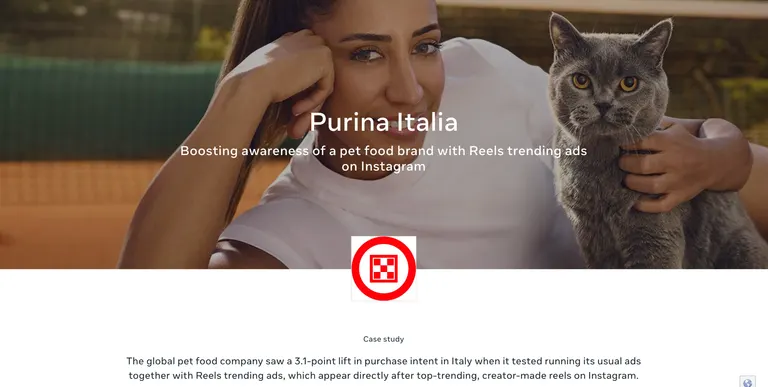
Purina Italia usually ran its Meta campaigns optimized for reach. For a new campaign from November 21 to December 17, 2025, it tested adding Reels trending ads across all topic categories, aimed at Italian adults 25 and over.
A multi-cell brand lift test compared the usual reach-optimized campaign against the usual ads plus Reels trending ads.
The combined setup reported a 2.4-point lift in ad recall and a 3.1-point lift in purchase intent. That’s the smallest ad recall lift on this list, which is why I’d keep it in. The lift measures only what the added placement contributed on top of a campaign already optimized for reach.
How to measure brand awareness ads
Measure brand awareness ads with reach, frequency, ad recall lift, brand lift studies, and branded search volume. Last-click ROAS belongs to conversion campaigns, so awareness work needs its own scoreboard.
5 metrics make up that scoreboard:
- Reach and frequency: Reach counts the unique people who saw your ad, and frequency shows the average number of times each person saw it. Together they show how much exposure you bought.
- Impressions: Impressions count every time the ad appeared, repeat views included. I use them as a volume check and read nothing deeper into them.
- Ad recall lift: In a brand lift study, this is the difference in ad recall between an exposed group and a control group. Meta also reports estimated ad recall lift, a modeled estimate rather than your campaign’s survey result.
- Brand lift: A survey-based study that compares exposed people with a control group on awareness, consideration, and intent. Veuve Clicquot’s 10.9-point gain in unaided awareness came from a study like this in Meta Ads Manager.
- Branded search volume: Searches for your brand name over time. PR, seasonality, and other campaigns can move it too, so I read it alongside the lift results and never as the only signal.
Set up the lift study before the ad sets you want to measure start running, because the comparison group has to be in place for the whole test window. I’d also pick your lead metric before launch, since choosing one after the results land invites cherry-picking.
Plan for a multi-week read. The lift studies in the examples above covered windows from about 3 weeks (Park Holidays UK) to about 11 weeks (Lipton Ice Tea).
A 5-day check on a campaign built for reach or recall shows early delivery, so a weak ROAS in that window says little about whether the ads worked.
💡 Tip: Want to compare performance by creative? Our guide to creative reporting tools covers tools that help you see which ads are working.
When to run awareness ads over conversion ads
Run awareness ads when your priority is getting more people to know and remember your brand. Run conversion ads when your priority is purchases or leads. The two can work together, so the useful question is which goal your budget needs to prioritize.
Use this table to match your situation to an objective:
| Run awareness ads when | Run conversion ads when |
|---|---|
| You’re launching a brand, product, or market | You have a proven offer with existing demand |
| Your retargeting pool is too small to feed conversions | Your retargeting audience is large and warm |
| Buyers take weeks or months to decide | The sales cycle is short, and intent is high |
| Few people search for your brand by name | People already search for you by name |
| You can wait for recall and branded search to build | You need revenue this quarter |
After seeing a 14.4-point lift in consideration from its Reels campaign, Park Holidays UK said ignoring higher-funnel audiences leaves money on the table, showing how awareness can support later conversion efforts.
For a launch, I’d prioritize awareness if the main goal is getting the name out there. If the offer is ready to sell and tracking is in place, I’d test conversion ads alongside it.
Awareness takes longer to pay off and is harder to attribute, but Nielsen research found that on average, a 1-point gain in brand metrics like awareness and consideration drives a 1% increase in sales, and a later analysis argues that upper-funnel work deserves more prominence in the mix.
Judge awareness on the lift metrics from the measurement section.
Where to run brand awareness ads across Meta, LinkedIn, Google, and video
Brand awareness ads run on Meta, LinkedIn, Google, and video platforms, and the right one depends on where your buyers spend their attention:
- Meta (Facebook, Instagram, Reels): Suits consumer brands that want broad reach. 5 of the 7 examples above ran Reels trending ads.
- LinkedIn: Fits B2B brands that target buyers by job title and company. Thought Leader Ads sponsor a member’s post and support the Brand Awareness objective.
- Google and YouTube: Google Ads offers a YouTube reach, views, and engagement objective for video campaigns. Its Reach goal includes a target frequency option.
- Video and connected TV: Brand films and TV spots can reach people before they search for you. Short-form video is another option. In HubSpot’s 2026 report, 49% of marketers cited it as a top ROI-driving content format.
I’d start with one channel for the first lift study, since splitting a small budget across all four leaves each test too thin to read.
💡 Tip: Building creative for Meta’s Andromeda-era delivery? Our Andromeda creative strategy guide covers the 2026 playbook.
How Atria helps you keep brand awareness ads fresh
Brand awareness ads rely on repeat exposure, and repeat exposure wears creative out. Recall holds only when your creative velocity outpaces fatigue, with new concepts reaching the feed before the audience tires of the old ones.
Atria is an AI creative platform for Meta and TikTok ads. Raya, its AI creative strategist, works inside Slack and turns your account data, competitor ads, and customer reviews into briefs.
Radar, its ad grading engine, grades live ads in plain English and flags a creative as it starts to decline, so you can line up the next concept before performance slips.
Start for free with 1,000 free credits and no credit card, and see what Raya and Radar flag in your account.
Frequently asked questions
What is the difference between brand awareness and brand recognition?
The main difference between brand awareness and brand recognition is the cue. Brand recognition means you identify a brand from a logo or jingle. Brand awareness covers your overall familiarity with it, including unaided recall, where you name the brand with no prompt at all.
How long do brand awareness ads take to work?
Brand awareness ads usually need several weeks to show measurable lift. The examples in this article ran from about 3 to 11 weeks, and your window depends on budget, audience, and study design.
How do you measure brand awareness ads?
Measure brand awareness ads with reach, frequency, ad recall lift, brand lift studies, and branded search volume. Set up the lift study before launch so a comparison group exists. Leave last-click ROAS to conversion campaigns.
Are brand awareness ads worth it for small businesses?
Yes, when getting known is the main goal or your retargeting pool is too small to feed conversion ads. Start with one channel, choose a metric you can measure, and scale if the results support it.
What budget do you need for a brand awareness campaign?
Estimate your ad spend by dividing planned impressions by 1,000, then multiplying by your expected CPM. Planned impressions equal your planned weekly reach times average weekly frequency times the number of weeks you run.