
MagicBrief shut down on July 31, 2026. This group of MagicBrief alternatives handles competitor research, ad spend visibility, and creative generation to get you from creative insight to a launched ad faster.
If you’re looking for a MagicBrief replacement, I tested these 9 alternatives, and below, I'll show you what each can do.
How I researched and tested these MagicBrief alternatives
I looked at how these tools perform in day-to-day use. I reviewed official product pages, checked user feedback on G2 and Trustpilot, and verified pricing directly from vendor sites.
I focused on what matters in use:
- Features: Whether the tool gets you from insight to a built, launched ad, or only organizes and displays research you still have to act on yourself.
- Usability: How long it takes to generate a usable brief or creative, and whether the dashboard makes sense without a training call.
- Data depth: How fresh and complete the ad coverage is, and whether spend estimates are included or just the creative.
- Pricing: What you really get at the entry tier compared to what's locked behind custom or sales-gated pricing.
- Use cases: Performance in the specific job each tool claims to solve: saving ad inspiration, competitor spend tracking, ad generation, or post-launch analytics.
9 best MagicBrief alternatives: TL;DR
- Atria: Best for brands and agencies that want research, a brief, and the finished ad generated and launched in one platform.
- Foreplay: Best for a like-for-like swap, with swipe files, briefs, and Spyder tracking.
- AdScan.ai: Best for businesses that want to see the real ad spend behind competitor campaigns, especially in the UK, EU, and Brazil.
- Motion: Best for growth teams who want to pull Meta, TikTok, and YouTube performance data alongside the creative.
- Skaler: Best for teams who like MagicBrief's strategy layer but want an AI suite that can also build the ad.
- Swipekit: Best for a cheaper, no-frills swipe file for saving ad inspo across Meta, TikTok, and LinkedIn.
- BigSpy: Best for raw competitor ad data across Facebook, TikTok, Instagram, and YouTube.
- PowerAdSpy: Best for advertisers who need the widest platform coverage, including niche networks like Reddit, Quora, and Pinterest. Its plans are broken down in PowerAdSpy pricing.
- PiPiAds: Best for e-commerce and dropshipping marketers whose research is almost entirely TikTok-first.
Why look for MagicBrief alternatives?
The truth, for many people, is that MagicBrief's closing forces their hand. They don't have a choice. MagicBrief has now closed its doors with no bulk export option for your saved ad inspiration, and the ad library and competitor-research layer isn't part of Canva Grow, the new product built by MagicBrief's team.
So this isn't about whether MagicBrief was good, because it was: a clean brief builder, a well-organized ad library, and handy AI cost estimates for checking a competitor's budget.
The question now is which tool replaces what's disappearing, and looking at MagicBrief's weaknesses (even before the shutdown) is the fastest way to figure that out:
- You have to build the ad yourself: MagicBrief handed you a beautifully organized brief (hook, persona, reference creative) and stops there. That means making the ad is still on you.
- The ad library is curated: MagicBrief's Facebook, TikTok, and LinkedIn coverage was solid, but noticeably smaller than dedicated ad-spy tools. If a competitor's winning ad wasn’t already in their system, you couldn’t find it.
- Pricing goes up fast: Before it closed, MagicBrief had moved to ad spend-based pricing with a 3-month minimum commitment, so cost climbed as your spend grew.
- No visibility into competitor ad spend: MagicBrief showed you the ad but not what someone paid to run it or at what scale.
- No benchmark against your own performance: MagicBrief's insights weren’t benchmarked against your own account's data. The recommendations were not personalized to what's converting for your brand.
None of this made MagicBrief a bad tool. Just that there are important tasks (and steps) in the workflow that it was never particularly well suited for, and that other tools do better.
Which MagicBrief alternative should you choose?
Here are 9 tools that you can replace MagicBrief with, and which perform better in many areas.
| Tool | Choose if... |
|---|---|
| Atria | You want to close the insight-to-ad gap. It takes you from competitor research and customer insight to a generated, launched, and graded ad with no tool-switching. |
| Foreplay | You want a more mature version of MagicBrief's swipe-file-and-brief workflow, plus Spyder tracking. It still won't build the ad for you. |
| AdScan | You need spend data to spot real scaled winners, especially in the UK, EU, or Brazil. Not a full creative workflow tool, so you'll need something downstream. |
| Motion | Your team is more data-led and wants performance metrics from Meta, TikTok, and YouTube. |
| Skaler | You want MagicBrief's strategic framing with an AI suite that builds the ad right after. The platform's still new and maturing. |
| Swipekit, BigSpy, or PowerAdSpy | Budget's the deciding factor and you mainly need raw ad data or a simple swipe file, not a full research-to-launch workflow. |
| PiPiAds | Your business is TikTok-first (especially e-commerce or dropshipping) and single-platform depth matters more than broad coverage. |
9 best MagicBrief alternatives at a glance
These tools vary by price point and what they offer, so it’s worth taking the time to explore each option.
| 🏆 Platform | 🎯 What it is | 💰 Price (billed annually) |
|---|---|---|
| Atria | Research-to-launched-ad in one platform | From $129/month |
| Foreplay | Closest like-for-like swipe file + brief swap | From $49/month |
| AdScan.ai | Real ad spend data in the UK, EU & Brazil | Free, then $99/month |
| Motion | Performance data next to the creative | From $750/month |
| Skaler | Strategy-to-execution with AI generation | From $83/month |
| Swipekit | Budget swipe file for solo marketers/small agencies | From $26/month |
| BigSpy | Raw ad data across 9 platforms, cheap | From $49/month |
| PowerAdSpy | Widest platform coverage (Reddit, Quora, Pinterest) | From $27/month |
| PiPiAds | TikTok-first product & ad research | From $34.30/month |
The 9 best MagicBrief alternatives
1. Atria
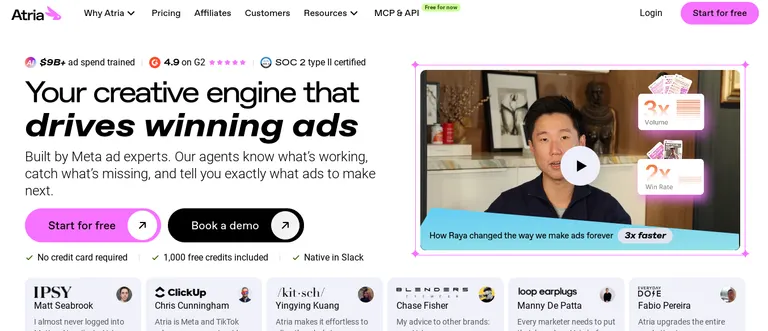
Atria takes you from research and brief all the way to a generated, launched ad.
It's an AI-powered ad intelligence and creative workflow platform built for performance marketers, agencies, and creative teams running Meta and TikTok. Its AI-powered creative strategist, Raya, is trained on over $10B in real ad spend data rather than just organizing what you feed it.
Key features
- Raya AI creative strategist: Combines competitor intel, customer reviews, and $10B+ in ad spend data to recommend winning personas, hooks, and messages before you build your ad.
- AI-generated ads: Produces images, scripts, and ad clones from your own performance data or competitor references.
- Radar grading and one-click Meta launch: Grades every ad with specific fix recommendations and lets you bulk-upload creatives directly to Meta.
Pros
- ✅ Goes from insight to a generated, graded, and launched ad in one workflow
- ✅ Recommendations are based on $10B+ of real spend data, not generic AI output
- ✅ Replaces the need to stack a separate swipe file, analytics tool, and ad launcher
Cons
- ❌ Steeper learning curve than a simple swipe file. Assumes you're familiar with ROAS, hook rates, and creative testing
- ❌ AI credits are metered monthly and don't roll over
Best for
- Brands and agencies tired of handing a brief to a designer and waiting
- Businesses that want competitor research benchmarked against their own account's real performance data
- Performance marketers who'd rather combine research, analytics, and ad generation into one subscription than stack three tools
Pricing
Core plan starts at $129/month billed annually ($159/month billed monthly), including 5 seats and 4,000 AI credits. Plus is $479/month annually. Business and Enterprise are custom-priced.
What users say
Pro: Instantly spins up new ads that mirror the structure and psychology of top performers. Like having a high-performing creative strategist on call, with a fast interface and solid output that fits existing workflows.
“Atria helps you stop reinventing the wheel. We can instantly spin up new ads that mirror the structure, flow, and psychology of top performers, without copy-paste chaos or starting from scratch.” (Gaurav V., G2 Review, August 4, 2025) 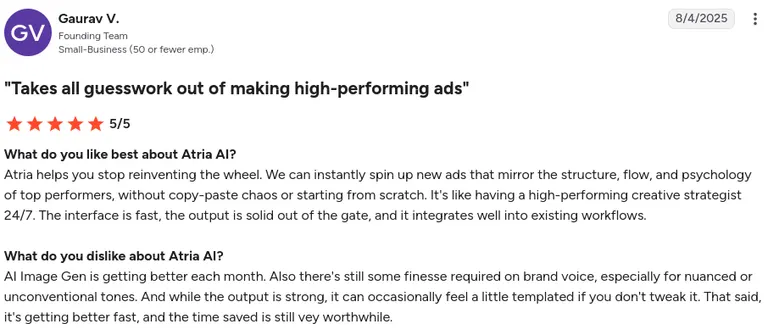
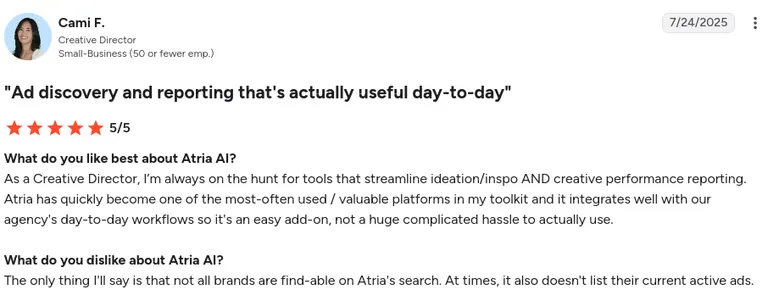
Con: Not all brands can be found through Atria's search, and even when a brand is found, its currently active ads aren't always listed.
“The only thing I'll say is that not all brands are find-able on Atria's search. At times, it also doesn't list their current active ads.” (Cami F., G2 Review, July 24, 2025)
2. Foreplay
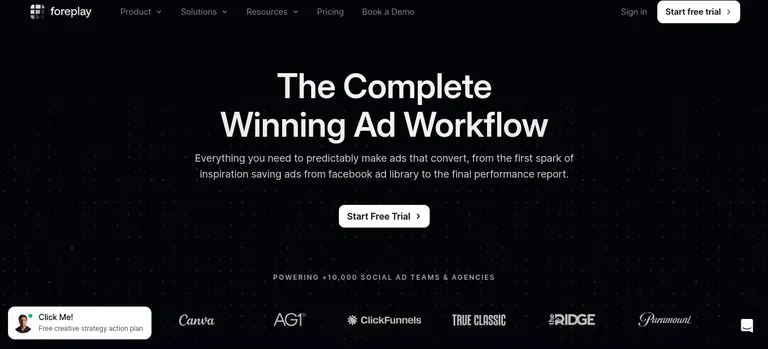
Foreplay is the closest thing to a straight swap for MagicBrief. Same swipe-file-and-brief DNA, just with a few more years of iteration behind it.
If you liked how MagicBrief organized inspiration and built briefs, Foreplay does that too. Then it adds Spyder, its competitor-tracking feature that watches specific brands and shows what they're running.
Key features
- Swipe File + Discovery: Save ads from Meta, TikTok, and LinkedIn into a searchable library of 10M+ ads. Faster than manually screenshotting from ad libraries.
- Spyder competitor tracking: Automatically monitors specific brands and catches new creatives as they launch.
- AI brief builder: Turns saved inspiration into a structured brief with AI-generated scripts and storyboards.
Pros
- ✅ AI brief builder generates scripts and storyboards automatically
- ✅ Covers Meta, TikTok, and LinkedIn in one place
- ✅ Landing Page Archive and Trending Hooks reports surface patterns you'd have to spot manually
Cons
- ❌ Foreplay doesn't build or launch the ad. You have to build it yourself, use another tool, or hire someone
- ❌ Pricing climbs fast if you need Spyder and Lens analytics on more than a handful of accounts
Best for
- Creative teams and agencies who liked MagicBrief's core workflow and just want a better-organized version
- Teams whose bottleneck is finding and briefing inspiration, not producing the finished ad
- Anyone who wants competitor tracking without a dedicated ad-spy tool
Pricing
Basic plan starts at $49/month when billed annually (research and swipe file only). Workflow, which adds Spyder tracking and Lens analytics, runs $149/month. Agency plans start at $389/month. Custom pricing is available for larger teams.
What users say
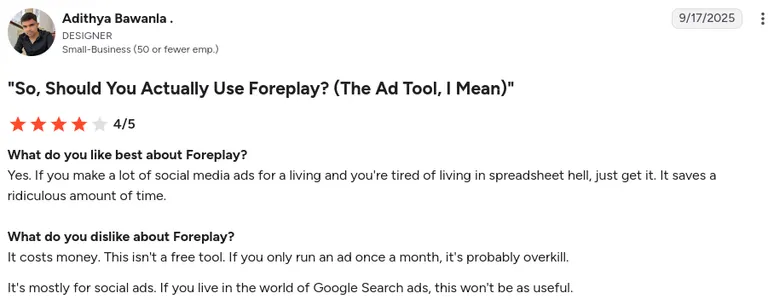
Pro: Saves a ton of time on making social media ad creatives. A good fit if you're doing it regularly for a living. “If you make a lot of social media ads for a living and you’re tired of living in spreadsheet hell, just get it. It saves a ridiculous amount of time.” (Adithya Bawania, G2 Review, September 17, 2025).
 Con: Discovery could use more granular filtering by ad style, category, or purpose. This reviewer found that level of detail on Atria (like seeing all of a followed brand's landing pages alongside their ads) but wasn't sure Foreplay matched it.
“I feel like the discovery could have more features, in terms of ads style, ads category, ads purpose.” (gary g, G2 Review, March 21, 2026) 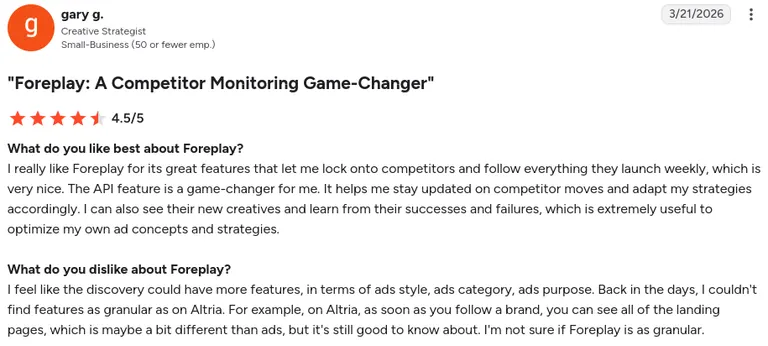
3. AdScan
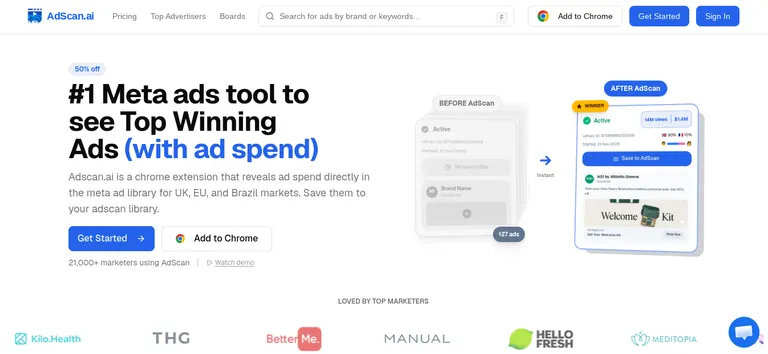
AdScan answers how much the ad costs to run.
It pulls hidden ad spend data and analyzes top-performing campaigns across Meta, TikTok, and LinkedIn. It's strong, especially in markets with mandated ad transparency reporting. Makes it strong for spend visibility in the UK, EU, and Brazil.
Key features
- Ad spend reveal: Shows estimated spend behind individual ads in the UK, EU, and Brazil.
- Cross-platform campaign analysis: Tracks top-performing campaigns across Meta, TikTok, and LinkedIn in one dashboard.
- AI-powered insights: Track which competitor campaigns are scaling versus which are quiet tests.
Pros
- ✅ AI insights flag scaling campaigns against tests
- ✅ Free tier lets you test spend visibility before committing to a paid plan
- ✅ Chrome extension overlays estimated spend directly on the ad card while browsing
Cons
- ❌ It's a research tool. You'll still need something else to build the ad
- ❌ Spend data quality is strongest in markets with transparency reporting. Coverage drops elsewhere
Best for
- Media buyers and strategists who need to measure a competitor's real investment, not just their creative
- Teams running or researching campaigns in the UK, EU, or Brazil
- Anyone combining research with a separate creative build tool
Pricing
There is a free tier, a Pro plan at $99/month, and a third tier for larger teams at $199/month.
No verified customer reviews exist yet on G2 and Trustpilot. AdScan is a relatively new platform
4. Motion
Motion tells you why your last ad worked.
It pulls Meta, TikTok, and YouTube performance data alongside the creative, so there’s no need for a spreadsheet of screenshots.
Key features
- AI Tags and Tasks: Automatically tags creatives by hook, format, angle, and messaging, then compares performance across tags.
- Ad leaderboard and creative dashboards: Visual-first reports ranking every creative by performance.
- Attribution integration: Connects Northbeam and GA4 on higher tiers to tie creative performance to revenue.
Pros
- ✅ Useful for spotting winning creative patterns that manual reporting misses
- ✅ Strong integration depth with Meta, TikTok, YouTube, and LinkedIn
- ✅ Comparing performance across tags shows patterns across multiple concepts at once
Cons
- ❌ Analyzes ads you've already run. Does nothing for competitor research, ideation, or briefing
- ❌ At $750/month to start, it's priced for teams already spending meaningfully on ads
Best for
- Growth and performance teams spending $50k+/month who want to know why their own ads are winning or losing
- Advertisers that already have a research/briefing tool and need a post-launch analytics layer
- Brands with structured creative testing cadences
Pricing
The starter plan is $750/month for brands spending up to $50k/month on ads. Pro costs $1,200/month and Growth is custom-priced.
What users say
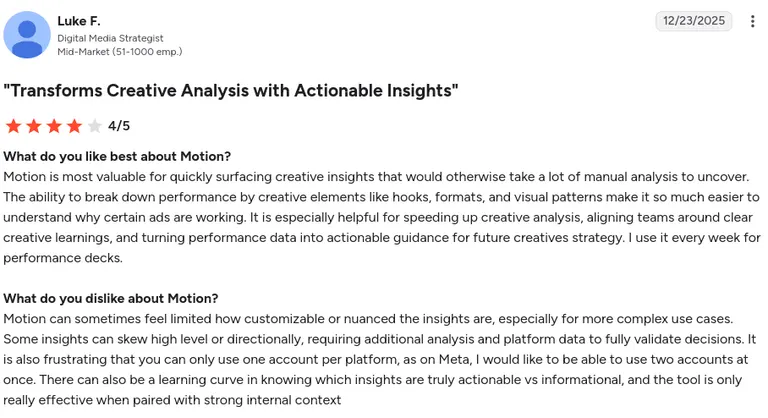
Pro: Quickly shows creative insights that would otherwise take a lot of manual analysis. Breaking down performance by hooks, formats, and visual patterns makes it easy to understand why ads work, speeding up analysis and aligning teams around clear creative learnings.
“Motion is most valuable for quickly surfacing creative insights that would otherwise take a lot of manual analysis to uncover. The ability to break down performance by creative elements like hooks, formats, and visual patterns make it so much easier to understand why certain ads are working.”
(Luke F., G2 Review, December 23, 2025).
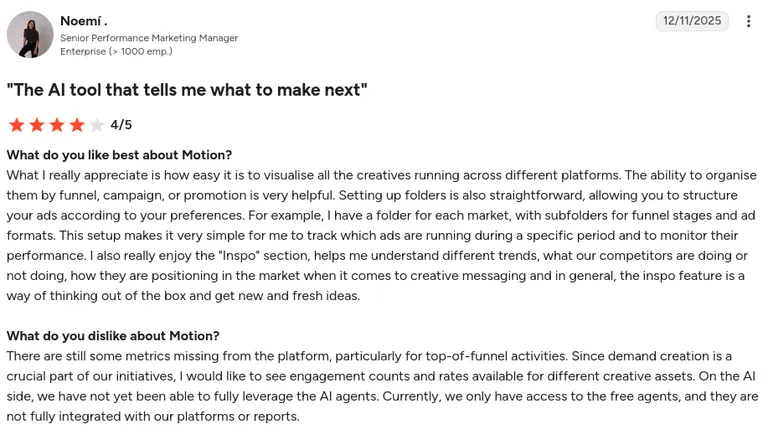
Con: Some metrics are still missing, particularly for top-of-funnel activities like engagement counts and rates on different creative assets. On the AI side, only the free agents are available so far, and they aren't fully integrated with the platform or reports yet.
“There are still some metrics missing from the platform, particularly for top-of-funnel activities.” (Noemí, G2 Review, December 11, 2025)
5. Skaler
 Skaler goes from insight to a built ad, although a much newer, less proven product.
It combines competitor ad spying, creative analytics, and generative AI, aimed at performance marketers tired of waiting on a design team to act on an insight.
Key features
- AI creative suite: Generates product shots, UGC-style images, and style variations directly from a competitor or performance insight.
- Competitor ad spying: Tracks what's working across the market to feed the generation step.
- Multi-language generation: Translates ad copy and generates native voiceovers in 100+ languages from a single winning formula.
Pros
- ✅ Quite fast from insight to a ready-to-launch AI-generated variant
- ✅ Flat, transparent pricing with no ad-spend-based scaling
- ✅ Competitor spying and generation in one place, not stitching tools together
Cons
- ❌ Thinner proof points than more established tools. Fewer case studies and less public data on scale
- ❌ Competitor research depth doesn't match dedicated ad-spy tools like BigSpy or PowerAdSpy
Best for
- Those who like insights but want the platform to also generate the variant
- Smaller businesses that want flat, predictable pricing
- Brands scaling ad copy across multiple languages and markets
Pricing
Creative Team plan runs $99/month (monthly billing) or $83/month (annual), with unlimited team members, 500 AI credits, Brand Spy tracking for 25 brands, and Creative Analytics for one ad account. There’s a Team tier billed at $166/month when you pay annually, and an Agency tier at $333/month.
What users say
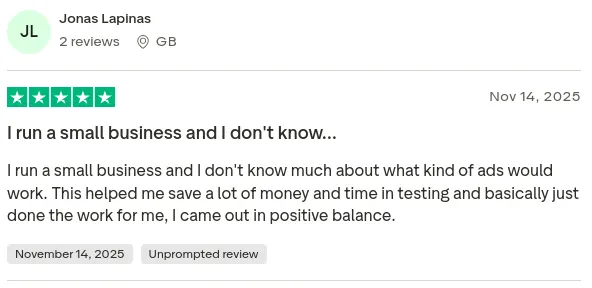
Pro: Helped a small business owner with limited ad experience save time and money on testing by essentially doing the work for them, resulting in a positive return.
“This helped me save a lot of money and time in testing and basically just done the work for me.” (Jonas Lapinas, Trustpilot Review, November 14, 2025)
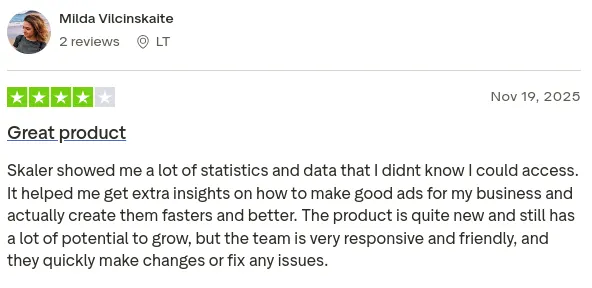
Con: The product is quite new and still has a lot of room to grow.
“The product is quite new.” (Milda Vilcinskaite, Trustpilot Review, November 19, 2025)
6. Swipekit
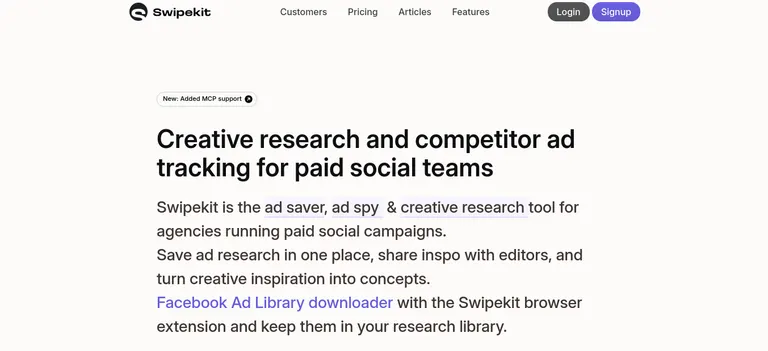
Swipekit is MagicBrief's budget option.
A cheaper, no-frills swipe file for saving ad inspo across Meta, TikTok, and LinkedIn.
Key features
- Swipefile: Saves ads from Facebook, TikTok, and LinkedIn ad libraries in one click.
- Brand Tracker: Automatically scrapes and monitors specific competitor brands.
- API/MCP access: Pulls ads, boards, and usage data into your own reporting workflows.
Pros
- ✅ Significantly cheaper than MagicBrief, Foreplay, or most dedicated ad-spy tools
- ✅ Clean, simple swipefile and board-sharing experience
- ✅ 14-day free trial with no credit card required, making it low-risk to test before committing
Cons
- ❌ No brief-building workflow. You save inspiration, but can't turn it into something actionable
- ❌ No creative analytics or AI insight layer
Best for
- Solo marketers, small agencies, and Shopify brand owners who mainly need a cheap, reliable swipe file
- Teams that already have a briefing process elsewhere
- Anyone who wants API access without paying agency-tier pricing
Pricing
Plans start from $26/month, with a 14-day free trial and no credit card required.
Swipekit currently has no reviews on G2 and Trustpilot.
7. BigSpy
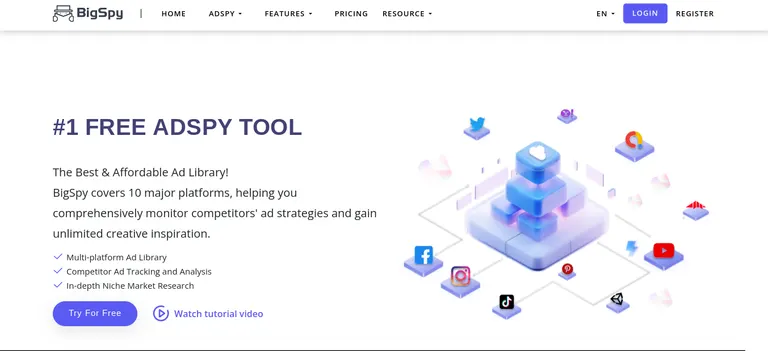
BigSpy trades depth for breadth and makes sense for a specific kind of team.
Raw competitor ad data across Facebook, TikTok, Instagram, and YouTube. No creative workflow features.
Key features
- Multi-platform search: Tracks ads across Facebook, Instagram, TikTok, YouTube, Pinterest, Twitter, and more.
- Engagement and duration data: Shows likes, comments, shares, and how long an ad has been running.
- Covers less-common platforms like Pinterest and Twitter that most ad-spy tools skip
Pros
- ✅ Broadest platform coverage at its price point
- ✅ Useful for casting a wide net across multiple platforms
- ✅ Engagement data (likes, comments, shares, running days) helps you tell a real winner
Cons
- ❌ Data depth and freshness lag behind specialist tools
- ❌ No creative brief, analytics, or generation layer. Just raw ad data.
Best for
- Budget-conscious marketers who want broad visibility without a big monthly commitment
- Dropshippers and e-commerce sellers scanning multiple platforms
- Teams that handle briefing and production separately
Pricing
BigSpy starts at $69/month (Basic), with Growth at $159/month, Scale at $399/month, and Ultimate at $499/month. Annual billing lowers each: roughly $49, $119, $299, and $399/month, respectively.
What users say
Pro: Being able to check competitors' ads all in one place helps understand current trends and come up with better creatives much faster, with a simple, easy-to-navigate interface.
“The best part is being able to check competitors' ads in one place. It helps me understand current trends and come up with better creatives much faster. The interface is simple and easy to navigate.” (Tricia R., G2 Review, July 8, 2026) 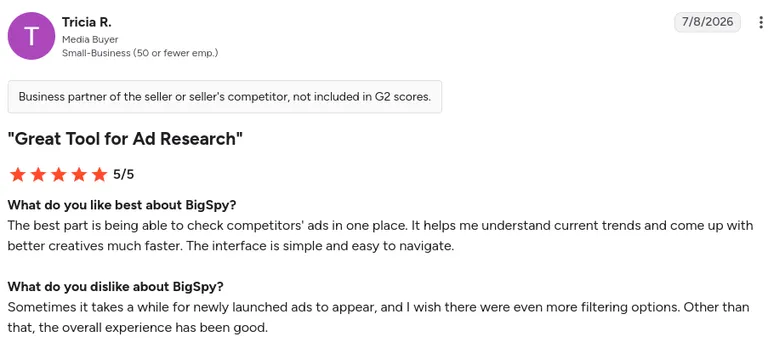
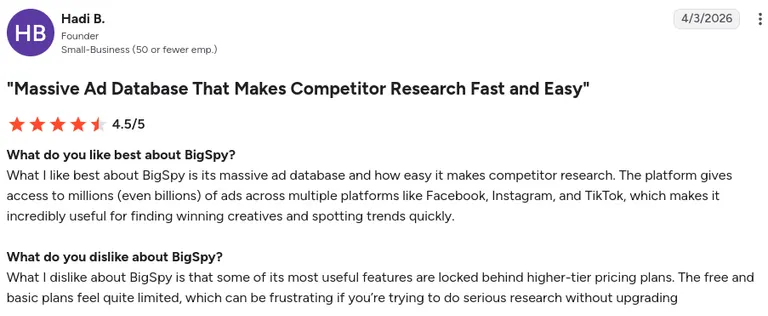
Con: Some of the most useful features are locked behind higher-tier plans, and the free/basic tiers feel quite limited for serious research without upgrading.
“What I dislike about BigSpy is that some of its most useful features are locked behind higher-tier pricing plans. ” (Hadi B, G2 Review, April 3, 2026)
8. PowerAdSpy
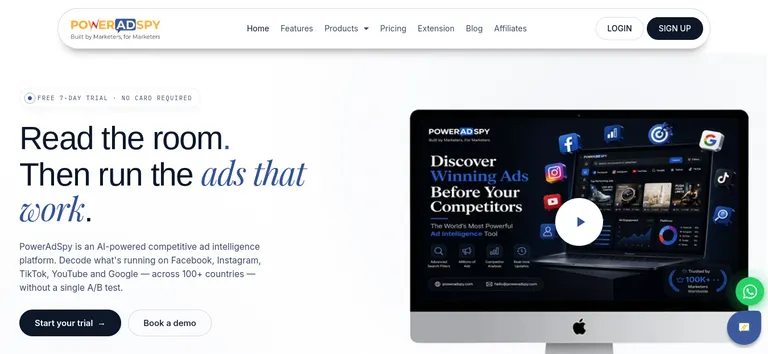 PowerAdSpy is the go-to tool when your competitors aren't all on Meta and TikTok.
For advertisers who need the widest platform coverage, including niche networks like Reddit, Quora, and Pinterest.
Key features
- Cross-network coverage: Searches Facebook, Instagram, Google Display, YouTube, native networks, Reddit, and Quora from one dashboard.
- Competitor alerts: Notifies you when a tracked competitor launches a new campaign.
- Chrome extension: Lets you research ads while browsing.
Pros
- ✅ Widest platform breadth of any tool on this list
- ✅ Mid-tier pricing gets you full filter access and unlimited searches
- ✅ Covers native ad networks (Taboola, Outbrain), filling a gap most ad-spy tools don't touch
Cons
- ❌ Data freshness lags. New ads can take 48-72 hours to appear
- ❌ Breadth comes at the cost of depth
Best for
- Agencies with clients running on niche or B2B-adjacent platforms like Reddit or Quora
- Advertisers who need one dashboard covering search, display, and social
- Those for whom platform breadth matters more than data freshness
Pricing
When billed annually, Plans start at $27/month (Basic), scaling through Standard ($39), and Palladium ($119).
What users say
Pro: The dashboard is clean and easy to understand, making it quick to check what competitors are running. Saves time and gives better ideas for his own campaigns.
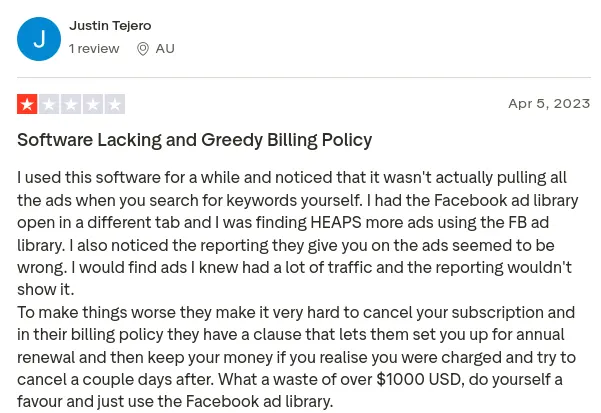
“I appreciate how PowerAdSpy shows so many social ads from different niches.” (Roy Hart, Trustpilot Review, February 3, 2026) 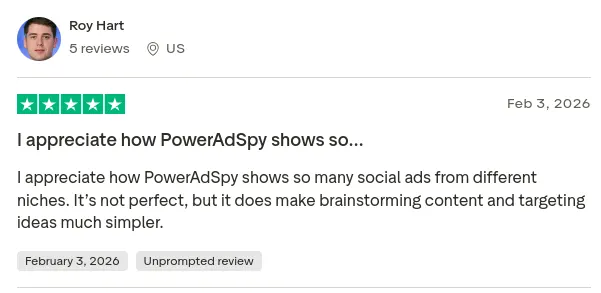 Con: Reviewer found the search missed many ads that were visible directly in the Facebook Ad Library, and reporting metrics sometimes didn't match ads they knew had significant traffic. They also described difficulty canceling, with a billing policy that allowed annual renewal charges to stick even when they tried to cancel shortly after.
“I used this software for a while and noticed that it wasn't actually pulling all the ads when you search for keywords yourself.” (Justin Tejero, Trustpilot Review, April 5, 2023)
9. PiPiAds
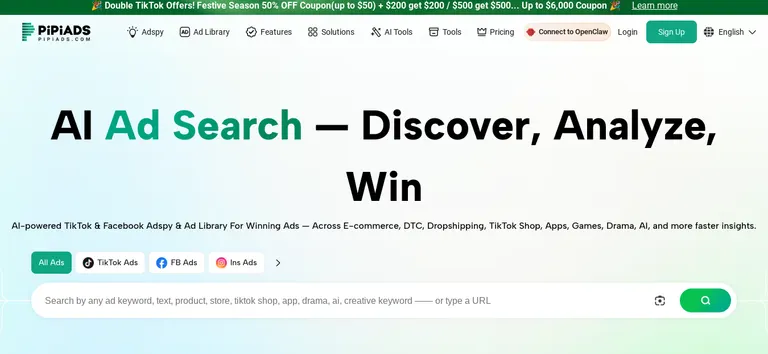
PiPiAds is great if you operate almost entirely on TikTok.
For e-commerce and dropshipping marketers whose research is almost entirely TikTok-first.
Key features
- Winning Product Detection: Finds products and ads rapidly gaining traction on TikTok before they go mainstream.
- Advertiser search: Shows every creative a particular competitor is currently testing on TikTok.
- Built-in business calculators: Estimates CPA, profit margin, and traffic directly from within the platform.
Pros
- ✅ Largest TikTok-specific ad database of any tool on this list (20M+ ads)
- ✅ Credit-based system means you only pay for what you use
- ✅ Free trial with 500 credits lets you test the platform's core features before spending anything
Cons
- ❌ TikTok-only. No meaningful Facebook, Meta, or cross-platform research
- ❌ No brief-building, analytics, or creative generation layer
Best for
- E-commerce brands and dropshippers whose customer acquisition is TikTok-first
- Teams validating winning products, not just winning ad angles
- Anyone who needs a specialist tool to pair alongside a broader platform for non-TikTok channels
Pricing
When billed annually, the basic plan starts at $34.30/month, with an Advanced plan at $69.30/month and an Enterprise tier at $630/month.
What users say
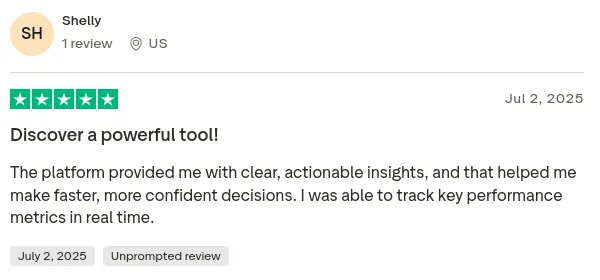
Pro: Provided clear, actionable insights that led to faster, more confident decisions, with the ability to track key performance metrics in real time.
“The platform provided me with clear, actionable insights, and that helped me make faster, more confident decisions.” (Shelly, Trustpilot Review, July 2, 2025).
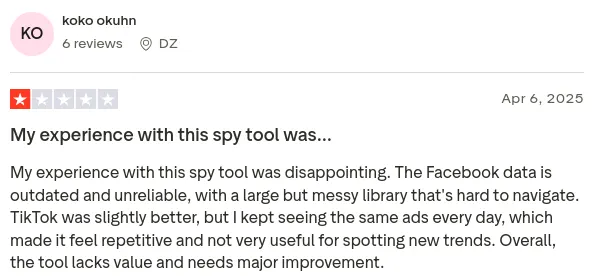
Con: Facebook data felt outdated and unreliable, with a large but messy library that's hard to navigate. TikTok was somewhat better, but showed repetitive ads day to day, making it less useful for spotting new trends.
“The Facebook data is outdated and unreliable, with a large but messy library that's hard to navigate.” (Koko Okuhn, Trustpilot Review, April 6, 2025)
How to evaluate MagicBrief alternatives
I'd ask these questions before committing.
Besides insight, does it get me to a launched ad?
This is the biggest factor. Foreplay, BigSpy, PowerAdSpy, and PiPiAds all stop at research. You still have to build the ad yourself or hire creators. Atria and Skaler support the complete workflow.
If your team has a strong creative production setup already, a research-only tool is fine. If creation is where your campaigns struggle and get delayed, pick a platform that handles the whole workflow.
Is the pricing model based on seats, spend, or a flat rate?
MagicBrief and Motion price partly on ad spend. Sounds cool until your budget grows and your software bill grows with it. Know which model you're signing up for, not just the entry-tier number.
How fresh is the competitor data?
A tool that shows you an ad three days late is showing you old news.
PowerAdSpy's 48-72 hour lag is a real example. Fine for general research, bad if you're trying to react to a competitor's launch in real time.
So ask vendors exactly how often their index updates.
Does the tool show me ad spend?
The spend numbers behind an ad are what tell you whether it's working or not. If ad spend data matters to you, give Adscan a serious look.
Is the platform coverage matched to where you advertise?
You need a platform that works for what you’re using it for. For example, PiPiAds is great on TikTok and practically ineffective elsewhere.
Also, pay only for what you need. If PowerAdSpy's Reddit and native coverage isn't important to you, getting it may not make a lot of financial sense.
What's the learning curve for my team?
Atria and Motion both assume you at least know a bit about ROAS, hook rates, and creative testing frameworks. If you're new to performance marketing, the simpler Swipekit might get you going sooner. Then pick up the more advanced tools down the road.
The case against a six-tool stack
I mentioned at the beginning that most MagicBrief alternatives on the list have specific use cases. Most are built to solve a specific part of the advertising workflow: research, brief, and ad production.
Foreplay organizes inspiration better than anyone. BigSpy and PowerAdSpy give you raw breadth for almost nothing, while Motion tells you why your own ads worked. And if you need ad spend data, Adscan handles that.
The issue is, if you were to get each, that'd be six plus tools and six plus logins. Then you add Slack to keep the conversations going. Research and production have been split into separate tools for so long that nobody questions it anymore. Think of the huge costs in money and time.
Instead, if you need research and ad production (the whole workflow) in one place, narrow your search to Atria and Skaler. That said, Skaler is new and still finding its feet. But Atria, having been trained in $10B+ ad spend data, can handle practically anything you throw at it.
That's why Raya (Atria's AI creative strategist) accurately and easily pulls competitor intel, customer review data, and patterns into one ad brief. Then goes ahead to generate and launch the ad from the same place.
There’s no handoff and no brief that goes stale while you wait on an ad creative to be ready.
Yes, Atria isn't the right fit for everybody. If you're TikTok-only and don't need generation, look at PiPiAds. If you just need a swipe file, Swipekit will do.
But if you need a tool that takes you from "here's what's working" to "here's the ad," then check out Atria.
Rubix, a performance marketing agency, ran creative analysis 40% faster, lifted ROAS 15%, and cut CPA 20% using Atria's tagging and reporting.
As Founder Alex Realmuto put it, "Atria is phenomenal, especially from a reporting standpoint. It's going to make your life easier, and it's an easy decision when you look at ROI."
Book a demo to see how Raya turns competitor insight into a launched ad in one sitting, and how Radar grades every one after it ships.
Frequently asked questions
Is MagicBrief worth it in 2026?
No, MagicBrief isn't worth it in 2026. They shut down on July 31, 2026. But these MagicBrief alternatives are capable enough. Pick the one that meets your needs.
Does any MagicBrief alternative actually generate the ad, not just the brief?
Yes. Atria and Skaler are the two tools on this list built to go from insight to a generated creative. Atria layers in AI-driven grading and one-click Meta launch on top of that generation step.
Is Foreplay really better than MagicBrief, or just different?
Foreplay and MagicBrief are different. Foreplay's swipe file and Spyder tracking are more mature than MagicBrief's equivalent features. If you're comparing research-and-brief tools head-to-head, Foreplay edges it out. But it has the exact same limitation MagicBrief does.
Do I need a separate tool for ad spend data, or does MagicBrief show that?
MagicBrief doesn't show competitor ad spend. It shows you the creative, not the budget behind it. AdScan.ai is the tool on this list built specifically for that, especially in the UK, EU, and Brazil.
Which MagicBrief alternative has the best free option?
There isn't a true free alternative with MagicBrief's full feature set. But Meta Ad Library and TikTok Creative Center cover the research basics for $0 if you're bootstrapping. BigSpy also has a very limited free tier with 5 daily queries that works for Facebook only.