
Superads, Atria, and Foreplay come up when performance marketers start looking for Motion alternatives, but they're not all solving the same problem.
After I spent weeks researching dozens of tools, here are the 7 worth considering in 2026. I cover what each does well, where it falls short, and who it's built for.
Why look for Motion alternatives?
Motion works well for creative teams that want a dedicated platform for tracking ad performance and analyzing what's driving results. A few limitations tend to come up as teams grow, though:
- The workflow stops at insights: Motion can tell you what's working, but you'll likely still need separate tools to brief, generate, and launch your next ad. For teams that want to act on their data without switching platforms, that gap adds up.
- The focus stays on paid social: Motion is strongest on Meta and TikTok, with added support for YouTube and LinkedIn. If you want to tie creative performance directly into email, CRM, or broader web analytics, you'll usually still need other tools to see the full picture.
- Deeper BI workflows push some teams elsewhere: Some teams prefer to pipe raw ad and performance data straight to BI tools like Looker or Power BI. A single reporting UI can get in the way of that.
TL;DR: Which Motion alternative should you choose?
The right Motion alternative depends on how much of the creative workflow you want to cover, whether you need generation and launch alongside analytics, and how your team currently handles research and reporting.
Choose:
- Superads if you want a dashboard-first analytics platform that tracks creative performance across Meta, TikTok, LinkedIn, YouTube, and Google Ads in a clean, familiar interface. Keep in mind that it stops at analytics and reporting. Briefing, generation, and launch happen elsewhere.
- Segwise for teams that want to go deeper on creative element analysis, tracking which specific hooks, visuals, and formats are driving performance and where fatigue is starting to show. Its strength is analysis and it doesn't cover the full creative workflow.
- Atria, if your team spends as much time acting on data as analyzing it. It connects creative analytics directly to briefing, generation, and launching ads without switching platforms. The tradeoff is that it's a broader platform, so there's more to learn upfront if reporting is all you need.
- Foreplay when your main need is building a swipe file, saving competitor ads, and turning inspiration into structured creative briefs. However, it's less focused on your own account performance and more on research and ideation.
- GetHookd for ad spying and competitor research on a tighter budget. It covers inspiration and research well, though the in-depth analytics for your own account are lighter.
- AdCreative.ai if production volume is the priority. The platform is built for generating ad creatives at scale with AI, but isn't the best for deep performance analysis.
- Canva Grow if your team is already working in Canva and want ad performance insights and publishing built into the same environment. It may feel limited outside of Canva's ecosystem.
Stick with Motion if the creative analytics reporting, performance dashboards, and competitive intelligence features are already working well for your team and you don't need briefing, generation, or launch built into the same platform.
7 Best Motion alternatives: At a glance
| Tool | Best for | Starting price (billed annually) |
|---|---|---|
| Superads | Creative performance analytics with a clean, dashboard-first interface | $150/month |
| Segwise | Deeper creative element and fatigue tracking | $449/month with a limited-eligibility lower tier |
| Atria | Creative analytics with built-in generation and launch | $129/month |
| Foreplay | Swipe file and competitor ad research | $49/month |
| GetHookd | Ad spying and inspiration on a budget | $19/month |
| AdCreative.ai | AI-generated ad creatives at scale | $20/month |
| Canva Grow | Ad performance insights inside Canva | $144/year with a free tier |
Pricing correct as of July 2026. Verify with the vendor.
1. Superads: Best for creative performance analytics with a clean, dashboard-first interface
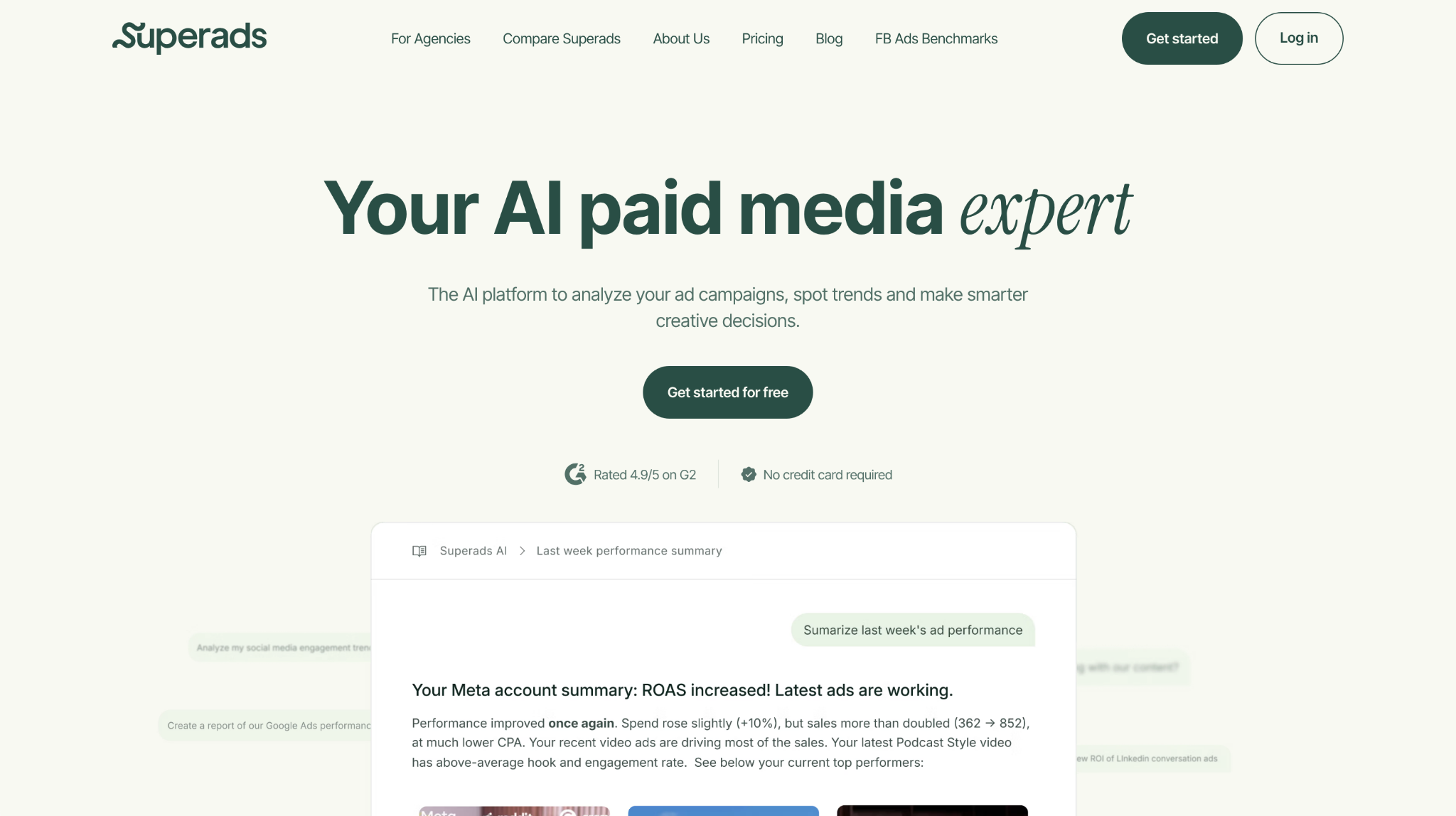
Superads is a creative analytics platform built by Superside that connects ad accounts across Meta, TikTok, LinkedIn, YouTube, and Google Ads. Its Superads Score benchmarks each creative across hook, hold, click, engagement, and conversion metrics relative to your own account history.
The focus is on your own account data, so teams that need competitor research will likely need a separate tool.
Key features
- Superads Score: Scores each creative across five dimensions (Hook, Hold, Click, Engagement, and Conversion) using benchmarks calibrated on your own historical account data.
- Multi-account reporting: Combines ad accounts from multiple brands or clients into a single dashboard or report with side-by-side performance comparisons.
- AI Copilot: Lets you ask questions directly about your ad performance data and surfaces insights across your connected accounts.
Pros
- Paid plans scale with ad spend, so adding team members doesn't increase the price
- Reports can be shared as live, interactive links that let clients filter and explore data in real time
- No fixed contracts, so you get a 14-day free trial and can cancel any time after that without a long-term commitment
Cons
- The platform focuses on your own account data and doesn't include a built-in competitor ad library, so teams that rely heavily on competitive research will pair it with a dedicated ad-spy tool
- Data accuracy depends on native platform APIs, which can create occasional gaps or delays in reporting
Best for
- Performance marketing teams that want a dedicated analytics layer for Meta, TikTok, YouTube, Google Ads, and LinkedIn without per-seat pricing
- Agencies managing multiple client accounts that need to combine performance data into a single, shareable report
- Teams with significant paid social spend that want AI-powered creative scoring without committing to enterprise-level pricing
Pricing
Superads starts at $150 per month.
2. Segwise: Best for the deeper creative element and fatigue tracking
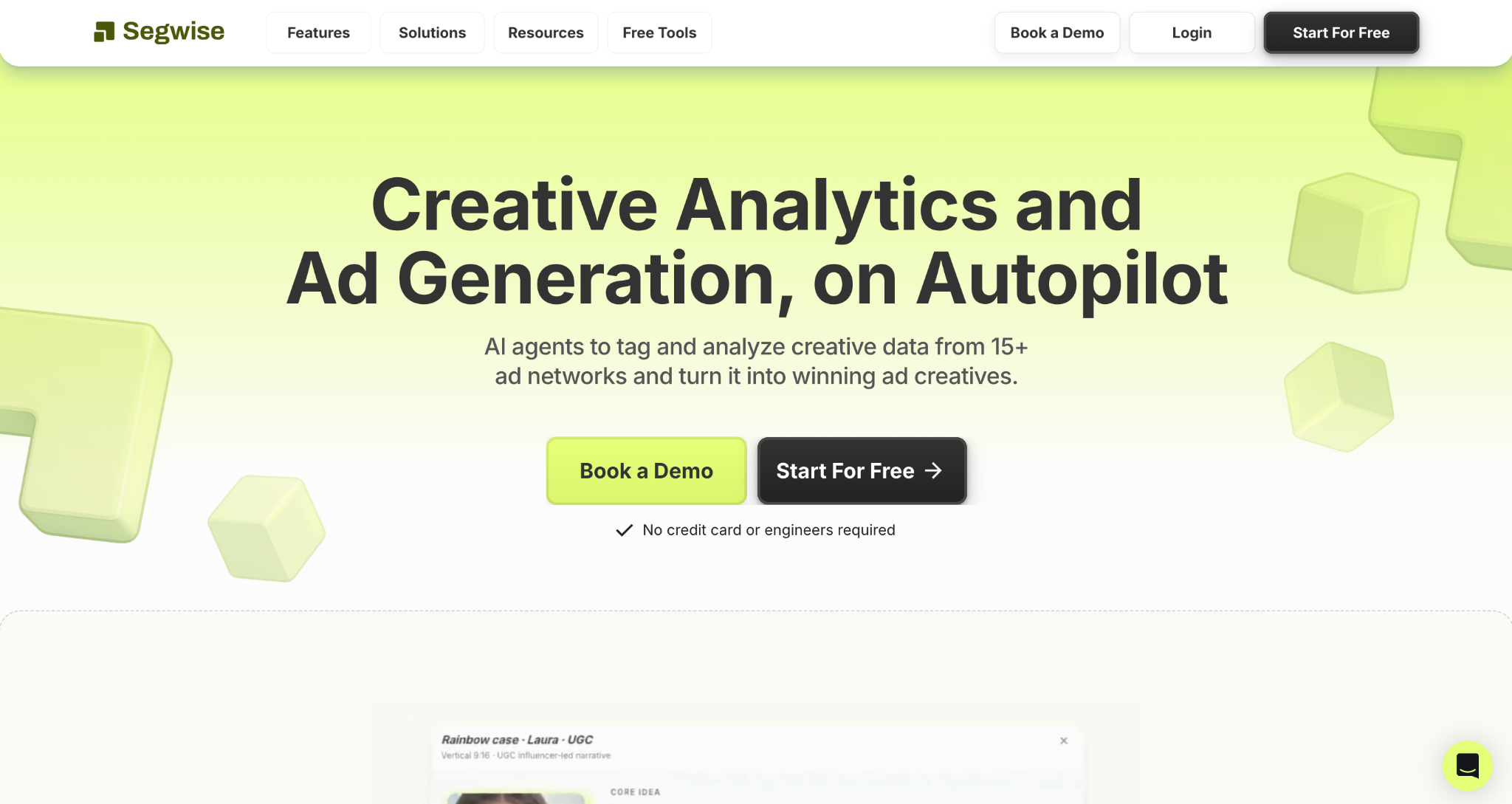
Segwise is an AI creative analytics platform that connects to 15+ ad networks and MMPs (mobile measurement partners) like AppsFlyer and Adjust.
It tags creative elements across video, audio, and images, then maps them to performance so you see what's driving results. Segwise has deep roots in mobile user acquisition (UA), so Meta-only brands may find some features heavier than needed.
Key features
- Multimodal AI tagging: Automatically tags every creative element across video, audio, image, and text, and maps each tag to performance metrics across your connected ad networks.
- Creative fatigue detection: Monitors all creatives across platforms for early patterns of performance decline so you can catch fatigue before it drains budget.
- MMP integration: Connects to AppsFlyer, Adjust, Branch, and Singular alongside ad network data, giving you a unified view of creative performance and down-funnel outcomes in one dashboard.
Pros
- The element-level tagging goes deeper than standard creative analytics, covering hooks, calls to action (CTAs), emotions, characters, audio, and visual styles across video and static formats
- Fatigue detection flags declining creatives early, which can help you pull budget before a dip in performance costs you money
- Multi-account and multi-brand reporting lets agencies and larger teams manage creative analytics across several clients or products from one interface
Cons
- Competitor creative tracking is focused on Meta right now, so teams that need a broad, multi-network ad spy library may need to pair Segwise with a dedicated competitor research tool
- The platform's depth and cross-network focus are built around mobile gaming and UA workflows, so some features may feel like more than you need if Meta is your only channel
Best for
- UA teams and mobile game studios that need element-level creative analytics across multiple ad networks and MMPs in one place
- Direct-to-consumer (DTC) brands running significant spend across Meta, TikTok, and other paid channels that want to go beyond top-level performance metrics and understand which specific creative elements are driving results
- Performance teams that want early fatigue detection built into their analytics workflow
Pricing
Segwise's Growth plan is $449/month (billed annually) for up to $250k in monthly ad spend, with a Pro tier at $1,529/month above that. Early-stage teams under $50k/month may qualify for a discounted $250/month rate.
3. Atria: Best for creative analytics with built-in generation and launch
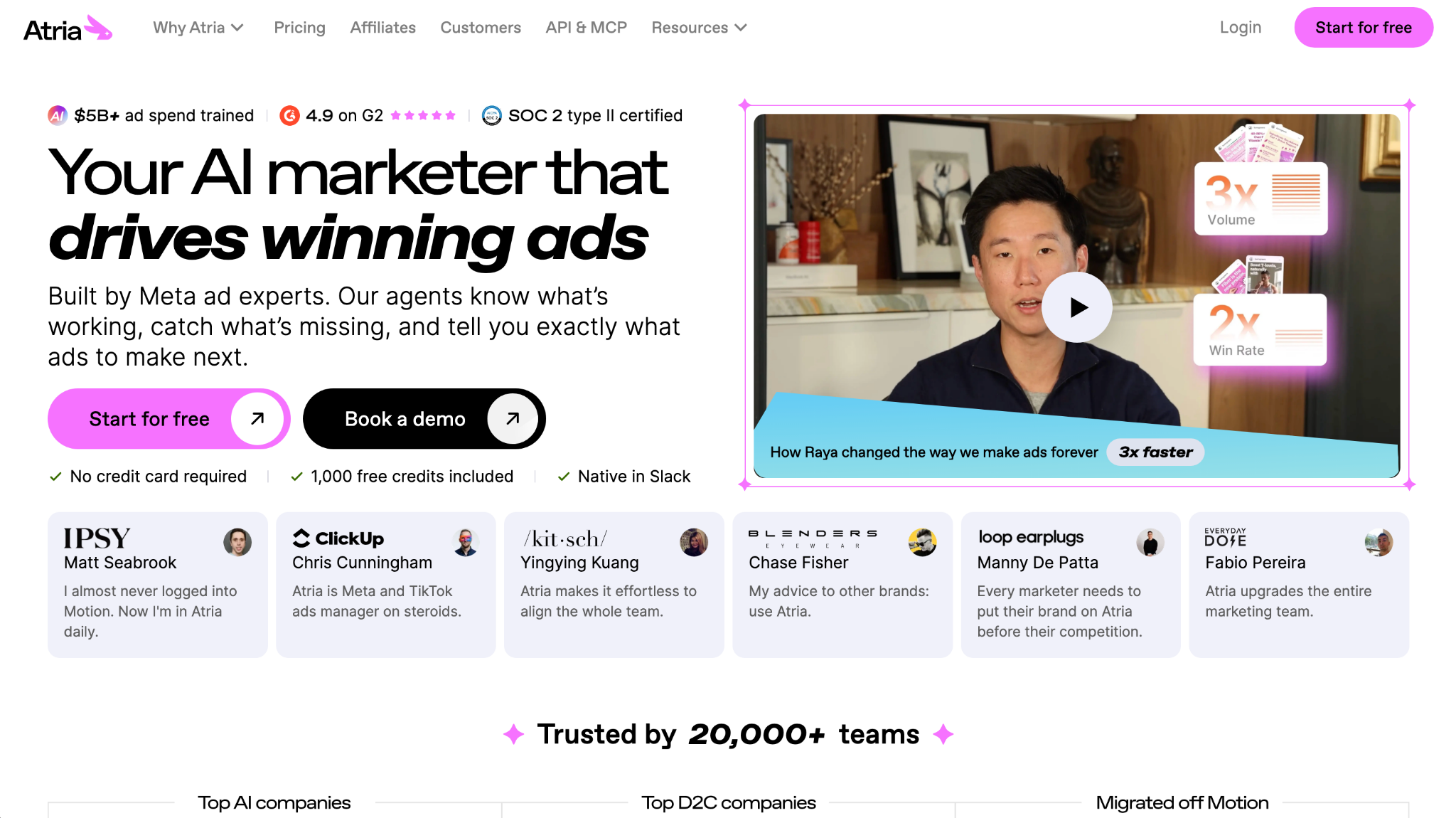
Atria is a creative intelligence platform for Meta ads that covers research, briefing, generation, and launch in one place.
Raya, its AI creative strategist trained on $9B+ in real ad spend, finds winning hooks and ad angles from your data and the wider market, which matters more since Meta's Andromeda update started rewarding creative volume and diversity.
It's primarily built for Meta, so teams running significant ad spend across other channels may not find the same depth of analytics there.
Key features
- Raya: Analyzes your ad account, competitor creatives, and customer reviews, then surfaces winning hooks, generates briefs, and creates new ad variations from your performance data and market patterns.
- Radar: Grades every ad in your account with plain-English feedback and specific fix recommendations, and sends proactive alerts when a creative's performance starts to decline.
- Competitor research: Lets you track competitors' active ads and pull their top hooks, personas, and landing pages from a library of over 100M ads.
Pros
- Every step from research to launch happens in one platform
- Benchmarking draws from $9B+ in market-wide ad spend data, not just your own account history, which can help you spot opportunities your account alone wouldn't show
- Performance feedback comes in plain English with specific fixes, so team members outside media buying can act on it without translation
- Atria lives inside Slack with no separate dashboard login
Cons
- The platform is broader than a pure analytics tool, so teams whose main need is reporting depth may need to invest time learning features they won't use regularly
- The platform is built primarily for Meta, so teams running significant spend across other channels won't get the same depth of analytics across their full stack
Best for
- Performance marketing teams running Meta ads that want the full workflow, from analytics to launch, in one connected platform
- Agencies managing multiple brand accounts on Meta that want automated creative reporting and competitive intelligence alongside ad creation
- E-commerce brands with significant Meta spend that want to go beyond analytics and turn performance data into launched ads in the same tool.
Pricing
Atria starts at $129 per month.
4. Foreplay: Best for swipe file and competitor ad research
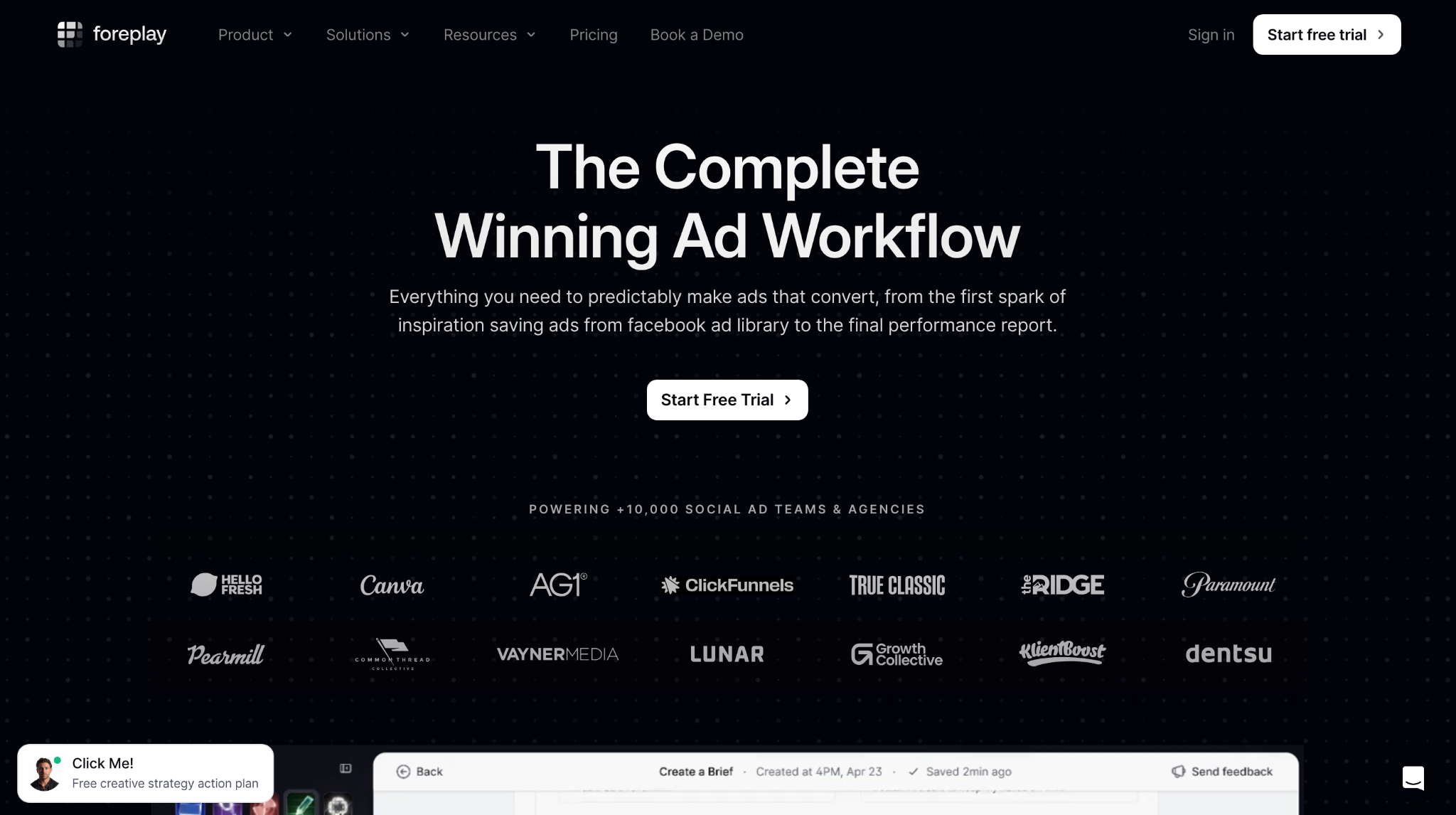
Foreplay is an ad research and creative workflow platform that lets you save ads from Meta, TikTok, LinkedIn, and YouTube into organized swipe file boards.
Its Spyder feature tracks competitors' live and inactive ads continuously, and its library holds over 100 million ads you can filter by brand, niche, or format. However, I found that Spyder and the platform's creative analytics are behind higher-tier plans.
Key features
- Swipe File: Lets you save ads from Meta, TikTok, LinkedIn, and YouTube using the Chrome extension into organized boards with custom tags, ratings, and comments.
- Spyder: Continuously tracks selected competitor brands, captures every new ad they launch (live or inactive), and keeps that ad history for as long as you track the brand.
- Briefs: Lets you build AI-assisted creative briefs directly from your saved ad boards, with support for custom templates and storyboards.
Pros
- Saved ads stay in your library permanently, so you keep access even after the original campaigns end
- The board-based organization makes it easy to annotate, comment on, and share research with designers or clients as a PDF
- The discovery library holds over 100 million ads you can search by brand, niche, format, or platform without leaving the tool
Cons
- Spyder and Lens, the platform's creative analytics for your own ad account, are only available on the Workflow plan and above, not the $49/month entry tier
- The platform is built for research and inspiration. Teams that need detailed reporting on their own ad accounts will want a dedicated analytics tool.
Best for
- Creative strategists and performance marketers who do regular competitor research and want to organize it into briefs for designers or content creators
- Agencies that need to share polished swipe file boards with clients or use them as part of a creative pitch
- Teams running high-volume creative production that want a centralized, permanent library of saved ads to reference during briefing
Pricing
Foreplay starts at $49 per month, billed annually.
5. GetHookd: Best for ad spying and inspiration on a budget
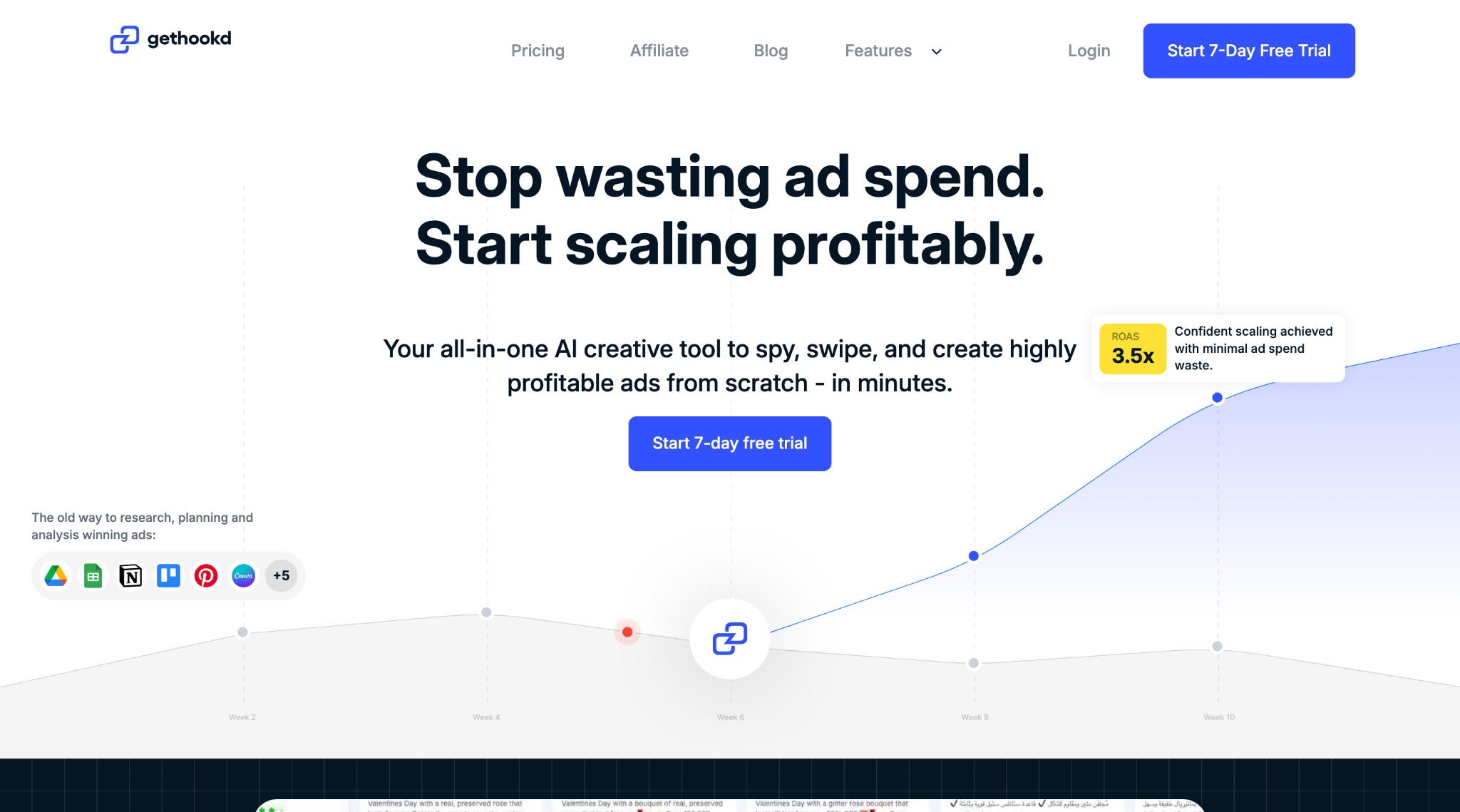
GetHookd is an ad spy and creative production platform with a 21M+ ad library of Facebook, TikTok, and Google ads.
It surfaces competitors' top ads, landing pages, and traffic sources, and has AI tools to transcribe videos, generate scripts, and clone image variations. Key features run on a monthly credit system with no rollover, which can limit heavy usage.
Key features
- Brand Spy: Lets you track a competitor brand's ads directly from their Meta Ad Library, pulling their creatives into your research library so you can study format and messaging patterns over time.
- AI script generation: Transcribes any video ad and generates new hooks, angles, and full scripts based on the creative frameworks in your competitor research.
- Clone Ads: Generates image ad variations from an existing creative, letting you adjust colors, avatars, and formats without starting from scratch.
Pros
- Covers research and basic creative production in one platform at a starting price of $19 per month, which makes it accessible for smaller teams and solo operators
- Saved ads stay in your library permanently, so you keep access even after the original campaigns go offline
- Brand Spy pulls a competitor's full ad activity as well as their top posts, so you can see everything they're actively running
Cons
- Key features like Brand Spy and script generation draw from a monthly credit allowance, which can run out quickly during heavy research sessions
- The platform is built for competitor research and creative ideation. You won't find performance reporting on your own ad account here.
Best for
- Solo operators and small e-commerce teams that want ad spy and basic creative production tools without a large monthly commitment
- Performance marketers who want to research competitors' full funnel, including landing pages alongside ads, in one place
- If you do regular creative research on Meta and TikTok and want to move quickly from inspiration to a working script or image variation
Pricing
GetHookd starts at $19 per month, billed annually.
6. AdCreative.ai: Best for AI-generated ad creatives at scale
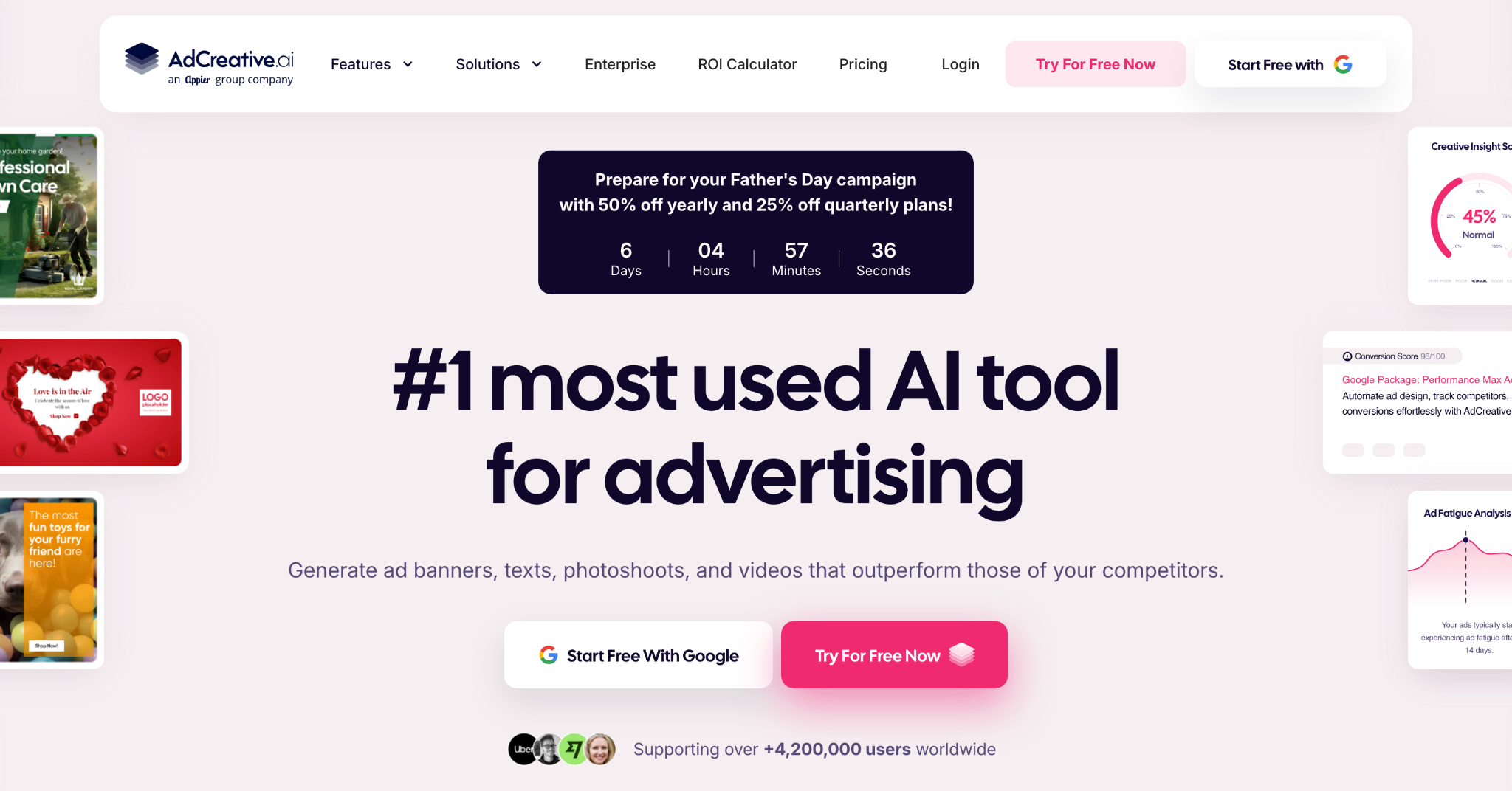
AdCreative.ai is an AI-powered ad creative generation platform that produces static ads, video ads, product photoshoots, and ad copy for Meta, Google, LinkedIn, and other platforms.
It's built for high-volume creative production without a designer. One thing I noticed was that downloads run on a monthly credit limit, so if you have heavy production needs, you might need a higher tier sooner than expected.
Key features
- Ad creative generation: Generates static image ads, product photoshoots, and ad copy across multiple sizes and formats using your brand assets and copy inputs.
- Text Generator AI: Generates ad headlines and copy across multiple copywriting frameworks, included on all plans at no extra cost.
- Ad account integration: Connects to your Meta and Google ad accounts to surface performance insights like average CTR by category and top-performing colors and creative formats.
Pros
- Unlimited generations on all plans means you can iterate freely during the creative process, since credits are only spent when you download a final asset
- Covers a wide range of formats, including static images, product photoshoots, and video ads across Meta, Google, and LinkedIn
- At $20 per month on the annual plan, it's one of the more accessible entry points for AI-powered creative generation
Cons
- The entry tier's low credit and download limits mean high-volume teams will likely need to upgrade fast
- AdCreative.ai is built for creative generation, not deep reporting. It won't give you detailed insight into what's working in your existing ad account
Best for
- Small businesses and solo marketers who need to produce static ad creatives at volume without a design team
- E-commerce brands that want AI-generated product photoshoots for paid social campaigns
- If you're running Meta and Google ads and want to test multiple creative variations quickly without a large production budget
Pricing
AdCreative.ai starts at $20 per month.
7. Canva Grow: Best for ad performance insights inside Canva
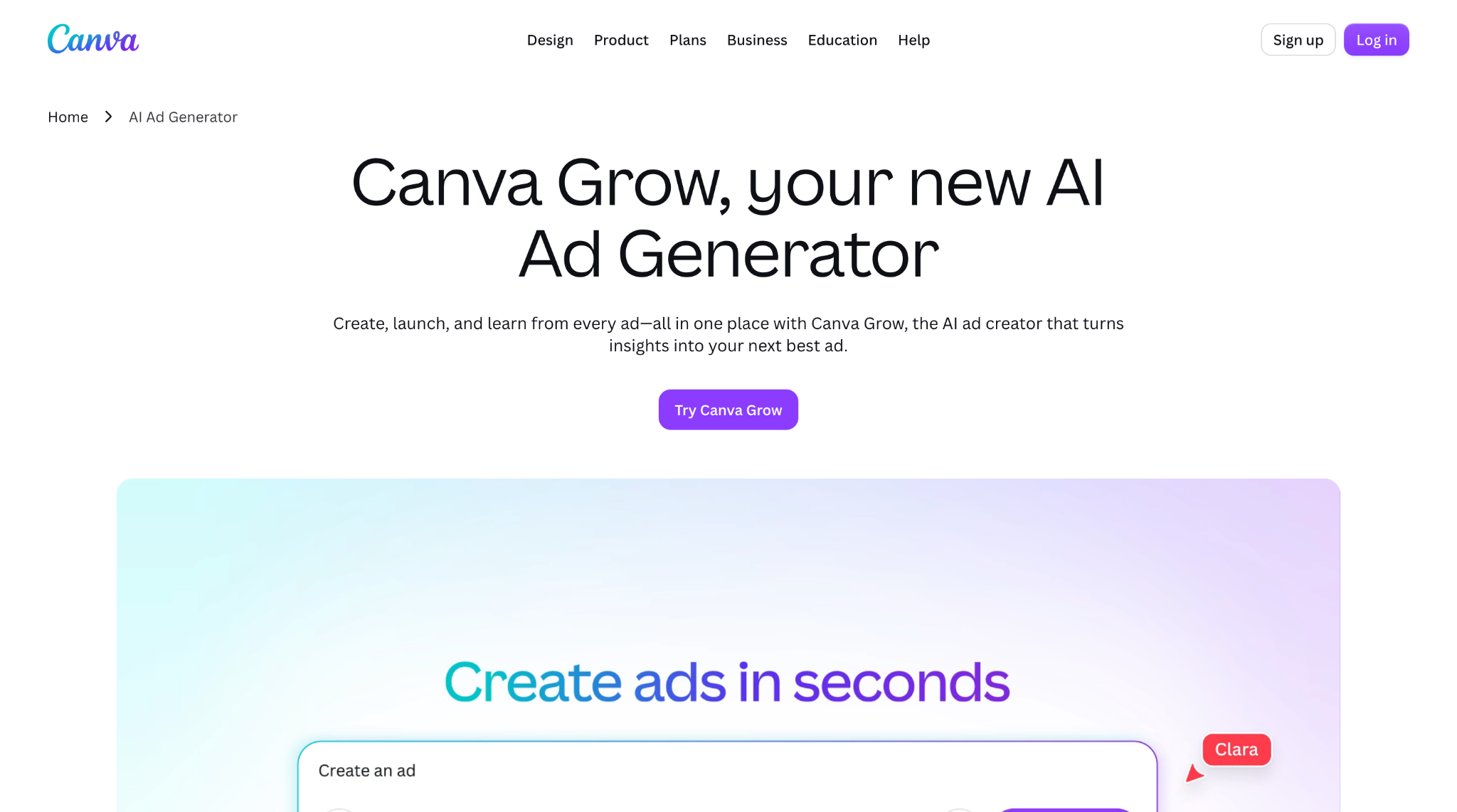
Canva Grow is an ad creation and performance tool built into Canva that lets you generate, publish, and track ads across Meta, TikTok, and LinkedIn.
It builds on Canva's acquisition of MagicBrief and adds AI ad generation and performance insights to a visual dashboard. Grow Insights, the analytics layer, is part of Business and Enterprise, so free and Pro users get a narrower slice of the workflow.
Key features
- AI ad generation: Generates static and video ads from a prompt and website link, using your brand's existing profile in Canva to match your visual style and messaging.
- Bulk publish: Publishes ads directly from Canva to Meta, TikTok, and LinkedIn in a single workflow, regardless of whether they were created in Canva Grow or uploaded from elsewhere.
- Ad performance insights: Shows creative-level performance metrics and AI-tagged patterns across your connected ad accounts, with saved insight snapshots you can turn into shareable reports.
Pros
- Teams already using Canva for other design work can create, publish, and track ads without adding a separate platform to their stack
- Ad generation uses your existing brand profile in Canva, so new creatives stay visually consistent without extra brand setup work
- AI tagging and recommendations surface what's driving performance without manually building reports from scratch
Cons
- Canva Grow Insights, the ad performance analytics piece, is part of Canva Business and Enterprise, so free and Pro users don't get the same depth of ad reporting
- The ad tools are part of a broader design platform, so teams that want a dedicated, purpose-built performance marketing tool may find the feature set less specialized than a standalone analytics platform
Best for
- Teams already working in Canva that want to add ad generation and basic performance tracking without switching platforms
- Small businesses that want to create, publish, and monitor ads across Meta, TikTok, and LinkedIn from one familiar interface
- Marketers who want AI-generated ad creative tied to performance data without building reports manually
Pricing
Canva Grow is included on all Canva plans, including Free. Canva Pro runs $144/year; the Grow Insights analytics layer requires Canva Business (about $250/year per user) or Enterprise.
How to evaluate Motion alternatives
Motion alternatives range from pure creative analytics tools to fuller ad workflow platforms that cover the whole process end to end.
The right fit depends on how much of that workflow you want in one place and what your team's actual bottleneck is.
Here's what to consider:
- How much of the workflow you need to cover: Some tools focus purely on creative performance analytics. Others extend into briefing, generation, and launch. If reporting is all you need, a dedicated analytics tool may be enough. If you're exporting data from one tool to execute in another, a broader platform may be worth it.
- How deep your analytics needs go: Not every creative analytics tool measures the same things. You can track top-level metrics like ROAS and CTR by creative with most options on this list, but breaking down performance by individual hooks, formats, and audience segments requires a more granular tool.
- Whether competitor and market data matters to your workflow: Your own account data only tells part of the story. A few tools here pull in competitor ad data and market-level creative intelligence alongside your own performance, which can change how you brief and prioritize creatives in competitive categories on Meta.
- How much your existing stack matters: If your team already has a BI tool or data warehouse, it's worth checking how well each option fits before adding another proprietary reporting layer. A few tools here integrate tightly with Meta Ads Manager, while others work better as standalone reporting layers.
- How much setup you're willing to take on: Some tools are close to plug-and-play once you connect your ad accounts. Others are highly configurable but require more time to tailor to your workflow. If you need something running quickly, that trade-off matters as much as the feature set.
From creative analytics to winning ads, in one platform
Switching between tools to act on your data eats up time fast, and that's what sends most teams looking for a Motion alternative in the first place. The tools on this list split up that workflow differently, and the right one comes down to how much of it you want under one roof.
If you're running paid social on Meta and want to go from performance data to a launched ad without leaving one platform, Atria is worth considering.
Raya, its AI creative strategist, pulls from your account and the wider market to surface what's working, then helps you build and launch your next winning ad on the spot. Rubix used it to cut creative analysis time by 40% while lifting ROAS by 15%.
See how Atria can help you ship your next winning ad.
Frequently asked questions
What is the best Motion alternative?
Some of the best Motion alternatives include Superads and Segwise for creative analytics, Foreplay for swipe files and competitor research, and Atria for teams that want analytics and execution in one platform.
The right pick depends on which part of the workflow you need to replace. A pure analytics swap looks different from a tool that also covers briefing, generation, and launch.
What's the difference between a creative analytics tool and an ad spy tool?
A creative analytics tool connects your own ad performance data to specific creative decisions, showing you which hooks, formats, and angles are driving results in your account.
An ad spy tool focuses on competitor ads, letting you browse what other brands are running and save inspiration for your own briefs. Some tools on this list do one or the other, and a few cover both.
Does Motion have a free plan?
No, Motion doesn't currently offer a permanent free plan, but it does provide a free trial with no credit card required.
During the trial, you can connect your ad accounts and access creative analytics, AI tagging, and dashboards before deciding whether to move to the Starter plan, which starts at $250 per month for brands spending up to $50k per month on ads.