
Dynamic creatives touch nearly every corner of digital advertising, but the mechanics change depending on where you build them, and I've set these up across enough platforms to know the assumptions don't carry over. Here's how they work, and what Andromeda changes on Meta.
What are dynamic creatives?
Dynamic creatives are ad units that a platform assembles into new ad variations and tests automatically.
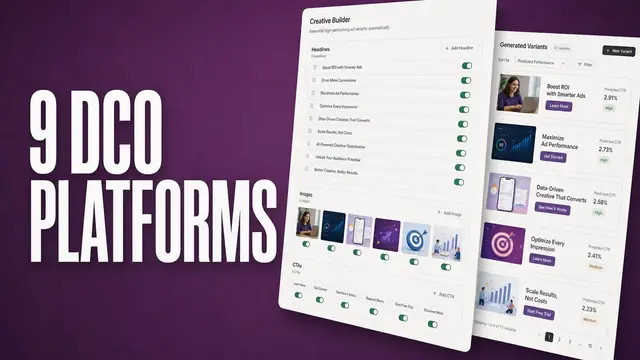
Each one draws from building blocks you upload, such as images, video clips, headlines, and calls-to-action (CTA). The system then pairs those pieces into combinations and serves whichever version performs best to each viewer.
A single dynamic creative setup with 5 images, 3 headlines, and 2 CTAs can produce dozens of unique ad variations, reducing the manual work of building each one by hand.
You'll find dynamic creatives running across several advertising channels: on Meta and Snapchat, in programmatic display buys through platforms like Campaign Manager 360, and on out-of-home screens that swap content based on location or time of day.
Dynamic creative vs. dynamic ads vs. dynamic creative optimization
These three terms are used as if they mean the same thing, but each covers a different part of the process:
| 📝 Term | 🎯What it does | ⚡Key differentiator |
|---|---|---|
| Dynamic creative | Combines a fixed template with swappable elements, such as images, copy, and CTAs, based on rules you set | Uses one template with swappable elements; the feed drives dynamic ads instead |
| Dynamic ads | Pulls products or content directly from a catalog to retarget or promote items to interested shoppers | Pulls straight from a live product feed with no fixed creative shell |
| Dynamic creative optimization (DCO) | Tests creative combinations and serves whichever performs best | Decides which version wins; the creative itself gets built elsewhere |
Dynamic creative
Dynamic creative starts with a single creative template. You define which elements can change (a headline, an image, a CTA) and set the rules for when each version appears.
The template stays fixed, and what moves within it makes the ad dynamic. This is what most marketers mean when they say "dynamic creative," even when they're describing something closer to dynamic ads.
Dynamic ads
Dynamic ads work differently, and I've seen this cause more confusion with dynamic creatives than anything else.
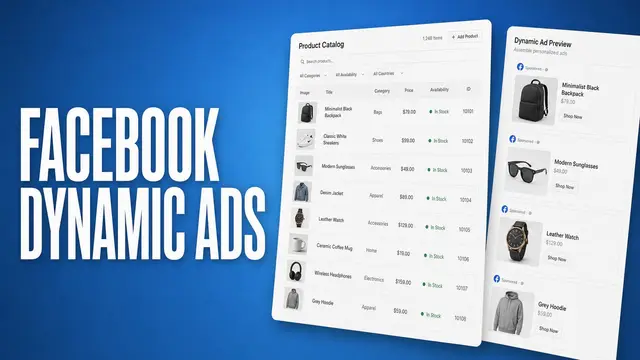
Dynamic ads pull directly from a product catalog or feed instead of a template with swappable parts, typically retargeting shoppers with the items they’ve viewed or surfacing related products based on browsing behavior.
There's no fixed creative shell here, and the ad reflects whatever the feed says at that moment.
Dynamic creative optimization
Dynamic creative optimization (DCO) is the testing layer that decides which creative combination wins, working across both dynamic creative and dynamic ads. It's the process, or the technology, that tests creative combinations against each other and pushes whichever one performs best.
DCO doesn't build the creative. Rather, it decides which version of an already-built dynamic creative to serve.
How dynamic creatives work
Dynamic creative runs on four moving parts: the creative elements you upload, the data that feeds it, the rules that govern assembly, and the delivery system that serves it in real time.
Let’s break these 4 elements down:
1. Creative elements
You already know the building blocks: images, video, headlines, descriptions, CTAs. What matters here is how platforms treat them once uploaded.
Each element type becomes its own slot that the system pulls from and assembles later. That's what turns a handful of assets into dozens of ad combinations without you touching a single finished ad by hand.
2. Feed and data inputs
A feed tells the system which values to pull into those slots and when. This can be a product catalog (prices, names, images tied to SKUs), an audience data set (location, weather, device type, interests), or both layered together.
The richer the feed, the sharper the variations tend to be, and in my experience, thin feeds are often why a "dynamic" campaign ends up looking more static. The platforms that handle this well are ranked in dynamic creative optimization platforms. Static still has its place, which we make the case for in static ads.
3. Rules-based assembly
Rules decide which combinations are even allowed to run. You might pair a specific headline only with a specific image, or restrict certain elements to audiences matching certain criteria.
If you skip this step, the system tests every possible combination regardless of whether it makes sense. With a large feed, things can get messy fast.
4. Real-time serving
The delivery system builds the ad the moment someone sees it. It reads the viewer's context, checks the rules, pulls the matching elements, and serves that combination.
This is the part I see people misunderstand most. The "dynamic" version doesn't exist as a saved file anywhere. It's assembled fresh per viewer, which is also why pulling reports on individual combinations tends to be harder than pulling reports on a normal ad.
Data inputs for dynamic creative campaigns
The feed section above covered the mechanism. Here's what goes into it and why the mix matters more than the volume:
| 📊 Data type | 📋 Examples | ⚡Use cases |
|---|---|---|
| Audience data | Location, weather, device type, demographics, and interests | Retailers trigger seasonal products by weather; travel brands swap destination imagery by location |
| Product and catalog data | Prices, product names, images, and stock status tied to SKUs | E-commerce and travel brands with large catalogs where manual ad-building isn't practical |
| 1st-party data | Past purchases, site behavior, and CRM records | Sharper targeting based on real customer behavior, limited by the size of your own audience |
| 3rd-party data | Platform or vendor demographic and interest signals | Fills the gap when your 1st-party pool is too small to build real variation |
Most campaigns end up blending two or three of these at once. For example, you’ll see a product feed layered with location data, or audience interests layered with weather.
The more sources you stack, the more combinations become possible, but also the more testing it takes to know which one is driving results.
How dynamic creative works in Meta Ads Manager
The mechanics above hold on any platform, but I'm narrowing in on Meta from here, since that's where a lot of performance marketers spend their creative testing budget.
Ads Manager also has its own quirks that the general version of dynamic creatives doesn't prepare you for, and a few of them can catch you off guard if nobody's flagged them ahead of time.
Building a dynamic creative ad in Ads Manager comes down to three things:
1. What you upload
Meta lets you upload multiple versions of each creative element within a single ad. It then builds a pool of assets it can assemble on its own, so you don’t have to build separate ads for each individual combination.
2. How Meta builds combinations
Ads Manager combines your uploaded elements automatically, and the variations you see depend on the elements and placements you select.
This isn't random shuffling. In the accounts I've run, Meta tests combinations across the audience and placements you've chosen, then leans toward whichever pairings perform best within that specific setup.
3. The "optimize creative for each person" toggle
This toggle changes what "dynamic" means for your ad. With it off, Meta only mixes and matches the exact assets you uploaded. Turn it on, and Meta can start making its own edits to those assets, including:
- Enhancing thumbnails or images: Adjusting visual elements Meta predicts will perform better for a given viewer
- Cropping images and video: Adapting to a placement's dimensions automatically
- Applying Stories templates: Formatting elements to fit Stories-specific layouts
- Generating video from images: Turning static images into video assets
- Adding matching music: Layering in songs suited to the ad's content
- Expanding image backgrounds: Filling extra space with matching colors or patterns
I'd treat this toggle as a decision point. Leaving it on by default hands Meta creative control you might not want on every account, especially anywhere brand consistency matters more than raw performance.
Why you can't see which combination won
Meta reports on dynamic creative performance as one combined number across every variation. It doesn't break results out by individual pairing, so you won't see which specific image and headline combination won.
That's worth knowing before you build one of these campaigns expecting the kind of clarity a standard split test gives you.
Meta itself frames dynamic creative as useful when you're unsure which media or components will resonate, and cautions against using it as a substitute for split testing.
Current Meta limits and restrictions to know before you build a dynamic creative campaign
Meta puts guardrails on dynamic creatives, and a few of them can catch you off guard mid-build. Be aware of these restrictions:
- Access isn't guaranteed: Meta restricts some advertising features based on trust signals tied to your account and business portfolio history. So if you’re a newer advertiser or account, you might not have dynamic creative access yet.
- Sales and app promotion can't always use dynamic creatives: If your objective is Sales or App Promotion, you might not be able to set up new ad sets with dynamic creatives.
- Some ad types don't support it at all: Dynamic creatives don't work with multi-language ads, ads using asset customization, or ads with political content.
- Turning it on removes WhatsApp Status as a placement: You'll need to toggle dynamic creatives off to bring that placement back, which resets you to Advantage+ placements.
- There's a hard cap of 1,000 dynamic creative ads per account: You'll need to delete or archive existing ads before creating more. Teams that rely on bulk ad creation tend to hit this cap first.
How Andromeda changes dynamic creative strategy on Meta
One of the most talked-about changes in Andromeda is how it groups similar ads together and treats them as one entry in its system.
That grouping was built around Dynamic Product Ads (DPAs), Meta's version of dynamic ads pulled from a product catalog, and I think that's a detail worth calling out on its own.
With DPAs, Meta treats your product images as data points tied to a catalog, similar to a price or SKU. Meta doesn't judge it for creative quality the way it does other assets.
That's why swapping DPA templates repeatedly doesn't reset the learning phase the way other creative changes can.
Standard dynamic creatives, the images-headlines-CTA combinations we've covered throughout this piece, don't get that same exemption.
Those combinations still get judged as creative content, and I'd treat them with the same rigor I'd apply to any other Meta campaign trying to earn a spot in front of the right audience.
💡 Tip: For a deeper dive into how Andromeda affects your creative strategy, check out our complete guide to Andromeda and Meta ads.
When dynamic creatives are worth setting up on Meta
Dynamic creatives aren't the right call for every campaign, and I've watched teams build one out of habit more than actual need.
Run through these before you commit to building one:
| ❓ Question | ✅ Build it if... | ❌ Skip it if... |
|---|---|---|
| Do you have enough distinct elements? | You've got multiple headlines, images, and CTAs, each meaningfully different | You only have a headline or two and one image |
| Are you testing components or a concept? | You're testing which headline pairs best with which image | You're comparing two entirely different creative concepts against each other |
| Is your objective eligible? | Your campaign runs under an objective other than Sales or App Promotion | Your campaign runs under Sales or App Promotion, where new dynamic creative ad sets aren't allowed |
| Can you work with aggregate results? | You're fine reading an overall performance lift | Your team needs to point to one specific winning image or headline |
Here’s my rule of thumb: build one when you have creative variety, you're testing individual elements, and you're fine reading results at the campaign level. If any of those isn’t true, run a standard test.
💡 Tip: If you’ve decided to build dynamic creatives, a creative automation platform can help you produce and test at volume. Our creative automation platform breakdown compares the top options.
Common mistakes to avoid with dynamic creatives
A few mistakes show up often enough to waste meaningful budget, and many of them happen after launch. Here's what to watch for once the campaign's already live:
- Turning on automation before you have enough creative variety: Dynamic creative optimization tests combinations against each other, so two headlines and one image leaves it with nothing meaningful to learn from.
- Setting a trigger without checking whether the creative changes for it: Weather or location triggers only work if the ad looks or reads differently across conditions. Swapping "cold weather" copy without swapping the image barely counts as dynamic.
- Letting the feed go stale: A feed or exclusion rule set needs upkeep like anything else on autopilot. If a sale ends, but the discount still shows, or a seasonal ad keeps running past its season, that's a sign nobody's reviewed the feed in a while.
I'd treat all three of these as maintenance issues. A recurring check can catch them faster than a stronger initial build would. Review your feed accuracy and creative variety every couple of weeks, since these mistakes tend to show up once nobody's looking as closely.
See which dynamic creative wins with Atria
Dynamic creatives can show you that something's working, but Meta's combined reporting won't tell you which specific image or headline earned that result. Getting a clear answer usually means looking past what Ads Manager shows you.
Atria is a creative intelligence platform that breaks dynamic creative performance down further than Meta's combined view, so you can see which elements are carrying a test instead of guessing from an overall lift.
Rubix, a performance marketing agency, brought Atria into their workflow and saw creative analysis time drop by 40%, ROAS climb by 15%, and CPA fall by 20%.
Here's how it can support your dynamic creative testing:
- Creative-level grading: Every creative inside a dynamic creative set gets a plain-English grade, so you can see which specific image, headline, or CTA combination is driving the results Meta's aggregate report hides.
- Continuous performance monitoring: Atria's Radar tracks every live creative and flags fatigue as it starts, so a combination losing steam gets caught before it drags down the whole set.
- Competitor research: Pull hooks, angles, and personas from a library of over 100 million ads, giving your next dynamic creative test a stronger starting point than your own account data alone.
- Auto-scaling and auto-pausing: Winning combinations get more budget automatically, and underperforming ones get paused, so your test keeps working between manual check-ins.
- Native in Slack: Atria runs inside Slack, so grading updates and next-step recommendations land where your team already works, no separate dashboard login required.
Ready to see which combination is winning? Try Atria for free today.
Frequently asked questions
Can you use dynamic creative outside of Meta, like on Google or DOOH?
Yes, dynamic creative runs on Meta, Google's Campaign Manager 360, and digital out-of-home (DOOH) screens. Meta assembles ads from uploaded assets and a feed. CM360 relies on Studio profiles and dynamic feeds. DOOH triggers content changes based on real-time data like weather or time of day.
Can you run dynamic creative and a standard split test at the same time?
Yes, Meta's Experiments tool lets you run a dynamic creative ad set against another campaign as a controlled comparison. The combinations inside the dynamic creative test still won't be isolated from each other, since Meta reports on them as one group.
Is dynamic creative the same as Advantage+ creative?
No, dynamic creatives and Advantage+ creative work differently.
Dynamic creative assembles combinations from assets you upload, images, headlines, and CTAs. Advantage+ creative applies algorithm-selected enhancements, like cropping or background generation, to a single creative you've already built.