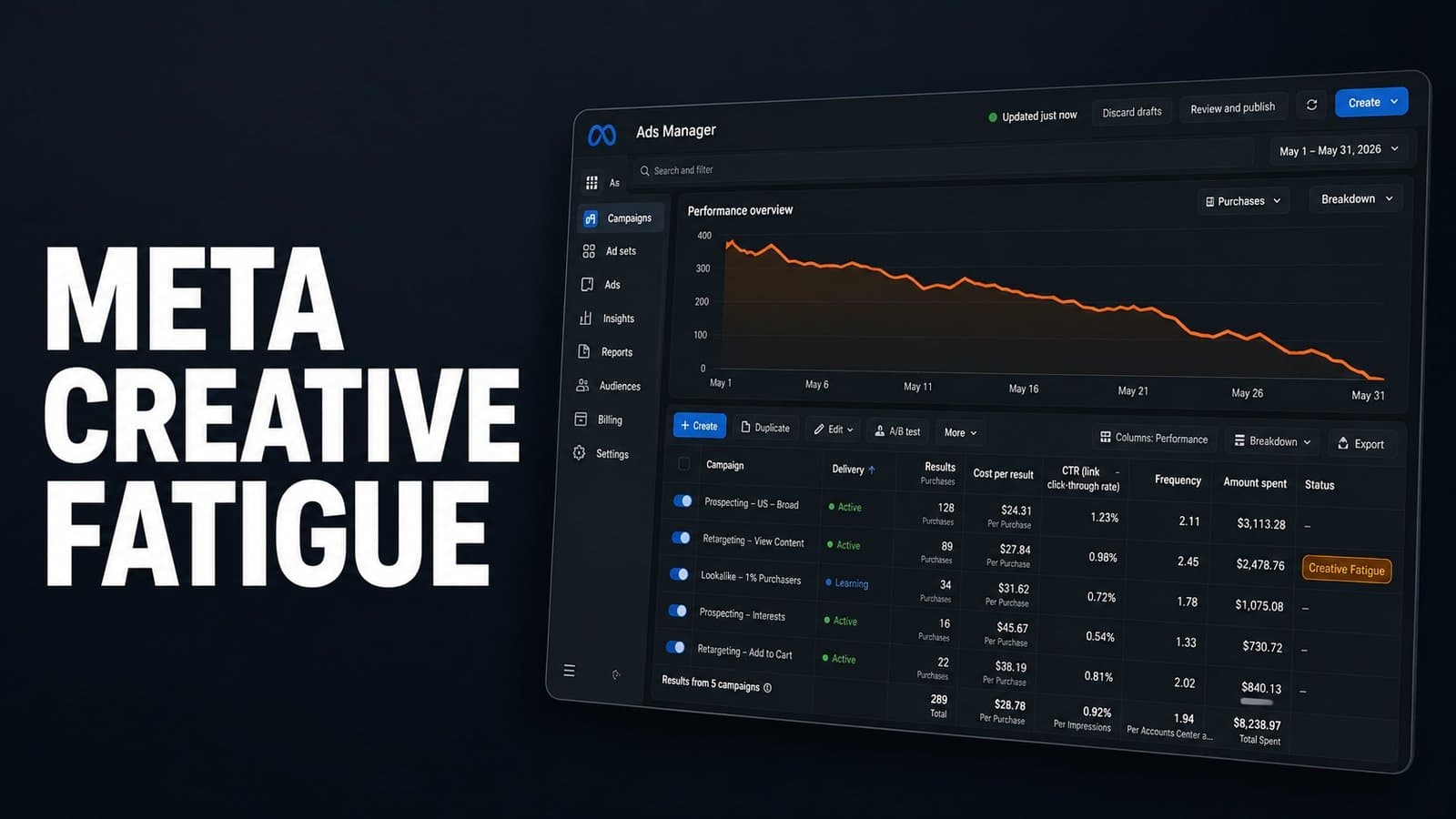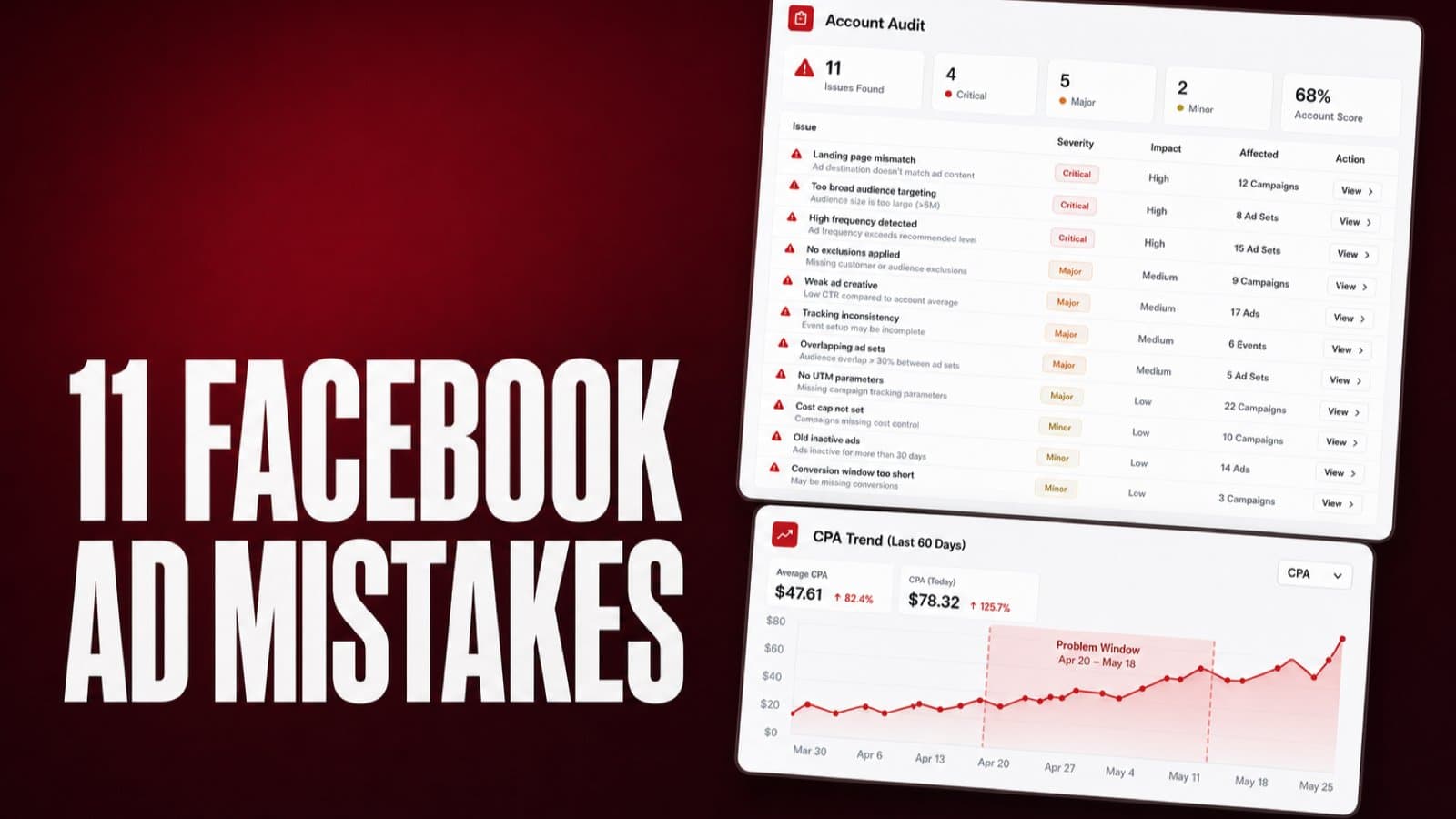

You refresh the Ads Manager on Monday morning, and the numbers are wrong. Cost per acquisition up 40%. Conversions down. Same budget, same targeting, same ads that were working last week.
Facebook ad performance decline is the process by which a previously profitable Meta campaign degrades in ROAS, CPA, or conversion volume, caused by creative fatigue, audience saturation, tracking gaps, or algorithm disruptions.
It affects nearly every advertiser who runs campaigns long enough, and it almost always has a diagnosable root cause.
This guide covers how to diagnose it fast, the most common causes, a fix for each, and a long-term framework to keep performance stable.
Quick Diagnostics for Facebook Ads Performance Decline
Don't start guessing. Run this triage before touching anything in your ad account.
- Has your ad frequency exceeded 3.0 in the last 7 days?
- Have your top creatives been running for more than 14 days without a refresh?
- Has any ad set been edited (budget, audience, bid, or creative) in the last 5 days?
- Does your landing page load correctly, and does the CTA work?
- Is your Meta pixel or Conversions API actively passing conversion events?
- Has performance fallen across all campaigns, or just one ad set or creative?
A "yes" to questions 1 or 2 points to creative fatigue or audience fatigue. A "yes" to question 3 points to a learning phase reset.
"Yes" to question 4 or 5 means you likely have a tracking or post-click problem, not an ad problem. "Yes" to question 6 means the issue is isolated, which is a much faster fix.
Each root cause is covered below.
Measurement and Tracking Fixes for Facebook Ads Performance

Image source: Pexels
Many apparent performance declines are tracking failures, not real drops in conversions. Your ads may still be driving sales. Your ad account just can't see them.
Why tracking breaks
Since Apple's App Tracking Transparency (ATT) framework launched, a significant proportion of iPhone users limit cross-app tracking. When that happens, Facebook loses visibility into a large portion of the conversion journey.
Ads Manager shows declining conversions. Your actual revenue may be flat.
Browser-based pixel tracking makes it worse. Safari's Intelligent Tracking Prevention, Firefox's Enhanced Tracking Protection, and ad blockers strip conversion signals before they reach Meta. For many businesses, that gap between reported and real conversions has become the common culprit behind apparent performance drops.
How to fix it
Server-side tracking via Meta's Conversions API (CAPI) is the fix. Unlike browser pixels, CAPI sends conversion events directly from your server to Meta, bypassing browser restrictions entirely.
Server-side tracking alongside your browser pixel typically recovers 15-30% of conversion events that were going unreported, giving the algorithm better data to work from.
Before diagnosing anything else, verify:
- CAPI is live and passing purchase, lead, or signup events correctly
- Event Match Quality scores in Events Manager are above 6.0
- You're not seeing duplicate events, which inflate conversion numbers and confuse delivery
What to check in Ads Manager
Compare your Ads Manager-reported conversions against your backend order data for the same period. A significant gap confirms a measurement problem, not a creative or audience one.
Fix the measurement layer first. Better data means every subsequent diagnosis reflects reality, not an incomplete signal.
AI tools built natively for Meta ad optimization often include attribution diagnostics that show tracking gaps before they compound. Wasted spend from misattribution is preventable once you can see it.
Learning Phase and Meta Ads Algorithm Disruptions
The Meta ads algorithm needs a minimum of 50 conversion events per ad set per week to exit the learning phase and optimize effectively.
Below that threshold, delivery is unstable, costs are volatile, and results are unreliable, especially in the first week of a campaign or after any structural change.
Any significant edit to an ad set resets the learning phase from zero. That includes:
- Changing the bid strategy or bid amount
- Editing the audience by adding or removing targeting, changing location, or adjusting age range
- Swapping the creative on an existing ad
- Making a budget change of more than 20% in a single edit
- Pausing and restarting an ad set after more than 7 days
Here's the trap.
When Facebook ads performance falls, the instinct is to edit the campaign. Editing resets the learning phase, which causes more volatility, which triggers more edits. It's a cycle that keeps ad sets stuck in learning for weeks and makes it impossible to determine what's actually working.
Consolidation fixes it.
Instead of running eight small ad sets that can't collect many conversions individually, consolidate them into three larger ones. Each gets more budget, hits the 50-conversion threshold faster, and exits learning sooner.
Use Campaign Budget Optimization (CBO) to let Meta allocate spend automatically. It reduces fragmentation and keeps more budget out of the learning phase.
Don't make any structural change until you've seen at least three consecutive days of declining performance. Natural variance looks like a decline. A real problem looks like a trend.
Creative Problems: Ad Fatigue and Audience Fatigue
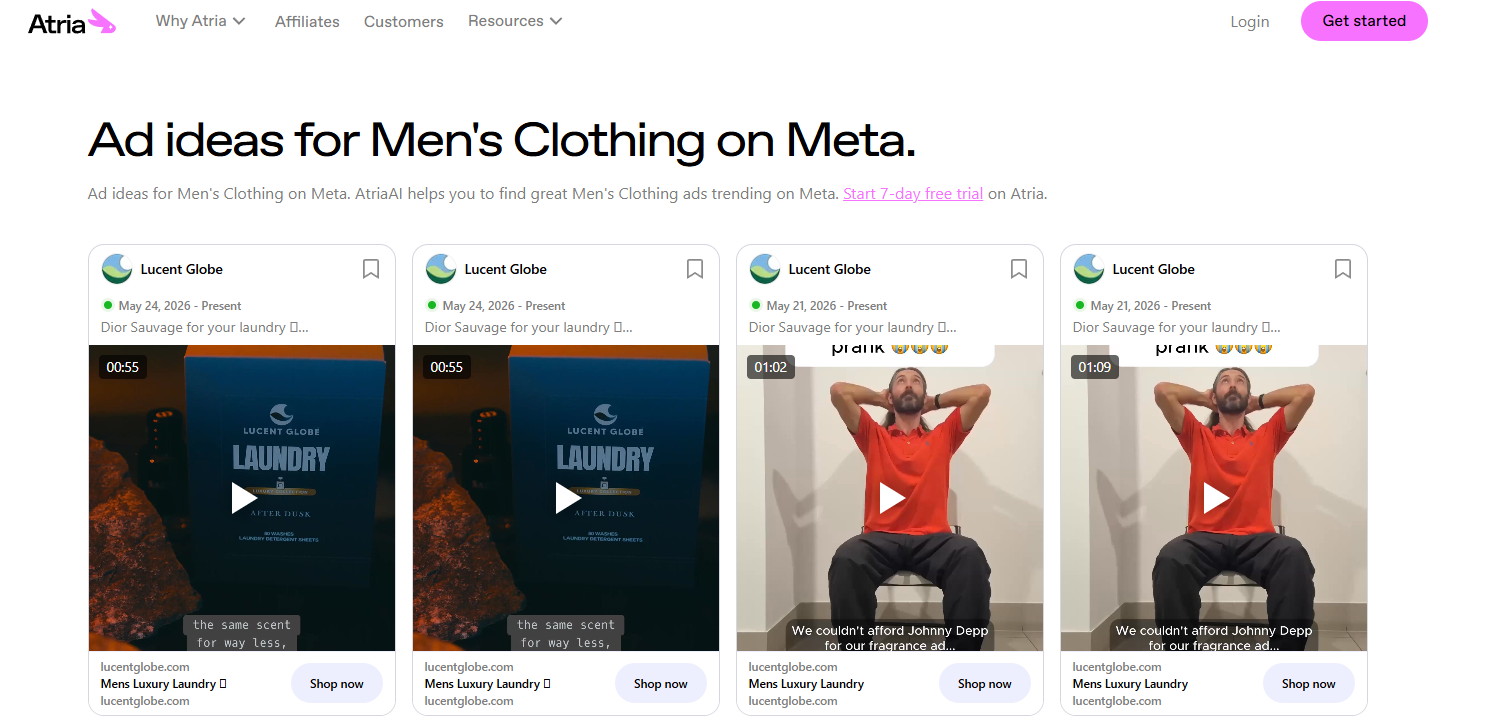
This is the most common cause of Facebook ad performance decline, and the one most teams fail to diagnose correctly because standard Ads Manager reporting hides it.
Ad fatigue happens when a specific creative asset has been shown to your audience too many times. Same visual, same hook, same message: your target audience has seen it and moved on. CTR drops. CPA rises. The ad is still live and spending. You just can't see which specific creative is the problem from a campaign-level view.
Audience fatigue is broader. Your entire audience segment is exhausted, not just one creative. The more times an audience sees the same ads, the lower the response rate. The people who haven't converted yet are increasingly low-quality prospects outside your real target audience.
The signals to watch in Ads Manager:
| Metric | Healthy Range | Warning Threshold | Action Required |
|---|---|---|---|
| Frequency | Below 3.0 | 3.0-4.0 | Refresh creative or expand audience |
| CTR (link) | Above 1.0% | Declining 15%+ week-over-week | New creative variants immediately |
| CPA | Stable or falling | Rising 20%+ with no targeting change | Diagnose creative vs. audience issue |
| ROAS | Stable or rising | Declining 2+ weeks in a row | Full creative audit |
| Thumbstop Rate | Above 30% | Below 20% | Hook is failing, rewrite it |
These metrics appear at the ad set or campaign level. If you're running eight creatives in one ad set, you can't easily see which one is dragging the average down without manually cross-referencing creative-level columns. Most teams make changes that don't address the real problem.
What to do about creative fatigue
- Launch every new campaign with 3-5 creative variations: different visuals, different hooks, same core offer
- For cold audiences, refresh creatives every 7-14 days or when frequency exceeds 3.0
- Test video against static, UGC-style against polished, and try different hooks across formats
- When performance drops, don't pause the ad set. Identify the specific underperforming creative, pause that, and introduce a new variant
Explore how AI-powered creative analysis platforms are changing how teams diagnose and rotate creative before fatigue compounds into significant budget loss.
How Atria identifies the problem creative
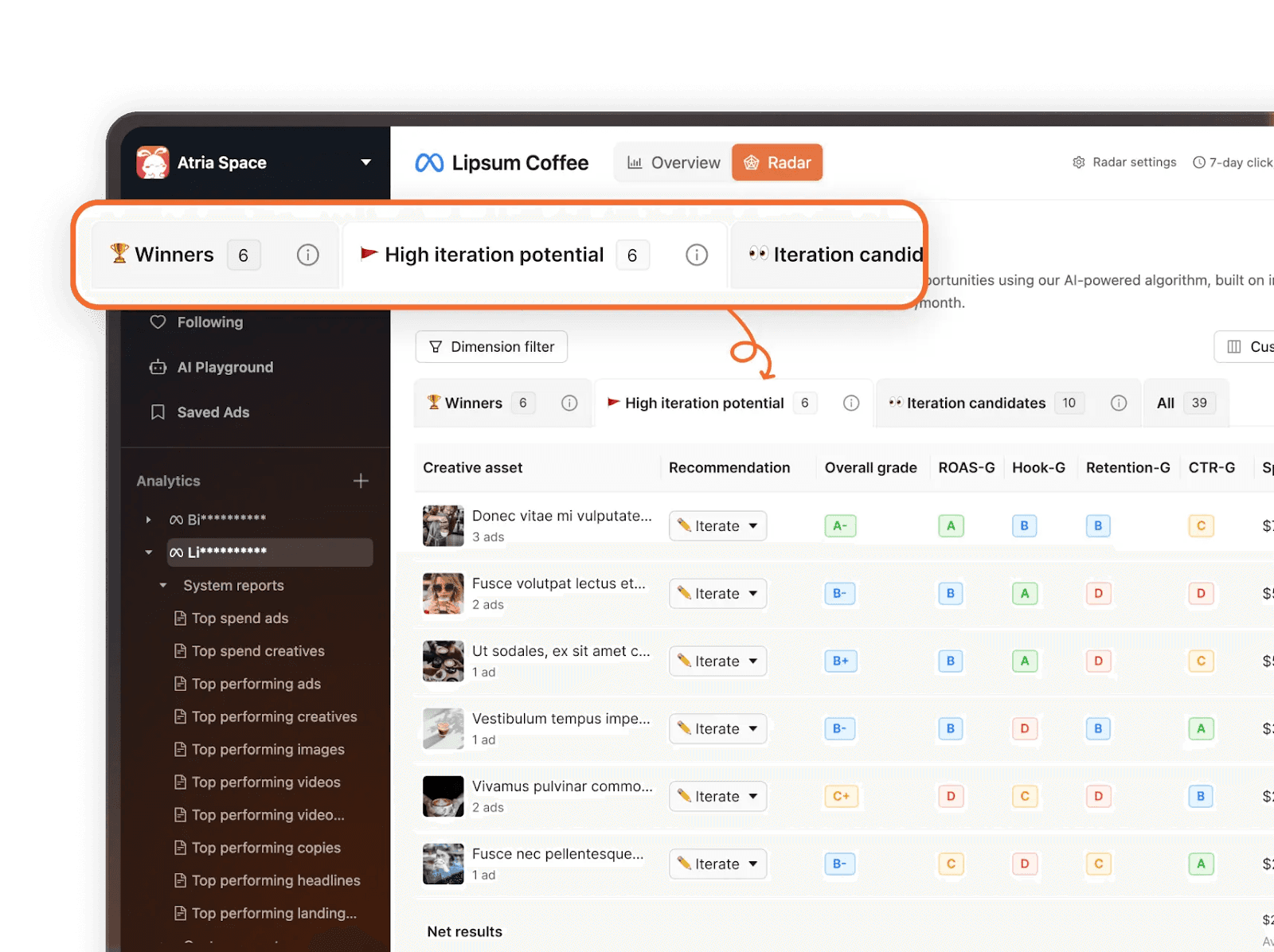
Standard Ads Manager shows you that performance is falling. It doesn't show you which specific creative is responsible. A team running 10 ads across three ad sets is looking at blended averages. The underperforming asset is hidden inside aggregated numbers.
Atria, an AI-powered creative analytics platform for Meta advertisers, solves this directly.
Atria's performance dashboard breaks down ROAS, CPA, and spend by individual creative, so instead of guessing which asset is dragging results, you see it immediately.
Raya, Atria's AI creative strategist trained on over $9 billion in ad spend data, generates a specific fix recommendation per underperforming ad. Not a score. A concrete next action.
Ready to see exactly which creative is hurting your ROAS?
Book a demo and see it in practice.
Audience Saturation and Targeting Remedies
Audience saturation happens when your budget is reaching the same people repeatedly, and diminishing returns have set in. The audience hasn't grown. The people your ads are reaching have already decided. Performance falls even at the same budget.
Two signals confirm it: audience reached ratio climbing above 70%, and frequency rising while reach stays flat.
The fixes:
- Build lookalike audiences from recent converters. A 1-2% lookalike based on your last 90 days of purchasers gives the algorithm a fresh pool that your current targeting hasn't touched.
- Exclude existing customers from prospecting. Hitting purchasers inside a cold audience campaign means paying for impressions that can't convert at a prospecting target CPA.
- Expand core audience targeting. Narrow interest targeting saturates faster. Broadening, or switching to Advantage+ Audience, often reduces CPMs and extends campaign lifespan.
- Separate cold audiences from warm retargeting. Mixing funnel stages forces inefficient budget allocation. Separate campaigns, separate budgets.
Analyzing competitor audience strategies on Facebook can reveal targeting angles your current setup is missing, especially useful when you've exhausted obvious audience segments.
Meta Ads Auction Pressure and Competition Responses
Every impression on Facebook is won or lost in a real-time auction. More advertisers competing for the same audience means higher CPMs and less reach for the same spend. Your ad quality hasn't changed. Competitive pressure in the advertising auction has increased.
Auction pressure rises in predictable patterns: Q4, Black Friday, Prime Day and back-to-school season. CPMs can double during peak periods. Your vertical may also become more competitive over time as more brands discover the same targeting that's been working for you, and that's when good performance becomes harder to sustain without a systematic creative approach.
Three things you control in an auction you can't opt out of:
- Ad quality and relevance. Meta's auction rewards relevance, not just budget. An ad with strong engagement and conversion signals wins impressions at a lower cost. Improving your creative is the most effective lever to improve performance on cost.
- Placement selection. Audience Network placements often have lower CPMs than Facebook Feed, but also lower conversion rates. Review placement-level performance weekly, shift budget toward what generates the best cost-per-result, and you'll get more results from the same spend.
- Bid strategy. During high-competition periods, test a cost cap to prevent CPA from spiking. The tradeoff is reduced delivery volume, but controlled cost beats volume at a loss.
Understanding how Meta's latest algorithm update reshapes creative strategy matters here. Andromeda places more weight on creative quality as an auction signal, which means the Andromeda creative strategy guide for 2026 is essential reading for advertisers trying to maintain efficient delivery at scale.
Landing Page and Post-Click Fixes to Improve Ad Performance

Image source: Pexels
A strong ad can be killed by a weak landing page. If your CTR is holding but your conversion rate is falling, the ad is working. The post-click experience isn't.
This is especially common in e-commerce. The ad promises one thing. The landing page delivers something different, slower, or harder to act on. Facebook logs a low-quality result and reduces your ad quality score.
Run this five-point audit before touching anything in Ads Manager:
- Page speed. Load on a mobile connection. More than 3 seconds means a significant drop-off before a single conversion can happen.
- Message match. Does the landing page headline directly reflect the ad copy? If the ad promises a specific offer and the landing page shows a generic collection, you've broken the ad promises that got the click.
- Mobile experience. Over 98% of Meta ad impressions are on mobile. A desktop-first page will underperform regardless of creative quality.
- CTA clarity. One primary action, above the fold, high contrast. No competing options.
- Offer visibility. Every claim in the ad, price, discount and feature, must be immediately visible without scrolling.
Fixing the post-click experience doesn't require Ads Manager access. It requires treating the landing page as part of the ad.
Tactical Responses to Stop Rapid Facebook Ad Performance Decline
When performance is dropping now, follow this sequence in order. Don't make simultaneous changes. Overlapping edits make it impossible to determine what actually fixed the problem.
- Observe for 72 hours before making structural changes. Unless something is visibly broken (a dead landing page, a stopped pixel, a Conversions API outage), don't restructure campaigns in the first three days. Natural variance looks like a decline. A real problem is a trend across multiple days.
- Reactivate past creative winners. Pull creatives that performed well and were paused more than 60 days ago. Audience memory fades. A creative that fatigued in February may perform with renewed impact in May. Zero production cost, zero structural risk.
- Consolidate ad sets to exit the learning phase. Merge small ad sets stuck in learning. Fewer, larger ad sets with more budget reach the 50-conversion threshold faster and reduce volatility immediately.
- Run a rapid creative sprint. Produce 2-3 new static variants using your best-performing headlines. Try different hooks, different visuals, same offer. Get them live within 24-48 hours. Fresh creative is the fastest way to reset a declining account without touching structure.
- Verify server-side tracking is active. Confirm CAPI is firing correctly in Events Manager. Check for duplicate events. Cross-check reported conversions against your backend. A tracking gap during a decline makes the problem look worse than it is and pushes the algorithm toward bad optimization decisions.
Ready to diagnose which specific creative is causing the decline?
Book a demo and see Atria's performance dashboard break down ROAS, CPA, and spend by individual creative in seconds.
Long-Term Frameworks to Maintain Facebook Ads Performance
Reactive fixes stop the bleeding. Frameworks prevent it. Every advertiser who maintains strong performance over 12 months on Meta runs some version of these four systems.
Framework 1: The creative rotation calendar
Decide your refresh cadence before the campaign launches. For cold prospecting audiences, plan a new creative variant every 7-14 days. For retargeting, every 30 days. When frequency hits 3.0, a new variant should already be ready. Keep 3-5 concepts in the pipeline at all times.
Framework 2: Weekly creative-level performance review
Set a recurring 30-minute weekly review. Pull ROAS, CPA, CTR, frequency, and spend by individual ad. The average number of underperforming creatives in any active account is higher than teams realize. Blended metrics hide them.
Sort by CPA descending. Pause the worst performers. Scale the best. For example, a team running 10 ads in one ad set will often find 2-3 carrying the rest. Kill those stragglers, focus budget on what's working, and get better results from the same spend.
That's maintenance, not optimization.
Framework 3: The audience expansion ladder
Build the next audience before the current one saturates. Start with warm retargeting, move to 1-2% lookalikes from recent converters, test 3-5% lookalikes, then broad targeting with strong creative. Expanding proactively means you don't lose a week of performance waiting for a new audience to ramp.
Framework 4: The Continuous Testing Pipeline
Always keep 2-3 creative variants in an active test alongside your control. Test one variable at a time: the hook, the visual, the CTA, the offer angle.
Each test helps you create better ads, not just react to worse ones. Compounding over months, this is what separates accounts with consistently strong performance from accounts that peak and crash.
The best AI tools for Facebook ads optimization now automate much of this workflow, showing creative-level signals, flagging fatigue early, and helping teams focus on decisions rather than data collection.
Understanding how Meta's Andromeda update changed for advertisers adds further context: the algorithm rewards systematic creative testing more than ever.
How Atria Stops Facebook Ad Performance Decline
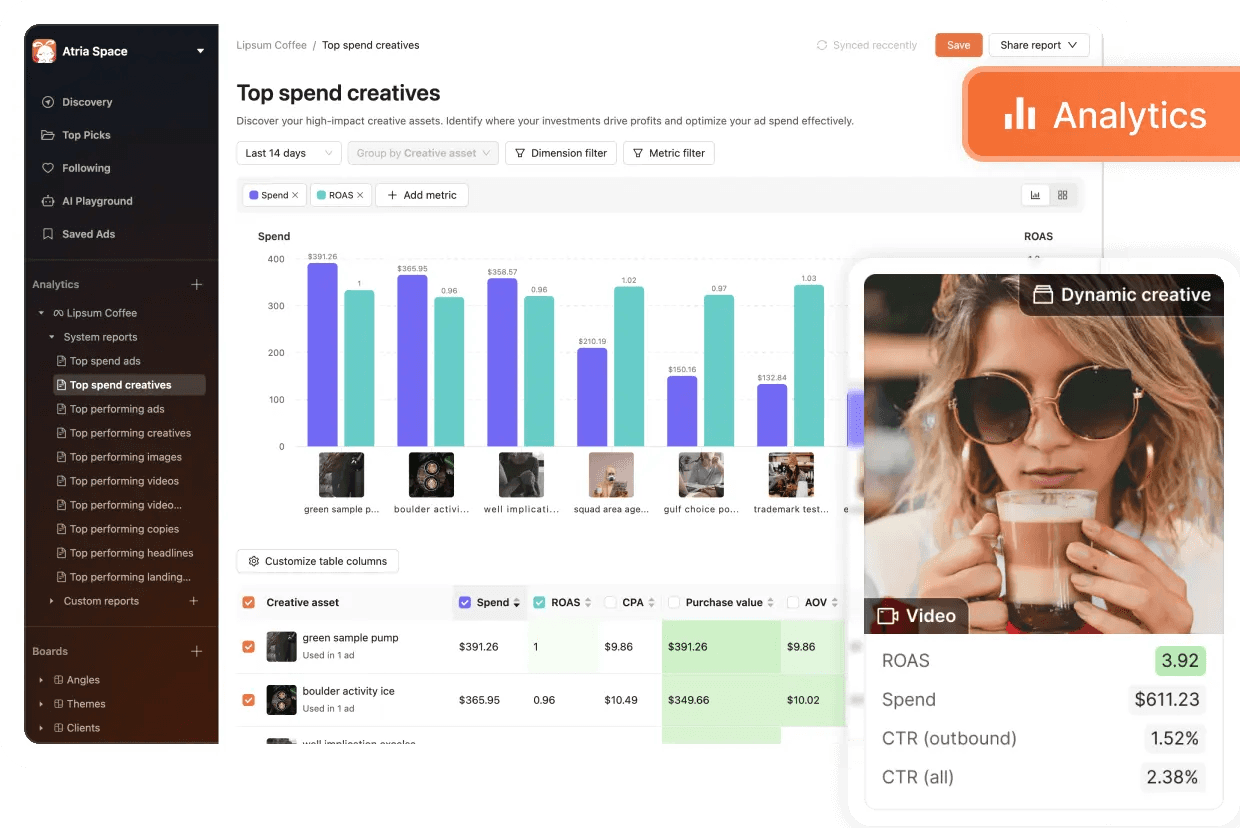
The root cause of most Facebook ad performance decline is creative. Standard Ads Manager doesn't show you which specific creative is responsible. That's the gap Atria closes.
What Atria does
Atria is an AI-powered creative analytics platform for Meta advertisers. It breaks down ROAS, CPA, and spend by individual creative assets, not by campaign or ad set, but by the specific ad. The underperformer is immediately visible. No manual cross-referencing. No guessing.
What Raya adds
Raya is Atria's built-in AI creative strategist, trained on over $9 billion in ad spend data. Where Atria finds the problem, Raya tells you what to do about it: a specific fix recommendation per underperforming ad. Not a quality score.
A next action: change this hook, test this visual angle, try this CTA format. Work that previously required hours of manual column-pulling gets done in minutes.
Who it's built for
| Team type | The problem Atria solves |
|---|---|
| In-house DTC and e-commerce teams | No dedicated creative strategist: Raya fills that role |
| Performance agencies | Manual creative review across multiple client accounts isn't sustainable at scale |
| Growth teams scaling spend | Creative fatigue accelerates with higher frequency: Atria catches it before it costs |
See how Atria breaks down performance by individual creative and get a fix recommendation for every underperforming ad.
Conclusion About Facebook Ad Performance Decline
Facebook ad performance decline almost always has a diagnosable cause. Most of the time, that cause is creative: the wrong asset running too long, with no creative-level data to catch it. The fix isn't to rebuild the account. It's to see the specific problem and act on it.
Atria gives you that visibility. The performance dashboard surfaces ROAS, CPA, and spend by individual creative. Raya gives you a specific fix recommendation per underperforming ad.
Stop guessing which ad is hurting your performance.
Book a demo and see the difference in minutes.
FAQs About Facebook Ad Performance Decline
Why is my Facebook ad not performing well?
The most common reasons are creative fatigue (the same ad shown too many times), audience saturation (you've reached most of your target audience), tracking gaps (your pixel or Conversions API isn't passing events correctly), or a landing page that doesn't match the ad's promise. Check frequency, CTR trend, and post-click conversion rate in Ads Manager to identify which issue applies before making any changes.
Is FB losing popularity?
Facebook isn't losing popularity globally. According to Meta's most recent investor reporting, Facebook has approximately 3.07 billion monthly active users, making it the world's largest social network. Usage is declining slightly among younger demographics in North America and Western Europe. For advertisers targeting 25-54-year-olds, Meta's family of apps remains the dominant paid social channel in terms of reach and conversion volume.
Is $10 a day good for Facebook ads?
A $ 10-per-day budget can yield results for testing but will limit your ability to exit the learning phase. Meta recommends that each ad set reach at least 50 conversions per week to optimize effectively. At $10 per day, that's rarely achievable. For most e-commerce brands, a minimum of $20-50 per day per ad set is required for stable, optimizable delivery. Below that, the data is too thin to learn from reliably.
What is the Facebook 20 rule?
The Facebook 20% rule was a former policy that penalized ad images containing more than 20% text by reducing reach and increasing costs. Meta officially retired this rule in 2021. Ads with heavy text overlays still tend to perform worse in practice, so keeping image text minimal remains a sound creative approach even without the formal restriction.