
For years, media buyers treated Optmyzr as the default optimization toolkit built for Google Ads power users. But paid media's changed, platforms have expanded, and managing campaigns across channels is noisier than ever.
So, does Optmyzr hold up today now that it covers six major ad networks?
To find out, I analyzed recent Optmyzr reviews across G2, Capterra, and Reddit while testing its expanded feature set. Here's what real users think and whether it deserves a spot in your ad tech stack this year.
Quick Verdict on Optmyzr Reviews (TL;DR)
Optmyzr shines with deep automation workflows, customizable Rule Engine scripts, and a multi-platform reach that covers Google, Microsoft, Amazon, Meta, LinkedIn, and Yahoo! Japan Ads. The learning curve can feel steep, and its pricing structure takes a bit of math to figure out.
Across review platforms, Optmyzr rates well, averaging 4.7/5 on G2 (130+ reviews), 4.7/5 on Capterra (180+ reviews), with consistently positive feedback on TrustRadius too.
Optmyzr is a reliable and advanced engine for performance-driven PPC managers and mid-to-large agencies handling complex ad structures. If you only run basic social campaigns, it's likely more than you need.
What Is Optmyzr?
Optmyzr is a PPC and paid media management platform designed to help agencies and in-house teams build, optimize, and report on campaigns across ad networks.
It replaces black-box automation with custom, rule-based workflows so you keep full control over your media spend.
While it started as a Google Ads toolkit, Optmyzr now spans six major networks: Google Ads, Microsoft Ads, Amazon Ads, Meta Ads, LinkedIn Ads, and Yahoo! Japan Ads. What each tier costs is broken down in Optmyzr pricing.
Optmyzr helps growing marketing teams replace repetitive manual optimization, disconnected account management, and hours spent digging through search terms with structured, cross-platform workflows.
Features
Automation and the Rule Engine: Rule Engine builds custom logic from performance and third-party data to pause weak keywords, adjust bids, or restructure campaigns. Blueprints standardize audits. Campaign Automator turns inventory into live campaigns. But setup takes real technical effort.
PPC Investigator and Diagnostics: PPC Investigator traces performance changes, pinpointing cost spikes or conversion drops. Includes N-Gram analysis, Quality Score tracking, Keyword Lasso, and an automated Negative Keyword Finder. Diagnostic depth drops on Meta and LinkedIn versus search.
Multi-Platform and AI Tools: Optmyzr manages Meta, LinkedIn, and Yahoo! Japan Ads alongside search accounts. AI Sidekick answers account questions in natural language. Premium users can link Optmyzr to Claude or ChatGPT via Model Context Protocol (MCP) to query account data directly.
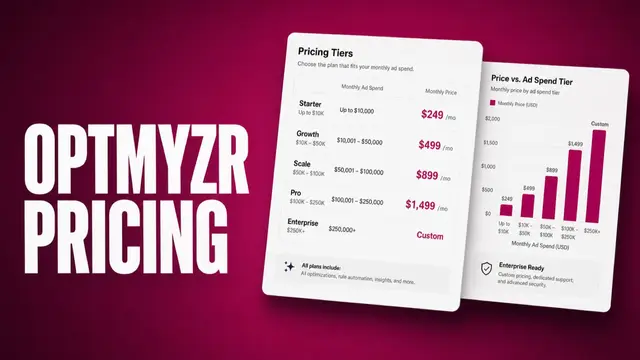
Pricing Model: Pricing scales with ad spend. Essentials starts at $209/month annually ($299 monthly). Premium runs $272/month annually ($389 monthly), while Enterprise needs a custom quote.
Feature Overview Table
Here's a quick breakdown of Optmyzr's core features:
| Feature Category | Key Capabilities | Primary Value |
|---|---|---|
| Rule Engine | Custom IF/THEN automation, custom metrics, scheduled execution | Eliminates repetitive manual optimization |
| Diagnostics | PPC Investigator, N-Gram analysis, Quality Score tracker | Fast root-cause analysis for performance shifts |
| Multi-Platform | Google, Microsoft, Amazon, Meta, LinkedIn, Yahoo! Japan | Centralized cross-channel oversight |
| AI Integrations | AI Sidekick, Model Context Protocol (MCP) for LLMs | Natural language querying and automated insights |
Optmyzr Reviews: What Real Users Are Saying
Aggregating user feedback across G2, Capterra, and Reddit shows that PPC specialists rely on Optmyzr to handle manual account maintenance, but they remain cautious about cost and setup overhead.
Pros
- Massive time savings on daily optimizations: Account managers praise the platform for streamlining repetitive manual tasks. One agency reviewer on Reddit (mdmppc) noted, "Once you get the hang of it, I haven't found any that come close to what they offer."
- Granular rule-based control: Media buyers appreciate building custom logic. A verified media buyer on G2 (Heath K.) highlighted ”These automation capabilities let us build out incredibly specific optimization parameters that improve our overall workflow efficiency."
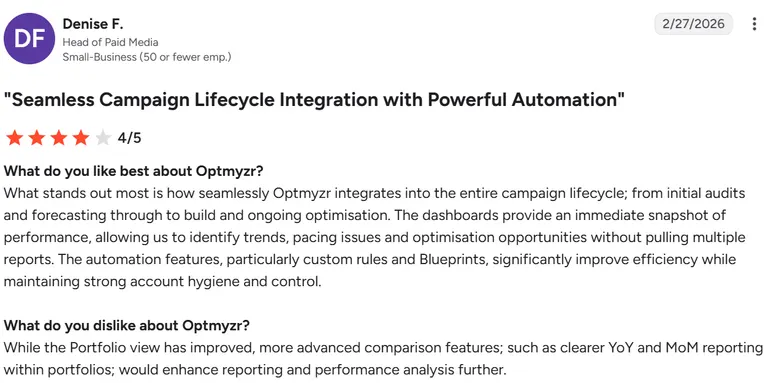
- Cross-account reporting and budget tracking: Users value the reporting dashboards and budget pacing tools. Denise F. on G2 noted, "The dashboards provide an immediate snapshot of performance, allowing us to identify trends, pacing issues and optimisation opportunities without pulling multiple reports."
Cons
- Escalating subscription costs: Pricing scales higher as monthly ad spend or client counts increase. Coffeblaster on Reddit noted that Optmyzr can become "quite a chunky monthly expense as we layer more clients in / spend ramps up."
- Risk of over-automation: Broad changes applied without proper testing can disrupt account performance. Former user, genebadd1, cautioned, "It did more harm than good to my accounts. It's too easy to make sweeping changes across accounts."
- Secondary focus on non-Google channels: While Optmyzr supports channels like Meta and LinkedIn, users note that diagnostic capabilities and feature depth remain strongest in search networks.
“The tool is heavily weighted toward Google Ads functionality, meaning there are far fewer advanced capabilities for platforms like Amazon Ads or Microsoft Ads.” (Betty G., G2 Review, June 25, 2026)
My Personal Take on Optmyzr
In my testing, Optmyzr is technically deep. As a search media buyer, I got noticeably more efficient once the rules were dialed in.
Features like the Rule Engine and N-Gram analysis will help you cut down hours of repetitive query harvesting and bid adjustments. Its multi-condition "if-this-then-that" rules provide a level of oversight that you don't get with native channel interfaces.
The interface is dense, and it takes time to configure custom rules.
Optmyzr now covers Meta and LinkedIn Ads, but the features are inferior to its core Google Ads infrastructure.
I agree with what users say across review communities: Optmyzr speeds up skilled PPC managers' work, but it won't run campaigns on its own.
And if you depend heavily on social ad creative or competitive intelligence, you'll still need dedicated tools outside Optmyzr to fill those gaps.
Is Optmyzr Right for You?
Who will love it:
- Mid-to-large PPC agencies: Teams managing dozens of Google and Microsoft Ads accounts benefit from cross-account pacing, automated auditing, and standardized rule blueprints.
- Technical media buyers: Search specialists who want full control over bidding logic and query harvesting will thrive using the Rule Engine.
- E-commerce brands with massive SKU catalogs: Performance teams running complex inventory-based search campaigns can use Campaign Automator to build and update ad groups dynamically.
Who should avoid it:
- Solo founders and micro-advertisers: If your monthly ad spend is under $10,000, Optmyzr’s starting price of $209/month cuts heavily into your return on investment.
- Paid social-first growth teams: Advertisers spending the majority of their budget on Meta, TikTok, or video creatives will find Optmyzr’s non-search tools too basic for their primary needs.
Optmyzr Alternatives to Consider
If Optmyzr doesn't align with your team's workflow or media mix, several direct alternatives fit different operational needs:
- Adalysis: Built specifically for Google and Microsoft search accounts. It offers over 100 prebuilt daily audit checks to catch issues like wasted spend or missing assets automatically, coupled with a flatter learning curve than Optmyzr's custom Rule Engine.
- Opteo: Ideal for smaller agencies or teams wanting fast, guided wins on Google Ads. It skips complex rule building in favor of a clean, single-click recommendation feed with clear reasoning behind every suggestion.
Bïrch or Madgicx: Tailored for media buyers spending heavily on paid social. While Optmyzr focuses mainly on search logic, Bïrch and Madgicx offer automated scaling, creative fatigue tracking, and auto-bidding workflows built specifically for Meta and TikTok campaigns.
See how they compare in our AI tools for Meta ads agencies roundup.
What Optmyzr Doesn't Cover: Competitor and Creative Intelligence
Across the Optmyzr reviews we analyzed, one gap comes up again and again: it handles bidding, scripts, and search terms exceptionally well, but today’s paid media landscape requires more than keyword adjustments.
Winning on high-scale channels like Meta and TikTok requires continuous creative iteration, rapid concept testing, and real-time market insights.
Atria is built to address this.
While Optmyzr optimizes the technical machinery of search accounts, Atria powers your creative engine.
It tracks competitor ad libraries in real time, extracts winning hooks, and uses AI trained on over $9B in spend data to turn performance trends into actionable creative briefs.
- Unlike Optmyzr's search focus, Atria targets the core performance driver on paid social, ad creative.
- Unlike raw adspy databases, Atria links competitor research directly to script generation and AI asset creation in a single workflow.
- Unlike manual creative reporting, Atria auto-tags video hooks, formats, theme, message, and more so media buyers see why an ad converts.
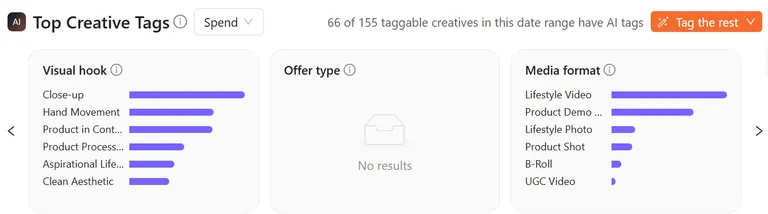
Auto-tagging in Atria
Atria acts as the strategic partner to your tech stack. It handles creative intelligence, so your team scales spend on social while Optmyzr keeps your search campaigns running clean.
Raya tracks your competitors' live ad libraries, pulls the winning hooks, and turns them into briefs, while Radar grades what you launch and flags fatigue before spend leaks. See what Raya surfaces in your account.
Frequently Asked Questions
How much does Optmyzr cost?
Optmyzr pricing starts at $209 per month on an annual plan ($299 per month billed monthly) for the Essentials tier, covering up to $150,000 in monthly ad spend.
The Premium tier starts at $272 per month annually ($389 per month monthly). Rates scale up as total monthly ad spend or account volume grows.
Does Optmyzr manage Meta and LinkedIn Ads?
Yes, Optmyzr supports Meta Ads and LinkedIn Ads alongside search engines like Google, Microsoft, Amazon, and Yahoo! Japan Ads. But its tool depth and diagnostic features remain strongest in search environments.
Is Optmyzr hard to learn?
Optmyzr has a noticeable learning curve. You can set up basic reports fast, but mastering the custom Rule Engine and creating complex blueprints will take time and testing.
Does Optmyzr offer a free trial?
Yes, Optmyzr provides a 14-day free trial without requiring a credit card upfront. This gives you time to connect ad accounts and test audit tools before subscribing.
Can Optmyzr replace a human PPC manager?
No. Optmyzr automates manual tasks, flags performance anomalies, and enforces rules, but it needs an experienced media buyer to design strategy, review changes, and set targets.