
If you are looking to replace AdEspresso, Bïrch (formerly Revealbot) is a great fit for complex Meta and Google rule automation — though it is worth reading what its users actually report before committing. Madgicx leads for AI-driven audience targeting and analytics. Atria fits teams whose bottleneck is creative intelligence and briefs.
These eight AdEspresso alternatives address its three biggest weaknesses: spend-based pricing, thin automation, and zero creative intelligence. Here's what fixes each one.
8 best AdEspresso alternatives: TL;DR
- Atria: Best for growth teams stuck on visual intelligence and creative briefs.
- Foreplay: For creative strategists who need a dedicated ad swipe library and brief builder.
- Adscook: For bootstrapped Meta advertisers who want flat-fee, high-volume A/B testing.
- Adzooma: For local businesses and small agencies that want free multi-channel optimization across Meta, Google, and Microsoft Ads.
- Bïrch (formerly Revealbot): For technical media buyers who need multi-condition rule builders and cross-platform automation.
- Madgicx: For Meta-focused ecommerce brands that want AI-guided audience expansion and creative fatigue monitoring.
- AdManage: For fast-growing agencies that need high-speed, enterprise-style campaign launches.
- Smartly.io: For enterprise brands managing multimillion-dollar budgets that need dynamic catalog automation.
Why look for AdEspresso alternatives?
For years, AdEspresso gave lean agencies and solo media buyers a quick way to run structured creative tests and hand clients clean PDF reports.
But Hootsuite acquired AdEspresso and development slowed. Many growth teams now consider it maintenance-mode software.
Meta's native ad stack now includes Advantage+ campaigns, automated budget optimization, and complex dynamic creative formats. But AdEspresso's feature set remained the same.
Today, four problems push performance teams elsewhere:
- The split-testing model aged past post-iOS realities: AdEspresso was built to test dozens of micro-audiences at once. Under today's attribution windows and signal loss, spreading spend across many micro-tests starves Meta's algorithm and drives up acquisition costs.
- Restrictive ad spend caps and pricing tiers: AdEspresso ties pricing to your monthly ad spend. Costs rise automatically as your accounts scale, even if you're not using more features or getting more value.
- Superficial automation logic: The native rules engine pauses high-CPA ads and little else. It lacks the multi-condition logic, cross-channel triggers, and custom formulas that aggressive scaling strategies need.
- The bottleneck shifted from setup to creative: AdEspresso streamlines campaign structure and ad set permutations. But modern ad performance hinges on creative volume and iteration speed, areas where AdEspresso offers no competitor insight or asset-building tools.
Which AdEspresso alternative should you choose?
- Choose Atria if your team spends more time debating ad ideas than building campaigns, and you need to spy on competitor ads and draft winning briefs fast. Skip it if you want automated bidding.
- Choose Foreplay if you need to build your swipe list and improve creative brief output.
- Choose Bïrch if you need powerful, multi-condition rules to manage Facebook and Google campaigns without watching them all day. Setup takes time to learn, though.
- Choose Madgicx if you want AI to analyze your Meta creative performance and tell you which audiences to target next. Skip it if you're on a tight budget, since costs rise as you scale.
- Choose Adzooma if you're small and want free optimization across ad channels.
- Choose Adscook if you want to create dozens of ad variations fast without extra fees as your spend grows. It focuses on Meta. So it won't help much with Google Ads.
- Choose AdManage if your bottleneck is launch volume across Meta and TikTok, not optimization.
- Choose Smartly if you're managing tens of millions in ad spend and need enterprise-grade automation.
- Stick with AdEspresso if you run smaller Facebook budgets, already use Hootsuite for social posts, and want a simple way to schedule ads and print clean client reports.
8 best AdEspresso alternatives: at a glance
See how pricing and positioning stack up across all eight before diving into the details below:
| 🏆 Platform | 🎯 Best for | 💰 Price |
|---|---|---|
| Atria | Competitor ad research and creative brief output | From $159/mo |
| Foreplay | Saving ad swipe files and building ad briefs | From $59/mo |
| Adscook | Flat-fee bulk A/B testing on Meta | From $29/mo |
| Adzooma | Free basic optimization across multi-channels | Free, or from $69/month |
| Bïrch (formerly Revealbot) | Deep multi-condition rule automation | From $49/mo |
| Madgicx | AI audience targeting and creative analytics | From $45/mo |
| AdManage | High-speed bulk launches for agencies | From £99/mo |
| Smartly.io | Enterprise catalog automation for huge spend | Custom enterprise pricing |
Pricing verified against vendor sites as of August 2026.
The 8 best AdEspresso alternatives
I've grouped these by the reasons for leaving AdEspresso: creative intelligence, price, automation depth, or launch scale. You'll see four short groups below instead of one flat list.
Leaving because your bottleneck is creative intelligence
If AdEspresso managed your campaigns just fine but never told you what to make next, this is your group. Both tools replace the guesswork that usually happens before you open Ads Manager.
1. Atria
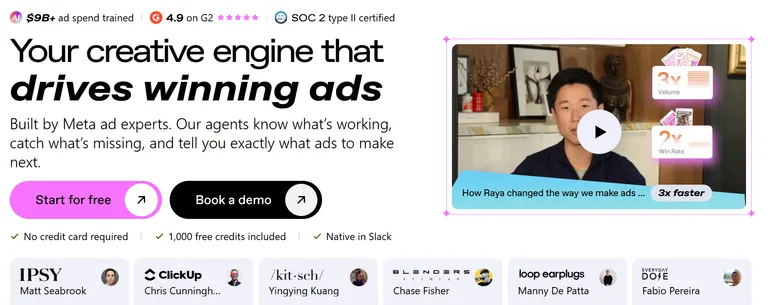
Atria helps performance teams monitor high-performing competitor ads, pull real-time visual inspiration, and turn insights into ready-to-launch creative briefs.
Rubix, a performance marketing agency, cut creative analysis time by 40% and lifted ROAS by 15% using Atria.
Key features
- Competitor ad tracking: See the visual hooks and copy formats your top competitors run at scale, in real time.
- Brief-to-launch workflow: Convert visual inspiration into actionable creative briefs automatically.
- Creative output analytics: Track which visual elements (hooks, angles, CTAs) drive your real business metrics.
Pros
- ✅ Solves the bottleneck in modern ad scaling, which is getting better creative out the door faster.
- ✅ Connects competitor research directly to brief creation, saving media buyers hours of manual work.
- ✅ Surfaces the winning formulas already working across your competitors' ad accounts
Cons
- ❌ Doesn't handle rule-based bid management or automatic budget adjustments.
- ❌ Focused on visual and creative workflow. No multi-channel post scheduling.
Best for
- Growth teams whose ad performance plateaued because they can't produce enough new creative concepts.
- Agencies that spend too much time searching competitor ad libraries and drafting design briefs by hand.
What users say
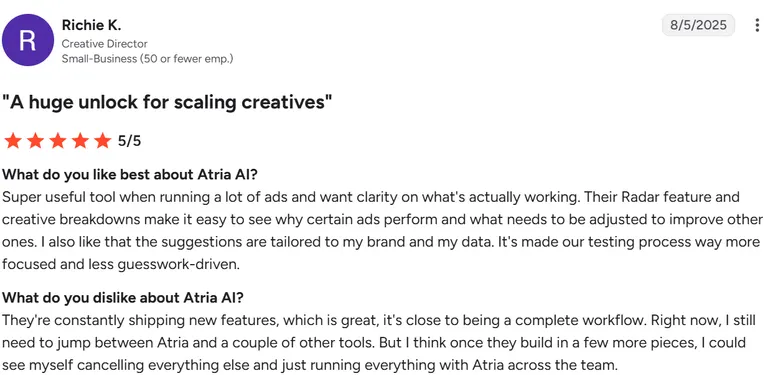
Pro: Radar's performance breakdowns removed guesses from creative testing.
“Their Radar feature and creative breakdowns make it easy to see why certain ads perform and what needs to be adjusted to improve other ones” (Richie K. G2 Review, August 5, 2025)
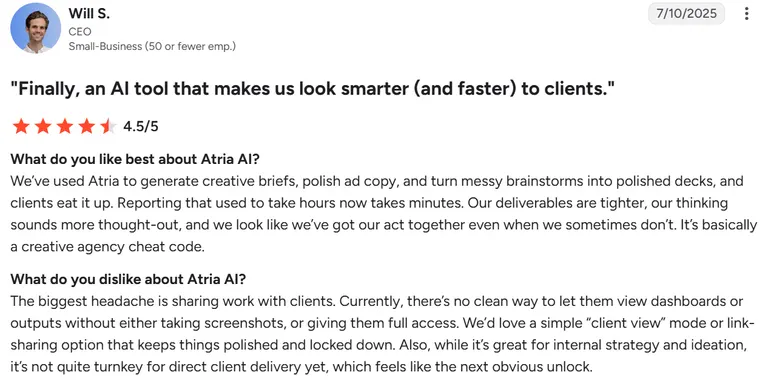
Con: There's no easy way to share dashboards with clients short of screenshots or full account access.
“The biggest headache is sharing work with clients.” (Will S. G2 Review, July 10, 2025)
Pricing: Starts at $159/month ($129/month billed annually). Higher tiers scale with team size and workspace needs.
2. Foreplay
Foreplay replaces messy screenshot folders with a Chrome extension that clips live ads straight from Meta, TikTok, and LinkedIn.
Key features
- One-click swipe file extension: Save live ads, including video files, ad copy, and landing pages, directly into organized team boards.
- Spyder competitor tracking (available on the $175/month Workflow plan): Get automated alerts when your target competitors launch new ad creative.
- Visual brief builder: Build creative briefs, transcriptions, and storyboards with drag-and-drop tools.
Pros
- ✅ Saves hours building a swipe file by hand since the extension captures ads directly from your feed
- ✅ Makes sharing creative mood boards with freelance creators and video editors easy.
- ✅ Flat pricing tiers that don't increase with your monthly ad spend.
Cons
- ❌ Doesn't generate finished ad graphics or publish ads to Meta or Google.
- ❌ Competitor tracking and creative analytics require the $175/month plan.
Best for
- Creative strategists and agencies producing large volumes of UGC video ads.
- Design teams that need an organized, shareable library of competitor references.
What users say
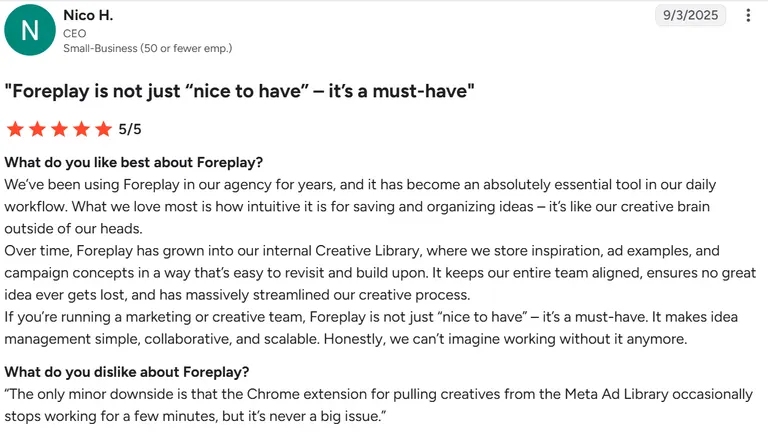
Pro: Foreplay became the agency's permanent creative library, keeping the whole team aligned on inspiration.
“We've been using Foreplay in our agency for years, and it has become an absolutely essential tool in our daily workflow.”
(Nico H., G2 Review, March 9, 2025)
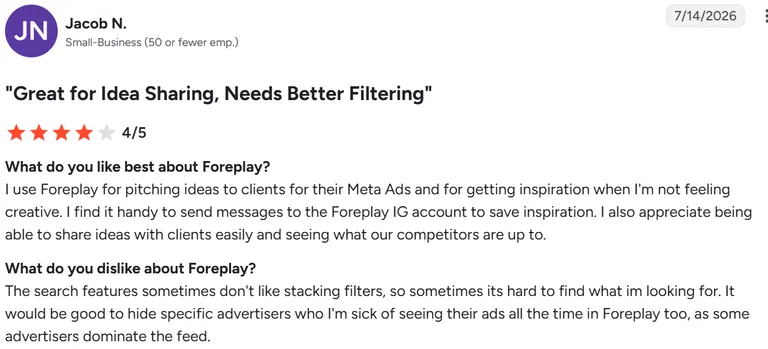
Con: Stacked search filters are unreliable, and there's no way to mute overrepresented advertisers.
“The search features sometimes don't like stacking filters, so sometimes it's hard to find what I'm looking for.” (Jacob N., G2 Review, July 14, 2026)
Pricing: Basic plan starts at $59/month (1 seat). Workflow plan costs $175/month (5 seats plus competitor tracking).
Leaving because of price or spend caps
If AdEspresso's $1,000 spend cap or the jump to $99/month is what's pushing you out, these two solve that specifically. Neither tool asks you to pay more as you scale.
3. Adscook
AdEspresso and Adscook both scale software cost with ad spend, but Adscook's tier jumps are smaller and more predictable at each spend level.
Key features
- Matrix ad generator: Combine headlines, media files, and descriptions into hundreds of unique ad variants in a few clicks.
- Automated rules engine: Set custom logic to scale budget, pause underperforming ads, or adjust bids based on live ROAS and CPA targets.
- Real-time funnel analytics: Track conversions across your funnel to see which creative variations drive actual revenue.
Pros
- ✅ Flat-rate pricing means no higher software bills as you scale ad spend.
- ✅ Visual combination tester makes creating hundreds of Meta ad variations fast and organized.
- ✅ Cleaner dashboard than Meta Ads Manager.
Cons
- ❌ Lacks deep Google or TikTok features, staying mostly tied to Meta.
- ❌ No competitor ad spying tools or built-in brief builders.
Best for
- Ecommerce brands and media buyers running large-scale creative A/B tests on Facebook and Instagram.
- Advertisers tired of paying percentage-of-spend penalties on scaling accounts.
What people say
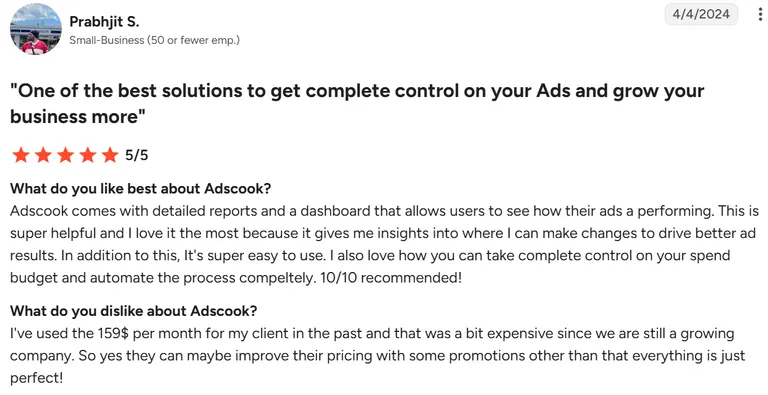
Pro: Detailed reporting dashboard plus full automated control over spend budgets.
“Adscook comes with detailed reports and a dashboard that allows users to see how their ads are performing.” (Prabhjit S., G2 Review, April 4, 2024)
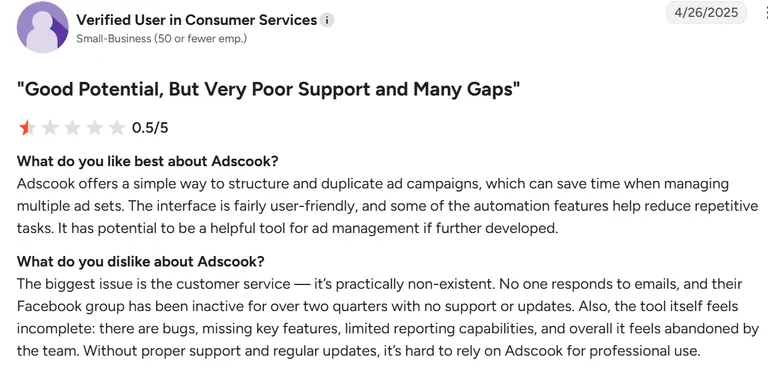
Con: Support is effectively dead, and the product itself feels unfinished and abandoned.
“The biggest issue is the customer service” (Verified User in Consumer Services, G2 Review, April 26, 2025)
Pricing: Plans start at $29/month for up to $5K in ad spend, scaling up to $1,999/month at $3M in spend
4. Adzooma
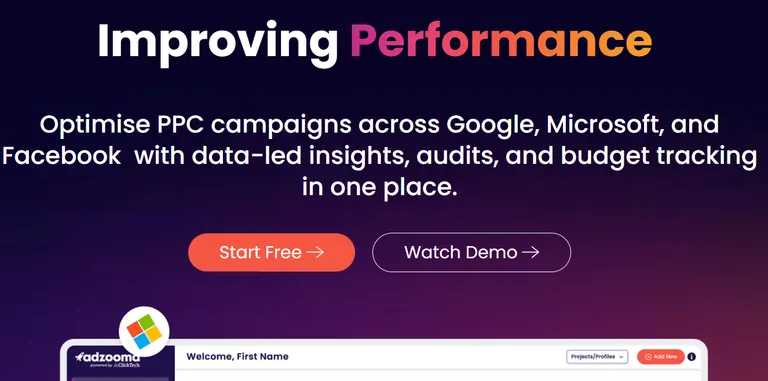
Adzooma targets businesses that can't afford enterprise software fees just to monitor campaign health.
Key features
- Multi-channel opportunity engine: Run automated audits that scan Google, Meta, and Microsoft campaigns for quick fixes.
- One-click optimizations: Apply fixes, like adjusting keyword bids or adding negative match keywords, with one click.
- Cross-channel reporting: Combine search and social ad metrics into unified client reports.
Pros
- ✅ Generous free plan gives small accounts real optimization suggestions at no cost.
- ✅ One login instead of three, so you're not toggling between Meta, Google, and Microsoft dashboards to catch the same problem.
- ✅ Plain-English recommendations make PPC management simple for beginners.
Cons
- ❌ Automation is fairly basic compared to technical rule engines like Bïrch.
- ❌ Opportunity suggestions can feel generic for highly specialized ad strategies.
Best for
- Local businesses, freelancers, and small agencies that need simple cross-channel ad management.
- Media buyers who want a free auditing safety net to catch wasted spend fast.
What people say
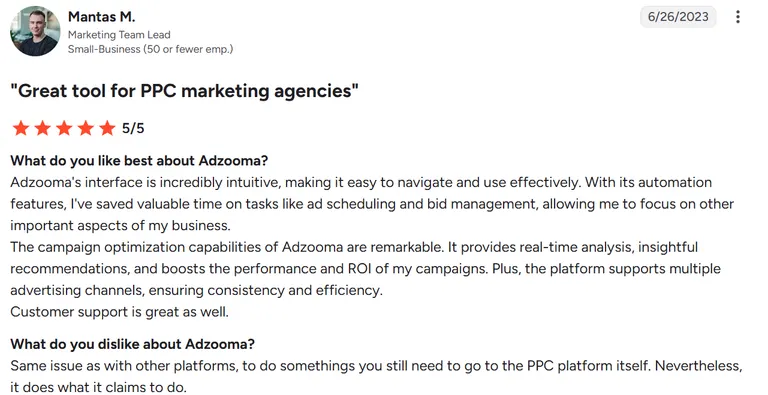
Pro: Intuitive interface and automation save real time on scheduling and bid management.
“Adzooma's interface is incredibly intuitive, making it easy to navigate and use effectively.” (Mantas M., G2 Review, June 26, 2023)
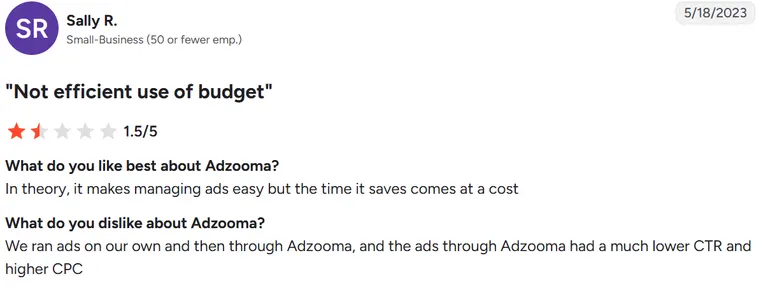
Con: A direct side-by-side test showed Adzooma-run ads underperformed self-managed ads on CTR and CPC.
“We ran ads on our own and then through Adzooma, and the ads through Adzooma had a much lower CTR and higher CPC.”
(Sally R., G2 Review, May 18, 2023)
Pricing: Free tier available. Paid plans start at $69/month for unlimited seats and advanced reporting.
Leaving because you've hit an automation ceiling
Both tools go deeper on automation than AdEspresso does, at the cost of a real learning curve.
5. Bïrch (formerly Revealbot)
AdEspresso handles simple rules, like pausing an ad when CPA hits a set dollar amount. That logic breaks down fast once you're managing complex scaling strategies.
Key features
- Advanced rule builder: Create nested 'AND/OR' logic using custom variables, trailing timeframes, and custom metrics.
- Cross-platform automation: Apply rule strategies across Meta, Google Ads, TikTok, and Snapchat from one dashboard.
- Auto-creation workflows: Spawn hundreds of ad variations using standardized naming and custom post IDs to keep social proof intact.
Pros
- ✅ Rules engine is far more capable than AdEspresso's native features or Meta's basic rules.
- ✅ Keeps likes, shares, and comments intact across ad sets by preserving post IDs during updates.
- ✅ Multi-platform support lets you run unified automation across search and social.
Cons
- ❌ Setup takes time and requires a solid grasp of logic flows. It isn't beginner-friendly.
- ❌ Monthly pricing scales up quickly with your ad spend.
Best for
- Performance agencies and media buyers running aggressive scaling strategies that need 24/7 rule automation.
- Growth teams managing campaigns across multiple platforms who want one centralized rules engine.
What people say
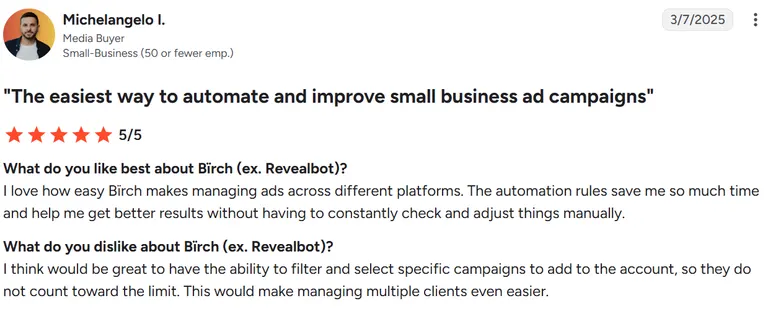
Pro: Cross-platform automation rules save time and reduce manual monitoring.
“I love how easy Bïrch makes managing ads across different platforms.” (Michelangelo I., G2 Review, March 7, 2025 )
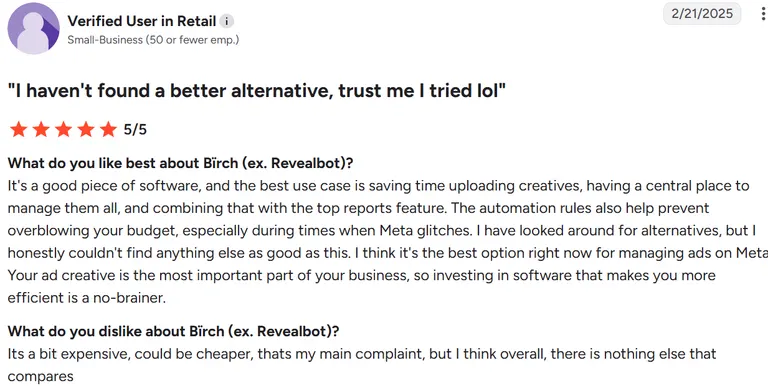
Con: Pricing is the main gripe, though the reviewer still sees no real competitor alternative.
“It's a bit expensive, could be cheaper, that's my main complaint, but I think overall, there is nothing else that compares.”
(Verified User in Retail, G2 Review, February 21, 2025)
Pricing: Starts at $49/month for up to $10k in monthly ad spend, scaling up from there.
6. Madgicx
Madgicx does the heavy lifting if you're tired of digging through Meta's Ads Manager to find which creative angle or audience segment drives sales.
Key features
- Autonomous budget optimizer: Shift budget toward high-performing ad sets and scale winning campaigns automatically, in real time.
- Audience studio: Access pre-built lookalike, retargeting, and interest-based audience combinations backed by AI analysis.
- Creative insights dashboard: See which visual elements, copy formats, and hooks bring in revenue.
Pros
- ✅ AI recommendations give clear, actionable directions instead of vague data points.
- ✅ Creative analytics reveal performance trends across formats without spreadsheet work.
- ✅ Built-in automation handles routine budget reallocations, so you don't check accounts hourly.
Cons
- ❌ Can feel overwhelming at first with so many dashboards and metrics.
- ❌ Pricing scales with ad spend, so it gets pricey as budgets grow.
Best for
- Meta-focused ecommerce brands expanding audience targeting with AI guidance.
- Media buyers who want deep visual performance reporting without building custom dashboards.
What people say
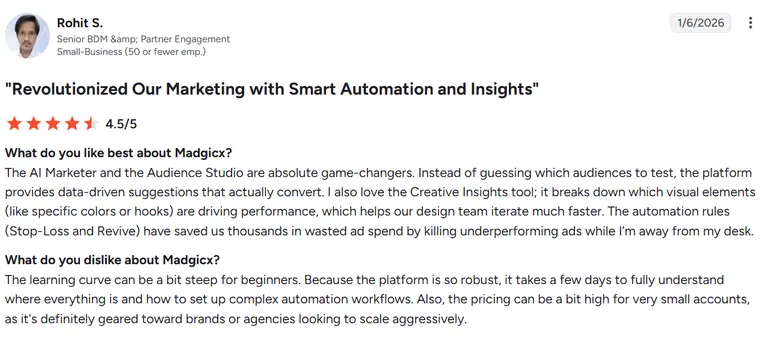
Pro: AI-driven automation rules cut wasted spend by killing underperforming ads automatically.
“The AI Marketer and the Audience Studio are absolute game-changers” (Rohit S., G2 Review, January 6, 2026)
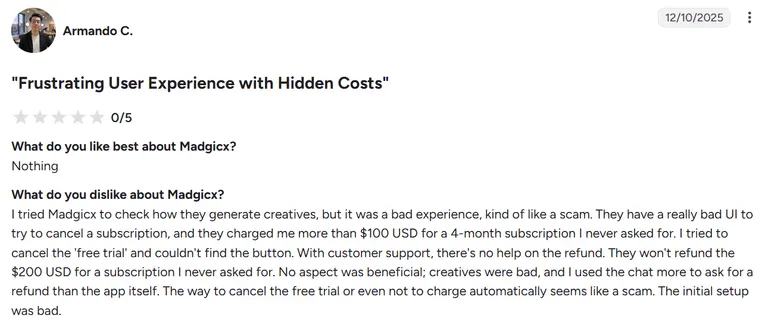
Con: Cancellation is deliberately hard to find, leading to unwanted charges and refusal to refund.
“They have a really bad UI to try to cancel a subscription” (Armando C., G2 Review, December 10, 2025)
Pricing: Starts at $45/month for smaller budgets, scaling up to $329/month as ad spend grows.
Leaving because you need multi-platform or bulk scale
If your problem is volume and you’re launching more ads across more platforms than AdEspresso can keep up with, these two solve that.
7. AdManage
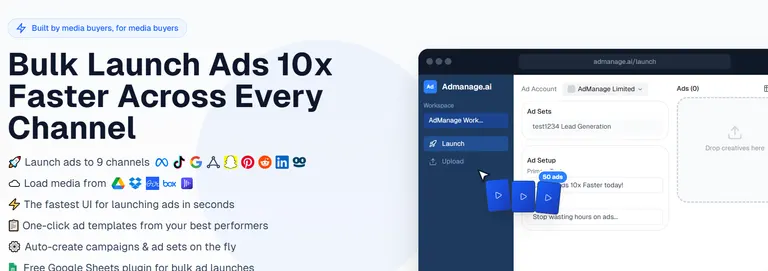
Manually building campaigns in Meta, TikTok, and Google Ads becomes a massive bottleneck at high client volumes. AdManage cuts that setup work out.
Key features
- Multi-channel bulk launching: Launch campaigns across Meta, TikTok, Google Ads, Snapchat, and LinkedIn from one setup screen.
- Auto-grouping and aspect ratio matching: Upload mixed media files and let the system pair 9:16 story formats with matching 1:1 feed posts.
- One-click copy templates: Apply pre-approved primary text, headlines, and UTM parameters across entire campaign sets instantly.
Pros
- ✅ Drastically cuts campaign launch time for agencies managing large numbers of ad variations.
- ✅ Reuses post IDs to keep social proof like comments and likes intact.
- ✅ Clean workspace built for media buyers who hate native setup wizards.
Cons
- ❌ Doesn't offer automated bidding rules as advanced as Bïrch.
- ❌ Not built for deep competitor ad research or brief creation.
Best for
- Fast-moving agencies that launch dozens of new creative variations every week.
- Growth teams managing campaigns across Meta, TikTok, and Google that want to speed up execution.
What users say
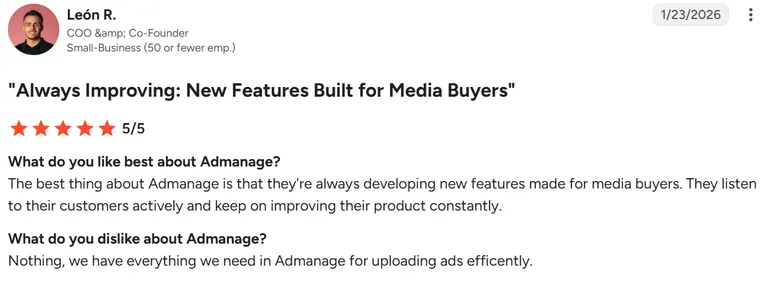
Pro: Actively developed with new media-buyer-focused features shipped in response to customer feedback.
“The best thing about Admanage is that they're always developing new features made for media buyers.” (León R., G2 Review, January 23, 2026)
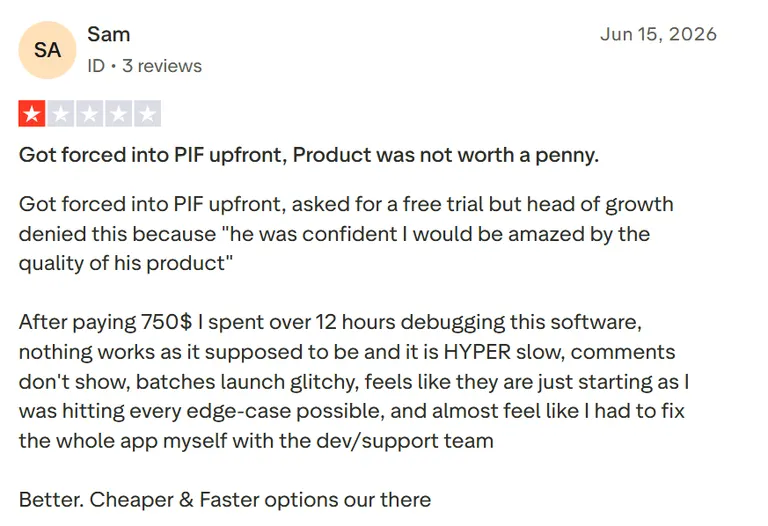
Con: Reviewer was denied a free trial and pushed into a $750 upfront payment, then hit over 12 hours of debugging. The reviewer felt like they were doing the dev team's QA work for them.
“Got forced into PIF upfront, asked for a free trial but head of growth denied this because ‘he was confident I would be amazed by the quality of his product’” (Sam, Trustpilot Review, June 15, 2026)
Pricing: Plans start at £99/month (about $134/month), but that entry tier covers just 1 ad account on 1 platform.
The multi-platform bulk launching described above needs the In-house plan at £499/month (about $675/month, 5 accounts, 9 platforms) or the Agency plan at £999/month (about $1,352/month, 10 accounts).
GBP-to-USD conversions are approximate and change with exchange rates.
8. Smartly.io
Smartly is built for global retailers, airlines, and CPG brands spending six or seven figures on ad spend.
Key features
- Feed-driven creative automation: Turn raw ecommerce product catalogs into dynamic video and image ads automatically.
- Multi-platform orchestration: Launch and manage dynamic ad campaigns across Meta, TikTok, Google, Pinterest, and Snapchat.
- Brand governance and approval flows: Built-in compliance tools keep every generated ad within enterprise brand guidelines.
Pros
- ✅ Unmatched scale for ecommerce brands with huge catalogs and international localized campaigns.
- ✅ Automated dynamic templates save thousands of hours of manual design work.
- ✅ High-level enterprise support and custom account management.
Cons
- ❌ Extremely expensive. Minimum contract commitments run thousands of dollars per month.
- ❌ Steep learning curve with long onboarding cycles for your team.
Best for
- Large enterprise brands managing thousands of SKUs across multiple international markets.
- Global agencies with massive monthly budgets that need deep catalog automation.
What people say
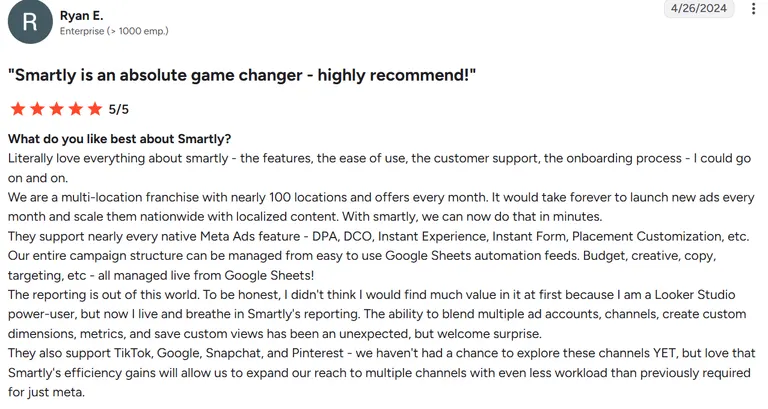
Pro: Smartly turned a months-long, 100-location localized ad rollout into a minutes-long task.
“It would take forever to launch new ads every month and scale them nationwide with localized content. With Smartly, we can now do that in minutes.” (Ryan E., G2 Review, April 26, 2024)
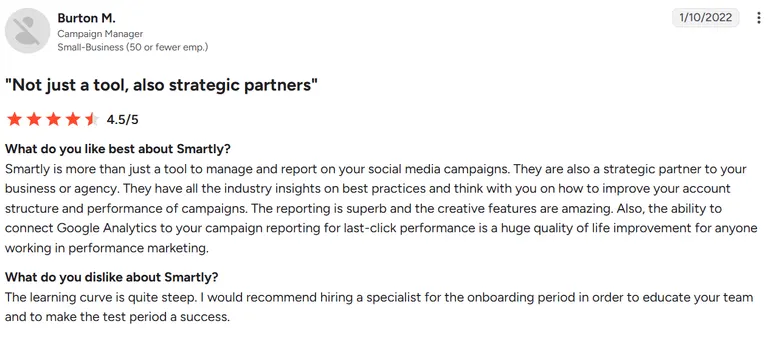
Con: Steep learning curve that's best handled by bringing in an onboarding specialist.
“The learning curve is quite steep.” (Burton M., G2 Review, January 10, 2022)
Pricing: Custom enterprise pricing, typically structured as a percentage of managed spend with minimum monthly commitments. Smartly doesn't publish rates
How to evaluate AdEspresso alternatives
Choosing the right alternative comes down to finding where your current workflow breaks down. Focus on these criteria to figure out what your team needs.
- Identify your actual scaling bottleneck: Figure out if your team wastes time on campaign setup, fights complex rule logic, or runs out of fresh ad concepts. An automation platform won't save you if you don't produce enough winning ads.
- Watch for the ad-spend tax: Many platforms charge higher fees as your ad spend grows, even without extra value. Look for flat-rate or usage-based pricing so scaling up doesn't cost you more in software fees.
- Check rule complexity and trigger types: Confirm the tool offers multi-condition rules, trailing timeframes, and custom metrics. Basic rules that pause ads after one CPA spike can kill promising campaigns before Meta's algorithm stabilizes.
- Weigh multi-channel support against platform depth: Decide if you need deep Meta features alone or broad coverage across Google, TikTok, and Microsoft Ads. A tool that handles multiple channels lightly isn't always better than one that masters Facebook and Instagram.
- Look for creative brief and swipe file integration: Check if the platform connects ad research to creative production. If saving inspiration and building briefs takes hours outside the app, you're losing real team efficiency.
An AdEspresso alternative which isn't another patchwork tool
If you've relied on AdEspresso for years, it's easy to think you just need a better split-testing matrix or a faster dashboard. But modern ad performance has changed.
Scaling, these days, is limited by your ability to find winning creative concepts and turn them into fresh ads.
If your ad spend has plateaued, another traditional campaign management tool won't fix the core problem. You don't need an app that tweaks bids by 5% or pushes button variations.
Instead, you need clear visibility into what's converting in your market, and a direct way to turn those insights into winning creative assets.
See how Atria helps you uncover competitor ad intelligence and build winning creative briefs.
Frequently Asked Questions
Is AdEspresso still supported and worth using?
Yes. AdEspresso is still supported, but it's entered maintenance mode since Hootsuite acquired it. It's fine for smaller businesses that want simple A/B testing and clean PDF reports. Performance teams scaling aggressive budgets usually outgrow it.
Why are marketers moving away from AdEspresso's split-testing model?
Marketers are moving away from AdEspresso's split-testing model because it was built to split ad spend across dozens of micro-audiences and small ad variations.
Under today's attribution limits and post-iOS signal loss, spreading your budget across too many micro-tests starves ad platform algorithms and raises acquisition costs instead of finding clear winners.
What is the best free AdEspresso alternative?
Adzooma is the strongest free AdEspresso alternative. Its free plan connects to Meta, Google, and Microsoft Ads, and provides automated account audits and plain-English optimizations at no cost.
Which alternative is best for automated rules on Facebook and Google ads?
Bïrch (formerly Revealbot) is the best AdEspresso alternative for advanced automated rules. It lets you set multi-condition rules, custom metrics, and trailing timeframes across Meta, Google, TikTok, and Snapchat.
Do all AdEspresso alternatives charge based on ad spend?
No, not all AdEspresso alternatives charge based on ad spend. Bïrch and Madgicx raise prices as your ad spend scales, but Adscook, Foreplay, and Atria offer flat-fee tiers that don't penalize you for growing your ad accounts.