Medical Services Ads on Meta
Browse Medical Services ads running on Meta, updated daily. Atria helps you find the Medical Services ads that are trending on Meta. Start for free on Atria.



⚡️ Low energy
👎 No motivation
😔 Low mood
💪 Loss of strength and muscle mass
One or more of these sound familiar? Check your levels with a simple blood test. Order today with 38% off.

✔ 100% Free with Medicaid
✔ Open 12 hours a day
✔ Free transport, including pick up, drop off, and provider visits
✔ We work directly with your insurance
✔ Licensed for safety
✔ Get daily updates
✔ Physical, occupational, and speech therapy

⚡️ Low energy
👎 No motivation
😔 Low mood
💪 Loss of strength and muscle mass
One or more of these sound familiar? Check your levels with a simple blood test. Order today with 38% off.

⚡️ Low energy
👎 No motivation
😔 Low mood
💪 Loss of strength and muscle mass
One or more of these sound familiar? Check your levels with a simple blood test. Order today with 38% off.


Make high converting ads 10x faster
AI-powered ad creative platform for insights, inspirations, and ideations.



We were diagnosed the same spring, at 52. Her doctor took her off her pill. I was on two, and still high. The morning after my cousin's funeral, my husband's drugstore cuff had read 168 over 100. I put it back in the box. I was too f*cking scared of the number. What that doctor asked, and what my sister answered, is why I'm still here.
The first thing you should know is that I was the one lying in the bed.
Heart unit, St. Ann's, Columbus, Ohio. Wires stuck to my chest, a screen beeping with every beat of my heart. Two days I'd been in there. How I got there is the middle of this story, and I'll get to all of it. But this part has to come first.
The door swung open, and in walked my sister.
She'd come almost four hundred miles in a hired van. Black bonnet held in both hands, plain dark dress, a white prayer covering on hair that had mostly gone gray. In her whole life she'd been out of Lancaster County maybe four times.
My husband needed two days to get word to her, because nobody phones an Amish farm. You ring a little shack at the bottom of a dirt lane, and you wait, and you pray somebody walking past hears it.
She stopped in the doorway of my room, and the nurse right behind her froze.
Because this is the thing about my sister and me. Thirty-nine years apart. Different food, different lives, different worlds. And still the same face. Same hands. Same walk.
The nurse looked at her, then me, then her again, the way folks have done since we were small. Only this time it wasn't funny. Everybody in that room felt it, and nobody said so.
She took the chair by the bed. Said very little. Amish women don't talk much, and my sister talks least of all.
She set her bonnet on her knee and looked at the monitor. Then she looked at me, calm and steady, the way Daed used to look down a fence line to see if it ran straight. And there we sat, the same woman twice, born eleven minutes apart, one in the bed and one in the chair beside it.
Same blood, same age. What her own pressure had done, the pills, the years, I didn't know any of that yet. I learned it in the cellar.
That's when the cardiologist walked in holding my chart.
Two steps in, he stopped. Looked at my sister. Looked at me. Looked down at the chart as if it might tell him something, then up again. I watched him add it up. Twins. Identical. One of them hooked to the wall.
Then he asked me the question.
I won't hand it to you yet. It was eleven words, and it wasn't a doctor's question at all. It just slipped out of him, and the room went dead quiet.
My sister answered, not me. Four words back, in that flat Dutch way of hers. What she said is the reason I'm writing to you, and the reason I'm still here to do it.
You'll get them both, his question and her answer, before the end. Not yet, though. You can't hear them right until you know what put me in that bed while the woman wearing my face was out stacking hay at 58.
Let me go back. Clear back.
My name is Loretta Kemp. I was born Lydia Yoder. I borrowed Loretta off a diner name tag my first month out, and Kemp came with husband number two. My sister is Esther Yoder, Esther Beiler since she married, which out there is like marrying a Jones, and she is the last person alive who still calls me Lydia.
If you know the Amish at all, you know we could knock on any farmhouse door in Lancaster County and turn out to be cousins. Half the mailboxes out there say Yoder.
That's the family I came from. Seventy-six acres outside Bird-in-Hand, Pennsylvania, yes, a real town, and no, nobody there finds the name cute. Third and fourth of seven children, born in an upstairs bedroom with no electric in the walls, eleven minutes between us.
Esther first. She has never let me forget it, not once.
Today I'm about as English as a woman can be. Thirty-one years I've run a house-painting crew outside Columbus. Pickup, mortgage, satellite dish, one marriage that fell apart and one that held.
I eat what painters eat in gas station lots at six in the morning. And until last summer, I hadn't seen my sister's face in thirty-nine years, except in my own mirror, getting older.
So let me say one thing plain, right here, because everything that follows hangs on it:
Not one speck of difference between my sister and me came with us at birth. Same mother, same father.
Same blood. Same genes. Identical, the doctors told me more than once, like they were handing me the receipt. We were even diagnosed with the same stage 2 high blood pressure the same spring, both 52. Mine read 162 over 100.
Hers read 160 over 98, she told me later. Same blood, same numbers. Whatever you read from here, you can't blame it on the luck of the draw, because we drew one card. She is me. I am her.
One of us farms at 58, and one of us got hooked to a wall at 58, and those eleven minutes had nothing to do with it.
The thirty-nine years did.
I have to show you the farm quickly first, or you'll think I ran from something bad. I didn't. I ran from something good that I just couldn't breathe in.
Seventy-six acres, dairy and corn. A garden that fed nine of us straight from the dirt, not from a store with a garden painted on the box.
Mamm put up over four hundred jars a summer, and hauling them down cellar was Esther's job and mine every October, shoulder to shoulder on those steps. Green beans, chowchow, peaches, tomatoes.
And garlic. A whole wall of it, braided and hung from the beams, a smell that got into everything. The rafters, the rags, your fingers.
Mamm grew it in a long bed behind the summer kitchen, and it went into nearly every pot on that stove. The best heads she sealed in a crock by the stove till they went black, and years later, after her diagnosis, Esther started eating those black cloves every day. Hang onto the garlic. This story ends in that corner of the cellar.
Every one of us worked, and Esther loved it. That's the plainest way I know to tell you the difference between two identical girls. Five in the morning we'd be milking, same stalls, same cows, same cold, and Esther was right where she belonged, and I was counting the days.
She'd look down a plowed row and see order. I'd look down the same row and see forty more years with no way out, and then a plot in the graveyard down the road.
Some women find that lovely. My twin does. To me it felt like a weight on my chest.
For me it was motors. Our cousin Verna had gone English two years before me, and some evenings she'd leave her Ford down the road and I'd sit behind the wheel. Once she let me drive it around a square of fields, and that settled it. Some girls it's a boy. Some it's the city. Mine was second gear.
Remember Verna. Apart from the woman in the bonnet, nobody matters more in this story.
I left one June night in 1986. Boots in hand, duffel on my shoulder, down the same steps I'd hauled jars on all my life. And here's what's different when you're a twin. I slipped past Daed's door. I slipped past Mamm's.
But when I reached the lane where Verna waited with her lights off, Esther stood at the fence.
Nineteen, in her nightgown, in the dark. The one person I could never fool.
She didn't stop me. She didn't even speak. That's what I carried all those years. Not one word.
She only stood with both hands on the rail and watched me throw the duffel into the car, and when I turned back from the open door, my own face looked at me from the fence line, and it wasn't mad.
She was doing the math. Even back then, I think she was doing the math.
I climbed in. Verna rolled out slow with the lights still dark, and I watched my sister in the side mirror till she was gone in the dark. I didn't see her again for thirty-nine years. Not until a June funeral. But I'm running ahead.
Now the English years, and I'll tell them straight, the way I'd want another woman to tell me.
The early ones were good. My own money in my own pocket. A truck, then a nicer truck. Work I was good at. I can cut a ceiling line by hand quicker than painters half my age, or I used to. Married at twenty-seven, lost that one at thirty-five, married the right one at forty-one. Curtis. He's why there's any more to this story.
And the food. Folks ask what's really different out here and they figure I'll say electric. It's the food. I went from a table where every last bite grew in our own ground that year, to a gas station at six, a drive-thru at noon, and whatever's fastest at supper because everybody's beat.
Thirty-nine years. And for the first twenty, I'll be honest, I loved it. It tastes like freedom. It's made to.
Mamm's cellar held four hundred jars and a wall of garlic. Mine in Columbus holds a water heater and the Christmas boxes.
Somewhere in my mid-forties, the knees gave out, and the ladders got heavier. Not one day in particular. They just got heavier, and I sent the young fellows up instead, and told myself that's what young fellows are for. By fifty-four I was tired in a way sleep didn't fix.
I was asleep in the recliner by eight-thirty, remote still in my hand. Curtis laughed about it for a couple of years. Then he quit laughing and just watched me, and a woman can tell the difference even when she pretends she can't.
Hardly any doctor. The knees I looked after myself. A big warehouse jug of anti-inflammatories, two every morning, four on ladder days. At 52 an insurance physical read 162 over 100, stage 2, and the clinic wrote me a pressure pill. I took the pill and changed nothing else, recliner at eight-thirty, drive-thru at noon. At 55 they added a second one, and it still read in the 150s over 90s.
I tried beetroot powder in my coffee, beet chews, cutting the salt. Nothing got me to normal, and I was worn out all the time. After that it was refills by phone, in and out in ten minutes when they made me come in. I've had plenty of time since to chew on that, because back where I was raised, you don't spend one day of your life unwatched.
The church, the family, everybody in everybody's kitchen. At nineteen it smothered me. Not till fifty-eight did I see it had been looking after me the whole time. Somebody would've spoken up about the recliner at eight-thirty. Somebody would've said something about the stairs.
Out here I finally got what I wanted. Nobody watching. Thirty-nine years it took me to find out the price.
Then, last June, Verna died.
Stay with me on this part, because I had to.
Verna. The cousin with the Ford, the one who drove me away, the first taste of freedom I ever had. She'd made a good English life, same as me. Driving a school bus, then running a little diner outside Wheeling. Big laugh, bad knees, a woman you figured would outlast us all.
Her husband found her in her recliner one Sunday morning. The TV still on.
She'd passed sometime in the night, asleep, right in the chair. And the coroner wrote down the word you already guessed. Heart. Massive, they told him, which is a strange thing to tell a man who just lost his wife, like he needed to know the size.
She was sixty.
The call came on a job site and I had to go sit in my truck. Not from the shock. Because there wasn't any.
That's what I couldn't say out loud to a single person. Deep down I knew something I'd been dodging since 1986. Verna and I ate at the same six o'clock gas stations for decades. Verna and I had the same knees, and the same big jug on our kitchen windowsills.
Verna and I had run one road. She was two years in front of me.
She'd always been two years in front of me.
It was an English funeral, but Lancaster County turned out. Folks don't know this. The Amish come to your burying even if you left, even if you never wrote, because a funeral isn't about what you chose.
Two vans full came from the county. Black hats in a Wheeling funeral parlor, plain dresses filling the pews, and everybody in that room made space for them.
I was a pallbearer. Six of us carried Verna out into the June sun, and I had the front left handle, and I'll tell you just what went through my head with that handle digging into my hand, because it's the darkest thought I've ever had, and this story is worthless if I lie:
I thought, this is the box. This is the box, and this is how heavy it is, and these are the folks who'll carry mine, and it'll be soon, and every person here sees it but me.
And when we lowered her at the grave, I looked up, and across the casket, among the black dresses, there was my own face.
Thirty-nine years. Esther had come for Verna, of course. Verna was ours before she was English. My twin, gray now under her covering, across a grave from me with my eyes, and neither of us took a step.
Do you see what I'm telling you? Last time I saw my sister was a dark fence line in 1986, and the next time was over the coffin of the woman who drove the getaway car. And my feet would not carry me to her.
Pride is its own shunning. You do it to yourself, from the far side.
All through the graveside prayer she watched me. Level. Steady. Reading me like Daed read a fence. And when it ended and the bonnets started for the vans, she paused at the edge of the grass and looked at me once more, and I turned my head.
I turned my head. Fifty-eight years old, and I looked away, and by the time I got up the nerve, the van was rolling.
That night Curtis asked why I was so quiet. I said funerals. He left it alone. I sat up by myself with the TV off, doing the same math Esther had been doing since that night at the fence. Verna, sixty, in the chair.
Me, fifty-eight, in the recliner every night by eight-thirty. Same road. Same food. Same bad knees. Same jug. Same run.
Two years behind her. Always two years behind her.
I wish I could say I saw a doctor that week. I didn't. The next morning I wrapped Curtis's drugstore cuff around my arm, six years on pressure pills, two of them by then, and it read 168 over 100, and I packed it back in the box and told nobody.
I want that written down, because some of you have your own morning like that, and I need you to know I understand. I was scared of the number, so I chose not to have one.
That's all the reasoning there was. Nobody fixes a house nobody's watching.
I got four months.
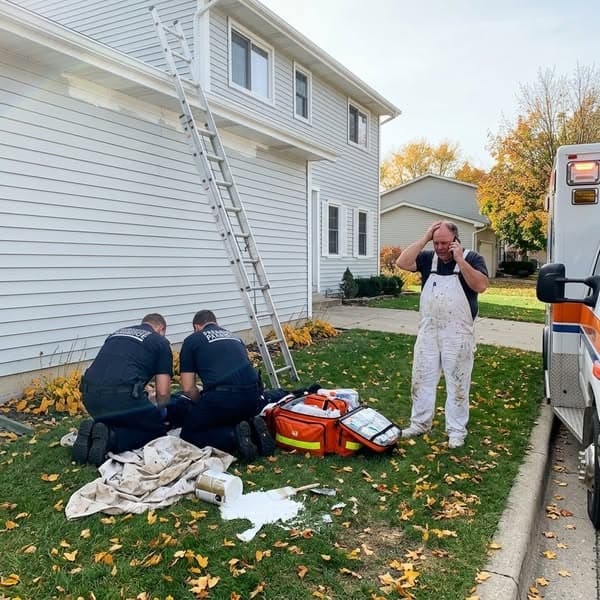
October. A Tuesday. We were painting a two-story outside Dublin, and I climbed the ladder with a cutting brush and a quart of trim white the way I've climbed all my life, and up at the top something went wrong.
An elephant sat down on my chest. That's the only way I can put it and it's how everybody puts it, because it's dead right.
A weight pressed down on me like nothing I'd ever felt, and my left arm went wrong. Not hurting, exactly. Wrong. Cold, heavy, somebody else's. The rungs started to swim, and way off somewhere Rusty, my foreman, was hollering my name in a voice I'd never heard from him in twenty-two years.
I don't recall choosing to come down. You'd figure folks fall off ladders when the heart quits. Not as often as you'd think. Your body just gets you down somehow. I recall the grass.
I recall Rusty's face above me, upside down, and his voice on the phone, and I recall, and this is the one that stays, thinking, as the sky went white around the edges:
Verna died in her chair. I'm going to die in a yard somebody's paying me to be in. And my sister is going to stand at one more grave wearing my face, and I never once walked around that coffin.
That was the whole of my prayer. Not Curtis, God forgive me. Not my girl. The coffin I didn't walk around.
The squad came in eleven minutes. Widowmaker, they call it, the big artery down the front, over ninety percent shut, and I'll skip the hospital tour except for this.
A stent, two days on the heart unit, and a surgeon who told Curtis in the hall, in that voice they have, that twenty minutes more and he'd have been picking out a dress to bury me in, not bringing me a clean one.
Fifty-eight. Eleven minutes younger than a woman out stacking hay, on the same diagnosis, the same first pill, who didn't take a single pressure pill anymore.
And now you're caught up.
Now you're right back where this began. A heart ward in Columbus, a screen beeping, a door swinging open, and a gray-haired Amish woman with my face who'd come almost four hundred miles, because her brother-in-law found the number of a phone shack, and because that's what you do.
Even after thirty-nine years. Even for the one who turned her head at the grave. A funeral isn't about what you chose, and it turns out a hospital room isn't either.
She sat with her bonnet on her knee. And the cardiologist came in, and stopped, and looked from her to me, and asked his eleven words.
I'm still holding them back. We're close. But the question only means what it means once you know what Esther knew when she answered, and I didn't find that out till December, down in a cellar, in front of a wall of garlic.
They sent me home with a sack of prescriptions. The statin, the beta blocker, the two pressure pills, the whole stent kit. And they took one thing away. The cardiologist held my warehouse jug of anti-inflammatories up like it was evidence. "These are finished," he said. "Your heart can't carry them anymore." Thirteen years, two each morning, and into the bin by the door it went.
And before anybody sends me an angry letter: I took the rest of that sack home. I take it still.
Once an artery's been propped open with hardware, you don't play games, and nothing in this story says otherwise. I am not telling you to stop your pills.
What this story does say is that the pills were half of it, and not one person in that hospital said a word about the other half. And that other half is why two old women with one face are walking around today instead of one.
Esther stayed three days. Curtis gave her the spare room, and my Amish twin slept under a ceiling fan she refused to turn on, and every morning she was up before the coffee pot, out in my backyard at first light, just looking around.
The last morning, at the door, bonnet tied, van running at the curb, she finally strung more than four words together. She said, "When they let you drive, come home. Before Christmas." Then, because she's who she is, she held my eyes one beat longer and said, "Come hungry."
Fifty-eight years old, and my big sister, because eleven minutes is eleven minutes, told me to come home hungry, and I stood in my own doorway in heart-patient slippers and cried the way I should have cried at that fence.
By Thanksgiving my knees ached without their pills, an ache I've learned to live with, and Curtis was taking my pressure every night at the kitchen table. On all those heart pills it still sat at 156 over 96, and the cardiologist was talking about adding a third pressure pill come spring.
I drove east the second week of December. Curtis came along. Six hours, and I idled at the foot of the lane a minute with the engine ticking, the way you stand at the edge of cold water, and then I drove up it, thirty-nine years and one stent late.
The farm belongs to Esther now, her and her husband. Our folks are gone, Daed at ninety, still doing chores the morning he died, Mamm two years after. Esther's boys run the dairy, and her grandchildren came running off the porch to get a look at the English great-aunt who looks exactly, exactly like their grossmammi.
One little girl planted herself in front of me a whole minute, eyes going back and forth between us, doing the same math the nurse had. Esther said something to her in Deitsch that set the whole porch laughing. She wouldn't tell me what. Twins keep some things.
Then supper. I could name the field every dish on that table came out of, which I hadn't been able to say about a meal since 1986. There was pie, and then a long, easy quiet I'd forgotten about.
Then Esther lit a lantern and said, "Come down cellar."
The same steps we'd hauled jars on. The same cool smell of dirt and vinegar, and it hit me like a hymn does when you've been away from church for years. The shelves still in the same order, her daughters-in-law doing the canning now.
And in the corner, the same wall. Garlic. Braid after braid hanging off the beams, more than one family could ever eat. Mamm's garlic, still coming up each spring out of that same long bed, the same bed I watched her plant as a girl. And on the shelf by the stairs, Mamm's old crock, still going black.
My sister raised the lantern and laid her other hand on a braid, and then my twin, a woman with an eighth-grade schooling and my face, explained what had happened to me better than anyone at that hospital. And she did it with a tea kettle.
"You know how a kettle goes, Lydia. You boil it every day. Nothing wrong with the water. Same water. But scale builds up inside, a little each day, and you never see it till one morning the kettle won't pour."
She nodded toward the dark where the milk house stood.
"The pipes in the milk house go the same. Nobody puts anything in them. The pipe's no smaller on the outside. It goes hard on the inside. That's scale. And scale is slow, Lydia, so slow you can't watch it working. It just builds, a little each year."
She tapped the braid, gentle.
"The old folks said a body goes the same. Your pipes, Lydia, the ones that carry your blood. They're meant to be soft, to give a little each time your heart pushes. Year by year they go stiff instead, like scale in a kettle, layer on layer, till one day the pipe won't give. Then the heart has to shove harder, and the number on that cuff climbs.
That's what took Verna in her chair. That's what put you down in that yard." She looked at me over the lantern. "Not how high the number reads, Lydia. Whether the pipes are going hard. The number isn't the story. The pipes are the story."
I just stood there, mouth hanging open, two months off a table where they'd taken pictures of the inside of my heart, and I'm telling you, not the surgeon, not the cardiologist, not one sheet in the folder they mailed me home with, had ever told me the number and the pipes were two different things.
They looked at my number and wrote a pill for it. And here stood a dairy farmer doing, by lantern light, with a tea kettle, what a $71,000 hospital bill never did: making it make sense.
"The English doctors treat the number," I said. "Six years on pressure pills, two of them, and I never got to normal. Now they've got me on a sack of pills, and the cuff still says 156."
"Ja. Good they took the knee pills." She said it that plain, and I want it here that plain. "Those pills hush the knees, Lydia. They don't touch the pipes. And every single morning, year after year, they put their own strain on the same heart the stiff pipes are already working too hard. They were never going to save you. They couldn't save Verna. The heart pills they sent home with you, those you keep. A woman with hardware in her chest doesn't get to be proud."
She lifted her hand off the braid. "Verna. You think anybody missed her pressure? Her husband told me at the burying, she saw her doctor that spring. Same as every spring. A pill for it, the paper said, and they'd keep watch. The doctor was pleased with her. Pleased." She let that sit. "Six weeks before the chair they checked her. Nobody checked her pipes."
And that, there in the cold and the lantern light, is when I finally got the first half of what happened in my hospital room. Why that question slipped out of the cardiologist the way it did.
He stood between two matching faces, my chart in his hand and nothing on it about her. One of us hooked to the wall, one of us fit to stack hay. One body had been going stiff for thirty-nine years and one hadn't, and nothing on his chart could say why.
"So why aren't your pipes going hard?" I asked her. "Same blood, Esther. Same everything. Why am I the kettle nobody cleaned?"
And Esther pulled one bulb off the braid, held it to the lantern, and peeled the papery skin back so the cloves showed, and she said:
"You weren't left on the stove, Lydia. You left the kitchen."
Then she told me about the garlic.
"Mamm put it in everything. Her mother did, and hers before. Every pot, every winter, every day. The English eat it now and then, in a sauce from a jar. We ate it like we drank water. And we ate it the old way, not cooked to death and not shaken out of a jar off some shelf."
She set the bulb in my palm. It felt heavier than I remembered, or I was weaker than I'd thought.
"That's what keeps the pipes soft. That's the whole of it, and it's all you need to hold onto: the garlic keeps the pipes soft. The old folks didn't know the why. They knew the what, and they knew it like they knew rain, for over a hundred years. They hung a wall of it in every cellar in this county and ate off that wall all winter, every winter, all their lives." She nodded at the bulb in my hand. "When the clinic wrote my pill at 52, I took it, Lydia, and I kept the black garlic from Mamm's crock and this table, every day.
My cuff came into the normal range, and at 55 my doctor took me off the pill at a checkup. Now it's only the black garlic. Nineteen years you ate off that wall, Lydia. Then for thirty-nine you didn't. There's your twin study. The English doctors would pay good money for it, and it was lying right in their heart ward asking questions they couldn't answer."
I'll keep this as simple as my sister did, because every time I've heard English folks explain it since, they bury the one thing that counts under ten that don't.
The good in garlic gets stronger when it's fermented slow. Left ninety days, warm and damp, it turns black clean through, and a thing called S-allylcysteine climbs, up to 8 times more than normal garlic. And that black garlic helps keep the walls of your arteries soft and flexible.
Then there's the heart, which has to push blood through those pipes every second you're alive. CoQ10 is a nutrient your heart muscle uses to make energy. The good form is called ubiquinol, and 200mg of it is fuel for the pump. Two jobs. Soft pipes, and a heart with the fuel to push.
My heart pills do their work, and I take them, and my doctor keeps an eye on them. The stent holds one artery open.
The black garlic does what none of them ever claimed to: it looks after the pipes. The number and the pipes. You need an eye on both. Only one of them takes you in a chair.
That's it. That's all of it, the way it was told to me, by lantern light, by a woman who has never once said the word artery.
And then Esther told me the part I couldn't have dreamed up, the part that still makes me shake my head in my own kitchen.
"The garlic down here is food," she said. "You'd have to eat it like a field hand, every meal, the way we do, to get the good of it. You won't. You'll be at a gas station at six."
"And you can't keep a crock going in town. So get the black kind, the real fermented kind, made slow. Somebody has to have the patience to wait on it."
"Read the label, Lydia. Every word, the way Mamm read a seed catalog."
She printed it in pencil, slow and careful, on the back of a seed packet from the drawer that's held seed packets since before we were born. Black garlic. Fermented. Read it. Then she tucked it in the basket Curtis was loading with jars.
"Your heart needs fuel too. Mamm's stove can't give you that, but the doctors say the heart runs on it. Look for that on the same label."
And she said, "Don't buy the cheap kind off the English shelf. You'll want to, because it's cheap and handy. Don't. Thirty-nine years you've been buying off the English shelf, sister. Look where you ended up in October."
I wish I could say I listened.
The jars of Mamm's pickled garlic came home with us, two cases, and Curtis stretched them out like medicine. But jars run dry, and the seed packet sat in the basket out in the garage, and come January, with the last jar rinsed and in the bin, I did the most English thing a woman with a stent could do.
I decided garlic was garlic, and I could get it cheaper.
Phone, top result, four and a half stars, aged garlic, two-day shipping. Every morning I took it like communion. And here's the sneaky part. I felt something. A small lift in the afternoons, a bit more in the tank. I told Curtis it worked. I told Rusty it worked. I was a woman with an answer.
Ten weeks on, my checkup. Since the stent the cardiologist had been writing my cuff on the chart, the one number that shows how hard my heart is pushing.
And that number hadn't budged. Not one point.
Ten weeks of four-and-a-half-star aged garlic, and the cuff read 156 over 96, right where it sat at Thanksgiving, and the talk of a third pressure pill hadn't gone anywhere either.
I'd been swallowing dust and feeling a little lift from it, and my pipes had gone right on hardening. Feeling better isn't proof. Write it down. Underline it. It cost me ten weeks, and it came close to costing a lot more. Feeling better isn't proof.
I sat in my truck outside the clinic and, for the second time that year, did something thirty-nine years late.
I rang the shack and left word for Esther, and two days on, standing in a cold shack at the bottom of a dirt lane, my twin called back. When I told her, she was quiet a moment, and then she summed up that jar in one sentence:
"You bought the pale kind, cooked dead."
The cheap English kind, she said, is plain aged garlic, white garlic soaked and hurried dry, because slow costs money, and the good in it can't stand the hurry.
Hurry it, and the good never comes. What's left is beige as a feed sack, does nothing, and gives you just enough lift to fool you while the pipes keep hardening. "Cut one open over a saucer," she said. "If it's pale, it's dead. The real one is black clear through. And Lydia, that packet is still in the basket."
The packet was still in the basket.
Elivora. That's the name on the only label I could find that matched my sister's pencil.
Fermented black garlic, ninety days, made slow, the way the good comes up in it, black all the way to the middle. And CoQ10 in the form called ubiquinol, the fuel my sister told me to look for, in the very same softgel.
6000mg of garlic equivalent in every serving, two softgels, printed plain on the label, no blend hiding a pinch of it. Two jobs, two ingredients, one bag. Third-party lab tested, somebody outside the company checking what's inside.
The night it came I read that label front to back, twice, because ten weeks of beige dust makes a woman careful.
I did the saucer before I swallowed anything. Cut one open at the kitchen table with Curtis looking on. What came out was black. Black as the bottom of Mamm's old iron skillet, black as the cellar dirt under that wall of braids, fifty years back, where I stood beside a girl wearing my face.
One drop of water, and it ran across the white china like ink.
Curtis looked at it a long while. Then he said, "That's not the stuff from the phone." Not the stuff from the phone. Mamm's cellar wall, done right, on my kitchen table in Columbus, thirty-nine years after I walked out on it.
Mamm's wall had made it home ahead of me.
Next morning, two softgels, a tall glass of water, coffee on the tailgate, watching myself close.
Nothing big happened, and I was glad. No garlic on my breath, Curtis checked, and no burn in my stomach like the warehouse jug used to give me. But I was careful, because I'd already been fooled once that year, and that cost me plenty.
A good first morning isn't the pipes going soft. Pipes change over weeks, and they show on the cuff, not on a tailgate.
What a first morning tells you is just one thing: you finally swallowed the real thing. After ten weeks of beige dust, the black was going in. The proof would show on the cuff.
And it did. But before the numbers, I want to give you the part no cuff can measure, because that's the part that sat me down to write all this to strangers.
Week two, the three o'clock slump never showed. I worked a whole day on the Hilliard house and still had something at supper. Really had it, enough to sit and hear about Curtis's day instead of nodding off.
Week four, I woke before the alarm. No alarm needed, like I hadn't since my forties. I lay there in the dark a minute, just checking in with myself. Then I got up and put the cuff on. 141 over 90. And I couldn't find the dread anywhere.
That low hum of fear I'd carried since the ladder, since before the ladder if I'm truthful, since Verna's funeral, maybe years before that, it hadn't left, but it had gone quiet enough that I could hear other things.
Week six, I climbed. First time since October. Rusty had kept me on the ground like a green kid, doctor's orders and his own, and I'll never forget his face when I came up behind him on the ladder with a cutting brush and a new quart and passed them up at the top. He didn't say anything.
He took the brush, looked at me, and gave one nod. Just one. And if you've been following this story, you know what a nod is worth to me.
Week eight, the checkup. The nurse put the cuff on and read it twice. 128 over 84. The number that had sat stone still through ten weeks of beige dust had moved. Down.
For the first time since they started writing it on my chart, my number was heading back where it belongs, and the talk of a third pressure pill had gone quiet.
The cardiologist looked at it, looked at the bag I'd carried in the way Esther taught me, label facing out, and said the words I never thought I'd hear from a cardiologist: "Whatever you're doing beyond my prescriptions, keep doing it. Your numbers are heading for the normal range."
Then, his call, from his own reading and his own exam, he left the plan exactly as it was and booked me another visit in twelve weeks. Keeping an eye on it.
That's how it's meant to go, the only way it ever should, and there's a note at the end of this about the pills, because I promised Esther I'd say it plain.
Week ten, Curtis and I drove to my daughter's for the weekend, and my girl, thirty now, who'd seen her mother hauled off a job site in October, opened the door, and I watched her take me in.
She sat me down and put her own cuff on my arm, like she'd done since the stent. 118 over 76. In the normal range, for the first time since anybody bothered writing it down.
Color, weight, the way I walked, whatever a daughter reads. And her shoulders dropped for the first time since October, and she said nothing about it and neither did I. There are nods, and there are shoulders. I'm saving up both.
I sleep all night now, except the nights that question comes back. I'm out of the recliner by seven and I know what the day is for. This spring I bought fishing licenses, two of them, and the second one was for Curtis.
There's a difference, and I need you to hear me, between being alive and wanting to be, and I'd been just plain alive for a long, long while before any ladder dropped me in the grass. The heart pills and the stent do their part.
The black garlic helped keep my pipes soft. But what came back in those weeks, the wanting, came up the cellar steps of a farm I ran away from, carried by a woman with my face, and I can't give one bag all the credit for that, and I've given up trying. It all came off one table.
Which brings me to June. And the question. I promised, and here we are.
Close to a year to the day after Verna went in the ground, I drove east again, Curtis next to me, my girl and her husband following. Haying time. And this time I didn't sit at the foot of the lane.
This time I drove straight up it like a woman coming home, because I was, and my sister was out in the near field with two of her boys. I climbed out of the truck, and there was no coffin to walk around to reach her. I just walked into the field.
And I worked it.
Both of us fifty-nine by then.
From after breakfast till the light stretched long I threw bales next to my twin, and I kept up. Her boys watched the English aunt match their mother bale for bale, and by noon they were grinning at each other. Esther never said a word about it. She didn't need to. Same diagnosis at 52, and at 59 she takes no pressure pill at all, only the black garlic, since her doctor took her off it at 55.
Her numbers in the normal range, chasing grandkids round the barn, no more of that tight ache under her left breast she used to rub at 52, sleeping through the night. She's herself again. That's what I want: to be there for my girl and her babies, to wake up not scared, to work beside my sister, not end up the cousin in the recliner. Level looks, steady, the whole afternoon, and I could tell she was pleased.
At supper, the long table, twenty-odd Yoders and Beilers, gas lamps, food I could trace to the field, that same little girl, the one who'd stood and stared at Christmas, looked from one of us to the other again, twin to twin, both sunburned, both dusty.
And she quit. You could watch her give it up for good. Whatever difference she'd spotted in December, she couldn't find it now. She said something in Deitsch that cracked the whole table up, and this time Esther told me: "She says now there's two of you, and one was plenty."
Now there's two of us.
Out on the porch that night, after the lamps, I finally asked. "That day in the hospital. The doctor. Did you know what you'd say, or did it just come?"
My sister rocked a couple of times, thinking it over, because she never says a word she hasn't thought about first.
"It just came," she said. "True things do that."
So here it is. A heart ward in Columbus, October, a doctor with my numbers on his chart, standing between two women with one face, and out it came before he could stop himself. Eleven words:
"What did the two of you do differently for forty years?"
And my sister, bonnet resting on her knee, not even glancing up, four words:
"She left the table."
That was all. The doctor waited for more and none came, because none was needed. Same pressure at 52, same pill. Today she takes only the black garlic, and I take two pressure pills and carry a stent.
She kept the garlic and the table. I kept the recliner and the drive-thru. Thirty-nine years of gas stations, and a cellar with a water heater where a wall of garlic ought to hang.
Same blood. Same card. One of us stayed at a table that had been quietly, patiently looking after everyone around it for over a hundred years, and one of us got up and figured she'd only stepped out of a room.
On the porch, a year and a stent and one long hay day later, I told my sister I finally understood her four words. And Esther looked out at the dark where the fields lay, and handed me three more. The three it took me thirty-nine years and one ladder to earn:
"Table didn't leave."
No, it didn't. That's the good news in all of this, and it's true for you too, tonight, wherever you're reading. The table doesn't leave.
The garlic is still fermenting slow, ninety days, black all the way through, and the black garlic and the ubiquinol still go in the same softgel, still printed plain on the label, still third-party lab tested.
You don't need the lane, or a twin, or thirty-nine years. Two softgels. One glass of water. One ingredient that helps keep the pipes soft, one that fuels the pump, the thing no pressure pill ever claims to do.
If the recliner gets you by eight-thirty; if the stairs grew longer with nobody adding steps; if there's a cuff in a box in your closet you're scared to open; if there's a Verna in your life, a woman two years out in front of you on your very road, and you've been doing the math in the dark and choosing not to have a number:
I was you, right down to the last detail, and I'm telling you what that math comes to, because I got to see mine laid out line by line. The number is half the story.
The pipes are the ending.
And pipes can be looked after. Mine were, with hardware already in my chest, so yours can be, wherever you're standing, and standing is the word that counts. Verna never got a warning.
I got a ladder, an ambulance in eleven minutes, and a sister at a fence who waited thirty-nine years for me to add it up. You're getting a letter from a house painter. Of those three, take the letter.
Cut one softgel open over a white saucer before you swallow your first. Black means it's the real thing, fermented slow. Beige means it's dead, no matter who sold it to you. And the real proof comes on the cuff, over weeks, the way all proof worth having does.
https://elivorahealth.com/products/fermented-black-garlic-extract-coq10-ubiquinol-6000mg-odorless-softgels
Loretta Kemp, 59, Columbus, Ohio
P.S. Let me put the guarantee like a person would, because that's how it was put to me. Try it for 30 days. If your cuff doesn't show you, and your afternoons don't show you, and you don't feel what I felt, send it back and you get every dollar back.
That's the entire deal. Since October I've been handed a pile of prescriptions. Not a single one came on those terms.
What to expect, straight, so nobody fools you either way like I got fooled. First morning, nothing big. No garlic breath, no sour stomach. Pipes change over weeks and show on the cuff, nowhere else. And the flip side: if some cheap jar ever gave you a little lift, that lift proved nothing.
I whistled my way through ten weeks of beige dust while my cuff sat stone still. The saucer is proof. The cuff is proof. Feelings can fool you.
And the pills, plainly, because I promised my sister. Take your heart pills. I take every one of mine. Carry the bag to your next checkup, label out, and when the cuff looks good, let your doctor be the one to say what comes next. Esther's did, watching the whole way.
For the daughter. My husband needed two days and a shack at the foot of a dirt lane to reach my sister, and he never asked me first. But the one who'd watched longest was my girl, phoning Sundays, hearing the recliner in my voice, seeing me take the stairs one at a time at Easter and keeping quiet.
If you've been watching your mother that way, don't ask if she might maybe look into it. I'm a stubborn woman from a stubborn family. Put it in her hand. "Take it. For me." That works on us. My girl takes it too now, every morning, at her own table.
One last thing, and it's simple farm math. The good in black garlic takes ninety days to come up. You can't rush it any more than you can rush hay, so when a run sells through, there's a wait for the next, and I keep bags ahead now like I keep paint stocked before a job. You won't find it on Amazon or any store shelf, only on their own page.
Get some for you, and some for whoever popped into your head when I told you about Verna. Somebody did. My mother's table waited thirty-nine years for me, and I'd give anything for you to know how it felt throwing bales beside my sister in that June hay field, two old girls with one face, both still here. I want that for you.

We were diagnosed the same spring, at 52. Her doctor took her off her pill. I was on two, and still high. The morning after my cousin's funeral, my husband's drugstore cuff had read 168 over 100. I put it back in the box. I was too f*cking scared of the number. What that doctor asked, and what my sister answered, is why I'm still here.
The first thing you should know is that I was the one lying in the bed.
Heart unit, St. Ann's, Columbus, Ohio. Wires stuck to my chest, a screen beeping with every beat of my heart. Two days I'd been in there. How I got there is the middle of this story, and I'll get to all of it. But this part has to come first.
The door swung open, and in walked my sister.
She'd come almost four hundred miles in a hired van. Black bonnet held in both hands, plain dark dress, a white prayer covering on hair that had mostly gone gray. In her whole life she'd been out of Lancaster County maybe four times.
My husband needed two days to get word to her, because nobody phones an Amish farm. You ring a little shack at the bottom of a dirt lane, and you wait, and you pray somebody walking past hears it.
She stopped in the doorway of my room, and the nurse right behind her froze.
Because this is the thing about my sister and me. Thirty-nine years apart. Different food, different lives, different worlds. And still the same face. Same hands. Same walk.
The nurse looked at her, then me, then her again, the way folks have done since we were small. Only this time it wasn't funny. Everybody in that room felt it, and nobody said so.
She took the chair by the bed. Said very little. Amish women don't talk much, and my sister talks least of all.
She set her bonnet on her knee and looked at the monitor. Then she looked at me, calm and steady, the way Daed used to look down a fence line to see if it ran straight. And there we sat, the same woman twice, born eleven minutes apart, one in the bed and one in the chair beside it.
Same blood, same age. What her own pressure had done, the pills, the years, I didn't know any of that yet. I learned it in the cellar.
That's when the cardiologist walked in holding my chart.
Two steps in, he stopped. Looked at my sister. Looked at me. Looked down at the chart as if it might tell him something, then up again. I watched him add it up. Twins. Identical. One of them hooked to the wall.
Then he asked me the question.
I won't hand it to you yet. It was eleven words, and it wasn't a doctor's question at all. It just slipped out of him, and the room went dead quiet.
My sister answered, not me. Four words back, in that flat Dutch way of hers. What she said is the reason I'm writing to you, and the reason I'm still here to do it.
You'll get them both, his question and her answer, before the end. Not yet, though. You can't hear them right until you know what put me in that bed while the woman wearing my face was out stacking hay at 58.
Let me go back. Clear back.
My name is Loretta Kemp. I was born Lydia Yoder. I borrowed Loretta off a diner name tag my first month out, and Kemp came with husband number two. My sister is Esther Yoder, Esther Beiler since she married, which out there is like marrying a Jones, and she is the last person alive who still calls me Lydia.
If you know the Amish at all, you know we could knock on any farmhouse door in Lancaster County and turn out to be cousins. Half the mailboxes out there say Yoder.
That's the family I came from. Seventy-six acres outside Bird-in-Hand, Pennsylvania, yes, a real town, and no, nobody there finds the name cute. Third and fourth of seven children, born in an upstairs bedroom with no electric in the walls, eleven minutes between us.
Esther first. She has never let me forget it, not once.
Today I'm about as English as a woman can be. Thirty-one years I've run a house-painting crew outside Columbus. Pickup, mortgage, satellite dish, one marriage that fell apart and one that held.
I eat what painters eat in gas station lots at six in the morning. And until last summer, I hadn't seen my sister's face in thirty-nine years, except in my own mirror, getting older.
So let me say one thing plain, right here, because everything that follows hangs on it:
Not one speck of difference between my sister and me came with us at birth. Same mother, same father.
Same blood. Same genes. Identical, the doctors told me more than once, like they were handing me the receipt. We were even diagnosed with the same stage 2 high blood pressure the same spring, both 52. Mine read 162 over 100.
Hers read 160 over 98, she told me later. Same blood, same numbers. Whatever you read from here, you can't blame it on the luck of the draw, because we drew one card. She is me. I am her.
One of us farms at 58, and one of us got hooked to a wall at 58, and those eleven minutes had nothing to do with it.
The thirty-nine years did.
I have to show you the farm quickly first, or you'll think I ran from something bad. I didn't. I ran from something good that I just couldn't breathe in.
Seventy-six acres, dairy and corn. A garden that fed nine of us straight from the dirt, not from a store with a garden painted on the box.
Mamm put up over four hundred jars a summer, and hauling them down cellar was Esther's job and mine every October, shoulder to shoulder on those steps. Green beans, chowchow, peaches, tomatoes.
And garlic. A whole wall of it, braided and hung from the beams, a smell that got into everything. The rafters, the rags, your fingers.
Mamm grew it in a long bed behind the summer kitchen, and it went into nearly every pot on that stove. The best heads she sealed in a crock by the stove till they went black, and years later, after her diagnosis, Esther started eating those black cloves every day. Hang onto the garlic. This story ends in that corner of the cellar.
Every one of us worked, and Esther loved it. That's the plainest way I know to tell you the difference between two identical girls. Five in the morning we'd be milking, same stalls, same cows, same cold, and Esther was right where she belonged, and I was counting the days.
She'd look down a plowed row and see order. I'd look down the same row and see forty more years with no way out, and then a plot in the graveyard down the road.
Some women find that lovely. My twin does. To me it felt like a weight on my chest.
For me it was motors. Our cousin Verna had gone English two years before me, and some evenings she'd leave her Ford down the road and I'd sit behind the wheel. Once she let me drive it around a square of fields, and that settled it. Some girls it's a boy. Some it's the city. Mine was second gear.
Remember Verna. Apart from the woman in the bonnet, nobody matters more in this story.
I left one June night in 1986. Boots in hand, duffel on my shoulder, down the same steps I'd hauled jars on all my life. And here's what's different when you're a twin. I slipped past Daed's door. I slipped past Mamm's.
But when I reached the lane where Verna waited with her lights off, Esther stood at the fence.
Nineteen, in her nightgown, in the dark. The one person I could never fool.
She didn't stop me. She didn't even speak. That's what I carried all those years. Not one word.
She only stood with both hands on the rail and watched me throw the duffel into the car, and when I turned back from the open door, my own face looked at me from the fence line, and it wasn't mad.
She was doing the math. Even back then, I think she was doing the math.
I climbed in. Verna rolled out slow with the lights still dark, and I watched my sister in the side mirror till she was gone in the dark. I didn't see her again for thirty-nine years. Not until a June funeral. But I'm running ahead.
Now the English years, and I'll tell them straight, the way I'd want another woman to tell me.
The early ones were good. My own money in my own pocket. A truck, then a nicer truck. Work I was good at. I can cut a ceiling line by hand quicker than painters half my age, or I used to. Married at twenty-seven, lost that one at thirty-five, married the right one at forty-one. Curtis. He's why there's any more to this story.
And the food. Folks ask what's really different out here and they figure I'll say electric. It's the food. I went from a table where every last bite grew in our own ground that year, to a gas station at six, a drive-thru at noon, and whatever's fastest at supper because everybody's beat.
Thirty-nine years. And for the first twenty, I'll be honest, I loved it. It tastes like freedom. It's made to.
Mamm's cellar held four hundred jars and a wall of garlic. Mine in Columbus holds a water heater and the Christmas boxes.
Somewhere in my mid-forties, the knees gave out, and the ladders got heavier. Not one day in particular. They just got heavier, and I sent the young fellows up instead, and told myself that's what young fellows are for. By fifty-four I was tired in a way sleep didn't fix.
I was asleep in the recliner by eight-thirty, remote still in my hand. Curtis laughed about it for a couple of years. Then he quit laughing and just watched me, and a woman can tell the difference even when she pretends she can't.
Hardly any doctor. The knees I looked after myself. A big warehouse jug of anti-inflammatories, two every morning, four on ladder days. At 52 an insurance physical read 162 over 100, stage 2, and the clinic wrote me a pressure pill. I took the pill and changed nothing else, recliner at eight-thirty, drive-thru at noon. At 55 they added a second one, and it still read in the 150s over 90s.
I tried beetroot powder in my coffee, beet chews, cutting the salt. Nothing got me to normal, and I was worn out all the time. After that it was refills by phone, in and out in ten minutes when they made me come in. I've had plenty of time since to chew on that, because back where I was raised, you don't spend one day of your life unwatched.
The church, the family, everybody in everybody's kitchen. At nineteen it smothered me. Not till fifty-eight did I see it had been looking after me the whole time. Somebody would've spoken up about the recliner at eight-thirty. Somebody would've said something about the stairs.
Out here I finally got what I wanted. Nobody watching. Thirty-nine years it took me to find out the price.
Then, last June, Verna died.
Stay with me on this part, because I had to.
Verna. The cousin with the Ford, the one who drove me away, the first taste of freedom I ever had. She'd made a good English life, same as me. Driving a school bus, then running a little diner outside Wheeling. Big laugh, bad knees, a woman you figured would outlast us all.
Her husband found her in her recliner one Sunday morning. The TV still on.
She'd passed sometime in the night, asleep, right in the chair. And the coroner wrote down the word you already guessed. Heart. Massive, they told him, which is a strange thing to tell a man who just lost his wife, like he needed to know the size.
She was sixty.
The call came on a job site and I had to go sit in my truck. Not from the shock. Because there wasn't any.
That's what I couldn't say out loud to a single person. Deep down I knew something I'd been dodging since 1986. Verna and I ate at the same six o'clock gas stations for decades. Verna and I had the same knees, and the same big jug on our kitchen windowsills.
Verna and I had run one road. She was two years in front of me.
She'd always been two years in front of me.
It was an English funeral, but Lancaster County turned out. Folks don't know this. The Amish come to your burying even if you left, even if you never wrote, because a funeral isn't about what you chose.
Two vans full came from the county. Black hats in a Wheeling funeral parlor, plain dresses filling the pews, and everybody in that room made space for them.
I was a pallbearer. Six of us carried Verna out into the June sun, and I had the front left handle, and I'll tell you just what went through my head with that handle digging into my hand, because it's the darkest thought I've ever had, and this story is worthless if I lie:
I thought, this is the box. This is the box, and this is how heavy it is, and these are the folks who'll carry mine, and it'll be soon, and every person here sees it but me.
And when we lowered her at the grave, I looked up, and across the casket, among the black dresses, there was my own face.
Thirty-nine years. Esther had come for Verna, of course. Verna was ours before she was English. My twin, gray now under her covering, across a grave from me with my eyes, and neither of us took a step.
Do you see what I'm telling you? Last time I saw my sister was a dark fence line in 1986, and the next time was over the coffin of the woman who drove the getaway car. And my feet would not carry me to her.
Pride is its own shunning. You do it to yourself, from the far side.
All through the graveside prayer she watched me. Level. Steady. Reading me like Daed read a fence. And when it ended and the bonnets started for the vans, she paused at the edge of the grass and looked at me once more, and I turned my head.
I turned my head. Fifty-eight years old, and I looked away, and by the time I got up the nerve, the van was rolling.
That night Curtis asked why I was so quiet. I said funerals. He left it alone. I sat up by myself with the TV off, doing the same math Esther had been doing since that night at the fence. Verna, sixty, in the chair.
Me, fifty-eight, in the recliner every night by eight-thirty. Same road. Same food. Same bad knees. Same jug. Same run.
Two years behind her. Always two years behind her.
I wish I could say I saw a doctor that week. I didn't. The next morning I wrapped Curtis's drugstore cuff around my arm, six years on pressure pills, two of them by then, and it read 168 over 100, and I packed it back in the box and told nobody.
I want that written down, because some of you have your own morning like that, and I need you to know I understand. I was scared of the number, so I chose not to have one.
That's all the reasoning there was. Nobody fixes a house nobody's watching.
I got four months.
October. A Tuesday. We were painting a two-story outside Dublin, and I climbed the ladder with a cutting brush and a quart of trim white the way I've climbed all my life, and up at the top something went wrong.
An elephant sat down on my chest. That's the only way I can put it and it's how everybody puts it, because it's dead right.
A weight pressed down on me like nothing I'd ever felt, and my left arm went wrong. Not hurting, exactly. Wrong. Cold, heavy, somebody else's. The rungs started to swim, and way off somewhere Rusty, my foreman, was hollering my name in a voice I'd never heard from him in twenty-two years.
I don't recall choosing to come down. You'd figure folks fall off ladders when the heart quits. Not as often as you'd think. Your body just gets you down somehow. I recall the grass.
I recall Rusty's face above me, upside down, and his voice on the phone, and I recall, and this is the one that stays, thinking, as the sky went white around the edges:
Verna died in her chair. I'm going to die in a yard somebody's paying me to be in. And my sister is going to stand at one more grave wearing my face, and I never once walked around that coffin.
That was the whole of my prayer. Not Curtis, God forgive me. Not my girl. The coffin I didn't walk around.
The squad came in eleven minutes. Widowmaker, they call it, the big artery down the front, over ninety percent shut, and I'll skip the hospital tour except for this.
A stent, two days on the heart unit, and a surgeon who told Curtis in the hall, in that voice they have, that twenty minutes more and he'd have been picking out a dress to bury me in, not bringing me a clean one.
Fifty-eight. Eleven minutes younger than a woman out stacking hay, on the same diagnosis, the same first pill, who didn't take a single pressure pill anymore.
And now you're caught up.
Now you're right back where this began. A heart ward in Columbus, a screen beeping, a door swinging open, and a gray-haired Amish woman with my face who'd come almost four hundred miles, because her brother-in-law found the number of a phone shack, and because that's what you do.
Even after thirty-nine years. Even for the one who turned her head at the grave. A funeral isn't about what you chose, and it turns out a hospital room isn't either.
She sat with her bonnet on her knee. And the cardiologist came in, and stopped, and looked from her to me, and asked his eleven words.
I'm still holding them back. We're close. But the question only means what it means once you know what Esther knew when she answered, and I didn't find that out till December, down in a cellar, in front of a wall of garlic.
They sent me home with a sack of prescriptions. The statin, the beta blocker, the two pressure pills, the whole stent kit. And they took one thing away. The cardiologist held my warehouse jug of anti-inflammatories up like it was evidence. "These are finished," he said. "Your heart can't carry them anymore." Thirteen years, two each morning, and into the bin by the door it went.
And before anybody sends me an angry letter: I took the rest of that sack home. I take it still.
Once an artery's been propped open with hardware, you don't play games, and nothing in this story says otherwise. I am not telling you to stop your pills.
What this story does say is that the pills were half of it, and not one person in that hospital said a word about the other half. And that other half is why two old women with one face are walking around today instead of one.
Esther stayed three days. Curtis gave her the spare room, and my Amish twin slept under a ceiling fan she refused to turn on, and every morning she was up before the coffee pot, out in my backyard at first light, just looking around.
The last morning, at the door, bonnet tied, van running at the curb, she finally strung more than four words together. She said, "When they let you drive, come home. Before Christmas." Then, because she's who she is, she held my eyes one beat longer and said, "Come hungry."
Fifty-eight years old, and my big sister, because eleven minutes is eleven minutes, told me to come home hungry, and I stood in my own doorway in heart-patient slippers and cried the way I should have cried at that fence.
By Thanksgiving my knees ached without their pills, an ache I've learned to live with, and Curtis was taking my pressure every night at the kitchen table. On all those heart pills it still sat at 156 over 96, and the cardiologist was talking about adding a third pressure pill come spring.
I drove east the second week of December. Curtis came along. Six hours, and I idled at the foot of the lane a minute with the engine ticking, the way you stand at the edge of cold water, and then I drove up it, thirty-nine years and one stent late.
The farm belongs to Esther now, her and her husband. Our folks are gone, Daed at ninety, still doing chores the morning he died, Mamm two years after. Esther's boys run the dairy, and her grandchildren came running off the porch to get a look at the English great-aunt who looks exactly, exactly like their grossmammi.
One little girl planted herself in front of me a whole minute, eyes going back and forth between us, doing the same math the nurse had. Esther said something to her in Deitsch that set the whole porch laughing. She wouldn't tell me what. Twins keep some things.
Then supper. I could name the field every dish on that table came out of, which I hadn't been able to say about a meal since 1986. There was pie, and then a long, easy quiet I'd forgotten about.
Then Esther lit a lantern and said, "Come down cellar."
The same steps we'd hauled jars on. The same cool smell of dirt and vinegar, and it hit me like a hymn does when you've been away from church for years. The shelves still in the same order, her daughters-in-law doing the canning now.
And in the corner, the same wall. Garlic. Braid after braid hanging off the beams, more than one family could ever eat. Mamm's garlic, still coming up each spring out of that same long bed, the same bed I watched her plant as a girl. And on the shelf by the stairs, Mamm's old crock, still going black.
My sister raised the lantern and laid her other hand on a braid, and then my twin, a woman with an eighth-grade schooling and my face, explained what had happened to me better than anyone at that hospital. And she did it with a tea kettle.
"You know how a kettle goes, Lydia. You boil it every day. Nothing wrong with the water. Same water. But scale builds up inside, a little each day, and you never see it till one morning the kettle won't pour."
She nodded toward the dark where the milk house stood.
"The pipes in the milk house go the same. Nobody puts anything in them. The pipe's no smaller on the outside. It goes hard on the inside. That's scale. And scale is slow, Lydia, so slow you can't watch it working. It just builds, a little each year."
She tapped the braid, gentle.
"The old folks said a body goes the same. Your pipes, Lydia, the ones that carry your blood. They're meant to be soft, to give a little each time your heart pushes. Year by year they go stiff instead, like scale in a kettle, layer on layer, till one day the pipe won't give. Then the heart has to shove harder, and the number on that cuff climbs.
That's what took Verna in her chair. That's what put you down in that yard." She looked at me over the lantern. "Not how high the number reads, Lydia. Whether the pipes are going hard. The number isn't the story. The pipes are the story."
I just stood there, mouth hanging open, two months off a table where they'd taken pictures of the inside of my heart, and I'm telling you, not the surgeon, not the cardiologist, not one sheet in the folder they mailed me home with, had ever told me the number and the pipes were two different things.
They looked at my number and wrote a pill for it. And here stood a dairy farmer doing, by lantern light, with a tea kettle, what a $71,000 hospital bill never did: making it make sense.
"The English doctors treat the number," I said. "Six years on pressure pills, two of them, and I never got to normal. Now they've got me on a sack of pills, and the cuff still says 156."
"Ja. Good they took the knee pills." She said it that plain, and I want it here that plain. "Those pills hush the knees, Lydia. They don't touch the pipes. And every single morning, year after year, they put their own strain on the same heart the stiff pipes are already working too hard. They were never going to save you. They couldn't save Verna. The heart pills they sent home with you, those you keep. A woman with hardware in her chest doesn't get to be proud."
She lifted her hand off the braid. "Verna. You think anybody missed her pressure? Her husband told me at the burying, she saw her doctor that spring. Same as every spring. A pill for it, the paper said, and they'd keep watch. The doctor was pleased with her. Pleased." She let that sit. "Six weeks before the chair they checked her. Nobody checked her pipes."
And that, there in the cold and the lantern light, is when I finally got the first half of what happened in my hospital room. Why that question slipped out of the cardiologist the way it did.
He stood between two matching faces, my chart in his hand and nothing on it about her. One of us hooked to the wall, one of us fit to stack hay. One body had been going stiff for thirty-nine years and one hadn't, and nothing on his chart could say why.
"So why aren't your pipes going hard?" I asked her. "Same blood, Esther. Same everything. Why am I the kettle nobody cleaned?"
And Esther pulled one bulb off the braid, held it to the lantern, and peeled the papery skin back so the cloves showed, and she said:
"You weren't left on the stove, Lydia. You left the kitchen."
Then she told me about the garlic.
"Mamm put it in everything. Her mother did, and hers before. Every pot, every winter, every day. The English eat it now and then, in a sauce from a jar. We ate it like we drank water. And we ate it the old way, not cooked to death and not shaken out of a jar off some shelf."
She set the bulb in my palm. It felt heavier than I remembered, or I was weaker than I'd thought.
"That's what keeps the pipes soft. That's the whole of it, and it's all you need to hold onto: the garlic keeps the pipes soft. The old folks didn't know the why. They knew the what, and they knew it like they knew rain, for over a hundred years. They hung a wall of it in every cellar in this county and ate off that wall all winter, every winter, all their lives." She nodded at the bulb in my hand. "When the clinic wrote my pill at 52, I took it, Lydia, and I kept the black garlic from Mamm's crock and this table, every day.
My cuff came into the normal range, and at 55 my doctor took me off the pill at a checkup. Now it's only the black garlic. Nineteen years you ate off that wall, Lydia. Then for thirty-nine you didn't. There's your twin study. The English doctors would pay good money for it, and it was lying right in their heart ward asking questions they couldn't answer."
I'll keep this as simple as my sister did, because every time I've heard English folks explain it since, they bury the one thing that counts under ten that don't.
The good in garlic gets stronger when it's fermented slow. Left ninety days, warm and damp, it turns black clean through, and a thing called S-allylcysteine climbs, up to 8 times more than normal garlic. And that black garlic helps keep the walls of your arteries soft and flexible.
Then there's the heart, which has to push blood through those pipes every second you're alive. CoQ10 is a nutrient your heart muscle uses to make energy. The good form is called ubiquinol, and 200mg of it is fuel for the pump. Two jobs. Soft pipes, and a heart with the fuel to push.
My heart pills do their work, and I take them, and my doctor keeps an eye on them. The stent holds one artery open.
The black garlic does what none of them ever claimed to: it looks after the pipes. The number and the pipes. You need an eye on both. Only one of them takes you in a chair.
That's it. That's all of it, the way it was told to me, by lantern light, by a woman who has never once said the word artery.
And then Esther told me the part I couldn't have dreamed up, the part that still makes me shake my head in my own kitchen.
"The garlic down here is food," she said. "You'd have to eat it like a field hand, every meal, the way we do, to get the good of it. You won't. You'll be at a gas station at six."
"And you can't keep a crock going in town. So get the black kind, the real fermented kind, made slow. Somebody has to have the patience to wait on it."
"Read the label, Lydia. Every word, the way Mamm read a seed catalog."
She printed it in pencil, slow and careful, on the back of a seed packet from the drawer that's held seed packets since before we were born. Black garlic. Fermented. Read it. Then she tucked it in the basket Curtis was loading with jars.
"Your heart needs fuel too. Mamm's stove can't give you that, but the doctors say the heart runs on it. Look for that on the same label."
And she said, "Don't buy the cheap kind off the English shelf. You'll want to, because it's cheap and handy. Don't. Thirty-nine years you've been buying off the English shelf, sister. Look where you ended up in October."
I wish I could say I listened.
The jars of Mamm's pickled garlic came home with us, two cases, and Curtis stretched them out like medicine. But jars run dry, and the seed packet sat in the basket out in the garage, and come January, with the last jar rinsed and in the bin, I did the most English thing a woman with a stent could do.
I decided garlic was garlic, and I could get it cheaper.
Phone, top result, four and a half stars, aged garlic, two-day shipping. Every morning I took it like communion. And here's the sneaky part. I felt something. A small lift in the afternoons, a bit more in the tank. I told Curtis it worked. I told Rusty it worked. I was a woman with an answer.
Ten weeks on, my checkup. Since the stent the cardiologist had been writing my cuff on the chart, the one number that shows how hard my heart is pushing.
And that number hadn't budged. Not one point.
Ten weeks of four-and-a-half-star aged garlic, and the cuff read 156 over 96, right where it sat at Thanksgiving, and the talk of a third pressure pill hadn't gone anywhere either.
I'd been swallowing dust and feeling a little lift from it, and my pipes had gone right on hardening. Feeling better isn't proof. Write it down. Underline it. It cost me ten weeks, and it came close to costing a lot more. Feeling better isn't proof.
I sat in my truck outside the clinic and, for the second time that year, did something thirty-nine years late.
I rang the shack and left word for Esther, and two days on, standing in a cold shack at the bottom of a dirt lane, my twin called back. When I told her, she was quiet a moment, and then she summed up that jar in one sentence:
"You bought the pale kind, cooked dead."
The cheap English kind, she said, is plain aged garlic, white garlic soaked and hurried dry, because slow costs money, and the good in it can't stand the hurry.
Hurry it, and the good never comes. What's left is beige as a feed sack, does nothing, and gives you just enough lift to fool you while the pipes keep hardening. "Cut one open over a saucer," she said. "If it's pale, it's dead. The real one is black clear through. And Lydia, that packet is still in the basket."
The packet was still in the basket.
Elivora. That's the name on the only label I could find that matched my sister's pencil.
Fermented black garlic, ninety days, made slow, the way the good comes up in it, black all the way to the middle. And CoQ10 in the form called ubiquinol, the fuel my sister told me to look for, in the very same softgel.
6000mg of garlic equivalent in every serving, two softgels, printed plain on the label, no blend hiding a pinch of it. Two jobs, two ingredients, one bag. Third-party lab tested, somebody outside the company checking what's inside.
The night it came I read that label front to back, twice, because ten weeks of beige dust makes a woman careful.
I did the saucer before I swallowed anything. Cut one open at the kitchen table with Curtis looking on. What came out was black. Black as the bottom of Mamm's old iron skillet, black as the cellar dirt under that wall of braids, fifty years back, where I stood beside a girl wearing my face.
One drop of water, and it ran across the white china like ink.
Curtis looked at it a long while. Then he said, "That's not the stuff from the phone." Not the stuff from the phone. Mamm's cellar wall, done right, on my kitchen table in Columbus, thirty-nine years after I walked out on it.
Mamm's wall had made it home ahead of me.
Next morning, two softgels, a tall glass of water, coffee on the tailgate, watching myself close.
Nothing big happened, and I was glad. No garlic on my breath, Curtis checked, and no burn in my stomach like the warehouse jug used to give me. But I was careful, because I'd already been fooled once that year, and that cost me plenty.
A good first morning isn't the pipes going soft. Pipes change over weeks, and they show on the cuff, not on a tailgate.
What a first morning tells you is just one thing: you finally swallowed the real thing. After ten weeks of beige dust, the black was going in. The proof would show on the cuff.
And it did. But before the numbers, I want to give you the part no cuff can measure, because that's the part that sat me down to write all this to strangers.
Week two, the three o'clock slump never showed. I worked a whole day on the Hilliard house and still had something at supper. Really had it, enough to sit and hear about Curtis's day instead of nodding off.
Week four, I woke before the alarm. No alarm needed, like I hadn't since my forties. I lay there in the dark a minute, just checking in with myself. Then I got up and put the cuff on. 141 over 90. And I couldn't find the dread anywhere.
That low hum of fear I'd carried since the ladder, since before the ladder if I'm truthful, since Verna's funeral, maybe years before that, it hadn't left, but it had gone quiet enough that I could hear other things.
Week six, I climbed. First time since October. Rusty had kept me on the ground like a green kid, doctor's orders and his own, and I'll never forget his face when I came up behind him on the ladder with a cutting brush and a new quart and passed them up at the top. He didn't say anything.
He took the brush, looked at me, and gave one nod. Just one. And if you've been following this story, you know what a nod is worth to me.
Week eight, the checkup. The nurse put the cuff on and read it twice. 128 over 84. The number that had sat stone still through ten weeks of beige dust had moved. Down.
For the first time since they started writing it on my chart, my number was heading back where it belongs, and the talk of a third pressure pill had gone quiet.
The cardiologist looked at it, looked at the bag I'd carried in the way Esther taught me, label facing out, and said the words I never thought I'd hear from a cardiologist: "Whatever you're doing beyond my prescriptions, keep doing it. Your numbers are heading for the normal range."
Then, his call, from his own reading and his own exam, he left the plan exactly as it was and booked me another visit in twelve weeks. Keeping an eye on it.
That's how it's meant to go, the only way it ever should, and there's a note at the end of this about the pills, because I promised Esther I'd say it plain.
Week ten, Curtis and I drove to my daughter's for the weekend, and my girl, thirty now, who'd seen her mother hauled off a job site in October, opened the door, and I watched her take me in.
She sat me down and put her own cuff on my arm, like she'd done since the stent. 118 over 76. In the normal range, for the first time since anybody bothered writing it down.
Color, weight, the way I walked, whatever a daughter reads. And her shoulders dropped for the first time since October, and she said nothing about it and neither did I. There are nods, and there are shoulders. I'm saving up both.
I sleep all night now, except the nights that question comes back. I'm out of the recliner by seven and I know what the day is for. This spring I bought fishing licenses, two of them, and the second one was for Curtis.
There's a difference, and I need you to hear me, between being alive and wanting to be, and I'd been just plain alive for a long, long while before any ladder dropped me in the grass. The heart pills and the stent do their part.
The black garlic helped keep my pipes soft. But what came back in those weeks, the wanting, came up the cellar steps of a farm I ran away from, carried by a woman with my face, and I can't give one bag all the credit for that, and I've given up trying. It all came off one table.
Which brings me to June. And the question. I promised, and here we are.
Close to a year to the day after Verna went in the ground, I drove east again, Curtis next to me, my girl and her husband following. Haying time. And this time I didn't sit at the foot of the lane.
This time I drove straight up it like a woman coming home, because I was, and my sister was out in the near field with two of her boys. I climbed out of the truck, and there was no coffin to walk around to reach her. I just walked into the field.
And I worked it.
Both of us fifty-nine by then.
From after breakfast till the light stretched long I threw bales next to my twin, and I kept up. Her boys watched the English aunt match their mother bale for bale, and by noon they were grinning at each other. Esther never said a word about it. She didn't need to. Same diagnosis at 52, and at 59 she takes no pressure pill at all, only the black garlic, since her doctor took her off it at 55.
Her numbers in the normal range, chasing grandkids round the barn, no more of that tight ache under her left breast she used to rub at 52, sleeping through the night. She's herself again. That's what I want: to be there for my girl and her babies, to wake up not scared, to work beside my sister, not end up the cousin in the recliner. Level looks, steady, the whole afternoon, and I could tell she was pleased.
At supper, the long table, twenty-odd Yoders and Beilers, gas lamps, food I could trace to the field, that same little girl, the one who'd stood and stared at Christmas, looked from one of us to the other again, twin to twin, both sunburned, both dusty.
And she quit. You could watch her give it up for good. Whatever difference she'd spotted in December, she couldn't find it now. She said something in Deitsch that cracked the whole table up, and this time Esther told me: "She says now there's two of you, and one was plenty."
Now there's two of us.
Out on the porch that night, after the lamps, I finally asked. "That day in the hospital. The doctor. Did you know what you'd say, or did it just come?"
My sister rocked a couple of times, thinking it over, because she never says a word she hasn't thought about first.
"It just came," she said. "True things do that."
So here it is. A heart ward in Columbus, October, a doctor with my numbers on his chart, standing between two women with one face, and out it came before he could stop himself. Eleven words:
"What did the two of you do differently for forty years?"
And my sister, bonnet resting on her knee, not even glancing up, four words:
"She left the table."
That was all. The doctor waited for more and none came, because none was needed. Same pressure at 52, same pill. Today she takes only the black garlic, and I take two pressure pills and carry a stent.
She kept the garlic and the table. I kept the recliner and the drive-thru. Thirty-nine years of gas stations, and a cellar with a water heater where a wall of garlic ought to hang.
Same blood. Same card. One of us stayed at a table that had been quietly, patiently looking after everyone around it for over a hundred years, and one of us got up and figured she'd only stepped out of a room.
On the porch, a year and a stent and one long hay day later, I told my sister I finally understood her four words. And Esther looked out at the dark where the fields lay, and handed me three more. The three it took me thirty-nine years and one ladder to earn:
"Table didn't leave."
No, it didn't. That's the good news in all of this, and it's true for you too, tonight, wherever you're reading. The table doesn't leave.
The garlic is still fermenting slow, ninety days, black all the way through, and the black garlic and the ubiquinol still go in the same softgel, still printed plain on the label, still third-party lab tested.
You don't need the lane, or a twin, or thirty-nine years. Two softgels. One glass of water. One ingredient that helps keep the pipes soft, one that fuels the pump, the thing no pressure pill ever claims to do.
If the recliner gets you by eight-thirty; if the stairs grew longer with nobody adding steps; if there's a cuff in a box in your closet you're scared to open; if there's a Verna in your life, a woman two years out in front of you on your very road, and you've been doing the math in the dark and choosing not to have a number:
I was you, right down to the last detail, and I'm telling you what that math comes to, because I got to see mine laid out line by line. The number is half the story.
The pipes are the ending.
And pipes can be looked after. Mine were, with hardware already in my chest, so yours can be, wherever you're standing, and standing is the word that counts. Verna never got a warning.
I got a ladder, an ambulance in eleven minutes, and a sister at a fence who waited thirty-nine years for me to add it up. You're getting a letter from a house painter. Of those three, take the letter.
Cut one softgel open over a white saucer before you swallow your first. Black means it's the real thing, fermented slow. Beige means it's dead, no matter who sold it to you. And the real proof comes on the cuff, over weeks, the way all proof worth having does.
https://elivorahealth.com/pages/7-reasons-black-garlic-heart-bp
Loretta Kemp, 59, Columbus, Ohio
P.S. Let me put the guarantee like a person would, because that's how it was put to me. Try it for 30 days. If your cuff doesn't show you, and your afternoons don't show you, and you don't feel what I felt, send it back and you get every dollar back.
That's the entire deal. Since October I've been handed a pile of prescriptions. Not a single one came on those terms.
What to expect, straight, so nobody fools you either way like I got fooled. First morning, nothing big. No garlic breath, no sour stomach. Pipes change over weeks and show on the cuff, nowhere else. And the flip side: if some cheap jar ever gave you a little lift, that lift proved nothing.
I whistled my way through ten weeks of beige dust while my cuff sat stone still. The saucer is proof. The cuff is proof. Feelings can fool you.
And the pills, plainly, because I promised my sister. Take your heart pills. I take every one of mine. Carry the bag to your next checkup, label out, and when the cuff looks good, let your doctor be the one to say what comes next. Esther's did, watching the whole way.
For the daughter. My husband needed two days and a shack at the foot of a dirt lane to reach my sister, and he never asked me first. But the one who'd watched longest was my girl, phoning Sundays, hearing the recliner in my voice, seeing me take the stairs one at a time at Easter and keeping quiet.
If you've been watching your mother that way, don't ask if she might maybe look into it. I'm a stubborn woman from a stubborn family. Put it in her hand. "Take it. For me." That works on us. My girl takes it too now, every morning, at her own table.
One last thing, and it's simple farm math. The good in black garlic takes ninety days to come up. You can't rush it any more than you can rush hay, so when a run sells through, there's a wait for the next, and I keep bags ahead now like I keep paint stocked before a job. You won't find it on Amazon or any store shelf, only on their own page.
Get some for you, and some for whoever popped into your head when I told you about Verna. Somebody did. My mother's table waited thirty-nine years for me, and I'd give anything for you to know how it felt throwing bales beside my sister in that June hay field, two old girls with one face, both still here. I want that for you.
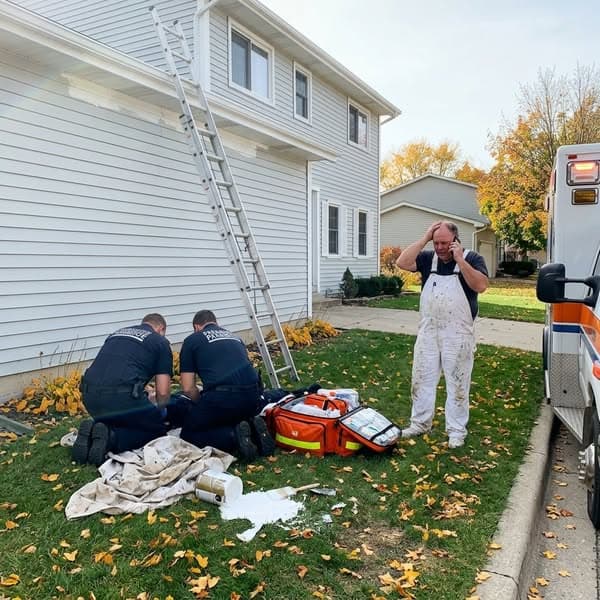

For Our Medical Lab Techs, Every Connection Matters.


For Our Medical Lab Techs, Every Connection Matters.


For Our Medical Lab Techs, Every Connection Matters.


Les plus grosse offres de l’année sont disponibles, jusqu’à -70% cumulable avec l’offre 1 acheté, 1 OFFERT !
⚠️Certaines pièces ne reviendront jamais. C’est le dernier moment pour en profiter, avec les prix les plus bas qu’on ait jamais proposés.


Atria AI helps you to find the best performing Ads on Meta for Medical Services products. Discover winning ads on Meta on Nov 22, 2026. With AtriaAI, you can effortlessly explore a vast library of top-performing Medical Services ads on Meta and derive actionable insights to enhance your ad campaigns. Our robust analytics tools enable you to never create Medical Services ads on Meta blindly, offering instant reviews of key ad metrics and performance topics for data-driven decisions. Gain a competitive edge with powerful research and analysis features, including competitor analysis for Medical Services ads on Meta. Our platform also provides endless inspiration from over 100 million winning ads, customizable ad creation tools, and ready-made templates to streamline your creative process. Transform your Medical Services advertising strategies with AtriaAI and achieve unparalleled success in your campaigns.