Ad ideas for Higher Education on Meta.
Ad ideas for Higher Education on Meta. AtriaAI helps you to find great Higher Education ads trending on Meta. Start for free on Atria.

Sep 28, 2026 - Present
We’re banking on something bigger: our people. That’s why we provide benefits like tuition reimbursement to employees like Nadine.
00:06

Sep 27, 2026 - Present
We’re banking on something bigger: our people. That’s why we provide benefits like tuition reimbursement to employees like Nadine.
00:14

Oct 04, 2026 - Present
Campus communications are getting more complex. Your workflows don’t have to.
Join Constant Contact for a webinar hosted by The Chronicle of Higher Education on scaling communications across departments without losing control.
Register now to save your spot.
Register for the webinar today.
Join Constant Contact for a webinar hosted by The Chronicle of Higher Education on scaling communications across departments without losing control.
Register now to save your spot.
Register for the webinar today.
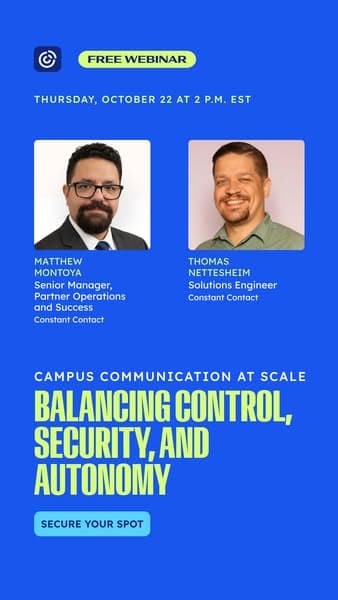
chronicle.zoom.usTake Control of Campus CommunicationsEvery department on your campus has something to say. Admissions wants to reach applicants, advancement wants to reach donors, and the history department just discovered email marketing. Meanwhile, central marketing is supposed to keep it all on brand, on time, and nonoverlapping — usually with th...

Aug 01, 2023 - Aug 30, 2023
To Be A Higher Education Decision Maker


Oct 02, 2026 - Present
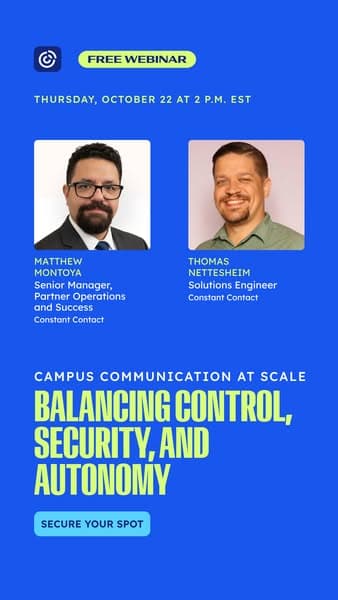
Campus communications are getting more complex. Your workflows don’t have to.
Join Constant Contact for a webinar hosted by The Chronicle of Higher Education on scaling communications across departments without losing control.
Register now to save your spot.
Register for the webinar today.
Join Constant Contact for a webinar hosted by The Chronicle of Higher Education on scaling communications across departments without losing control.
Register now to save your spot.
Register for the webinar today.

Jan 24, 2024 - Jan 28, 2024
See what the new partnership means for higher education — go deeper with Axios Phoenix


Jan 30, 2024 - Jan 31, 2024
See what the new partnership means for higher education — go deeper with Axios Phoenix

Make high converting ads 10x faster
AI-powered ad creative platform for insights, inspirations, and ideations.
Trusted by 5000+ teams

Jan 24, 2024 - Jan 24, 2024
See what the new partnership means for higher education — go deeper with Axios Phoenix


Sep 27, 2024 - Sep 30, 2024
Your student should apply by November 1 to join our extraordinary group of leaders solving tomorrow’s challenges.


Sep 16, 2026 - Present
We’re banking on something bigger: our people. That’s why we provide benefits like tuition reimbursement to employees like Nadine.
00:06

Oct 24, 2024 - Oct 30, 2024
Your student should apply by November 1 to join our extraordinary group of leaders solving tomorrow’s challenges.


Jul 05, 2026 - Jul 05, 2026
A 61-year-old woman died on a flight last Wednesday.
She wasn't sick. She wasn't in pain.
She had a heart attack at 35,000 feet.
The flight attendants did CPR for 40 minutes. They diverted to Kansas City. She was dead before the plane touched down.
She was flying to hold her first grandchild. Her daughter was standing at the gate with a car seat and a welcome home sign.
She never made it off the plane.
A colleague in emergency called me about her that evening. We talk. That's what nurses do.
Her cholesterol medication was in her carry-on. Atorvastatin 40mg. Twelve years of faithful doses. LDL at her last checkup: 94.
Her doctor's chart said the same thing I have read in thousands of folders since.
"Cholesterol well-controlled. Continue current regimen."
I need to tell you something I have been carrying for a very long time. I'm telling you now because six months ago I got my own lipid panel back — and I know exactly what "controlled" looks like at the end of the road.
My name is Sandra Keller. I've been a dialysis nurse for 14 years. Roughly 11,000 patients connected to machines.
Most people think my patients die from kidney failure. They don't. The number one cause of death in dialysis patients is cardiovascular disease. Heart attacks. Strokes. Cardiac events that arrive without warning behind numbers someone called "controlled."
I have watched it more times than I can count.
Let me tell you what that looks like — because most people only know the word. They don't know the room.
Three days a week. Four hours a session. A needle goes into a fistula — a surgically created access point in the arm, the scar most patients hide under long sleeves even in summer. The machine does what their kidneys cannot anymore. For four hours. While they sit there.
I've watched patients cry during sessions — not from pain but from the weight of what their life became.
I've sat with a 67-year-old man who told me his cardiologist had given him a clean bill last year. Cholesterol "perfectly controlled." Six months later he had a massive MI at his kitchen table. He survived. He comes to me now on a Tuesday-Thursday-Saturday schedule and doesn't talk much anymore.
I've watched families come in after we lose someone. Stunned. Repeating the same sentence.
"But his numbers were fine. The doctor said the cholesterol was managed."
I've watched cardiologists and nephrologists look at the same charts and say some version of the same words.
"I don't understand. The LDL was controlled."
After the hundredth time I heard that — sitting in a room full of people whose bodies were failing behind perfect-looking numbers — something settled into me that wouldn't let go.
If the medication brings the number down and cardiac events keep happening, then bringing the number down alone isn't enough. Something else is happening underneath. Something nobody is fixing.
I carried that question for 14 years. And then six months ago, the question became mine.
The hospital ran its annual wellness screening. Quick blood draw. Full metabolic panel.
LDL: 166. Total cholesterol: 243. CRP — the inflammation marker — elevated.
I sat there in my scrubs, in the same break room where I have held colleagues after we lose patients, and my own numbers were telling me I was building toward becoming one of them.
The attending handed me a prescription. Atorvastatin 20mg. "We'll recheck in 90 days."
I folded it, put it in my scrub pocket, and never filled it.
Because that prescription was the same one in the carry-on bag of the woman who was supposed to hold her grandchild.
I have watched what "controlled" cholesterol looks like at the end of 12 years of faithful medication.
I wasn't going to trust the same number.
Instead I started following the research. And what I found in three weeks of reading finally made 14 years of watching patients die of cardiac events behind "perfect" lab work suddenly make sense.
Here is what you were taught to believe about cholesterol. High LDL means too much of the wrong fat in your blood. Medication brings the number down. Number drops, risk drops. Simple.
The first part is true.
Here is what nobody told you about why cholesterol becomes dangerous in the first place.
Your body makes cholesterol every day. It's supposed to. Cholesterol builds your cell walls. It protects your brain. It is the raw material for hormones your body cannot function without. It is not the enemy.
Here is what turns it into one.
Your blood is full of unstable molecules called free radicals. They come from stress, processed food, pollution, sugar, inflammation, just getting older. And they attack your cholesterol while it is traveling through your bloodstream. They damage it. They oxidize it.
Think of your cholesterol like a delivery route. In a healthy system, cholesterol goes out, drops off what your cells need, and keeps moving.
Oxidized cholesterol is a delivery truck that got hit on the road. It cannot complete the route. It doesn't keep moving. It pulls over — which in this case is your artery wall — and it stays there.
More damaged cholesterol comes along and parks right next to it. Layer after layer. That is plaque. That is the blockage. That is the heart attack at 3 AM that the chart calls "sudden" even though it has been building for a decade.
And here is the part that explains why your number keeps climbing no matter what you try.
Your body doesn't know the cholesterol is stuck. It just knows it sent cholesterol out and it never came back. So it does what any system does when a delivery doesn't arrive.
It sends more.
Your liver manufactures replacement cholesterol to compensate for what it's losing to the buildup. More enters the blood. More gets damaged. More gets stuck. More replacement gets dispatched.
A cycle that feeds itself. And it has been running inside you — quietly, invisibly — for years.
That is why your cholesterol was "a little elevated" five years ago, higher last year, and higher again at your last appointment. That is not aging. That is a cycle accelerating.
And if that cycle keeps running, the plaque keeps building. A piece breaks free. That is the stroke. That is the heart attack at midnight. That is the flight that gets diverted while your daughter stands at the gate holding a sign she made for a grandmother who will never walk through the doors.
Now. Here is why your medication doesn't stop it.
Your statin forces your liver to stop producing cholesterol. The LDL number on the chart drops. Your doctor says great.
But the cholesterol already circulating? Still getting hit by free radicals. Still getting oxidized. Still sticking to your artery walls. Still triggering your liver to send more.
The drug slowed the production. It never stopped the damage.
That is why the dose goes up. That is why your doctor starts talking about a second medication. Because the number they are managing on paper is not the process that has been running underneath it.
And that is why you get the side effects.
The way statins slow production — by blocking a specific pathway in your liver — also blocks CoQ10. The molecule your heart, your muscles, and your brain need to make energy. Block that pathway and you get the muscle pain that came out of nowhere and never fully leaves. The brain fog that makes you feel a decade older than you are. The fatigue that starts in the early afternoon and doesn't lift. The weakness in your legs when you climb a single flight of stairs.
Those are not random. Those are the price your body pays when a drug shuts down a pathway that your heart, your muscles, and your brain all depend on.
The medication manages the number. It never stops the damage.
Fish oil works in your bloodstream. It can nudge triglycerides slightly. But it cannot stop your cholesterol from getting oxidized. It is cleaning the gutters while the foundation cracks.
Oatmeal works in your gut. Grabs some cholesterol before it enters circulation. Cannot touch the cholesterol already in your arteries.
Garlic thins the blood modestly. It does not neutralize free radicals.
Red yeast rice works like a weak statin. Same mechanism, same blind spot. Lowers the production. Never stops the damage.
Every single thing you have tried works somewhere else. Nothing has addressed the oxidative damage that turns your cholesterol into the sticky, artery-clogging kind in the first place.
That is the blind spot I watched quietly take my patients for 14 years.
I went looking for what could actually stop it.
In my unit there is a cardiologist, Dr. Okafor. Not a research cardiologist. The kind who threads a catheter through your femoral artery and physically opens blocked vessels while the patient is still in crisis. He has looked at more coronary plaque up close than most people will ever think about. And he works alongside me — because cardiovascular disease follows kidney disease everywhere, and I know what his work looks like from the recovery side.
After my panel came back, I mentioned I hadn't filled the Atorvastatin.
He was quiet for a moment.
"Do you know why patients with controlled LDL still end up in your chairs?"
"I've been asking that for 14 years."
"Because the medication forces the liver to stop making cholesterol. But the cholesterol already in circulation — the oxidized kind, the kind sticking to artery walls — the statin doesn't touch that." He paused. "Look into Ceylon cinnamon. Not cinnamon in general. Ceylon specifically. The research on what it does to oxidative damage and LDL is real. I take it myself."
An interventional cardiologist who opens blocked arteries with his own hands. Telling me quietly, between cases, that he takes Ceylon cinnamon himself.
I had never looked at cinnamon seriously. I had heard it mentioned in the blood sugar conversation. I didn't know there was a cholesterol story underneath it.
That night I opened my laptop and started reading.
And what I found at 1 AM in my kitchen — with 14 years of watching patients die of cardiac events behind "controlled" numbers — stopped me cold.
Here is what the research actually shows. And here is what I should have understood years earlier.
Ceylon cinnamon contains active compounds called cinnamates. When researchers tested their effect in the liver, they found something that should have ended up in every cardiologist's office but never did.
Cinnamate inhibits an enzyme called HMG-CoA reductase.
If that sounds familiar, it should. Because HMG-CoA reductase is the exact same enzyme that every statin on the market targets. It is the liver's master switch for cholesterol production. When it is inhibited, the liver produces less cholesterol internally. And simultaneously, LDL receptors upregulate — the liver pulls more bad cholesterol out of the bloodstream to break it down.
Researchers at Kyungpook National University tested cinnamate directly against lovastatin — one of the most widely prescribed statins in the world. The cinnamon group came out with lower LDL, lower triglycerides, and HDL — the protective cholesterol — actually higher than the lovastatin group. The atherogenic index, the ratio that predicts actual cardiovascular risk, was significantly lower in the cinnamon group than in the statin group.
Side effects in the study? None.
No CoQ10 depletion. No muscle pain. No liver strain. No fatigue.
But that is only the first mechanism.
The second one goes deeper.
Cinnamaldehyde — the primary active compound in Ceylon — is one of the most potent antioxidants ever tested. Researchers measuring antioxidant strength across thousands of foods found Ceylon's compounds scoring higher than blueberries. Higher than turmeric. Higher than green tea. And it was not close.
Here is what that means for your cholesterol.
When cinnamaldehyde enters your bloodstream, it finds the free radicals that have been attacking your cholesterol and neutralizes them. Not in your gut like oatmeal. Not downstream like fish oil. In your blood, where the damage is actually happening.
When the free radicals are neutralized, your cholesterol stops getting damaged. When it stops getting damaged, it stops sticking to your artery walls. When it stops sticking, your body stops overproducing to replace what it was losing.
The cycle breaks.
Not because something forced your liver to stop making cholesterol.
Because your cholesterol stopped getting destroyed on its way to the cells that need it.
The same way a wound heals once you stop tearing it open.
A 2025 systematic review in the Journal of Health, Population and Nutrition — the most comprehensive analysis of cinnamon and cardiovascular health ever assembled — examined 49 randomized controlled trials. Across all 49 studies: LDL significantly reduced. Total cholesterol significantly reduced. Triglycerides significantly reduced. HDL — the protective kind — significantly increased. Systolic blood pressure down over five points. Inflammatory markers down.
Not one marker. The whole cardiovascular picture. In 49 independent trials.
Published. Peer-reviewed. Sitting in databases.
And in 14 years of watching patients die of cardiac events behind "controlled" cholesterol — not once had anyone put this in my hand.
Not because doctors are hiding it.
Because you cannot patent a plant.
No pharmaceutical company funds the research that would land this on a sales representative's desk. No sales rep walks it into a cardiology practice. The 49 studies sit in medical databases. The patients keep coming in with plaque that has been building for years behind a number someone called "controlled."
That is not your fault.
You took the medication. You tracked the number. You cut the saturated fat and took the fish oil and walked every morning. You were not failing the system. The system was only ever addressing one half of a two-sided problem — and never telling you the other half existed.
Now. Before you reach for the cinnamon in your spice cabinet or order the first thing that shows up on Amazon — stop.
If you have tried cinnamon before and seen nothing happen, there are three precise reasons why. And understanding them is the difference between another bottle that does nothing and the number your doctor pauses over at your next appointment.
The first reason is the plant.
The cinnamon in your spice rack and in most capsules and powders sold online is Cassia. It is a completely different species from Ceylon. It looks the same. It smells similar. Its chemical profile is entirely different.
Cassia contains a compound called coumarin. At the doses required to move cholesterol, coumarin silently stresses your liver. The European Food Safety Authority documented that as little as a quarter teaspoon per day pushes coumarin intake past the threshold linked to liver tissue damage.
You were not taking the wrong amount.
You were taking the wrong plant.
True Ceylon — Cinnamomum verum — contains 250 times less coumarin. It is the species in every significant clinical study showing real cholesterol results. It is the species that inhibits HMG-CoA reductase without the side effects. It is not what is in your kitchen.
The second reason is the dose.
The clinical trials showing meaningful LDL and triglyceride reductions used concentrated extract equivalent to 6,000 to 7,200mg of Ceylon daily. Most supplements on shelves and on Amazon contain 500 to 1,500mg of raw powder.
That is not a small gap. That is the difference between a therapeutic dose and a decorative amount. The research that showed cholesterol dropping a hundred points used dosing levels that most cinnamon products don't come within a fraction of.
You weren't taking too little. You were taking an amount that was never going to do anything at all.
The third reason is the delivery format.
The active compounds in Ceylon — cinnamate, cinnamaldehyde, the antioxidant polyphenols that neutralize free radicals and inhibit HMG-CoA reductase — are fat-soluble.
Your cell membranes are a double layer of fat molecules. Fat-soluble compounds require fat to cross them.
A dry powder capsule contains no fat.
So the compounds reach your gut, look for a fat carrier to cross the cell wall, find none, and pass straight through — without ever reaching the liver tissue where the enzyme lives, without ever entering the bloodstream where the free radicals are attacking your cholesterol, without ever breaking the cycle.
Your cinnamon did not fail because the science is wrong.
It failed because it was never delivered.
This is what I was looking for when I found Metabolae.
True Ceylon cinnamon. Cinnamomum verum, sourced from a single estate in Sri Lanka's Central Province — the original home of true cinnamon, where this tree has been cultivated for over two thousand years. DNA-verified at the species level. An actual Certificate of Analysis confirming species identity and coumarin levels, not a label claim.
Dosed at 7,200mg equivalent per softgel. A 12:1 concentrated extract. The exact dosing range that corresponds to the published clinical trials.
Suspended in MCT oil from coconuts. Not as a filler. As the delivery system — the fat bridge that carries cinnamate and cinnamaldehyde through your cell walls and into the liver tissue where HMG-CoA reductase lives. Into the bloodstream where the free radicals are attacking your cholesterol. Into the places where every dry powder capsule you have ever taken passed straight through without touching.
Third-party tested. GMP-certified. Every batch verified for purity, potency, and coumarin levels. Made in an FDA-registered facility. Zero fillers.
I ordered a bottle that night.
Week 1 — the fog I had been blaming on 14-hour shifts and getting older lifted. Not slightly improved — lifted. I finished a full shift and still had thoughts left when I walked to my car. The fatigue that had been hitting me by early afternoon moved. My sleep changed; the bone-deep heaviness I used to wake up with started to clear.
Week 2 — I pulled an informal lipid check through the hospital lab. My numbers were moving in the right direction. Not dramatically yet. But the direction had changed. The cycle was beginning to slow.
Week 4 — the shift was unmistakable. Stable energy. Consistent. No crash, no desperate afternoon coffee. I felt like my body was doing something it hadn't been able to do in years.
Week 8 — I ran full bloodwork.
LDL: 112. Down from 166. Total cholesterol down. HDL up. Triglycerides down. Inflammatory markers back in normal range. Seven pounds gone without changing what I ate or how much I moved.
I stared at that panel for a long time.
Not one marker. The whole picture.
I took the results to the attending.
She looked at the numbers. Looked at me. Looked at the numbers again.
"You never filled the prescription, did you."
"No."
"What did you do?"
I told her everything. She read for twenty minutes without saying a word. Closed the folder.
"Your numbers are better across the board." She looked up. "Don't stop what you're doing."
I'm not stopping.
I mentioned it to a few nurses in my unit. Within weeks, several were taking it.
Teresa. 56. Atorvastatin for 6 years. The muscle pain had gotten so bad she was taking the elevator for a single floor because climbing the stairs had become unbearable. Within a month on Metabolae, the pain was gone. She was taking the stairs again. Her next lipid panel came back better than anything she had seen in years. She cried when she told me.
Brenda. 63. Lipitor for 11 years. The brain fog had become so thick she had started writing everything down because she couldn't trust her own memory anymore. She told her husband she felt like she was losing herself. Six weeks on Metabolae, the fog lifted. Her doctor told her every number had improved across the board. She stopped carrying the notebook for the first time in three years.
But the one I think about most is the woman on the plane.
I don't know her name. I know the chart my colleague described. I know the carry-on bag. I know her LDL was 94 for 12 years and her doctor called it controlled and she did everything right. I know her daughter was standing at the gate with a car seat and a sign and a whole life she had planned around the grandmother who was supposed to walk off that plane.
Her medication brought the number down. Nothing stopped the damage.
The free radicals kept attacking her cholesterol. The oxidized particles kept sticking to her artery walls. Her liver kept manufacturing replacements. The cycle kept running.
And it ran until it didn't.
I think about the research sitting in 49 randomized controlled trials that nobody put in her hand. I think about an enzyme that has been studied for two decades in a plant that costs a fraction of a monthly prescription. I think about the gap between the journal and the appointment and who falls into it.
She didn't need a different number.
She needed someone to stop the damage behind it.
That is why I'm writing this.
If you are managing your cholesterol right now — if your doctor calls it "controlled" or "borderline," if your LDL is somewhere between 100 and 180 on your last report, if you have been on a statin and learned to live with muscle pain you once thought was just age, or a fog that rolls in by midday, or a fatigue that sleep and exercise don't seem to touch — I am talking to you.
If your numbers keep creeping up every year despite the prescription. Despite the fish oil. Despite the oatmeal and the walks and the red yeast rice.
If you've been told your cholesterol is fine and some quiet part of you wonders why you don't feel fine.
If your doctor says "we'll keep an eye on it" and you have heard those words before and you know what "keeping an eye on it" looks like at the end.
Try Metabolae risk-free for 90 days.
One softgel daily with breakfast. That is the entire protocol.
90-day money-back guarantee. No questions asked. If your LDL doesn't move, if your total cholesterol doesn't improve, if you see no difference at your next lab draw, you pay nothing.
But here is what happens when they do.
Your energy stabilizes within the first week. Sleep clears. The fatigue you have been carrying starts to lift — not because of a stimulant, but because the oxidative assault on your cholesterol is finally meeting resistance for the first time in years.
Your cholesterol numbers begin responding between weeks 2 and 4. Your full lipid picture — LDL down, HDL up, triglycerides down — begins to shift. The cycle starts to break.
And at your next appointment — the one where your doctor has been renewing the prescription and saying "let's keep monitoring" — she pulls up the panel.
Looks at the numbers.
Looks at you.
Asks what you changed.
You tell her.
She uses a word you have not heard in years of quarterly checkups.
"Improving."
Not managed.
Improving.
Metabolae is a small company sourcing verified Ceylon from a single estate in Sri Lanka's Central Province, third-party testing every batch, and using an MCT oil delivery system that costs more to produce than any dry capsule on Amazon. When a batch sells out it waits on the next harvest. If you see out of stock, sign up for the notification. If it is available, order now.
There is a promotion running currently. Three bottles at a significant discount — which is exactly the window your cholesterol markers need to actually shift and your doctor to see the difference at a follow-up.
If you are dealing with:
Numbers your doctor calls "controlled" while something keeps telling you you're not safe. LDL that keeps creeping up no matter what you cut from your diet. Muscle pain you have accepted as a permanent side effect of a pill you take every morning. Brain fog that wasn't there three years ago. Fatigue that hits like a wall by early afternoon. A lipid panel that's going in the wrong direction and a prescription that keeps getting refilled anyway.
Give it 90 days. Track your fasting cholesterol every morning. Note your energy, your sleep, your muscle pain. Go back for your next labs.
If the numbers don't move, you get your money back.
But if they do — if your LDL drops, if your HDL climbs, if your doctor pauses over the panel and says the word you have been waiting to hear for years — you will understand why I now have a quiet conversation with every patient and colleague who gets a flagged lipid report.
The damage is happening right now, behind a number someone is calling controlled.
The cycle is running.
But the window is still open.
Don't let someone else tell your story with the words "I wish someone had told me sooner."
I just did.
One softgel. Every morning. 90 days.
Click below while Metabolae is still available.
~ Sandra Keller, RN, Dialysis Unit, 14 years
👉 https://metabolae.com/products/ceylon-cinnamon-7200mg
She wasn't sick. She wasn't in pain.
She had a heart attack at 35,000 feet.
The flight attendants did CPR for 40 minutes. They diverted to Kansas City. She was dead before the plane touched down.
She was flying to hold her first grandchild. Her daughter was standing at the gate with a car seat and a welcome home sign.
She never made it off the plane.
A colleague in emergency called me about her that evening. We talk. That's what nurses do.
Her cholesterol medication was in her carry-on. Atorvastatin 40mg. Twelve years of faithful doses. LDL at her last checkup: 94.
Her doctor's chart said the same thing I have read in thousands of folders since.
"Cholesterol well-controlled. Continue current regimen."
I need to tell you something I have been carrying for a very long time. I'm telling you now because six months ago I got my own lipid panel back — and I know exactly what "controlled" looks like at the end of the road.
My name is Sandra Keller. I've been a dialysis nurse for 14 years. Roughly 11,000 patients connected to machines.
Most people think my patients die from kidney failure. They don't. The number one cause of death in dialysis patients is cardiovascular disease. Heart attacks. Strokes. Cardiac events that arrive without warning behind numbers someone called "controlled."
I have watched it more times than I can count.
Let me tell you what that looks like — because most people only know the word. They don't know the room.
Three days a week. Four hours a session. A needle goes into a fistula — a surgically created access point in the arm, the scar most patients hide under long sleeves even in summer. The machine does what their kidneys cannot anymore. For four hours. While they sit there.
I've watched patients cry during sessions — not from pain but from the weight of what their life became.
I've sat with a 67-year-old man who told me his cardiologist had given him a clean bill last year. Cholesterol "perfectly controlled." Six months later he had a massive MI at his kitchen table. He survived. He comes to me now on a Tuesday-Thursday-Saturday schedule and doesn't talk much anymore.
I've watched families come in after we lose someone. Stunned. Repeating the same sentence.
"But his numbers were fine. The doctor said the cholesterol was managed."
I've watched cardiologists and nephrologists look at the same charts and say some version of the same words.
"I don't understand. The LDL was controlled."
After the hundredth time I heard that — sitting in a room full of people whose bodies were failing behind perfect-looking numbers — something settled into me that wouldn't let go.
If the medication brings the number down and cardiac events keep happening, then bringing the number down alone isn't enough. Something else is happening underneath. Something nobody is fixing.
I carried that question for 14 years. And then six months ago, the question became mine.
The hospital ran its annual wellness screening. Quick blood draw. Full metabolic panel.
LDL: 166. Total cholesterol: 243. CRP — the inflammation marker — elevated.
I sat there in my scrubs, in the same break room where I have held colleagues after we lose patients, and my own numbers were telling me I was building toward becoming one of them.
The attending handed me a prescription. Atorvastatin 20mg. "We'll recheck in 90 days."
I folded it, put it in my scrub pocket, and never filled it.
Because that prescription was the same one in the carry-on bag of the woman who was supposed to hold her grandchild.
I have watched what "controlled" cholesterol looks like at the end of 12 years of faithful medication.
I wasn't going to trust the same number.
Instead I started following the research. And what I found in three weeks of reading finally made 14 years of watching patients die of cardiac events behind "perfect" lab work suddenly make sense.
Here is what you were taught to believe about cholesterol. High LDL means too much of the wrong fat in your blood. Medication brings the number down. Number drops, risk drops. Simple.
The first part is true.
Here is what nobody told you about why cholesterol becomes dangerous in the first place.
Your body makes cholesterol every day. It's supposed to. Cholesterol builds your cell walls. It protects your brain. It is the raw material for hormones your body cannot function without. It is not the enemy.
Here is what turns it into one.
Your blood is full of unstable molecules called free radicals. They come from stress, processed food, pollution, sugar, inflammation, just getting older. And they attack your cholesterol while it is traveling through your bloodstream. They damage it. They oxidize it.
Think of your cholesterol like a delivery route. In a healthy system, cholesterol goes out, drops off what your cells need, and keeps moving.
Oxidized cholesterol is a delivery truck that got hit on the road. It cannot complete the route. It doesn't keep moving. It pulls over — which in this case is your artery wall — and it stays there.
More damaged cholesterol comes along and parks right next to it. Layer after layer. That is plaque. That is the blockage. That is the heart attack at 3 AM that the chart calls "sudden" even though it has been building for a decade.
And here is the part that explains why your number keeps climbing no matter what you try.
Your body doesn't know the cholesterol is stuck. It just knows it sent cholesterol out and it never came back. So it does what any system does when a delivery doesn't arrive.
It sends more.
Your liver manufactures replacement cholesterol to compensate for what it's losing to the buildup. More enters the blood. More gets damaged. More gets stuck. More replacement gets dispatched.
A cycle that feeds itself. And it has been running inside you — quietly, invisibly — for years.
That is why your cholesterol was "a little elevated" five years ago, higher last year, and higher again at your last appointment. That is not aging. That is a cycle accelerating.
And if that cycle keeps running, the plaque keeps building. A piece breaks free. That is the stroke. That is the heart attack at midnight. That is the flight that gets diverted while your daughter stands at the gate holding a sign she made for a grandmother who will never walk through the doors.
Now. Here is why your medication doesn't stop it.
Your statin forces your liver to stop producing cholesterol. The LDL number on the chart drops. Your doctor says great.
But the cholesterol already circulating? Still getting hit by free radicals. Still getting oxidized. Still sticking to your artery walls. Still triggering your liver to send more.
The drug slowed the production. It never stopped the damage.
That is why the dose goes up. That is why your doctor starts talking about a second medication. Because the number they are managing on paper is not the process that has been running underneath it.
And that is why you get the side effects.
The way statins slow production — by blocking a specific pathway in your liver — also blocks CoQ10. The molecule your heart, your muscles, and your brain need to make energy. Block that pathway and you get the muscle pain that came out of nowhere and never fully leaves. The brain fog that makes you feel a decade older than you are. The fatigue that starts in the early afternoon and doesn't lift. The weakness in your legs when you climb a single flight of stairs.
Those are not random. Those are the price your body pays when a drug shuts down a pathway that your heart, your muscles, and your brain all depend on.
The medication manages the number. It never stops the damage.
Fish oil works in your bloodstream. It can nudge triglycerides slightly. But it cannot stop your cholesterol from getting oxidized. It is cleaning the gutters while the foundation cracks.
Oatmeal works in your gut. Grabs some cholesterol before it enters circulation. Cannot touch the cholesterol already in your arteries.
Garlic thins the blood modestly. It does not neutralize free radicals.
Red yeast rice works like a weak statin. Same mechanism, same blind spot. Lowers the production. Never stops the damage.
Every single thing you have tried works somewhere else. Nothing has addressed the oxidative damage that turns your cholesterol into the sticky, artery-clogging kind in the first place.
That is the blind spot I watched quietly take my patients for 14 years.
I went looking for what could actually stop it.
In my unit there is a cardiologist, Dr. Okafor. Not a research cardiologist. The kind who threads a catheter through your femoral artery and physically opens blocked vessels while the patient is still in crisis. He has looked at more coronary plaque up close than most people will ever think about. And he works alongside me — because cardiovascular disease follows kidney disease everywhere, and I know what his work looks like from the recovery side.
After my panel came back, I mentioned I hadn't filled the Atorvastatin.
He was quiet for a moment.
"Do you know why patients with controlled LDL still end up in your chairs?"
"I've been asking that for 14 years."
"Because the medication forces the liver to stop making cholesterol. But the cholesterol already in circulation — the oxidized kind, the kind sticking to artery walls — the statin doesn't touch that." He paused. "Look into Ceylon cinnamon. Not cinnamon in general. Ceylon specifically. The research on what it does to oxidative damage and LDL is real. I take it myself."
An interventional cardiologist who opens blocked arteries with his own hands. Telling me quietly, between cases, that he takes Ceylon cinnamon himself.
I had never looked at cinnamon seriously. I had heard it mentioned in the blood sugar conversation. I didn't know there was a cholesterol story underneath it.
That night I opened my laptop and started reading.
And what I found at 1 AM in my kitchen — with 14 years of watching patients die of cardiac events behind "controlled" numbers — stopped me cold.
Here is what the research actually shows. And here is what I should have understood years earlier.
Ceylon cinnamon contains active compounds called cinnamates. When researchers tested their effect in the liver, they found something that should have ended up in every cardiologist's office but never did.
Cinnamate inhibits an enzyme called HMG-CoA reductase.
If that sounds familiar, it should. Because HMG-CoA reductase is the exact same enzyme that every statin on the market targets. It is the liver's master switch for cholesterol production. When it is inhibited, the liver produces less cholesterol internally. And simultaneously, LDL receptors upregulate — the liver pulls more bad cholesterol out of the bloodstream to break it down.
Researchers at Kyungpook National University tested cinnamate directly against lovastatin — one of the most widely prescribed statins in the world. The cinnamon group came out with lower LDL, lower triglycerides, and HDL — the protective cholesterol — actually higher than the lovastatin group. The atherogenic index, the ratio that predicts actual cardiovascular risk, was significantly lower in the cinnamon group than in the statin group.
Side effects in the study? None.
No CoQ10 depletion. No muscle pain. No liver strain. No fatigue.
But that is only the first mechanism.
The second one goes deeper.
Cinnamaldehyde — the primary active compound in Ceylon — is one of the most potent antioxidants ever tested. Researchers measuring antioxidant strength across thousands of foods found Ceylon's compounds scoring higher than blueberries. Higher than turmeric. Higher than green tea. And it was not close.
Here is what that means for your cholesterol.
When cinnamaldehyde enters your bloodstream, it finds the free radicals that have been attacking your cholesterol and neutralizes them. Not in your gut like oatmeal. Not downstream like fish oil. In your blood, where the damage is actually happening.
When the free radicals are neutralized, your cholesterol stops getting damaged. When it stops getting damaged, it stops sticking to your artery walls. When it stops sticking, your body stops overproducing to replace what it was losing.
The cycle breaks.
Not because something forced your liver to stop making cholesterol.
Because your cholesterol stopped getting destroyed on its way to the cells that need it.
The same way a wound heals once you stop tearing it open.
A 2025 systematic review in the Journal of Health, Population and Nutrition — the most comprehensive analysis of cinnamon and cardiovascular health ever assembled — examined 49 randomized controlled trials. Across all 49 studies: LDL significantly reduced. Total cholesterol significantly reduced. Triglycerides significantly reduced. HDL — the protective kind — significantly increased. Systolic blood pressure down over five points. Inflammatory markers down.
Not one marker. The whole cardiovascular picture. In 49 independent trials.
Published. Peer-reviewed. Sitting in databases.
And in 14 years of watching patients die of cardiac events behind "controlled" cholesterol — not once had anyone put this in my hand.
Not because doctors are hiding it.
Because you cannot patent a plant.
No pharmaceutical company funds the research that would land this on a sales representative's desk. No sales rep walks it into a cardiology practice. The 49 studies sit in medical databases. The patients keep coming in with plaque that has been building for years behind a number someone called "controlled."
That is not your fault.
You took the medication. You tracked the number. You cut the saturated fat and took the fish oil and walked every morning. You were not failing the system. The system was only ever addressing one half of a two-sided problem — and never telling you the other half existed.
Now. Before you reach for the cinnamon in your spice cabinet or order the first thing that shows up on Amazon — stop.
If you have tried cinnamon before and seen nothing happen, there are three precise reasons why. And understanding them is the difference between another bottle that does nothing and the number your doctor pauses over at your next appointment.
The first reason is the plant.
The cinnamon in your spice rack and in most capsules and powders sold online is Cassia. It is a completely different species from Ceylon. It looks the same. It smells similar. Its chemical profile is entirely different.
Cassia contains a compound called coumarin. At the doses required to move cholesterol, coumarin silently stresses your liver. The European Food Safety Authority documented that as little as a quarter teaspoon per day pushes coumarin intake past the threshold linked to liver tissue damage.
You were not taking the wrong amount.
You were taking the wrong plant.
True Ceylon — Cinnamomum verum — contains 250 times less coumarin. It is the species in every significant clinical study showing real cholesterol results. It is the species that inhibits HMG-CoA reductase without the side effects. It is not what is in your kitchen.
The second reason is the dose.
The clinical trials showing meaningful LDL and triglyceride reductions used concentrated extract equivalent to 6,000 to 7,200mg of Ceylon daily. Most supplements on shelves and on Amazon contain 500 to 1,500mg of raw powder.
That is not a small gap. That is the difference between a therapeutic dose and a decorative amount. The research that showed cholesterol dropping a hundred points used dosing levels that most cinnamon products don't come within a fraction of.
You weren't taking too little. You were taking an amount that was never going to do anything at all.
The third reason is the delivery format.
The active compounds in Ceylon — cinnamate, cinnamaldehyde, the antioxidant polyphenols that neutralize free radicals and inhibit HMG-CoA reductase — are fat-soluble.
Your cell membranes are a double layer of fat molecules. Fat-soluble compounds require fat to cross them.
A dry powder capsule contains no fat.
So the compounds reach your gut, look for a fat carrier to cross the cell wall, find none, and pass straight through — without ever reaching the liver tissue where the enzyme lives, without ever entering the bloodstream where the free radicals are attacking your cholesterol, without ever breaking the cycle.
Your cinnamon did not fail because the science is wrong.
It failed because it was never delivered.
This is what I was looking for when I found Metabolae.
True Ceylon cinnamon. Cinnamomum verum, sourced from a single estate in Sri Lanka's Central Province — the original home of true cinnamon, where this tree has been cultivated for over two thousand years. DNA-verified at the species level. An actual Certificate of Analysis confirming species identity and coumarin levels, not a label claim.
Dosed at 7,200mg equivalent per softgel. A 12:1 concentrated extract. The exact dosing range that corresponds to the published clinical trials.
Suspended in MCT oil from coconuts. Not as a filler. As the delivery system — the fat bridge that carries cinnamate and cinnamaldehyde through your cell walls and into the liver tissue where HMG-CoA reductase lives. Into the bloodstream where the free radicals are attacking your cholesterol. Into the places where every dry powder capsule you have ever taken passed straight through without touching.
Third-party tested. GMP-certified. Every batch verified for purity, potency, and coumarin levels. Made in an FDA-registered facility. Zero fillers.
I ordered a bottle that night.
Week 1 — the fog I had been blaming on 14-hour shifts and getting older lifted. Not slightly improved — lifted. I finished a full shift and still had thoughts left when I walked to my car. The fatigue that had been hitting me by early afternoon moved. My sleep changed; the bone-deep heaviness I used to wake up with started to clear.
Week 2 — I pulled an informal lipid check through the hospital lab. My numbers were moving in the right direction. Not dramatically yet. But the direction had changed. The cycle was beginning to slow.
Week 4 — the shift was unmistakable. Stable energy. Consistent. No crash, no desperate afternoon coffee. I felt like my body was doing something it hadn't been able to do in years.
Week 8 — I ran full bloodwork.
LDL: 112. Down from 166. Total cholesterol down. HDL up. Triglycerides down. Inflammatory markers back in normal range. Seven pounds gone without changing what I ate or how much I moved.
I stared at that panel for a long time.
Not one marker. The whole picture.
I took the results to the attending.
She looked at the numbers. Looked at me. Looked at the numbers again.
"You never filled the prescription, did you."
"No."
"What did you do?"
I told her everything. She read for twenty minutes without saying a word. Closed the folder.
"Your numbers are better across the board." She looked up. "Don't stop what you're doing."
I'm not stopping.
I mentioned it to a few nurses in my unit. Within weeks, several were taking it.
Teresa. 56. Atorvastatin for 6 years. The muscle pain had gotten so bad she was taking the elevator for a single floor because climbing the stairs had become unbearable. Within a month on Metabolae, the pain was gone. She was taking the stairs again. Her next lipid panel came back better than anything she had seen in years. She cried when she told me.
Brenda. 63. Lipitor for 11 years. The brain fog had become so thick she had started writing everything down because she couldn't trust her own memory anymore. She told her husband she felt like she was losing herself. Six weeks on Metabolae, the fog lifted. Her doctor told her every number had improved across the board. She stopped carrying the notebook for the first time in three years.
But the one I think about most is the woman on the plane.
I don't know her name. I know the chart my colleague described. I know the carry-on bag. I know her LDL was 94 for 12 years and her doctor called it controlled and she did everything right. I know her daughter was standing at the gate with a car seat and a sign and a whole life she had planned around the grandmother who was supposed to walk off that plane.
Her medication brought the number down. Nothing stopped the damage.
The free radicals kept attacking her cholesterol. The oxidized particles kept sticking to her artery walls. Her liver kept manufacturing replacements. The cycle kept running.
And it ran until it didn't.
I think about the research sitting in 49 randomized controlled trials that nobody put in her hand. I think about an enzyme that has been studied for two decades in a plant that costs a fraction of a monthly prescription. I think about the gap between the journal and the appointment and who falls into it.
She didn't need a different number.
She needed someone to stop the damage behind it.
That is why I'm writing this.
If you are managing your cholesterol right now — if your doctor calls it "controlled" or "borderline," if your LDL is somewhere between 100 and 180 on your last report, if you have been on a statin and learned to live with muscle pain you once thought was just age, or a fog that rolls in by midday, or a fatigue that sleep and exercise don't seem to touch — I am talking to you.
If your numbers keep creeping up every year despite the prescription. Despite the fish oil. Despite the oatmeal and the walks and the red yeast rice.
If you've been told your cholesterol is fine and some quiet part of you wonders why you don't feel fine.
If your doctor says "we'll keep an eye on it" and you have heard those words before and you know what "keeping an eye on it" looks like at the end.
Try Metabolae risk-free for 90 days.
One softgel daily with breakfast. That is the entire protocol.
90-day money-back guarantee. No questions asked. If your LDL doesn't move, if your total cholesterol doesn't improve, if you see no difference at your next lab draw, you pay nothing.
But here is what happens when they do.
Your energy stabilizes within the first week. Sleep clears. The fatigue you have been carrying starts to lift — not because of a stimulant, but because the oxidative assault on your cholesterol is finally meeting resistance for the first time in years.
Your cholesterol numbers begin responding between weeks 2 and 4. Your full lipid picture — LDL down, HDL up, triglycerides down — begins to shift. The cycle starts to break.
And at your next appointment — the one where your doctor has been renewing the prescription and saying "let's keep monitoring" — she pulls up the panel.
Looks at the numbers.
Looks at you.
Asks what you changed.
You tell her.
She uses a word you have not heard in years of quarterly checkups.
"Improving."
Not managed.
Improving.
Metabolae is a small company sourcing verified Ceylon from a single estate in Sri Lanka's Central Province, third-party testing every batch, and using an MCT oil delivery system that costs more to produce than any dry capsule on Amazon. When a batch sells out it waits on the next harvest. If you see out of stock, sign up for the notification. If it is available, order now.
There is a promotion running currently. Three bottles at a significant discount — which is exactly the window your cholesterol markers need to actually shift and your doctor to see the difference at a follow-up.
If you are dealing with:
Numbers your doctor calls "controlled" while something keeps telling you you're not safe. LDL that keeps creeping up no matter what you cut from your diet. Muscle pain you have accepted as a permanent side effect of a pill you take every morning. Brain fog that wasn't there three years ago. Fatigue that hits like a wall by early afternoon. A lipid panel that's going in the wrong direction and a prescription that keeps getting refilled anyway.
Give it 90 days. Track your fasting cholesterol every morning. Note your energy, your sleep, your muscle pain. Go back for your next labs.
If the numbers don't move, you get your money back.
But if they do — if your LDL drops, if your HDL climbs, if your doctor pauses over the panel and says the word you have been waiting to hear for years — you will understand why I now have a quiet conversation with every patient and colleague who gets a flagged lipid report.
The damage is happening right now, behind a number someone is calling controlled.
The cycle is running.
But the window is still open.
Don't let someone else tell your story with the words "I wish someone had told me sooner."
I just did.
One softgel. Every morning. 90 days.
Click below while Metabolae is still available.
~ Sandra Keller, RN, Dialysis Unit, 14 years
👉 https://metabolae.com/products/ceylon-cinnamon-7200mg

Feb 04, 2025 - Feb 06, 2025
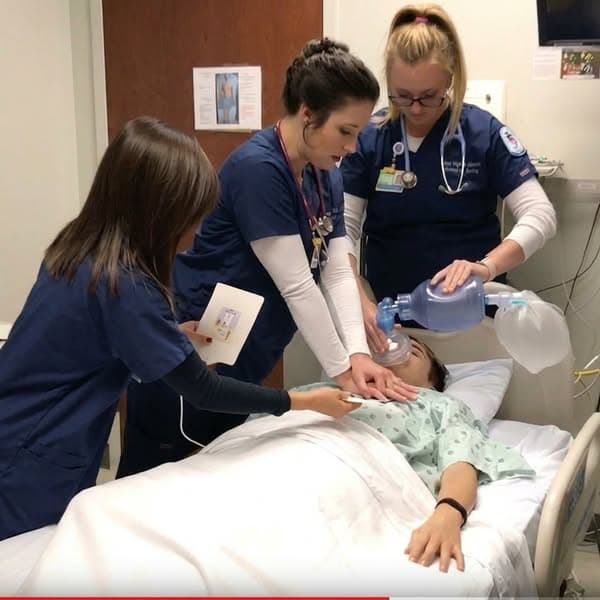
Unlock a new era of campus learning with Canva! Discover how students and staff are creating, collaborating, and innovating.


Jan 24, 2025 - Jan 29, 2025
Transform learning on campus with Canva. Discover how students and staff are creating, collaborating, and innovating.


Mar 05, 2026 - Mar 09, 2026
Lipscomb University - A university that will prepare you for a purposeful life.


Aug 15, 2025 - Feb 25, 2026
Lipscomb University - A university that will prepare you for a purposeful life.


Jan 24, 2024 - Jan 24, 2024
💬 Arizona State University will become the first-ever higher education institution to partner with OpenAI — Axios Phoenix zooms in on the details


Aug 06, 2026 - Aug 13, 2026
📚 Library desk energy, but make it practical.
🎒 Grey and dark styles bring smart pockets, laptop protection and classroom-ready storage into one clean carry.
🎒 Grey and dark styles bring smart pockets, laptop protection and classroom-ready storage into one clean carry.


Atria AI helps you to find the best performing Ads on Meta for Higher Education products. Discover winning ads on Meta on Oct 6, 2026. With AtriaAI, you can effortlessly explore a vast library of top-performing Higher Education ads on Meta and derive actionable insights to enhance your ad campaigns. Our robust analytics tools enable you to never create Higher Education ads on Meta blindly, offering instant reviews of key ad metrics and performance topics for data-driven decisions. Gain a competitive edge with powerful research and analysis features, including competitor analysis for Higher Education ads on Meta. Our platform also provides endless inspiration from over 100 million winning ads, customizable ad creation tools, and ready-made templates to streamline your creative process. Transform your Higher Education advertising strategies with AtriaAI and achieve unparalleled success in your campaigns.
Discover the latest ad ideas on Meta
Women's ClothingMen's ClothingWomen's ShoesMen's ShoesBags & WalletsJewelryWatchesEyewearAccessoriesWearable Tech DevicesSportswearDigital DevicesKitchen AppliancesLaundry AppliancesHome AppliancesPersonal Care AppliancesHeating, Cooling & Air QualitySmall AppliancesBaby ClothingKids' ClothingMaternity ClothingBaby Feeding SuppliesBaby FoodBaby FormulaBaby ShoesChild Car SeatsBaby Hygiene ProductsNursery FurnitureStrollers & CribsDiapers & WipesToysSkincareHaircareCosmeticsFragrances & PerfumesPersonal HygieneOral CareMen's GroomingBeauty Tools & AccessoriesAesthetic MedicineFeminine CareWig & Hair StylingNewspaperMagzinesBook StoresMachinery & EquipmentsMarketing & AdvertisingOffice Equipment & SuppliesConsulting ServicesIT ServicesLegal ServicesHR & RecruitingReal Estate & Home RentalsSafety & SecurityOnline RetailersMarketplacesSubscription BoxesDigital ProductsE-commerce PlatformsPayment SolutionsDelivery ServicesEarly Childhood & Preschool EducationK-12 EducationHigher EducationOnline CoursesProfessional CertificationsTutoring ServicesEducational MaterialsLanguage LearningNon-academic Training (Hobbies)Overseas EducationVocational TrainingConferencesTrade ShowsConcertsFestivalsSports EventsCorporate EventsCommunity EventsBankingInsuranceInvestment ServicesLoans & MortgagesFinancial PlanningPrecious MetalsSports EquipmentFitness EquipmentOutdoor GearSupplements & NutritionGyms & Fitness CentersAlcoholic BeveragesCooking & RecipesCuisineFood & Fresh ProduceNon-alcoholic BeveragesRestaurants & CafesPackaged FoodsSnacksBoard gamesBrowser gamesCard gamesCasinoGamblingMobile gamesVideo gamesGovernment OfficialIntergovernmental OrganizationPublic & Government ServiceDietary SupplementsMedical InformationMedical ServicesMedicineWomen's HealthMen's HealthSenior CareFurnitureKitchen & DiningLaundryBed & BathGarden & OutdoorConstruction Materials & LightingStorage & OrganizationInterior Design & Decorating ServicesSmart HomeChild CareDating ServiceGifts & FlowersHousekeepingInternet ServicesPhotographyShopping ServicesUsed Good Sales PlatformsUtilities PaymentsWedding ServicePet FoodPet AccessoriesPet GroomingPet StorePet ToysPet TrainingPet BoardingPet SuppliesProduct & ServiceSoftware & AppsResearch & DevelopmentEngineering ServicesTech AccessoriesTelecommunicationsRoboticsTravel ServiceTravel AgenciesHotels & ResortsLuggage, Bags & CasesCar RentalsBicyclesMotocyclesCarsPlanesBoatsVehicle Parts & AccessoriesVehicle MaintenanceRide-Sharing Services