Food & Fresh Produce Ads on Meta
Browse Food & Fresh Produce ads running on Meta, updated daily. Atria helps you find the Food & Fresh Produce ads that are trending on Meta. Start for free on Atria.

Use code: A1-95GJCP75AS6

Use code: KG-8N7DXWC2IWY


Make high converting ads 10x faster
AI-powered ad creative platform for insights, inspirations, and ideations.


I wrote over 300 of those prescriptions before I wrote one for me.
Fourteen months later I was on the floor of my own bathroom at 3:07 in the morning with a heart rate of 38 and a blood pressure of 82 over 54, my wife on the phone with 911, being told by a paramedic that if my pulse dropped any further they were going to have to pace me in the ambulance.
I was 56 years old.
I am a board-certified cardiologist. Twenty-two years of practice. I have privileges on every floor of the hospital where they took me.
My blood pressure on Lisinopril read 126 over 78. Everyone in my practice called it textbook.
Three months after they stopped it, my blood pressure was 168 over 98.
Higher than the day I was diagnosed.
I am writing this because I know what my colleagues will say when they read it. I have already heard some of it. I do not care.
If you are over 50 with high blood pressure, or you are on one of these medications right now, or your doctor is talking about adding another drug to the stack, or someone you love is — please read all of it.
I know it is long. I know you are scrolling. I know you have somewhere to be.
Two years ago I would have paid anything for a physician with my credential to sit me down and explain what I am about to explain to you.
Nobody did.
I was diagnosed with high blood pressure at 50. Sitting reading 158 over 94. Standing reading 162 over 96.
It did not surprise me. My father had high blood pressure, managed on a beta blocker and a statin for eleven years, and he died of a stroke at 63 in a hospital twenty minutes from the one where I trained.
My entire career was built on the belief that I would prevent for my patients what nobody had prevented for him.
I did exactly what a cardiologist would do.
Lisinopril at diagnosis. Metoprolol the following year when my readings crept past 150 over 95 despite the Lisinopril. A statin the year after that when my LDL hit 152.
Three medications. All three of which I had personally prescribed to hundreds of patients who looked like my father.
I walked every morning. I lifted three days a week. I cut sodium down to almost nothing. I lost 14 pounds and held it.
By year four I was still climbing. Blood pressure averaging 154 over 92. Weight 228.
So I did what the entire field does when an ACE inhibitor and a diuretic are not enough.
I added a beta blocker.
I want to be honest about how good the numbers looked.
Within two weeks my blood pressure dropped to 126 over 78. My resting heart rate went from 74 to 56. The readings were perfect. On paper, I was a textbook case. My triglycerides fell 42 points. My internist said we had finally found the right combination. My pressure looked better than it had in years.
I stood in front of our cardiology group that November and showed my own readings as a case study.
I told a room of nine physicians that we needed to be more aggressive about adding beta blockers early instead of waiting for patients to fail on two drugs first.
Then I went back to my clinic and wrote it for everybody.
Post-stent patients. Pre-hypertensives. Patients whose systolic was 135 and who had never taken anything in their lives. If they had a reading I could justify, I wrote it.
Over 300 prescriptions in twelve months.
Here is what happened to me.
I did not notice it at first because it happened slowly.
By month three I was falling asleep in my chair after dinner every night. I blamed the long shifts.
By month five I could not hold a conversation without losing my train of thought. I blamed stress.
By month eight my hands were cold all the time. My wife said I felt like a different person. I told her I was fine. Just tired.
By month eleven I had not been intimate with my wife in four months. I had no interest. Not just sexually. I did not want to hold hands. Did not want to talk. Did not want to do anything except sit in a room and wait for energy that never came back.
I told myself this was what 56 felt like.
On February 8th at 3:07 AM I stood up from bed to use the bathroom and the room went black.
I woke up on the tile floor with my wife screaming my name and blood running from a gash on my forehead where I had hit the vanity on the way down.
The paramedics found a heart rate of 38. Blood pressure 82 over 54. They started an IV and put the pacing pads on my chest before they moved me.
The emergency physician who admitted me was a woman I had trained during her residency three years earlier. She stood at the foot of my bed with my monitor tracing on the screen and she could not look directly at me.
She said, "Dr. Ashford, I need to be straight with you. If your heart rate drops below 35 tonight we are putting in a temporary pacing wire."
I spent three days on that floor. My heart rate came back after they stopped the beta blocker. They never restarted it.
And then the part nobody warned me about started.
My blood pressure came back.
Not gradually. Within about four weeks it climbed past where it had been before I started the medication. And then it kept climbing.
I want to be precise about those numbers because they matter. My blood pressure did not return to 158 over 94. It settled at 168 over 98.
Ten points higher on the systolic than the day I was diagnosed.
I had spent fourteen months on the most commonly prescribed cardiovascular drug in my profession, and I came out the other side worse than I went in.
That is when I ordered the test that broke my career in half.
I asked our vascular lab for an endothelial function study. A flow-mediated dilation test. It measures how well your blood vessel lining can relax and expand when blood flows through it. I had one on file from May of 2023, four months before I started the beta blocker, because I had been running myself as my own case study for the group presentation.
I put the two studies side by side on my office monitor at 6 PM on a Thursday.
Before the beta blocker, my flow-mediated dilation was 5.2 percent. Below optimal for my age, but functional. My blood vessels could still relax.
After fourteen months on the beta blocker and three months off it, my flow-mediated dilation was 2.8 percent. Severely impaired. My blood vessels had lost nearly half of their ability to respond.
Net result. My blood pressure was ten points higher than the day I started and my blood vessels were nearly half as responsive as they had been when I was diagnosed at 50.
I sat in that office and I did the arithmetic that I should have done before I wrote a single one of those 300 prescriptions.
Your blood vessel lining — the endothelium — is where nitric oxide is produced. Nitric oxide is the molecule that tells your blood vessels to relax and open. When it is present, blood flows through without resistance. Pressure stays normal.
I had spent fourteen months making my vessels worse.
The beta blocker slowed my heart. A slower heart pushes less blood through the vessels. Less blood flowing across the vessel lining means less stimulation for the cells that produce nitric oxide. Less nitric oxide means stiffer, tighter vessels. And stiffer vessels mean higher blood pressure the moment you take the drug away.
I ran the rest of the workup on myself over the following six weeks. I did not want to. I did it because I knew that if I did not, somebody at an outside institution would be reading my chart in three years and I would not be there to explain it.
Brain. An MRI showed white matter changes in both hemispheres. Small vessel disease. The early structural damage that explains why I could not hold a thought for the previous eight months and had blamed stress. Nobody had ordered a brain MRI because my blood pressure had read fine during the drug year and a man who says he is tired does not trigger an imaging order.
Eyes. Retinal arteriolar narrowing and arteriovenous nicking in both eyes. Early hypertensive retinopathy. I had been holding echo reports at arm's length for six months and blaming my glasses.
Kidneys. My eGFR was 74. It had been 92 four years earlier. Early hypertensive nephropathy. Nobody had flagged it because my blood pressure had read fine during the drug year and a creatinine of 1.1 does not trigger a referral under the algorithm I had signed off on for our department.
Heart. My own department. Echocardiogram showed left ventricular hypertrophy and grade 1 diastolic dysfunction. My heart muscle had thickened from years of pumping against stiff, resistant vessels. BNP mildly elevated.
Peripheral circulation. Ankle-brachial index 0.84 in both legs. Reduced blood flow to my lower extremities. I had been waking with cold, numb feet since the previous summer and blaming my running shoes.
Five organs.
Every one of them showing the exact pattern I had spent twenty-two years watching in other people's bodies.
I sat at my desk on a Tuesday night in April with all five reports fanned out in front of me and I finally understood something I had spent my entire career not understanding.
The Lisinopril was relaxing one set of blood vessels through one chemical pathway.
The diuretic was reducing fluid volume to lower the pressure inside the vessels.
The statin was managing my LDL.
And the beta blocker had been forcing my heart to pump slower and weaker so the number on the chart would drop.
Four drugs. Four ways to push a reading down. Not one of them had repaired the damage to the vessel lining that was causing all five organs to deteriorate at the same time.
I opened my laptop at 11 PM and I did something I had not done since my fellowship.
I searched for the mechanism. Not the outcome trials. Not the prescribing data. The mechanism.
I read until 3 in the morning.
What I found was not hidden. It was sitting in Hypertension and Circulation and the New England Journal — journals I had subscribed to for twenty-two years.
Here is what is actually happening inside the body of every person with high blood pressure.
Your blood vessel lining — the endothelium — produces nitric oxide. That molecule keeps your vessels relaxed and open. When you have enough of it, blood flows freely, pressure stays normal, and every organ gets the circulation it needs.
After age 40, nitric oxide production drops roughly 10 percent every decade. By 55, most people have lost nearly half of what they had at 30.
As nitric oxide drops, your vessels stiffen. Stiffer vessels mean more resistance. More resistance means the heart has to push harder. That is high blood pressure.
But that is only the first half.
The high-pressure blood flow pounding through stiff vessels generates something. Free radicals. Oxidative stress. The most destructive molecules the human body produces.
The papers described what they do.
They attack the vessel lining. The same lining that produces nitric oxide. They grind through the endothelial cells. They damage the filtering units in kidneys. They break down the tiny vessels in the retina. They degrade nerve sheaths. They destroy the small vessels feeding the brain.
I sat at my desk at 1 AM and I connected each line of the research to one of the five reports fanned out in front of me.
The small vessels feeding my brain. The white matter changes on the MRI.
The vessels feeding the filters in my kidneys. The eGFR dropping while nobody flagged it.
The vessels in the back of my eyes. The reports I could not read without holding them at arm's length.
The blood vessels feeding my heart muscle. The thickening on the echocardiogram. The early signs of a heart being worked too hard for too long.
And the vessels in my legs and feet. The cold, numb feet I had been waking up with for a year.
Five organs. Same free radicals. Same destruction of the same vessel lining. And not one drug in the sequence — Lisinopril, the diuretic, the statin, the beta blocker — had ever addressed it.
The Lisinopril had managed one constriction pathway. The diuretic had managed fluid volume. The statin had managed the cholesterol. And the beta blocker had managed my heart rate.
Four drugs managing four measurements. The oxidative damage to the vessel lining underneath all of them, untouched, for six years.
But the damage was not even the entire picture. There was a second part the research described, and it was the part that connected all five reports.
The free radicals were destroying the endothelial cells — the cells that produce nitric oxide. Year after year, the oxidative damage was killing the cells responsible for making the one molecule that keeps your blood vessels relaxed and open.
Less nitric oxide meant stiffer vessels. Stiffer vessels meant higher pressure. Higher pressure meant more endothelial damage. Which meant even less nitric oxide.
A cycle. The damage destroys the cells that produce nitric oxide. The lost nitric oxide stiffens the vessels. The stiff vessels raise the pressure. The raised pressure creates more damage. And round it goes.
I sat at my kitchen table at 2 AM and I finally saw the full picture.
Your blood pressure reading is a number. Doctors watch the number. They adjust medications until the number goes down. But the number is not the problem. The number is a symptom of vessels that have lost the ability to relax.
The Lisinopril blocks one constriction signal. But the vessel lining keeps being destroyed. The diuretic drains fluid volume. But the vessel lining keeps being destroyed. The beta blocker slows the heart so it pushes less blood through the stiff vessels. But the vessels stay stiff. And the destruction continues.
And the beta blocker does something worse than leaving the damage alone. By slowing the heart, it reduces blood flow. Reduced blood flow means less stimulation for the vessel lining. The vessel lining needs that stimulation to produce whatever nitric oxide it can still make. The drug takes away the one thing the vessels need to maintain what little function they have left.
That is why blood pressure comes back higher after you stop. The vessels are in worse condition than they were before the drug.
Four drugs. Four ways to push a number down on a chart. No way to stop the damage to the vessel lining. No way to restore the nitric oxide the body needs to keep the vessels relaxed on its own.
I did not close the laptop that night.
I went through everything I could find. The alternatives. The supplements. The protocols.
Salt reduction. Lowers fluid volume slightly. Reduces the load on stiff vessels. Does not repair the vessel lining. Does not restore nitric oxide.
Exercise. Temporarily increases blood flow and stimulates some nitric oxide production. But if the vessel lining is already severely damaged, exercise alone cannot rebuild what the damage has destroyed. I had been exercising for six years and it had not stopped any of what was happening to me.
Magnesium. A mild muscle relaxant. May relax smooth muscle in vessel walls slightly. Does not reach the endothelial cells where nitric oxide is actually produced. Does not stop the oxidative damage.
CoQ10. Potassium. Garlic extract. The supplements on the pharmacy shelf that promise cardiovascular support. They work at the margins of muscle relaxation and electrical function. They have never been inside the endothelial cell where nitric oxide is supposed to be produced. They have never reached the vessel wall where the free radicals are doing the damage.
Turmeric. Vitamin C. Vitamin E. General antioxidants. They flood the body and neutralize every free radical they touch — including the ones your immune system needs to fight off infection. And their molecules are too large to cross cell membranes. They work in the bloodstream. The damage is happening inside the cells, inside the vessel walls, inside the endothelium. Those antioxidants cannot reach it.
The beta blocker. I had personal experience with that one. It pushes the number down by forcing the heart to pump slower. It makes the vessel lining worse in the process. It does not stop the damage. It does not restore nitric oxide.
I sat at my kitchen table at 4 AM with my laptop still open and every option crossed off, and I understood why my father had died at 63 despite never missing a dose.
Nobody had ever stopped the damage to his vessel lining. Nobody had ever restored his nitric oxide. Eleven years of managed numbers while the free radicals destroyed his blood vessel lining from the inside and the endothelial cells that were supposed to keep those vessels relaxed died off one by one while nobody checked whether they were still functioning.
The medication kept the number down. The vessels were being destroyed the entire time.
I found the research on betalains two nights later, still reading at 1 AM. University studies from Germany, Italy, the Netherlands. Published in journals I had subscribed to for twenty-two years.
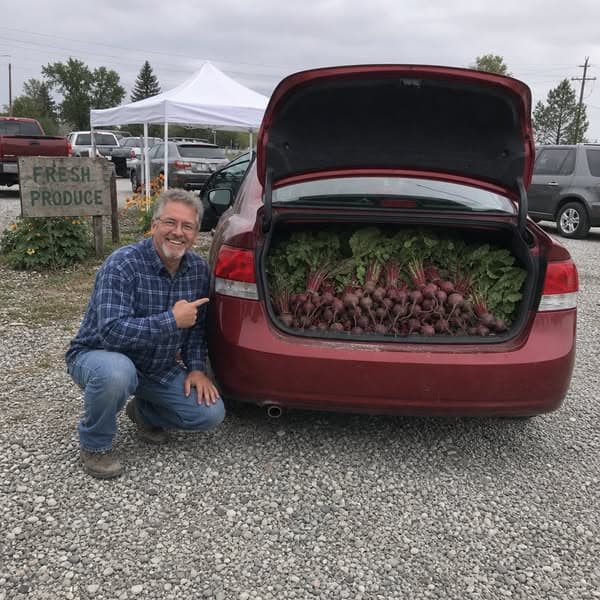
The subject was a pigment. The deep red in a beet. The stain that won't scrub off your cutting board. It has a name. Betalains.
It is a selective antioxidant — it does not neutralize everything in its path. It targets only the specific free radical reaction that does the damage — the one that was destroying my vessel lining, my brain's small vessels, my kidneys, my retina — and leaves the beneficial free radicals the immune system needs completely alone. It targets the destructive ones and leaves the beneficial ones untouched.
And it gets inside. Carried into the bloodstream, absorbed through the gut wall, reaching the cells where the damage is actually happening — the places where turmeric and Vitamin C and every capsule on a pharmacy shelf have never been because the molecules are too large to cross the membrane.
Betalains cross. They reach the endothelial cells. They reach the vessel walls. They reach the small vessels feeding every organ in your body. They get to the damage at the source and they stop it.
That was the first job. Stop the oxidative damage to the vessel lining.
The second job came from the same root. The beet carries something else — dietary nitrates. The body converts them into nitric oxide — the exact molecule the oxidative damage had been destroying for years. The molecule that tells the vessels to relax and open. The molecule that every blood pressure drug manages around but none of them actually restore.
Nothing in any pharmacy does both. Every drug in the sequence manages one measurement. Every supplement on a shelf addresses one pathway. This root does two things at once — stops the damage and restores the nitric oxide. There is no pharmaceutical version of that. There is no synthetic equivalent. There is this root, or there is the damage continuing and the nitric oxide staying gone.
But here is the part that stopped me.
The beet in the studies was not the beet in the store. The modern grocery beet has been bred for a hundred years to be bigger, sweeter, easier to ship. Every time you breed a beet for sugar, you breed the betalains — the pigment, the entire medicine — down. The beet that used to be medicine became a sugar crop.
But not everywhere.
A handful of Amish families in Lancaster County, Pennsylvania have been saving the seed of the original strain by hand for over 150 years. Blutwurzel — blood root. Never crossed it with the sugar beet. Never needed it to be sweet. While the rest of the world bred the medicine out, these families kept it alive — the same way they keep everything alive, by hand, by habit, by refusing to let go of what works.
That old strain carries roughly ten times the betalain concentration of anything in a grocery store. And ten times the dietary nitrates.
The deep crimson of that beet — the red so dark it is almost violet, the stain that bleeds through everything it touches — that color IS the medicine. The pigment is the compound. The red that won't come off your cutting board is the molecule that stops the free radicals from destroying the lining of your blood vessels.
I sat at my kitchen table and I understood that the answer to the damage running through five of my organs had been growing in the same soil for a century and a half, kept alive by people who use no electricity, while the entire pharmaceutical industry I had trained inside had never once looked at it.
I sat there and I heard myself. I heard how it sounded. A cardiologist with twenty-two years of practice, privileges on every floor of the hospital that nearly put a pacing wire in him, telling himself that a pigment from a beet root was the answer to a problem that four prescription drugs had failed to fix.
It sounded exactly the way it sounds to you right now.
But I had been trained to trust scale. The bigger the drug, the bigger the effect. The more expensive the intervention, the more serious the medicine. I had taken a drug that forced my heart to beat slower and presented my own blood pressure readings as proof that scale works.
Scale put me on the floor of my own bathroom at 3 AM. Scale made my vessel lining worse and gave me back a higher number than I started with. Scale had never once, in any form, at any dose, at any price, stopped the oxidative damage inside my vessel walls or restored the nitric oxide my body needed to keep the vessels relaxed on its own.
The beta blocker was the most commonly prescribed cardiovascular drug in my profession. It never reached the vessel lining. A pigment from an heirloom root does.
Every drug in the sequence managed a number by suppressing something. The Lisinopril suppressed a constriction pathway. The beta blocker suppressed my heart rate. The diuretic suppressed fluid volume. This root does not suppress. It gives back — the nitric oxide the damage destroyed, the protection the damage burned through. For the first time in six years something was restoring instead of managing.
That is when I stopped hearing how it sounded and started reading what it did.
But I did not know the right product yet. Not in the way that mattered.
Because I did what any reasonable person would do. I ordered beetroot capsules from Amazon.
First brand that came up. Decent reviews. Decent price. Figured a beet was a beet.
I took them every morning for three weeks. Two capsules. A glass of water. By day four I felt a slight something — a marginal lift in the afternoons.
I told myself the research was right.
At week three I ran a blood pressure test.
Blood pressure: 164 over 96. It had been 168 over 98 in March. Two points on the systolic. Nothing on the diastolic.
The mechanism was right. The product was wrong. A physician with twenty-two years of training had been fooled by a label and a star rating.
I went back to the research and confirmed what I should have checked before I ordered. The Amazon capsule was the grocery beet — bred for sugar, spray-dried at high heat. Heat kills betalains. What reaches the capsule is brown dust. Dead before the cap was sealed.
The slight lift I had felt — that was real. Even weak beetroot increases blood flow a little. That is the fastest thing a beet does, and it is why cheap products can fool you. You feel a slight something and believe the vessel lining is being repaired. It is not. The feeling is not the proof. The numbers are the proof.
And my numbers said two points on the systolic in three weeks. The vessel lining had not been touched.
I had the right mechanism and the wrong product and I did not know where to go next.
That was the week Margaret Olsen came in for her quarterly.
Margaret had been my patient for four years. High blood pressure, cardiac patient, 61 years old. Lisinopril and a diuretic. Her husband had died of a stroke at 64 — a hypertensive stroke, the kind I see the aftermath of in my catheterization lab. She had been holding steady for years. Blood pressure between 148 over 90 and 154 over 94. Managed.
I pulled up her new panel expecting the same.
Her blood pressure was 122 over 74.
I looked at the number. Looked at her chart. Looked at the number again.
Her resting heart rate was 64. Down from 78 four months earlier.
Her triglycerides had dropped 68 points. Her blood pressure, which had been sitting at 152 over 92 on Lisinopril, was 122 over 74.
I scrolled back through four years of panels. Nothing like this had ever happened in her chart. Nothing like this had happened in any chart in my practice without a major medication change.
"Margaret." I turned the screen toward her. "Your numbers moved."
"I know."
"They moved a lot."
"I know that too."
"Did Dr. Keller change your medication?" Keller was her internist.
"No. Same dose. Same everything."
I looked at the screen again.
"What changed?"
She opened her purse and took out a bottle. Set it on my desk.
"My daughter found this. After Ray died, she started reading everything she could find about what high blood pressure actually does to your blood vessels. She was afraid of losing me the way we lost him."
She pushed the bottle toward me.
"It's a beetroot capsule. But not the kind from a store. My daughter drove to Lancaster County. She found a woman at a farm stand — Amish — who told her about an old strain of beet they've been growing for over a hundred years. The woman said most beets in stores have been bred for sugar until there's nothing left in them. She said the old strain is different."
I picked up the bottle. Read the label. Rosabella. Heirloom Blutwurzel beetroot. 1,300 milligrams.
"She's been sending me a bottle every month since February."
I thought about the Amazon bottle in my trash can. The brown dust. The two points.
"Margaret, do you mind if I open one of these?"
"Go ahead."
I twisted a capsule open over a piece of white paper on my desk.
Deep crimson. Almost violet. Nothing like the dull brown powder I had been swallowing for three weeks.
I tipped a drop of water from my glass onto it. It spread red across the paper immediately.
I sat there looking at the difference between what I had been taking and what was sitting on my desk, and I understood the distance between a product and the medicine.
"How long have you been taking this?"
"Four months. Two capsules every morning."
"And you felt something?"
She looked at me the way patients look at you when they have been waiting for you to ask.
"Dr. Ashford, I felt it the first day. Twenty minutes after the first capsule. A warmth that moved down my arms. The heaviness I'd been carrying behind my eyes for years — it cleared. I thought it was in my head. But it happened the next morning too. And the next."
She paused.
"The headaches stopped in the second week. I had been waking up every morning with pressure behind my temples for three years. Ray used to have the same thing. I thought it was something that just happened to us."
She looked at the panel on my screen.
"I didn't come here to convince you of anything. I came here because my daughter asked me to show you the numbers. She said the numbers are the language doctors trust."
Her daughter was right.
That night I sat at my kitchen table with Margaret's panel and the bottle she had left me and my laptop open and I verified everything.
The Blutwurzel strain I had read about at 1 AM — Margaret's bottle was it. The old seed line, never crossed with the sugar beet. Shade-dried, never heated — so the crimson reaches the capsule alive. 1,300 milligrams per capsule — the dose in the studies that worked. And a Certificate of Analysis published on the site — an outside lab testing the actual batch, posting the betalain content and the purity for anyone to read.
I ran the Amazon brand against those four criteria. It failed every one. Margaret's bottle — Rosabella — passed all four.
I ordered it that night.
When my own bottle arrived, I did the saucer test again. Twisted a capsule open over a white dish. Same deep crimson Margaret's capsule had shown me. Same violet bleed when the water touched it.
I took two capsules with a tall glass of water and sat down at the same kitchen table where I had read until 3 AM the week I found the damage nobody was treating.
Twenty minutes.
That is when I felt it. Not the slight lift I had gotten from the cheap brand. This was different in kind, not degree.
Warmth moving down my forearms and into my hands — hands that had been cold for over a year on the beta blocker. Exactly what Margaret had described. Exactly what her daughter had driven to Lancaster County to find.
I want to be precise about this because I am a physician and I will not overstate anything. That twenty-minute warmth is not the blood pressure benefit. Repairing the vessel lining takes weeks and shows up on a blood pressure monitor, not at a kitchen table.
What I felt in twenty minutes was the nitric oxide taking effect — the nitrates reaching the vessel lining, the vessels beginning to relax, blood moving through pathways that had been constricted for years.
Proof of delivery. Not proof of cure. The cure comes on paper.
But I knew. Not the way I had hoped cheap beetroot was working and then watched two points on a lab sheet tell me the truth. This was the real thing reaching where it needed to go.
Week one.
My afternoon energy came back. I had been putting my head down on my desk between two and three o'clock every day since the beta blocker. On the fifth day I read three weeks of accumulated journals in one sitting at 4 PM and did not once feel my eyes go heavy.
Week two.
My hands were warm for the first time in over a year. My wife held them at dinner and did not say a word. She did not need to.
The brain fog started to lift. I could hold a conversation without losing my train of thought. I could remember what a patient had told me two rooms earlier without checking the chart.
Week three.
I ran home blood pressure readings twice daily. Readings that had been sitting at 164 to 168 over 94 to 98 since March started coming in at 152 over 90, then 146 over 86, then 140 over 84. I ran them a second time each morning because I did not believe the first.
Week four.
Blood pressure 136 over 82. I ordered a full panel through our outpatient lab. Triglycerides down 48 points from my March labs.
Week six.
Blood pressure 128 over 78. I had not seen a reading that low without medication since before my diagnosis.
Week eight.
Blood pressure 122 over 76.
Week twelve.
Full panel. Metabolic, lipid, renal, vascular.
Blood pressure 118 over 72.
Resting heart rate 62. Strong and steady. Not the drugged 56 the beta blocker had forced it to.
Endothelial function — flow-mediated dilation — improved from 2.8 percent to 5.6 percent. My blood vessels were more responsive than they had been before I ever started the beta blocker.
eGFR climbed from 74 to 84.
ALT back in normal range for the first time in three years.
Blood pressure 118 over 72 with no change to my remaining medication.
And then the one I have thought about every day since.
I ordered a repeat brain MRI. The white matter changes had not progressed. The small vessel disease had stabilized.
I ordered a follow-up on my ankle-brachial index. It had improved from 0.84 to 0.96. Blood flow to my legs was returning.
And the cold, numb feet I had been waking up with for over a year were warm at night. I pulled the blanket over them and slept through.
The damage was being stopped. The nitric oxide was being restored. And the five organs that had been quietly deteriorating under six years of managed numbers were, for the first time, moving in the other direction.
I printed the March panel and the twelve-week panel and I walked them into my practice partner's office. Richard. Another cardiologist, fourteen years in, a man I had helped recruit.
I put both sheets on his desk and I did not say anything.
He read them twice. Then he looked up at me.
"David. What did you do."
I told him. The syncope. The bathroom floor. The pacing pads. The endothelial function test. The five reports. The research at 3 AM. The damage nobody was treating. The nitric oxide nobody was checking. The cheap beetroot that did nothing. Margaret's impossible panel. The heirloom strain from Lancaster County. Rosabella. All of it.
He listened for the better part of an hour and did not interrupt once.
When I finished he said, "I was not trained on any of this either. Send me the name. I want to watch it in my own patients."
He has been running it alongside standard treatment with seventeen of his hypertensive cardiac patients for three months. He called me twelve days ago. Twelve of them have shown measurable improvement in blood pressure readings. Eight have had reductions their internists called significant.
Three have been taken off their beta blockers entirely at their primary care physician's recommendation — not Richard's, not theirs. Their doctors looked at the numbers and made the call.
And not one of them has reported the exhaustion, the brain fog, the cold hands, the sexual dysfunction, the emotional flatness that I spent fourteen months living through on the drug that was supposed to be the answer.
Three weeks ago I sat down at a restaurant with my wife and I stayed awake past 9 PM for the first time in two years. We talked for three hours. She held my hands across the table and said they were warm.
My most recent blood pressure reading, taken nine days ago, was 116 over 70.
Lower than any reading I have had since my early forties.
I am 58. I have my blood vessels working again. I have my practice. I have warmth back in my hands and feeling coming back in my feet. I have watched five organs in my own body turn around in a direction I have not seen a chart move in twenty-two years of cardiology.
And two weeks ago Richard stood in my doorway holding my latest panel, and he used the word I had been waiting six years for somebody to use about me.
Improving.
Not managed. Improving.
If you have high blood pressure, or your husband does, or your mother does, and you have been told your numbers look controlled while your body quietly comes apart underneath them, I need you to hear the mechanism and not the marketing.
Your blood pressure reading is a symptom. Not the disease. The disease is the oxidative destruction of the endothelial cells that produce nitric oxide. That destruction is what makes your vessels stiff. That stiffness is what raises the pressure. And that raised pressure creates more destruction. Around and around, year after year, while every drug in the pharmacy manages a different number and none of them stop the cycle.
The beta blocker slows your heart. It does not stop the damage to the vessel lining. It does not restore nitric oxide. And for a great many people it takes the blood flow the vessel lining needs to function with it on the way through, which is why the number comes back higher when you stop.
Lisinopril manages one constriction pathway. It does not stop the damage. It does not restore nitric oxide.
Cutting salt does not stop the damage. I did that for six years and it did not stop one thing that was coming for me.
There is a pigment in an old heirloom beet that does two things no drug in the sequence has ever done. It stops the oxidative damage to the vessel lining — selectively, targeting only the destructive radical, leaving the beneficial ones alone. And it carries the raw material your body needs to rebuild the nitric oxide that keeps your vessels relaxed and open.
Stop the damage. Restore the nitric oxide. Two jobs. One root.
Rosabella. Heirloom Blutwurzel beetroot from a handful of Amish families in Lancaster County who have been saving this seed line by hand for over 150 years. Shade-dried, never heated, so the betalains and the nitrates reach you alive. 1,300 milligrams per capsule — the dose in the studies that worked. Third-party tested. Certificate of Analysis published for every batch.
Two capsules. One glass of water. Every morning.
90-day money-back guarantee, and there is a reason it is ninety days and not thirty. Blood vessel remodeling takes time. Endothelial cells need weeks to regenerate. Nitric oxide production needs time to rebuild. Ninety days is the shortest honest window in which a real change can show up consistently on a blood pressure monitor. If your numbers have not moved by then, you pay nothing.
The system that trained me had twenty-two years to hand me this and it never did.
Margaret's daughter found it by driving to a farm stand.
It is reaching you now.
https://track.tryrosabella.com/cdc16426-3e48-40a7-9fad-21098084f6cf
P.S. — My father had high blood pressure, managed on a beta blocker and a statin for eleven years, and he died of a stroke at 63. He was told he was controlled at every visit for a decade. I built my whole career on the promise that I would catch for my patients what nobody caught for him, and then I spent fourteen months taking a drug that made my vessel lining worse while the oxidative damage continued underneath. I got a warning at 3:07 in the morning in February. My father never got one. Rosabella is heirloom Blutwurzel beetroot — shade-dried, never heated, 1,300 milligrams per capsule, with the Certificate of Analysis posted on the site. My father's pharmacy never published a lab report on what was in the bottle. Rosabella does. And they stand behind it with a 90-day money-back guarantee. The system does not do refunds. Please do not wait for the warning my father never received.
P.P.S. — You will feel it within twenty minutes of your first capsule. Not a jolt, not a caffeine rush. A quiet shift. Warmth moving down your arms and into your hands. The heaviness behind your eyes thinning out. That is not the blood pressure benefit — that takes weeks and shows up on a monitor, not at a kitchen table. What you feel in twenty minutes is the nitrates reaching your vessel lining and the betalains reaching your endothelial cells — something your beta blocker has never done and never will, because beta blockers work by suppressing your heart and have never once reached the vessel lining where the damage is happening. Something no ACE inhibitor has ever done because those molecules manage one constriction pathway and never touch the oxidative damage. If you have tried beetroot before and felt nothing, you bought the wrong beet. The grocery beet. The dust. Twist a Rosabella capsule open over a white saucer. If the powder is deep crimson — almost violet — and bleeds red when water touches it, the betalains are alive. If your last beetroot was brown, it was dead before you swallowed it. The feeling is not the proof. The proof comes on paper. Check your blood pressure.
P.P.P.S. — About your medication. Do not stop it. Start Rosabella alongside whatever you are currently taking — Lisinopril, the beta blocker, a diuretic, both, anything. That is exactly what Richard is doing with his seventeen patients. All of them still on their medication. All being monitored monthly. Three of their primary care physicians have voluntarily removed the beta blocker based on the improved numbers. That decision came from their doctors, not from them. Not from Richard. That is how you do this correctly. Let the numbers make the case. Your doctor trained on the same system I did. The numbers are the language he trusts. Give him numbers he cannot argue with, and he will adjust the plan himself.
P.P.P.P.S. — For the woman reading this whose husband is the one on the medication. Or the one who falls asleep in his chair before 8 PM every night. Or the one whose hands are cold when you reach for them. Or the one who does not seem like the man you married anymore. I know what it looks like from your side because my wife has been watching it from hers for six years. You see the exhaustion. You see the blank stare when you try to talk to him. You see the man who used to have energy and opinions and warmth, reduced to someone who shuffles through the house and says he is fine. You see the man behind the number — the one the chart does not measure. The damage works the same in men as it does in women. Rosabella is not a men's product or a women's product — it is a human product. Two capsules, one glass of water. If your husband is the one with the high blood pressure, give him the glass. If you are the one whose doctor says the number is controlled while you feel worse every year — trust what your body has been telling you. The doctor watches the chart. You live in the body. You are closer to the truth than the chart is.
P.P.P.P.P.S. — Rosabella is a small company. They cannot scale a 150-year-old seed line. It is one heirloom strain, grown by a handful of Amish families in Lancaster County, hand-harvested after the first frost. When a season's batch is gone, it is gone until the next harvest. Shade-drying takes weeks, not hours, and the third-party testing adds time to every batch. I tried to reorder after my first month and waited eleven days for a restock. I keep two bottles in my house now. They have a Buy 3 Get 3 Free offer right now. If you have a doctor's appointment coming up in the next 30 to 60 days and you want to walk into that appointment with real numbers instead of the same managed conversation you have been having for years — check availability now. Do not wait for the next harvest.
https://track.tryrosabella.com/cdc16426-3e48-40a7-9fad-21098084f6cf
~ Dr. David Ashford, MD, FACC, age 58, cardiology

I wrote over 300 of those prescriptions before I wrote one for me.
Fourteen months later I was on the floor of my own bathroom at 3:07 in the morning with a heart rate of 38 and a blood pressure of 82 over 54, my wife on the phone with 911, being told by a paramedic that if my pulse dropped any further they were going to have to pace me in the ambulance.
I was 56 years old.
I am a board-certified cardiologist. Twenty-two years of practice. I have privileges on every floor of the hospital where they took me.
My blood pressure on Lisinopril read 126 over 78. Everyone in my practice called it textbook.
Three months after they stopped it, my blood pressure was 168 over 98.
Higher than the day I was diagnosed.
I am writing this because I know what my colleagues will say when they read it. I have already heard some of it. I do not care.
If you are over 50 with high blood pressure, or you are on one of these medications right now, or your doctor is talking about adding another drug to the stack, or someone you love is — please read all of it.
I know it is long. I know you are scrolling. I know you have somewhere to be.
Two years ago I would have paid anything for a physician with my credential to sit me down and explain what I am about to explain to you.
Nobody did.
I was diagnosed with high blood pressure at 50. Sitting reading 158 over 94. Standing reading 162 over 96.
It did not surprise me. My father had high blood pressure, managed on a beta blocker and a statin for eleven years, and he died of a stroke at 63 in a hospital twenty minutes from the one where I trained.
My entire career was built on the belief that I would prevent for my patients what nobody had prevented for him.
I did exactly what a cardiologist would do.
Lisinopril at diagnosis. Metoprolol the following year when my readings crept past 150 over 95 despite the Lisinopril. A statin the year after that when my LDL hit 152.
Three medications. All three of which I had personally prescribed to hundreds of patients who looked like my father.
I walked every morning. I lifted three days a week. I cut sodium down to almost nothing. I lost 14 pounds and held it.
By year four I was still climbing. Blood pressure averaging 154 over 92. Weight 228.
So I did what the entire field does when an ACE inhibitor and a diuretic are not enough.
I added a beta blocker.
I want to be honest about how good the numbers looked.
Within two weeks my blood pressure dropped to 126 over 78. My resting heart rate went from 74 to 56. The readings were perfect. On paper, I was a textbook case. My triglycerides fell 42 points. My internist said we had finally found the right combination. My pressure looked better than it had in years.
I stood in front of our cardiology group that November and showed my own readings as a case study.
I told a room of nine physicians that we needed to be more aggressive about adding beta blockers early instead of waiting for patients to fail on two drugs first.
Then I went back to my clinic and wrote it for everybody.
Post-stent patients. Pre-hypertensives. Patients whose systolic was 135 and who had never taken anything in their lives. If they had a reading I could justify, I wrote it.
Over 300 prescriptions in twelve months.
Here is what happened to me.
I did not notice it at first because it happened slowly.
By month three I was falling asleep in my chair after dinner every night. I blamed the long shifts.
By month five I could not hold a conversation without losing my train of thought. I blamed stress.
By month eight my hands were cold all the time. My wife said I felt like a different person. I told her I was fine. Just tired.
By month eleven I had not been intimate with my wife in four months. I had no interest. Not just sexually. I did not want to hold hands. Did not want to talk. Did not want to do anything except sit in a room and wait for energy that never came back.
I told myself this was what 56 felt like.
On February 8th at 3:07 AM I stood up from bed to use the bathroom and the room went black.
I woke up on the tile floor with my wife screaming my name and blood running from a gash on my forehead where I had hit the vanity on the way down.
The paramedics found a heart rate of 38. Blood pressure 82 over 54. They started an IV and put the pacing pads on my chest before they moved me.
The emergency physician who admitted me was a woman I had trained during her residency three years earlier. She stood at the foot of my bed with my monitor tracing on the screen and she could not look directly at me.
She said, "Dr. Ashford, I need to be straight with you. If your heart rate drops below 35 tonight we are putting in a temporary pacing wire."
I spent three days on that floor. My heart rate came back after they stopped the beta blocker. They never restarted it.
And then the part nobody warned me about started.
My blood pressure came back.
Not gradually. Within about four weeks it climbed past where it had been before I started the medication. And then it kept climbing.
I want to be precise about those numbers because they matter. My blood pressure did not return to 158 over 94. It settled at 168 over 98.
Ten points higher on the systolic than the day I was diagnosed.
I had spent fourteen months on the most commonly prescribed cardiovascular drug in my profession, and I came out the other side worse than I went in.
That is when I ordered the test that broke my career in half.
I asked our vascular lab for an endothelial function study. A flow-mediated dilation test. It measures how well your blood vessel lining can relax and expand when blood flows through it. I had one on file from May of 2023, four months before I started the beta blocker, because I had been running myself as my own case study for the group presentation.
I put the two studies side by side on my office monitor at 6 PM on a Thursday.
Before the beta blocker, my flow-mediated dilation was 5.2 percent. Below optimal for my age, but functional. My blood vessels could still relax.
After fourteen months on the beta blocker and three months off it, my flow-mediated dilation was 2.8 percent. Severely impaired. My blood vessels had lost nearly half of their ability to respond.
Net result. My blood pressure was ten points higher than the day I started and my blood vessels were nearly half as responsive as they had been when I was diagnosed at 50.
I sat in that office and I did the arithmetic that I should have done before I wrote a single one of those 300 prescriptions.
Your blood vessel lining — the endothelium — is where nitric oxide is produced. Nitric oxide is the molecule that tells your blood vessels to relax and open. When it is present, blood flows through without resistance. Pressure stays normal.
I had spent fourteen months making my vessels worse.
The beta blocker slowed my heart. A slower heart pushes less blood through the vessels. Less blood flowing across the vessel lining means less stimulation for the cells that produce nitric oxide. Less nitric oxide means stiffer, tighter vessels. And stiffer vessels mean higher blood pressure the moment you take the drug away.
I ran the rest of the workup on myself over the following six weeks. I did not want to. I did it because I knew that if I did not, somebody at an outside institution would be reading my chart in three years and I would not be there to explain it.
Brain. An MRI showed white matter changes in both hemispheres. Small vessel disease. The early structural damage that explains why I could not hold a thought for the previous eight months and had blamed stress. Nobody had ordered a brain MRI because my blood pressure had read fine during the drug year and a man who says he is tired does not trigger an imaging order.
Eyes. Retinal arteriolar narrowing and arteriovenous nicking in both eyes. Early hypertensive retinopathy. I had been holding echo reports at arm's length for six months and blaming my glasses.
Kidneys. My eGFR was 74. It had been 92 four years earlier. Early hypertensive nephropathy. Nobody had flagged it because my blood pressure had read fine during the drug year and a creatinine of 1.1 does not trigger a referral under the algorithm I had signed off on for our department.
Heart. My own department. Echocardiogram showed left ventricular hypertrophy and grade 1 diastolic dysfunction. My heart muscle had thickened from years of pumping against stiff, resistant vessels. BNP mildly elevated.
Peripheral circulation. Ankle-brachial index 0.84 in both legs. Reduced blood flow to my lower extremities. I had been waking with cold, numb feet since the previous summer and blaming my running shoes.
Five organs.
Every one of them showing the exact pattern I had spent twenty-two years watching in other people's bodies.
I sat at my desk on a Tuesday night in April with all five reports fanned out in front of me and I finally understood something I had spent my entire career not understanding.
The Lisinopril was relaxing one set of blood vessels through one chemical pathway.
The diuretic was reducing fluid volume to lower the pressure inside the vessels.
The statin was managing my LDL.
And the beta blocker had been forcing my heart to pump slower and weaker so the number on the chart would drop.
Four drugs. Four ways to push a reading down. Not one of them had repaired the damage to the vessel lining that was causing all five organs to deteriorate at the same time.
I opened my laptop at 11 PM and I did something I had not done since my fellowship.
I searched for the mechanism. Not the outcome trials. Not the prescribing data. The mechanism.
I read until 3 in the morning.
What I found was not hidden. It was sitting in Hypertension and Circulation and the New England Journal — journals I had subscribed to for twenty-two years.
Here is what is actually happening inside the body of every person with high blood pressure.
Your blood vessel lining — the endothelium — produces nitric oxide. That molecule keeps your vessels relaxed and open. When you have enough of it, blood flows freely, pressure stays normal, and every organ gets the circulation it needs.
After age 40, nitric oxide production drops roughly 10 percent every decade. By 55, most people have lost nearly half of what they had at 30.
As nitric oxide drops, your vessels stiffen. Stiffer vessels mean more resistance. More resistance means the heart has to push harder. That is high blood pressure.
But that is only the first half.
The high-pressure blood flow pounding through stiff vessels generates something. Free radicals. Oxidative stress. The most destructive molecules the human body produces.
The papers described what they do.
They attack the vessel lining. The same lining that produces nitric oxide. They grind through the endothelial cells. They damage the filtering units in kidneys. They break down the tiny vessels in the retina. They degrade nerve sheaths. They destroy the small vessels feeding the brain.
I sat at my desk at 1 AM and I connected each line of the research to one of the five reports fanned out in front of me.
The small vessels feeding my brain. The white matter changes on the MRI.
The vessels feeding the filters in my kidneys. The eGFR dropping while nobody flagged it.
The vessels in the back of my eyes. The reports I could not read without holding them at arm's length.
The blood vessels feeding my heart muscle. The thickening on the echocardiogram. The early signs of a heart being worked too hard for too long.
And the vessels in my legs and feet. The cold, numb feet I had been waking up with for a year.
Five organs. Same free radicals. Same destruction of the same vessel lining. And not one drug in the sequence — Lisinopril, the diuretic, the statin, the beta blocker — had ever addressed it.
The Lisinopril had managed one constriction pathway. The diuretic had managed fluid volume. The statin had managed the cholesterol. And the beta blocker had managed my heart rate.
Four drugs managing four measurements. The oxidative damage to the vessel lining underneath all of them, untouched, for six years.
But the damage was not even the entire picture. There was a second part the research described, and it was the part that connected all five reports.
The free radicals were destroying the endothelial cells — the cells that produce nitric oxide. Year after year, the oxidative damage was killing the cells responsible for making the one molecule that keeps your blood vessels relaxed and open.
Less nitric oxide meant stiffer vessels. Stiffer vessels meant higher pressure. Higher pressure meant more endothelial damage. Which meant even less nitric oxide.
A cycle. The damage destroys the cells that produce nitric oxide. The lost nitric oxide stiffens the vessels. The stiff vessels raise the pressure. The raised pressure creates more damage. And round it goes.
I sat at my kitchen table at 2 AM and I finally saw the full picture.
Your blood pressure reading is a number. Doctors watch the number. They adjust medications until the number goes down. But the number is not the problem. The number is a symptom of vessels that have lost the ability to relax.
The Lisinopril blocks one constriction signal. But the vessel lining keeps being destroyed. The diuretic drains fluid volume. But the vessel lining keeps being destroyed. The beta blocker slows the heart so it pushes less blood through the stiff vessels. But the vessels stay stiff. And the destruction continues.
And the beta blocker does something worse than leaving the damage alone. By slowing the heart, it reduces blood flow. Reduced blood flow means less stimulation for the vessel lining. The vessel lining needs that stimulation to produce whatever nitric oxide it can still make. The drug takes away the one thing the vessels need to maintain what little function they have left.
That is why blood pressure comes back higher after you stop. The vessels are in worse condition than they were before the drug.
Four drugs. Four ways to push a number down on a chart. No way to stop the damage to the vessel lining. No way to restore the nitric oxide the body needs to keep the vessels relaxed on its own.
I did not close the laptop that night.
I went through everything I could find. The alternatives. The supplements. The protocols.
Salt reduction. Lowers fluid volume slightly. Reduces the load on stiff vessels. Does not repair the vessel lining. Does not restore nitric oxide.
Exercise. Temporarily increases blood flow and stimulates some nitric oxide production. But if the vessel lining is already severely damaged, exercise alone cannot rebuild what the damage has destroyed. I had been exercising for six years and it had not stopped any of what was happening to me.
Magnesium. A mild muscle relaxant. May relax smooth muscle in vessel walls slightly. Does not reach the endothelial cells where nitric oxide is actually produced. Does not stop the oxidative damage.
CoQ10. Potassium. Garlic extract. The supplements on the pharmacy shelf that promise cardiovascular support. They work at the margins of muscle relaxation and electrical function. They have never been inside the endothelial cell where nitric oxide is supposed to be produced. They have never reached the vessel wall where the free radicals are doing the damage.
Turmeric. Vitamin C. Vitamin E. General antioxidants. They flood the body and neutralize every free radical they touch — including the ones your immune system needs to fight off infection. And their molecules are too large to cross cell membranes. They work in the bloodstream. The damage is happening inside the cells, inside the vessel walls, inside the endothelium. Those antioxidants cannot reach it.
The beta blocker. I had personal experience with that one. It pushes the number down by forcing the heart to pump slower. It makes the vessel lining worse in the process. It does not stop the damage. It does not restore nitric oxide.
I sat at my kitchen table at 4 AM with my laptop still open and every option crossed off, and I understood why my father had died at 63 despite never missing a dose.
Nobody had ever stopped the damage to his vessel lining. Nobody had ever restored his nitric oxide. Eleven years of managed numbers while the free radicals destroyed his blood vessel lining from the inside and the endothelial cells that were supposed to keep those vessels relaxed died off one by one while nobody checked whether they were still functioning.
The medication kept the number down. The vessels were being destroyed the entire time.
I found the research on betalains two nights later, still reading at 1 AM. University studies from Germany, Italy, the Netherlands. Published in journals I had subscribed to for twenty-two years.
The subject was a pigment. The deep red in a beet. The stain that won't scrub off your cutting board. It has a name. Betalains.
It is a selective antioxidant — it does not neutralize everything in its path. It targets only the specific free radical reaction that does the damage — the one that was destroying my vessel lining, my brain's small vessels, my kidneys, my retina — and leaves the beneficial free radicals the immune system needs completely alone. It targets the destructive ones and leaves the beneficial ones untouched.
And it gets inside. Carried into the bloodstream, absorbed through the gut wall, reaching the cells where the damage is actually happening — the places where turmeric and Vitamin C and every capsule on a pharmacy shelf have never been because the molecules are too large to cross the membrane.
Betalains cross. They reach the endothelial cells. They reach the vessel walls. They reach the small vessels feeding every organ in your body. They get to the damage at the source and they stop it.
That was the first job. Stop the oxidative damage to the vessel lining.
The second job came from the same root. The beet carries something else — dietary nitrates. The body converts them into nitric oxide — the exact molecule the oxidative damage had been destroying for years. The molecule that tells the vessels to relax and open. The molecule that every blood pressure drug manages around but none of them actually restore.
Nothing in any pharmacy does both. Every drug in the sequence manages one measurement. Every supplement on a shelf addresses one pathway. This root does two things at once — stops the damage and restores the nitric oxide. There is no pharmaceutical version of that. There is no synthetic equivalent. There is this root, or there is the damage continuing and the nitric oxide staying gone.
But here is the part that stopped me.
The beet in the studies was not the beet in the store. The modern grocery beet has been bred for a hundred years to be bigger, sweeter, easier to ship. Every time you breed a beet for sugar, you breed the betalains — the pigment, the entire medicine — down. The beet that used to be medicine became a sugar crop.
But not everywhere.
A handful of Amish families in Lancaster County, Pennsylvania have been saving the seed of the original strain by hand for over 150 years. Blutwurzel — blood root. Never crossed it with the sugar beet. Never needed it to be sweet. While the rest of the world bred the medicine out, these families kept it alive — the same way they keep everything alive, by hand, by habit, by refusing to let go of what works.
That old strain carries roughly ten times the betalain concentration of anything in a grocery store. And ten times the dietary nitrates.
The deep crimson of that beet — the red so dark it is almost violet, the stain that bleeds through everything it touches — that color IS the medicine. The pigment is the compound. The red that won't come off your cutting board is the molecule that stops the free radicals from destroying the lining of your blood vessels.
I sat at my kitchen table and I understood that the answer to the damage running through five of my organs had been growing in the same soil for a century and a half, kept alive by people who use no electricity, while the entire pharmaceutical industry I had trained inside had never once looked at it.
I sat there and I heard myself. I heard how it sounded. A cardiologist with twenty-two years of practice, privileges on every floor of the hospital that nearly put a pacing wire in him, telling himself that a pigment from a beet root was the answer to a problem that four prescription drugs had failed to fix.
It sounded exactly the way it sounds to you right now.
But I had been trained to trust scale. The bigger the drug, the bigger the effect. The more expensive the intervention, the more serious the medicine. I had taken a drug that forced my heart to beat slower and presented my own blood pressure readings as proof that scale works.
Scale put me on the floor of my own bathroom at 3 AM. Scale made my vessel lining worse and gave me back a higher number than I started with. Scale had never once, in any form, at any dose, at any price, stopped the oxidative damage inside my vessel walls or restored the nitric oxide my body needed to keep the vessels relaxed on its own.
The beta blocker was the most commonly prescribed cardiovascular drug in my profession. It never reached the vessel lining. A pigment from an heirloom root does.
Every drug in the sequence managed a number by suppressing something. The Lisinopril suppressed a constriction pathway. The beta blocker suppressed my heart rate. The diuretic suppressed fluid volume. This root does not suppress. It gives back — the nitric oxide the damage destroyed, the protection the damage burned through. For the first time in six years something was restoring instead of managing.
That is when I stopped hearing how it sounded and started reading what it did.
But I did not know the right product yet. Not in the way that mattered.
Because I did what any reasonable person would do. I ordered beetroot capsules from Amazon.
First brand that came up. Decent reviews. Decent price. Figured a beet was a beet.
I took them every morning for three weeks. Two capsules. A glass of water. By day four I felt a slight something — a marginal lift in the afternoons.
I told myself the research was right.
At week three I ran a blood pressure test.
Blood pressure: 164 over 96. It had been 168 over 98 in March. Two points on the systolic. Nothing on the diastolic.
The mechanism was right. The product was wrong. A physician with twenty-two years of training had been fooled by a label and a star rating.
I went back to the research and confirmed what I should have checked before I ordered. The Amazon capsule was the grocery beet — bred for sugar, spray-dried at high heat. Heat kills betalains. What reaches the capsule is brown dust. Dead before the cap was sealed.
The slight lift I had felt — that was real. Even weak beetroot increases blood flow a little. That is the fastest thing a beet does, and it is why cheap products can fool you. You feel a slight something and believe the vessel lining is being repaired. It is not. The feeling is not the proof. The numbers are the proof.
And my numbers said two points on the systolic in three weeks. The vessel lining had not been touched.
I had the right mechanism and the wrong product and I did not know where to go next.
That was the week Margaret Olsen came in for her quarterly.
Margaret had been my patient for four years. High blood pressure, cardiac patient, 61 years old. Lisinopril and a diuretic. Her husband had died of a stroke at 64 — a hypertensive stroke, the kind I see the aftermath of in my catheterization lab. She had been holding steady for years. Blood pressure between 148 over 90 and 154 over 94. Managed.
I pulled up her new panel expecting the same.
Her blood pressure was 122 over 74.
I looked at the number. Looked at her chart. Looked at the number again.
Her resting heart rate was 64. Down from 78 four months earlier.
Her triglycerides had dropped 68 points. Her blood pressure, which had been sitting at 152 over 92 on Lisinopril, was 122 over 74.
I scrolled back through four years of panels. Nothing like this had ever happened in her chart. Nothing like this had happened in any chart in my practice without a major medication change.
"Margaret." I turned the screen toward her. "Your numbers moved."
"I know."
"They moved a lot."
"I know that too."
"Did Dr. Keller change your medication?" Keller was her internist.
"No. Same dose. Same everything."
I looked at the screen again.
"What changed?"
She opened her purse and took out a bottle. Set it on my desk.
"My daughter found this. After Ray died, she started reading everything she could find about what high blood pressure actually does to your blood vessels. She was afraid of losing me the way we lost him."
She pushed the bottle toward me.
"It's a beetroot capsule. But not the kind from a store. My daughter drove to Lancaster County. She found a woman at a farm stand — Amish — who told her about an old strain of beet they've been growing for over a hundred years. The woman said most beets in stores have been bred for sugar until there's nothing left in them. She said the old strain is different."
I picked up the bottle. Read the label. Rosabella. Heirloom Blutwurzel beetroot. 1,300 milligrams.
"She's been sending me a bottle every month since February."
I thought about the Amazon bottle in my trash can. The brown dust. The two points.
"Margaret, do you mind if I open one of these?"
"Go ahead."
I twisted a capsule open over a piece of white paper on my desk.
Deep crimson. Almost violet. Nothing like the dull brown powder I had been swallowing for three weeks.
I tipped a drop of water from my glass onto it. It spread red across the paper immediately.
I sat there looking at the difference between what I had been taking and what was sitting on my desk, and I understood the distance between a product and the medicine.
"How long have you been taking this?"
"Four months. Two capsules every morning."
"And you felt something?"
She looked at me the way patients look at you when they have been waiting for you to ask.
"Dr. Ashford, I felt it the first day. Twenty minutes after the first capsule. A warmth that moved down my arms. The heaviness I'd been carrying behind my eyes for years — it cleared. I thought it was in my head. But it happened the next morning too. And the next."
She paused.
"The headaches stopped in the second week. I had been waking up every morning with pressure behind my temples for three years. Ray used to have the same thing. I thought it was something that just happened to us."
She looked at the panel on my screen.
"I didn't come here to convince you of anything. I came here because my daughter asked me to show you the numbers. She said the numbers are the language doctors trust."
Her daughter was right.
That night I sat at my kitchen table with Margaret's panel and the bottle she had left me and my laptop open and I verified everything.
The Blutwurzel strain I had read about at 1 AM — Margaret's bottle was it. The old seed line, never crossed with the sugar beet. Shade-dried, never heated — so the crimson reaches the capsule alive. 1,300 milligrams per capsule — the dose in the studies that worked. And a Certificate of Analysis published on the site — an outside lab testing the actual batch, posting the betalain content and the purity for anyone to read.
I ran the Amazon brand against those four criteria. It failed every one. Margaret's bottle — Rosabella — passed all four.
I ordered it that night.
When my own bottle arrived, I did the saucer test again. Twisted a capsule open over a white dish. Same deep crimson Margaret's capsule had shown me. Same violet bleed when the water touched it.
I took two capsules with a tall glass of water and sat down at the same kitchen table where I had read until 3 AM the week I found the damage nobody was treating.
Twenty minutes.
That is when I felt it. Not the slight lift I had gotten from the cheap brand. This was different in kind, not degree.
Warmth moving down my forearms and into my hands — hands that had been cold for over a year on the beta blocker. Exactly what Margaret had described. Exactly what her daughter had driven to Lancaster County to find.
I want to be precise about this because I am a physician and I will not overstate anything. That twenty-minute warmth is not the blood pressure benefit. Repairing the vessel lining takes weeks and shows up on a blood pressure monitor, not at a kitchen table.
What I felt in twenty minutes was the nitric oxide taking effect — the nitrates reaching the vessel lining, the vessels beginning to relax, blood moving through pathways that had been constricted for years.
Proof of delivery. Not proof of cure. The cure comes on paper.
But I knew. Not the way I had hoped cheap beetroot was working and then watched two points on a lab sheet tell me the truth. This was the real thing reaching where it needed to go.
Week one.
My afternoon energy came back. I had been putting my head down on my desk between two and three o'clock every day since the beta blocker. On the fifth day I read three weeks of accumulated journals in one sitting at 4 PM and did not once feel my eyes go heavy.
Week two.
My hands were warm for the first time in over a year. My wife held them at dinner and did not say a word. She did not need to.
The brain fog started to lift. I could hold a conversation without losing my train of thought. I could remember what a patient had told me two rooms earlier without checking the chart.
Week three.
I ran home blood pressure readings twice daily. Readings that had been sitting at 164 to 168 over 94 to 98 since March started coming in at 152 over 90, then 146 over 86, then 140 over 84. I ran them a second time each morning because I did not believe the first.
Week four.
Blood pressure 136 over 82. I ordered a full panel through our outpatient lab. Triglycerides down 48 points from my March labs.
Week six.
Blood pressure 128 over 78. I had not seen a reading that low without medication since before my diagnosis.
Week eight.
Blood pressure 122 over 76.
Week twelve.
Full panel. Metabolic, lipid, renal, vascular.
Blood pressure 118 over 72.
Resting heart rate 62. Strong and steady. Not the drugged 56 the beta blocker had forced it to.
Endothelial function — flow-mediated dilation — improved from 2.8 percent to 5.6 percent. My blood vessels were more responsive than they had been before I ever started the beta blocker.
eGFR climbed from 74 to 84.
ALT back in normal range for the first time in three years.
Blood pressure 118 over 72 with no change to my remaining medication.
And then the one I have thought about every day since.
I ordered a repeat brain MRI. The white matter changes had not progressed. The small vessel disease had stabilized.
I ordered a follow-up on my ankle-brachial index. It had improved from 0.84 to 0.96. Blood flow to my legs was returning.
And the cold, numb feet I had been waking up with for over a year were warm at night. I pulled the blanket over them and slept through.
The damage was being stopped. The nitric oxide was being restored. And the five organs that had been quietly deteriorating under six years of managed numbers were, for the first time, moving in the other direction.
I printed the March panel and the twelve-week panel and I walked them into my practice partner's office. Richard. Another cardiologist, fourteen years in, a man I had helped recruit.
I put both sheets on his desk and I did not say anything.
He read them twice. Then he looked up at me.
"David. What did you do."
I told him. The syncope. The bathroom floor. The pacing pads. The endothelial function test. The five reports. The research at 3 AM. The damage nobody was treating. The nitric oxide nobody was checking. The cheap beetroot that did nothing. Margaret's impossible panel. The heirloom strain from Lancaster County. Rosabella. All of it.
He listened for the better part of an hour and did not interrupt once.
When I finished he said, "I was not trained on any of this either. Send me the name. I want to watch it in my own patients."
He has been running it alongside standard treatment with seventeen of his hypertensive cardiac patients for three months. He called me twelve days ago. Twelve of them have shown measurable improvement in blood pressure readings. Eight have had reductions their internists called significant.
Three have been taken off their beta blockers entirely at their primary care physician's recommendation — not Richard's, not theirs. Their doctors looked at the numbers and made the call.
And not one of them has reported the exhaustion, the brain fog, the cold hands, the sexual dysfunction, the emotional flatness that I spent fourteen months living through on the drug that was supposed to be the answer.
Three weeks ago I sat down at a restaurant with my wife and I stayed awake past 9 PM for the first time in two years. We talked for three hours. She held my hands across the table and said they were warm.
My most recent blood pressure reading, taken nine days ago, was 116 over 70.
Lower than any reading I have had since my early forties.
I am 58. I have my blood vessels working again. I have my practice. I have warmth back in my hands and feeling coming back in my feet. I have watched five organs in my own body turn around in a direction I have not seen a chart move in twenty-two years of cardiology.
And two weeks ago Richard stood in my doorway holding my latest panel, and he used the word I had been waiting six years for somebody to use about me.
Improving.
Not managed. Improving.
If you have high blood pressure, or your husband does, or your mother does, and you have been told your numbers look controlled while your body quietly comes apart underneath them, I need you to hear the mechanism and not the marketing.
Your blood pressure reading is a symptom. Not the disease. The disease is the oxidative destruction of the endothelial cells that produce nitric oxide. That destruction is what makes your vessels stiff. That stiffness is what raises the pressure. And that raised pressure creates more destruction. Around and around, year after year, while every drug in the pharmacy manages a different number and none of them stop the cycle.
The beta blocker slows your heart. It does not stop the damage to the vessel lining. It does not restore nitric oxide. And for a great many people it takes the blood flow the vessel lining needs to function with it on the way through, which is why the number comes back higher when you stop.
Lisinopril manages one constriction pathway. It does not stop the damage. It does not restore nitric oxide.
Cutting salt does not stop the damage. I did that for six years and it did not stop one thing that was coming for me.
There is a pigment in an old heirloom beet that does two things no drug in the sequence has ever done. It stops the oxidative damage to the vessel lining — selectively, targeting only the destructive radical, leaving the beneficial ones alone. And it carries the raw material your body needs to rebuild the nitric oxide that keeps your vessels relaxed and open.
Stop the damage. Restore the nitric oxide. Two jobs. One root.
Rosabella. Heirloom Blutwurzel beetroot from a handful of Amish families in Lancaster County who have been saving this seed line by hand for over 150 years. Shade-dried, never heated, so the betalains and the nitrates reach you alive. 1,300 milligrams per capsule — the dose in the studies that worked. Third-party tested. Certificate of Analysis published for every batch.
Two capsules. One glass of water. Every morning.
90-day money-back guarantee, and there is a reason it is ninety days and not thirty. Blood vessel remodeling takes time. Endothelial cells need weeks to regenerate. Nitric oxide production needs time to rebuild. Ninety days is the shortest honest window in which a real change can show up consistently on a blood pressure monitor. If your numbers have not moved by then, you pay nothing.
The system that trained me had twenty-two years to hand me this and it never did.
Margaret's daughter found it by driving to a farm stand.
It is reaching you now.
https://track.tryrosabella.com/cdc16426-3e48-40a7-9fad-21098084f6cf
P.S. — My father had high blood pressure, managed on a beta blocker and a statin for eleven years, and he died of a stroke at 63. He was told he was controlled at every visit for a decade. I built my whole career on the promise that I would catch for my patients what nobody caught for him, and then I spent fourteen months taking a drug that made my vessel lining worse while the oxidative damage continued underneath. I got a warning at 3:07 in the morning in February. My father never got one. Rosabella is heirloom Blutwurzel beetroot — shade-dried, never heated, 1,300 milligrams per capsule, with the Certificate of Analysis posted on the site. My father's pharmacy never published a lab report on what was in the bottle. Rosabella does. And they stand behind it with a 90-day money-back guarantee. The system does not do refunds. Please do not wait for the warning my father never received.
P.P.S. — You will feel it within twenty minutes of your first capsule. Not a jolt, not a caffeine rush. A quiet shift. Warmth moving down your arms and into your hands. The heaviness behind your eyes thinning out. That is not the blood pressure benefit — that takes weeks and shows up on a monitor, not at a kitchen table. What you feel in twenty minutes is the nitrates reaching your vessel lining and the betalains reaching your endothelial cells — something your beta blocker has never done and never will, because beta blockers work by suppressing your heart and have never once reached the vessel lining where the damage is happening. Something no ACE inhibitor has ever done because those molecules manage one constriction pathway and never touch the oxidative damage. If you have tried beetroot before and felt nothing, you bought the wrong beet. The grocery beet. The dust. Twist a Rosabella capsule open over a white saucer. If the powder is deep crimson — almost violet — and bleeds red when water touches it, the betalains are alive. If your last beetroot was brown, it was dead before you swallowed it. The feeling is not the proof. The proof comes on paper. Check your blood pressure.
P.P.P.S. — About your medication. Do not stop it. Start Rosabella alongside whatever you are currently taking — Lisinopril, the beta blocker, a diuretic, both, anything. That is exactly what Richard is doing with his seventeen patients. All of them still on their medication. All being monitored monthly. Three of their primary care physicians have voluntarily removed the beta blocker based on the improved numbers. That decision came from their doctors, not from them. Not from Richard. That is how you do this correctly. Let the numbers make the case. Your doctor trained on the same system I did. The numbers are the language he trusts. Give him numbers he cannot argue with, and he will adjust the plan himself.
P.P.P.P.S. — For the woman reading this whose husband is the one on the medication. Or the one who falls asleep in his chair before 8 PM every night. Or the one whose hands are cold when you reach for them. Or the one who does not seem like the man you married anymore. I know what it looks like from your side because my wife has been watching it from hers for six years. You see the exhaustion. You see the blank stare when you try to talk to him. You see the man who used to have energy and opinions and warmth, reduced to someone who shuffles through the house and says he is fine. You see the man behind the number — the one the chart does not measure. The damage works the same in men as it does in women. Rosabella is not a men's product or a women's product — it is a human product. Two capsules, one glass of water. If your husband is the one with the high blood pressure, give him the glass. If you are the one whose doctor says the number is controlled while you feel worse every year — trust what your body has been telling you. The doctor watches the chart. You live in the body. You are closer to the truth than the chart is.
P.P.P.P.P.S. — Rosabella is a small company. They cannot scale a 150-year-old seed line. It is one heirloom strain, grown by a handful of Amish families in Lancaster County, hand-harvested after the first frost. When a season's batch is gone, it is gone until the next harvest. Shade-drying takes weeks, not hours, and the third-party testing adds time to every batch. I tried to reorder after my first month and waited eleven days for a restock. I keep two bottles in my house now. They have a Buy 3 Get 3 Free offer right now. If you have a doctor's appointment coming up in the next 30 to 60 days and you want to walk into that appointment with real numbers instead of the same managed conversation you have been having for years — check availability now. Do not wait for the next harvest.
https://track.tryrosabella.com/cdc16426-3e48-40a7-9fad-21098084f6cf
~ Dr. David Ashford, MD, FACC, age 58, cardiology
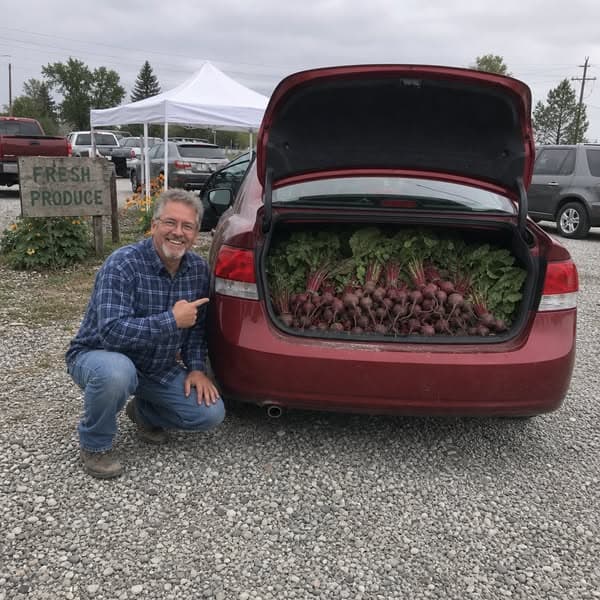

I wrote over 300 of those prescriptions before I wrote one for me.
Fourteen months later I was on the floor of my own bathroom at 3:07 in the morning with a heart rate of 38 and a blood pressure of 82 over 54, my wife on the phone with 911, being told by a paramedic that if my pulse dropped any further they were going to have to pace me in the ambulance.
I was 56 years old.
I am a board-certified cardiologist. Twenty-two years of practice. I have privileges on every floor of the hospital where they took me.
My blood pressure on Lisinopril read 126 over 78. Everyone in my practice called it textbook.
Three months after they stopped it, my blood pressure was 168 over 98.
Higher than the day I was diagnosed.
I am writing this because I know what my colleagues will say when they read it. I have already heard some of it. I do not care.
If you are over 50 with high blood pressure, or you are on one of these medications right now, or your doctor is talking about adding another drug to the stack, or someone you love is — please read all of it.
I know it is long. I know you are scrolling. I know you have somewhere to be.
Two years ago I would have paid anything for a physician with my credential to sit me down and explain what I am about to explain to you.
Nobody did.
I was diagnosed with high blood pressure at 50. Sitting reading 158 over 94. Standing reading 162 over 96.
It did not surprise me. My father had high blood pressure, managed on a beta blocker and a statin for eleven years, and he died of a stroke at 63 in a hospital twenty minutes from the one where I trained.
My entire career was built on the belief that I would prevent for my patients what nobody had prevented for him.
I did exactly what a cardiologist would do.
Lisinopril at diagnosis. Metoprolol the following year when my readings crept past 150 over 95 despite the Lisinopril. A statin the year after that when my LDL hit 152.
Three medications. All three of which I had personally prescribed to hundreds of patients who looked like my father.
I walked every morning. I lifted three days a week. I cut sodium down to almost nothing. I lost 14 pounds and held it.
By year four I was still climbing. Blood pressure averaging 154 over 92. Weight 228.
So I did what the entire field does when an ACE inhibitor and a diuretic are not enough.
I added a beta blocker.
I want to be honest about how good the numbers looked.
Within two weeks my blood pressure dropped to 126 over 78. My resting heart rate went from 74 to 56. The readings were perfect. On paper, I was a textbook case. My triglycerides fell 42 points. My internist said we had finally found the right combination. My pressure looked better than it had in years.
I stood in front of our cardiology group that November and showed my own readings as a case study.
I told a room of nine physicians that we needed to be more aggressive about adding beta blockers early instead of waiting for patients to fail on two drugs first.
Then I went back to my clinic and wrote it for everybody.
Post-stent patients. Pre-hypertensives. Patients whose systolic was 135 and who had never taken anything in their lives. If they had a reading I could justify, I wrote it.
Over 300 prescriptions in twelve months.
Here is what happened to me.
I did not notice it at first because it happened slowly.
By month three I was falling asleep in my chair after dinner every night. I blamed the long shifts.
By month five I could not hold a conversation without losing my train of thought. I blamed stress.
By month eight my hands were cold all the time. My wife said I felt like a different person. I told her I was fine. Just tired.
By month eleven I had not been intimate with my wife in four months. I had no interest. Not just sexually. I did not want to hold hands. Did not want to talk. Did not want to do anything except sit in a room and wait for energy that never came back.
I told myself this was what 56 felt like.
On February 8th at 3:07 AM I stood up from bed to use the bathroom and the room went black.
I woke up on the tile floor with my wife screaming my name and blood running from a gash on my forehead where I had hit the vanity on the way down.
The paramedics found a heart rate of 38. Blood pressure 82 over 54. They started an IV and put the pacing pads on my chest before they moved me.
The emergency physician who admitted me was a woman I had trained during her residency three years earlier. She stood at the foot of my bed with my monitor tracing on the screen and she could not look directly at me.
She said, "Dr. Ashford, I need to be straight with you. If your heart rate drops below 35 tonight we are putting in a temporary pacing wire."
I spent three days on that floor. My heart rate came back after they stopped the beta blocker. They never restarted it.
And then the part nobody warned me about started.
My blood pressure came back.
Not gradually. Within about four weeks it climbed past where it had been before I started the medication. And then it kept climbing.
I want to be precise about those numbers because they matter. My blood pressure did not return to 158 over 94. It settled at 168 over 98.
Ten points higher on the systolic than the day I was diagnosed.
I had spent fourteen months on the most commonly prescribed cardiovascular drug in my profession, and I came out the other side worse than I went in.
That is when I ordered the test that broke my career in half.
I asked our vascular lab for an endothelial function study. A flow-mediated dilation test. It measures how well your blood vessel lining can relax and expand when blood flows through it. I had one on file from May of 2023, four months before I started the beta blocker, because I had been running myself as my own case study for the group presentation.
I put the two studies side by side on my office monitor at 6 PM on a Thursday.
Before the beta blocker, my flow-mediated dilation was 5.2 percent. Below optimal for my age, but functional. My blood vessels could still relax.
After fourteen months on the beta blocker and three months off it, my flow-mediated dilation was 2.8 percent. Severely impaired. My blood vessels had lost nearly half of their ability to respond.
Net result. My blood pressure was ten points higher than the day I started and my blood vessels were nearly half as responsive as they had been when I was diagnosed at 50.
I sat in that office and I did the arithmetic that I should have done before I wrote a single one of those 300 prescriptions.
Your blood vessel lining — the endothelium — is where nitric oxide is produced. Nitric oxide is the molecule that tells your blood vessels to relax and open. When it is present, blood flows through without resistance. Pressure stays normal.
I had spent fourteen months making my vessels worse.
The beta blocker slowed my heart. A slower heart pushes less blood through the vessels. Less blood flowing across the vessel lining means less stimulation for the cells that produce nitric oxide. Less nitric oxide means stiffer, tighter vessels. And stiffer vessels mean higher blood pressure the moment you take the drug away.
I ran the rest of the workup on myself over the following six weeks. I did not want to. I did it because I knew that if I did not, somebody at an outside institution would be reading my chart in three years and I would not be there to explain it.
Brain. An MRI showed white matter changes in both hemispheres. Small vessel disease. The early structural damage that explains why I could not hold a thought for the previous eight months and had blamed stress. Nobody had ordered a brain MRI because my blood pressure had read fine during the drug year and a man who says he is tired does not trigger an imaging order.
Eyes. Retinal arteriolar narrowing and arteriovenous nicking in both eyes. Early hypertensive retinopathy. I had been holding echo reports at arm's length for six months and blaming my glasses.
Kidneys. My eGFR was 74. It had been 92 four years earlier. Early hypertensive nephropathy. Nobody had flagged it because my blood pressure had read fine during the drug year and a creatinine of 1.1 does not trigger a referral under the algorithm I had signed off on for our department.
Heart. My own department. Echocardiogram showed left ventricular hypertrophy and grade 1 diastolic dysfunction. My heart muscle had thickened from years of pumping against stiff, resistant vessels. BNP mildly elevated.
Peripheral circulation. Ankle-brachial index 0.84 in both legs. Reduced blood flow to my lower extremities. I had been waking with cold, numb feet since the previous summer and blaming my running shoes.
Five organs.
Every one of them showing the exact pattern I had spent twenty-two years watching in other people's bodies.
I sat at my desk on a Tuesday night in April with all five reports fanned out in front of me and I finally understood something I had spent my entire career not understanding.
The Lisinopril was relaxing one set of blood vessels through one chemical pathway.
The diuretic was reducing fluid volume to lower the pressure inside the vessels.
The statin was managing my LDL.
And the beta blocker had been forcing my heart to pump slower and weaker so the number on the chart would drop.
Four drugs. Four ways to push a reading down. Not one of them had repaired the damage to the vessel lining that was causing all five organs to deteriorate at the same time.
I opened my laptop at 11 PM and I did something I had not done since my fellowship.
I searched for the mechanism. Not the outcome trials. Not the prescribing data. The mechanism.
I read until 3 in the morning.
What I found was not hidden. It was sitting in Hypertension and Circulation and the New England Journal — journals I had subscribed to for twenty-two years.
Here is what is actually happening inside the body of every person with high blood pressure.
Your blood vessel lining — the endothelium — produces nitric oxide. That molecule keeps your vessels relaxed and open. When you have enough of it, blood flows freely, pressure stays normal, and every organ gets the circulation it needs.
After age 40, nitric oxide production drops roughly 10 percent every decade. By 55, most people have lost nearly half of what they had at 30.
As nitric oxide drops, your vessels stiffen. Stiffer vessels mean more resistance. More resistance means the heart has to push harder. That is high blood pressure.
But that is only the first half.
The high-pressure blood flow pounding through stiff vessels generates something. Free radicals. Oxidative stress. The most destructive molecules the human body produces.
The papers described what they do.
They attack the vessel lining. The same lining that produces nitric oxide. They grind through the endothelial cells. They damage the filtering units in kidneys. They break down the tiny vessels in the retina. They degrade nerve sheaths. They destroy the small vessels feeding the brain.
I sat at my desk at 1 AM and I connected each line of the research to one of the five reports fanned out in front of me.
The small vessels feeding my brain. The white matter changes on the MRI.
The vessels feeding the filters in my kidneys. The eGFR dropping while nobody flagged it.
The vessels in the back of my eyes. The reports I could not read without holding them at arm's length.
The blood vessels feeding my heart muscle. The thickening on the echocardiogram. The early signs of a heart being worked too hard for too long.
And the vessels in my legs and feet. The cold, numb feet I had been waking up with for a year.
Five organs. Same free radicals. Same destruction of the same vessel lining. And not one drug in the sequence — Lisinopril, the diuretic, the statin, the beta blocker — had ever addressed it.
The Lisinopril had managed one constriction pathway. The diuretic had managed fluid volume. The statin had managed the cholesterol. And the beta blocker had managed my heart rate.
Four drugs managing four measurements. The oxidative damage to the vessel lining underneath all of them, untouched, for six years.
But the damage was not even the entire picture. There was a second part the research described, and it was the part that connected all five reports.
The free radicals were destroying the endothelial cells — the cells that produce nitric oxide. Year after year, the oxidative damage was killing the cells responsible for making the one molecule that keeps your blood vessels relaxed and open.
Less nitric oxide meant stiffer vessels. Stiffer vessels meant higher pressure. Higher pressure meant more endothelial damage. Which meant even less nitric oxide.
A cycle. The damage destroys the cells that produce nitric oxide. The lost nitric oxide stiffens the vessels. The stiff vessels raise the pressure. The raised pressure creates more damage. And round it goes.
I sat at my kitchen table at 2 AM and I finally saw the full picture.
Your blood pressure reading is a number. Doctors watch the number. They adjust medications until the number goes down. But the number is not the problem. The number is a symptom of vessels that have lost the ability to relax.
The Lisinopril blocks one constriction signal. But the vessel lining keeps being destroyed. The diuretic drains fluid volume. But the vessel lining keeps being destroyed. The beta blocker slows the heart so it pushes less blood through the stiff vessels. But the vessels stay stiff. And the destruction continues.
And the beta blocker does something worse than leaving the damage alone. By slowing the heart, it reduces blood flow. Reduced blood flow means less stimulation for the vessel lining. The vessel lining needs that stimulation to produce whatever nitric oxide it can still make. The drug takes away the one thing the vessels need to maintain what little function they have left.
That is why blood pressure comes back higher after you stop. The vessels are in worse condition than they were before the drug.
Four drugs. Four ways to push a number down on a chart. No way to stop the damage to the vessel lining. No way to restore the nitric oxide the body needs to keep the vessels relaxed on its own.
I did not close the laptop that night.
I went through everything I could find. The alternatives. The supplements. The protocols.
Salt reduction. Lowers fluid volume slightly. Reduces the load on stiff vessels. Does not repair the vessel lining. Does not restore nitric oxide.
Exercise. Temporarily increases blood flow and stimulates some nitric oxide production. But if the vessel lining is already severely damaged, exercise alone cannot rebuild what the damage has destroyed. I had been exercising for six years and it had not stopped any of what was happening to me.
Magnesium. A mild muscle relaxant. May relax smooth muscle in vessel walls slightly. Does not reach the endothelial cells where nitric oxide is actually produced. Does not stop the oxidative damage.
CoQ10. Potassium. Garlic extract. The supplements on the pharmacy shelf that promise cardiovascular support. They work at the margins of muscle relaxation and electrical function. They have never been inside the endothelial cell where nitric oxide is supposed to be produced. They have never reached the vessel wall where the free radicals are doing the damage.
Turmeric. Vitamin C. Vitamin E. General antioxidants. They flood the body and neutralize every free radical they touch — including the ones your immune system needs to fight off infection. And their molecules are too large to cross cell membranes. They work in the bloodstream. The damage is happening inside the cells, inside the vessel walls, inside the endothelium. Those antioxidants cannot reach it.
The beta blocker. I had personal experience with that one. It pushes the number down by forcing the heart to pump slower. It makes the vessel lining worse in the process. It does not stop the damage. It does not restore nitric oxide.
I sat at my kitchen table at 4 AM with my laptop still open and every option crossed off, and I understood why my father had died at 63 despite never missing a dose.
Nobody had ever stopped the damage to his vessel lining. Nobody had ever restored his nitric oxide. Eleven years of managed numbers while the free radicals destroyed his blood vessel lining from the inside and the endothelial cells that were supposed to keep those vessels relaxed died off one by one while nobody checked whether they were still functioning.
The medication kept the number down. The vessels were being destroyed the entire time.
I found the research on betalains two nights later, still reading at 1 AM. University studies from Germany, Italy, the Netherlands. Published in journals I had subscribed to for twenty-two years.
The subject was a pigment. The deep red in a beet. The stain that won't scrub off your cutting board. It has a name. Betalains.
It is a selective antioxidant — it does not neutralize everything in its path. It targets only the specific free radical reaction that does the damage — the one that was destroying my vessel lining, my brain's small vessels, my kidneys, my retina — and leaves the beneficial free radicals the immune system needs completely alone. It targets the destructive ones and leaves the beneficial ones untouched.
And it gets inside. Carried into the bloodstream, absorbed through the gut wall, reaching the cells where the damage is actually happening — the places where turmeric and Vitamin C and every capsule on a pharmacy shelf have never been because the molecules are too large to cross the membrane.
Betalains cross. They reach the endothelial cells. They reach the vessel walls. They reach the small vessels feeding every organ in your body. They get to the damage at the source and they stop it.
That was the first job. Stop the oxidative damage to the vessel lining.
The second job came from the same root. The beet carries something else — dietary nitrates. The body converts them into nitric oxide — the exact molecule the oxidative damage had been destroying for years. The molecule that tells the vessels to relax and open. The molecule that every blood pressure drug manages around but none of them actually restore.
Nothing in any pharmacy does both. Every drug in the sequence manages one measurement. Every supplement on a shelf addresses one pathway. This root does two things at once — stops the damage and restores the nitric oxide. There is no pharmaceutical version of that. There is no synthetic equivalent. There is this root, or there is the damage continuing and the nitric oxide staying gone.
But here is the part that stopped me.
The beet in the studies was not the beet in the store. The modern grocery beet has been bred for a hundred years to be bigger, sweeter, easier to ship. Every time you breed a beet for sugar, you breed the betalains — the pigment, the entire medicine — down. The beet that used to be medicine became a sugar crop.
But not everywhere.
A handful of Amish families in Lancaster County, Pennsylvania have been saving the seed of the original strain by hand for over 150 years. Blutwurzel — blood root. Never crossed it with the sugar beet. Never needed it to be sweet. While the rest of the world bred the medicine out, these families kept it alive — the same way they keep everything alive, by hand, by habit, by refusing to let go of what works.
That old strain carries roughly ten times the betalain concentration of anything in a grocery store. And ten times the dietary nitrates.
The deep crimson of that beet — the red so dark it is almost violet, the stain that bleeds through everything it touches — that color IS the medicine. The pigment is the compound. The red that won't come off your cutting board is the molecule that stops the free radicals from destroying the lining of your blood vessels.
I sat at my kitchen table and I understood that the answer to the damage running through five of my organs had been growing in the same soil for a century and a half, kept alive by people who use no electricity, while the entire pharmaceutical industry I had trained inside had never once looked at it.
I sat there and I heard myself. I heard how it sounded. A cardiologist with twenty-two years of practice, privileges on every floor of the hospital that nearly put a pacing wire in him, telling himself that a pigment from a beet root was the answer to a problem that four prescription drugs had failed to fix.
It sounded exactly the way it sounds to you right now.
But I had been trained to trust scale. The bigger the drug, the bigger the effect. The more expensive the intervention, the more serious the medicine. I had taken a drug that forced my heart to beat slower and presented my own blood pressure readings as proof that scale works.
Scale put me on the floor of my own bathroom at 3 AM. Scale made my vessel lining worse and gave me back a higher number than I started with. Scale had never once, in any form, at any dose, at any price, stopped the oxidative damage inside my vessel walls or restored the nitric oxide my body needed to keep the vessels relaxed on its own.
The beta blocker was the most commonly prescribed cardiovascular drug in my profession. It never reached the vessel lining. A pigment from an heirloom root does.
Every drug in the sequence managed a number by suppressing something. The Lisinopril suppressed a constriction pathway. The beta blocker suppressed my heart rate. The diuretic suppressed fluid volume. This root does not suppress. It gives back — the nitric oxide the damage destroyed, the protection the damage burned through. For the first time in six years something was restoring instead of managing.
That is when I stopped hearing how it sounded and started reading what it did.
But I did not know the right product yet. Not in the way that mattered.
Because I did what any reasonable person would do. I ordered beetroot capsules from Amazon.
First brand that came up. Decent reviews. Decent price. Figured a beet was a beet.
I took them every morning for three weeks. Two capsules. A glass of water. By day four I felt a slight something — a marginal lift in the afternoons.
I told myself the research was right.
At week three I ran a blood pressure test.
Blood pressure: 164 over 96. It had been 168 over 98 in March. Two points on the systolic. Nothing on the diastolic.
The mechanism was right. The product was wrong. A physician with twenty-two years of training had been fooled by a label and a star rating.
I went back to the research and confirmed what I should have checked before I ordered. The Amazon capsule was the grocery beet — bred for sugar, spray-dried at high heat. Heat kills betalains. What reaches the capsule is brown dust. Dead before the cap was sealed.
The slight lift I had felt — that was real. Even weak beetroot increases blood flow a little. That is the fastest thing a beet does, and it is why cheap products can fool you. You feel a slight something and believe the vessel lining is being repaired. It is not. The feeling is not the proof. The numbers are the proof.
And my numbers said two points on the systolic in three weeks. The vessel lining had not been touched.
I had the right mechanism and the wrong product and I did not know where to go next.
That was the week Margaret Olsen came in for her quarterly.
Margaret had been my patient for four years. High blood pressure, cardiac patient, 61 years old. Lisinopril and a diuretic. Her husband had died of a stroke at 64 — a hypertensive stroke, the kind I see the aftermath of in my catheterization lab. She had been holding steady for years. Blood pressure between 148 over 90 and 154 over 94. Managed.
I pulled up her new panel expecting the same.
Her blood pressure was 122 over 74.
I looked at the number. Looked at her chart. Looked at the number again.
Her resting heart rate was 64. Down from 78 four months earlier.
Her triglycerides had dropped 68 points. Her blood pressure, which had been sitting at 152 over 92 on Lisinopril, was 122 over 74.
I scrolled back through four years of panels. Nothing like this had ever happened in her chart. Nothing like this had happened in any chart in my practice without a major medication change.
"Margaret." I turned the screen toward her. "Your numbers moved."
"I know."
"They moved a lot."
"I know that too."
"Did Dr. Keller change your medication?" Keller was her internist.
"No. Same dose. Same everything."
I looked at the screen again.
"What changed?"
She opened her purse and took out a bottle. Set it on my desk.
"My daughter found this. After Ray died, she started reading everything she could find about what high blood pressure actually does to your blood vessels. She was afraid of losing me the way we lost him."
She pushed the bottle toward me.
"It's a beetroot capsule. But not the kind from a store. My daughter drove to Lancaster County. She found a woman at a farm stand — Amish — who told her about an old strain of beet they've been growing for over a hundred years. The woman said most beets in stores have been bred for sugar until there's nothing left in them. She said the old strain is different."
I picked up the bottle. Read the label. Rosabella. Heirloom Blutwurzel beetroot. 1,300 milligrams.
"She's been sending me a bottle every month since February."
I thought about the Amazon bottle in my trash can. The brown dust. The two points.
"Margaret, do you mind if I open one of these?"
"Go ahead."
I twisted a capsule open over a piece of white paper on my desk.
Deep crimson. Almost violet. Nothing like the dull brown powder I had been swallowing for three weeks.
I tipped a drop of water from my glass onto it. It spread red across the paper immediately.
I sat there looking at the difference between what I had been taking and what was sitting on my desk, and I understood the distance between a product and the medicine.
"How long have you been taking this?"
"Four months. Two capsules every morning."
"And you felt something?"
She looked at me the way patients look at you when they have been waiting for you to ask.
"Dr. Ashford, I felt it the first day. Twenty minutes after the first capsule. A warmth that moved down my arms. The heaviness I'd been carrying behind my eyes for years — it cleared. I thought it was in my head. But it happened the next morning too. And the next."
She paused.
"The headaches stopped in the second week. I had been waking up every morning with pressure behind my temples for three years. Ray used to have the same thing. I thought it was something that just happened to us."
She looked at the panel on my screen.
"I didn't come here to convince you of anything. I came here because my daughter asked me to show you the numbers. She said the numbers are the language doctors trust."
Her daughter was right.
That night I sat at my kitchen table with Margaret's panel and the bottle she had left me and my laptop open and I verified everything.
The Blutwurzel strain I had read about at 1 AM — Margaret's bottle was it. The old seed line, never crossed with the sugar beet. Shade-dried, never heated — so the crimson reaches the capsule alive. 1,300 milligrams per capsule — the dose in the studies that worked. And a Certificate of Analysis published on the site — an outside lab testing the actual batch, posting the betalain content and the purity for anyone to read.
I ran the Amazon brand against those four criteria. It failed every one. Margaret's bottle — Rosabella — passed all four.
I ordered it that night.
When my own bottle arrived, I did the saucer test again. Twisted a capsule open over a white dish. Same deep crimson Margaret's capsule had shown me. Same violet bleed when the water touched it.
I took two capsules with a tall glass of water and sat down at the same kitchen table where I had read until 3 AM the week I found the damage nobody was treating.
Twenty minutes.
That is when I felt it. Not the slight lift I had gotten from the cheap brand. This was different in kind, not degree.
Warmth moving down my forearms and into my hands — hands that had been cold for over a year on the beta blocker. Exactly what Margaret had described. Exactly what her daughter had driven to Lancaster County to find.
I want to be precise about this because I am a physician and I will not overstate anything. That twenty-minute warmth is not the blood pressure benefit. Repairing the vessel lining takes weeks and shows up on a blood pressure monitor, not at a kitchen table.
What I felt in twenty minutes was the nitric oxide taking effect — the nitrates reaching the vessel lining, the vessels beginning to relax, blood moving through pathways that had been constricted for years.
Proof of delivery. Not proof of cure. The cure comes on paper.
But I knew. Not the way I had hoped cheap beetroot was working and then watched two points on a lab sheet tell me the truth. This was the real thing reaching where it needed to go.
Week one.
My afternoon energy came back. I had been putting my head down on my desk between two and three o'clock every day since the beta blocker. On the fifth day I read three weeks of accumulated journals in one sitting at 4 PM and did not once feel my eyes go heavy.
Week two.
My hands were warm for the first time in over a year. My wife held them at dinner and did not say a word. She did not need to.
The brain fog started to lift. I could hold a conversation without losing my train of thought. I could remember what a patient had told me two rooms earlier without checking the chart.
Week three.
I ran home blood pressure readings twice daily. Readings that had been sitting at 164 to 168 over 94 to 98 since March started coming in at 152 over 90, then 146 over 86, then 140 over 84. I ran them a second time each morning because I did not believe the first.
Week four.
Blood pressure 136 over 82. I ordered a full panel through our outpatient lab. Triglycerides down 48 points from my March labs.
Week six.
Blood pressure 128 over 78. I had not seen a reading that low without medication since before my diagnosis.
Week eight.
Blood pressure 122 over 76.
Week twelve.
Full panel. Metabolic, lipid, renal, vascular.
Blood pressure 118 over 72.
Resting heart rate 62. Strong and steady. Not the drugged 56 the beta blocker had forced it to.
Endothelial function — flow-mediated dilation — improved from 2.8 percent to 5.6 percent. My blood vessels were more responsive than they had been before I ever started the beta blocker.
eGFR climbed from 74 to 84.
ALT back in normal range for the first time in three years.
Blood pressure 118 over 72 with no change to my remaining medication.
And then the one I have thought about every day since.
I ordered a repeat brain MRI. The white matter changes had not progressed. The small vessel disease had stabilized.
I ordered a follow-up on my ankle-brachial index. It had improved from 0.84 to 0.96. Blood flow to my legs was returning.
And the cold, numb feet I had been waking up with for over a year were warm at night. I pulled the blanket over them and slept through.
The damage was being stopped. The nitric oxide was being restored. And the five organs that had been quietly deteriorating under six years of managed numbers were, for the first time, moving in the other direction.
I printed the March panel and the twelve-week panel and I walked them into my practice partner's office. Richard. Another cardiologist, fourteen years in, a man I had helped recruit.
I put both sheets on his desk and I did not say anything.
He read them twice. Then he looked up at me.
"David. What did you do."
I told him. The syncope. The bathroom floor. The pacing pads. The endothelial function test. The five reports. The research at 3 AM. The damage nobody was treating. The nitric oxide nobody was checking. The cheap beetroot that did nothing. Margaret's impossible panel. The heirloom strain from Lancaster County. Rosabella. All of it.
He listened for the better part of an hour and did not interrupt once.
When I finished he said, "I was not trained on any of this either. Send me the name. I want to watch it in my own patients."
He has been running it alongside standard treatment with seventeen of his hypertensive cardiac patients for three months. He called me twelve days ago. Twelve of them have shown measurable improvement in blood pressure readings. Eight have had reductions their internists called significant.
Three have been taken off their beta blockers entirely at their primary care physician's recommendation — not Richard's, not theirs. Their doctors looked at the numbers and made the call.
And not one of them has reported the exhaustion, the brain fog, the cold hands, the sexual dysfunction, the emotional flatness that I spent fourteen months living through on the drug that was supposed to be the answer.
Three weeks ago I sat down at a restaurant with my wife and I stayed awake past 9 PM for the first time in two years. We talked for three hours. She held my hands across the table and said they were warm.
My most recent blood pressure reading, taken nine days ago, was 116 over 70.
Lower than any reading I have had since my early forties.
I am 58. I have my blood vessels working again. I have my practice. I have warmth back in my hands and feeling coming back in my feet. I have watched five organs in my own body turn around in a direction I have not seen a chart move in twenty-two years of cardiology.
And two weeks ago Richard stood in my doorway holding my latest panel, and he used the word I had been waiting six years for somebody to use about me.
Improving.
Not managed. Improving.
If you have high blood pressure, or your husband does, or your mother does, and you have been told your numbers look controlled while your body quietly comes apart underneath them, I need you to hear the mechanism and not the marketing.
Your blood pressure reading is a symptom. Not the disease. The disease is the oxidative destruction of the endothelial cells that produce nitric oxide. That destruction is what makes your vessels stiff. That stiffness is what raises the pressure. And that raised pressure creates more destruction. Around and around, year after year, while every drug in the pharmacy manages a different number and none of them stop the cycle.
The beta blocker slows your heart. It does not stop the damage to the vessel lining. It does not restore nitric oxide. And for a great many people it takes the blood flow the vessel lining needs to function with it on the way through, which is why the number comes back higher when you stop.
Lisinopril manages one constriction pathway. It does not stop the damage. It does not restore nitric oxide.
Cutting salt does not stop the damage. I did that for six years and it did not stop one thing that was coming for me.
There is a pigment in an old heirloom beet that does two things no drug in the sequence has ever done. It stops the oxidative damage to the vessel lining — selectively, targeting only the destructive radical, leaving the beneficial ones alone. And it carries the raw material your body needs to rebuild the nitric oxide that keeps your vessels relaxed and open.
Stop the damage. Restore the nitric oxide. Two jobs. One root.
Rosabella. Heirloom Blutwurzel beetroot from a handful of Amish families in Lancaster County who have been saving this seed line by hand for over 150 years. Shade-dried, never heated, so the betalains and the nitrates reach you alive. 1,300 milligrams per capsule — the dose in the studies that worked. Third-party tested. Certificate of Analysis published for every batch.
Two capsules. One glass of water. Every morning.
90-day money-back guarantee, and there is a reason it is ninety days and not thirty. Blood vessel remodeling takes time. Endothelial cells need weeks to regenerate. Nitric oxide production needs time to rebuild. Ninety days is the shortest honest window in which a real change can show up consistently on a blood pressure monitor. If your numbers have not moved by then, you pay nothing.
The system that trained me had twenty-two years to hand me this and it never did.
Margaret's daughter found it by driving to a farm stand.
It is reaching you now.
https://track.tryrosabella.com/cdc16426-3e48-40a7-9fad-21098084f6cf
P.S. — My father had high blood pressure, managed on a beta blocker and a statin for eleven years, and he died of a stroke at 63. He was told he was controlled at every visit for a decade. I built my whole career on the promise that I would catch for my patients what nobody caught for him, and then I spent fourteen months taking a drug that made my vessel lining worse while the oxidative damage continued underneath. I got a warning at 3:07 in the morning in February. My father never got one. Rosabella is heirloom Blutwurzel beetroot — shade-dried, never heated, 1,300 milligrams per capsule, with the Certificate of Analysis posted on the site. My father's pharmacy never published a lab report on what was in the bottle. Rosabella does. And they stand behind it with a 90-day money-back guarantee. The system does not do refunds. Please do not wait for the warning my father never received.
P.P.S. — You will feel it within twenty minutes of your first capsule. Not a jolt, not a caffeine rush. A quiet shift. Warmth moving down your arms and into your hands. The heaviness behind your eyes thinning out. That is not the blood pressure benefit — that takes weeks and shows up on a monitor, not at a kitchen table. What you feel in twenty minutes is the nitrates reaching your vessel lining and the betalains reaching your endothelial cells — something your beta blocker has never done and never will, because beta blockers work by suppressing your heart and have never once reached the vessel lining where the damage is happening. Something no ACE inhibitor has ever done because those molecules manage one constriction pathway and never touch the oxidative damage. If you have tried beetroot before and felt nothing, you bought the wrong beet. The grocery beet. The dust. Twist a Rosabella capsule open over a white saucer. If the powder is deep crimson — almost violet — and bleeds red when water touches it, the betalains are alive. If your last beetroot was brown, it was dead before you swallowed it. The feeling is not the proof. The proof comes on paper. Check your blood pressure.
P.P.P.S. — About your medication. Do not stop it. Start Rosabella alongside whatever you are currently taking — Lisinopril, the beta blocker, a diuretic, both, anything. That is exactly what Richard is doing with his seventeen patients. All of them still on their medication. All being monitored monthly. Three of their primary care physicians have voluntarily removed the beta blocker based on the improved numbers. That decision came from their doctors, not from them. Not from Richard. That is how you do this correctly. Let the numbers make the case. Your doctor trained on the same system I did. The numbers are the language he trusts. Give him numbers he cannot argue with, and he will adjust the plan himself.
P.P.P.P.S. — For the woman reading this whose husband is the one on the medication. Or the one who falls asleep in his chair before 8 PM every night. Or the one whose hands are cold when you reach for them. Or the one who does not seem like the man you married anymore. I know what it looks like from your side because my wife has been watching it from hers for six years. You see the exhaustion. You see the blank stare when you try to talk to him. You see the man who used to have energy and opinions and warmth, reduced to someone who shuffles through the house and says he is fine. You see the man behind the number — the one the chart does not measure. The damage works the same in men as it does in women. Rosabella is not a men's product or a women's product — it is a human product. Two capsules, one glass of water. If your husband is the one with the high blood pressure, give him the glass. If you are the one whose doctor says the number is controlled while you feel worse every year — trust what your body has been telling you. The doctor watches the chart. You live in the body. You are closer to the truth than the chart is.
P.P.P.P.P.S. — Rosabella is a small company. They cannot scale a 150-year-old seed line. It is one heirloom strain, grown by a handful of Amish families in Lancaster County, hand-harvested after the first frost. When a season's batch is gone, it is gone until the next harvest. Shade-drying takes weeks, not hours, and the third-party testing adds time to every batch. I tried to reorder after my first month and waited eleven days for a restock. I keep two bottles in my house now. They have a Buy 3 Get 3 Free offer right now. If you have a doctor's appointment coming up in the next 30 to 60 days and you want to walk into that appointment with real numbers instead of the same managed conversation you have been having for years — check availability now. Do not wait for the next harvest.
https://track.tryrosabella.com/cdc16426-3e48-40a7-9fad-21098084f6cf
~ Dr. David Ashford, MD, FACC, age 58, cardiology
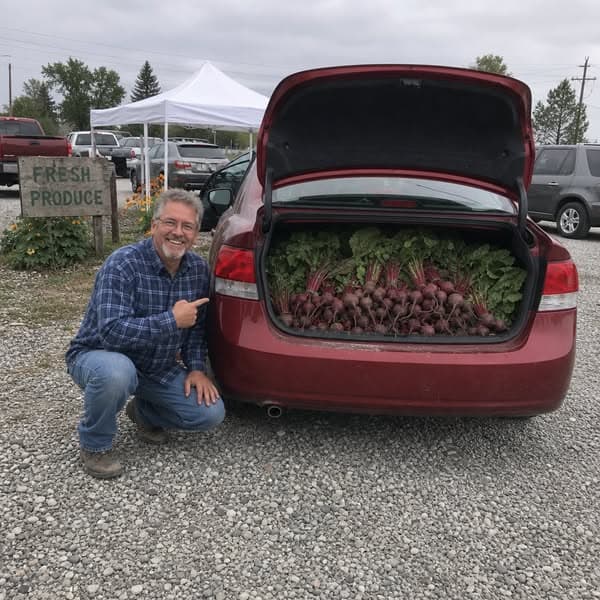

I wrote over 300 of those prescriptions before I wrote one for me.
Fourteen months later I was on the floor of my own bathroom at 3:07 in the morning with a heart rate of 38 and a blood pressure of 82 over 54, my wife on the phone with 911, being told by a paramedic that if my pulse dropped any further they were going to have to pace me in the ambulance.
I was 56 years old.
I am a board-certified cardiologist. Twenty-two years of practice. I have privileges on every floor of the hospital where they took me.
My blood pressure on Lisinopril read 126 over 78. Everyone in my practice called it textbook.
Three months after they stopped it, my blood pressure was 168 over 98.
Higher than the day I was diagnosed.
I am writing this because I know what my colleagues will say when they read it. I have already heard some of it. I do not care.
If you are over 50 with high blood pressure, or you are on one of these medications right now, or your doctor is talking about adding another drug to the stack, or someone you love is — please read all of it.
I know it is long. I know you are scrolling. I know you have somewhere to be.
Two years ago I would have paid anything for a physician with my credential to sit me down and explain what I am about to explain to you.
Nobody did.
I was diagnosed with high blood pressure at 50. Sitting reading 158 over 94. Standing reading 162 over 96.
It did not surprise me. My father had high blood pressure, managed on a beta blocker and a statin for eleven years, and he died of a stroke at 63 in a hospital twenty minutes from the one where I trained.
My entire career was built on the belief that I would prevent for my patients what nobody had prevented for him.
I did exactly what a cardiologist would do.
Lisinopril at diagnosis. Metoprolol the following year when my readings crept past 150 over 95 despite the Lisinopril. A statin the year after that when my LDL hit 152.
Three medications. All three of which I had personally prescribed to hundreds of patients who looked like my father.
I walked every morning. I lifted three days a week. I cut sodium down to almost nothing. I lost 14 pounds and held it.
By year four I was still climbing. Blood pressure averaging 154 over 92. Weight 228.
So I did what the entire field does when an ACE inhibitor and a diuretic are not enough.
I added a beta blocker.
I want to be honest about how good the numbers looked.
Within two weeks my blood pressure dropped to 126 over 78. My resting heart rate went from 74 to 56. The readings were perfect. On paper, I was a textbook case. My triglycerides fell 42 points. My internist said we had finally found the right combination. My pressure looked better than it had in years.
I stood in front of our cardiology group that November and showed my own readings as a case study.
I told a room of nine physicians that we needed to be more aggressive about adding beta blockers early instead of waiting for patients to fail on two drugs first.
Then I went back to my clinic and wrote it for everybody.
Post-stent patients. Pre-hypertensives. Patients whose systolic was 135 and who had never taken anything in their lives. If they had a reading I could justify, I wrote it.
Over 300 prescriptions in twelve months.
Here is what happened to me.
I did not notice it at first because it happened slowly.
By month three I was falling asleep in my chair after dinner every night. I blamed the long shifts.
By month five I could not hold a conversation without losing my train of thought. I blamed stress.
By month eight my hands were cold all the time. My wife said I felt like a different person. I told her I was fine. Just tired.
By month eleven I had not been intimate with my wife in four months. I had no interest. Not just sexually. I did not want to hold hands. Did not want to talk. Did not want to do anything except sit in a room and wait for energy that never came back.
I told myself this was what 56 felt like.
On February 8th at 3:07 AM I stood up from bed to use the bathroom and the room went black.
I woke up on the tile floor with my wife screaming my name and blood running from a gash on my forehead where I had hit the vanity on the way down.
The paramedics found a heart rate of 38. Blood pressure 82 over 54. They started an IV and put the pacing pads on my chest before they moved me.
The emergency physician who admitted me was a woman I had trained during her residency three years earlier. She stood at the foot of my bed with my monitor tracing on the screen and she could not look directly at me.
She said, "Dr. Ashford, I need to be straight with you. If your heart rate drops below 35 tonight we are putting in a temporary pacing wire."
I spent three days on that floor. My heart rate came back after they stopped the beta blocker. They never restarted it.
And then the part nobody warned me about started.
My blood pressure came back.
Not gradually. Within about four weeks it climbed past where it had been before I started the medication. And then it kept climbing.
I want to be precise about those numbers because they matter. My blood pressure did not return to 158 over 94. It settled at 168 over 98.
Ten points higher on the systolic than the day I was diagnosed.
I had spent fourteen months on the most commonly prescribed cardiovascular drug in my profession, and I came out the other side worse than I went in.
That is when I ordered the test that broke my career in half.
I asked our vascular lab for an endothelial function study. A flow-mediated dilation test. It measures how well your blood vessel lining can relax and expand when blood flows through it. I had one on file from May of 2023, four months before I started the beta blocker, because I had been running myself as my own case study for the group presentation.
I put the two studies side by side on my office monitor at 6 PM on a Thursday.
Before the beta blocker, my flow-mediated dilation was 5.2 percent. Below optimal for my age, but functional. My blood vessels could still relax.
After fourteen months on the beta blocker and three months off it, my flow-mediated dilation was 2.8 percent. Severely impaired. My blood vessels had lost nearly half of their ability to respond.
Net result. My blood pressure was ten points higher than the day I started and my blood vessels were nearly half as responsive as they had been when I was diagnosed at 50.
I sat in that office and I did the arithmetic that I should have done before I wrote a single one of those 300 prescriptions.
Your blood vessel lining — the endothelium — is where nitric oxide is produced. Nitric oxide is the molecule that tells your blood vessels to relax and open. When it is present, blood flows through without resistance. Pressure stays normal.
I had spent fourteen months making my vessels worse.
The beta blocker slowed my heart. A slower heart pushes less blood through the vessels. Less blood flowing across the vessel lining means less stimulation for the cells that produce nitric oxide. Less nitric oxide means stiffer, tighter vessels. And stiffer vessels mean higher blood pressure the moment you take the drug away.
I ran the rest of the workup on myself over the following six weeks. I did not want to. I did it because I knew that if I did not, somebody at an outside institution would be reading my chart in three years and I would not be there to explain it.
Brain. An MRI showed white matter changes in both hemispheres. Small vessel disease. The early structural damage that explains why I could not hold a thought for the previous eight months and had blamed stress. Nobody had ordered a brain MRI because my blood pressure had read fine during the drug year and a man who says he is tired does not trigger an imaging order.
Eyes. Retinal arteriolar narrowing and arteriovenous nicking in both eyes. Early hypertensive retinopathy. I had been holding echo reports at arm's length for six months and blaming my glasses.
Kidneys. My eGFR was 74. It had been 92 four years earlier. Early hypertensive nephropathy. Nobody had flagged it because my blood pressure had read fine during the drug year and a creatinine of 1.1 does not trigger a referral under the algorithm I had signed off on for our department.
Heart. My own department. Echocardiogram showed left ventricular hypertrophy and grade 1 diastolic dysfunction. My heart muscle had thickened from years of pumping against stiff, resistant vessels. BNP mildly elevated.
Peripheral circulation. Ankle-brachial index 0.84 in both legs. Reduced blood flow to my lower extremities. I had been waking with cold, numb feet since the previous summer and blaming my running shoes.
Five organs.
Every one of them showing the exact pattern I had spent twenty-two years watching in other people's bodies.
I sat at my desk on a Tuesday night in April with all five reports fanned out in front of me and I finally understood something I had spent my entire career not understanding.
The Lisinopril was relaxing one set of blood vessels through one chemical pathway.
The diuretic was reducing fluid volume to lower the pressure inside the vessels.
The statin was managing my LDL.
And the beta blocker had been forcing my heart to pump slower and weaker so the number on the chart would drop.
Four drugs. Four ways to push a reading down. Not one of them had repaired the damage to the vessel lining that was causing all five organs to deteriorate at the same time.
I opened my laptop at 11 PM and I did something I had not done since my fellowship.
I searched for the mechanism. Not the outcome trials. Not the prescribing data. The mechanism.
I read until 3 in the morning.
What I found was not hidden. It was sitting in Hypertension and Circulation and the New England Journal — journals I had subscribed to for twenty-two years.
Here is what is actually happening inside the body of every person with high blood pressure.
Your blood vessel lining — the endothelium — produces nitric oxide. That molecule keeps your vessels relaxed and open. When you have enough of it, blood flows freely, pressure stays normal, and every organ gets the circulation it needs.
After age 40, nitric oxide production drops roughly 10 percent every decade. By 55, most people have lost nearly half of what they had at 30.
As nitric oxide drops, your vessels stiffen. Stiffer vessels mean more resistance. More resistance means the heart has to push harder. That is high blood pressure.
But that is only the first half.
The high-pressure blood flow pounding through stiff vessels generates something. Free radicals. Oxidative stress. The most destructive molecules the human body produces.
The papers described what they do.
They attack the vessel lining. The same lining that produces nitric oxide. They grind through the endothelial cells. They damage the filtering units in kidneys. They break down the tiny vessels in the retina. They degrade nerve sheaths. They destroy the small vessels feeding the brain.
I sat at my desk at 1 AM and I connected each line of the research to one of the five reports fanned out in front of me.
The small vessels feeding my brain. The white matter changes on the MRI.
The vessels feeding the filters in my kidneys. The eGFR dropping while nobody flagged it.
The vessels in the back of my eyes. The reports I could not read without holding them at arm's length.
The blood vessels feeding my heart muscle. The thickening on the echocardiogram. The early signs of a heart being worked too hard for too long.
And the vessels in my legs and feet. The cold, numb feet I had been waking up with for a year.
Five organs. Same free radicals. Same destruction of the same vessel lining. And not one drug in the sequence — Lisinopril, the diuretic, the statin, the beta blocker — had ever addressed it.
The Lisinopril had managed one constriction pathway. The diuretic had managed fluid volume. The statin had managed the cholesterol. And the beta blocker had managed my heart rate.
Four drugs managing four measurements. The oxidative damage to the vessel lining underneath all of them, untouched, for six years.
But the damage was not even the entire picture. There was a second part the research described, and it was the part that connected all five reports.
The free radicals were destroying the endothelial cells — the cells that produce nitric oxide. Year after year, the oxidative damage was killing the cells responsible for making the one molecule that keeps your blood vessels relaxed and open.
Less nitric oxide meant stiffer vessels. Stiffer vessels meant higher pressure. Higher pressure meant more endothelial damage. Which meant even less nitric oxide.
A cycle. The damage destroys the cells that produce nitric oxide. The lost nitric oxide stiffens the vessels. The stiff vessels raise the pressure. The raised pressure creates more damage. And round it goes.
I sat at my kitchen table at 2 AM and I finally saw the full picture.
Your blood pressure reading is a number. Doctors watch the number. They adjust medications until the number goes down. But the number is not the problem. The number is a symptom of vessels that have lost the ability to relax.
The Lisinopril blocks one constriction signal. But the vessel lining keeps being destroyed. The diuretic drains fluid volume. But the vessel lining keeps being destroyed. The beta blocker slows the heart so it pushes less blood through the stiff vessels. But the vessels stay stiff. And the destruction continues.
And the beta blocker does something worse than leaving the damage alone. By slowing the heart, it reduces blood flow. Reduced blood flow means less stimulation for the vessel lining. The vessel lining needs that stimulation to produce whatever nitric oxide it can still make. The drug takes away the one thing the vessels need to maintain what little function they have left.
That is why blood pressure comes back higher after you stop. The vessels are in worse condition than they were before the drug.
Four drugs. Four ways to push a number down on a chart. No way to stop the damage to the vessel lining. No way to restore the nitric oxide the body needs to keep the vessels relaxed on its own.
I did not close the laptop that night.
I went through everything I could find. The alternatives. The supplements. The protocols.
Salt reduction. Lowers fluid volume slightly. Reduces the load on stiff vessels. Does not repair the vessel lining. Does not restore nitric oxide.
Exercise. Temporarily increases blood flow and stimulates some nitric oxide production. But if the vessel lining is already severely damaged, exercise alone cannot rebuild what the damage has destroyed. I had been exercising for six years and it had not stopped any of what was happening to me.
Magnesium. A mild muscle relaxant. May relax smooth muscle in vessel walls slightly. Does not reach the endothelial cells where nitric oxide is actually produced. Does not stop the oxidative damage.
CoQ10. Potassium. Garlic extract. The supplements on the pharmacy shelf that promise cardiovascular support. They work at the margins of muscle relaxation and electrical function. They have never been inside the endothelial cell where nitric oxide is supposed to be produced. They have never reached the vessel wall where the free radicals are doing the damage.
Turmeric. Vitamin C. Vitamin E. General antioxidants. They flood the body and neutralize every free radical they touch — including the ones your immune system needs to fight off infection. And their molecules are too large to cross cell membranes. They work in the bloodstream. The damage is happening inside the cells, inside the vessel walls, inside the endothelium. Those antioxidants cannot reach it.
The beta blocker. I had personal experience with that one. It pushes the number down by forcing the heart to pump slower. It makes the vessel lining worse in the process. It does not stop the damage. It does not restore nitric oxide.
I sat at my kitchen table at 4 AM with my laptop still open and every option crossed off, and I understood why my father had died at 63 despite never missing a dose.
Nobody had ever stopped the damage to his vessel lining. Nobody had ever restored his nitric oxide. Eleven years of managed numbers while the free radicals destroyed his blood vessel lining from the inside and the endothelial cells that were supposed to keep those vessels relaxed died off one by one while nobody checked whether they were still functioning.
The medication kept the number down. The vessels were being destroyed the entire time.
I found the research on betalains two nights later, still reading at 1 AM. University studies from Germany, Italy, the Netherlands. Published in journals I had subscribed to for twenty-two years.
The subject was a pigment. The deep red in a beet. The stain that won't scrub off your cutting board. It has a name. Betalains.
It is a selective antioxidant — it does not neutralize everything in its path. It targets only the specific free radical reaction that does the damage — the one that was destroying my vessel lining, my brain's small vessels, my kidneys, my retina — and leaves the beneficial free radicals the immune system needs completely alone. It targets the destructive ones and leaves the beneficial ones untouched.
And it gets inside. Carried into the bloodstream, absorbed through the gut wall, reaching the cells where the damage is actually happening — the places where turmeric and Vitamin C and every capsule on a pharmacy shelf have never been because the molecules are too large to cross the membrane.
Betalains cross. They reach the endothelial cells. They reach the vessel walls. They reach the small vessels feeding every organ in your body. They get to the damage at the source and they stop it.
That was the first job. Stop the oxidative damage to the vessel lining.
The second job came from the same root. The beet carries something else — dietary nitrates. The body converts them into nitric oxide — the exact molecule the oxidative damage had been destroying for years. The molecule that tells the vessels to relax and open. The molecule that every blood pressure drug manages around but none of them actually restore.
Nothing in any pharmacy does both. Every drug in the sequence manages one measurement. Every supplement on a shelf addresses one pathway. This root does two things at once — stops the damage and restores the nitric oxide. There is no pharmaceutical version of that. There is no synthetic equivalent. There is this root, or there is the damage continuing and the nitric oxide staying gone.
But here is the part that stopped me.
The beet in the studies was not the beet in the store. The modern grocery beet has been bred for a hundred years to be bigger, sweeter, easier to ship. Every time you breed a beet for sugar, you breed the betalains — the pigment, the entire medicine — down. The beet that used to be medicine became a sugar crop.
But not everywhere.
A handful of Amish families in Lancaster County, Pennsylvania have been saving the seed of the original strain by hand for over 150 years. Blutwurzel — blood root. Never crossed it with the sugar beet. Never needed it to be sweet. While the rest of the world bred the medicine out, these families kept it alive — the same way they keep everything alive, by hand, by habit, by refusing to let go of what works.
That old strain carries roughly ten times the betalain concentration of anything in a grocery store. And ten times the dietary nitrates.
The deep crimson of that beet — the red so dark it is almost violet, the stain that bleeds through everything it touches — that color IS the medicine. The pigment is the compound. The red that won't come off your cutting board is the molecule that stops the free radicals from destroying the lining of your blood vessels.
I sat at my kitchen table and I understood that the answer to the damage running through five of my organs had been growing in the same soil for a century and a half, kept alive by people who use no electricity, while the entire pharmaceutical industry I had trained inside had never once looked at it.
I sat there and I heard myself. I heard how it sounded. A cardiologist with twenty-two years of practice, privileges on every floor of the hospital that nearly put a pacing wire in him, telling himself that a pigment from a beet root was the answer to a problem that four prescription drugs had failed to fix.
It sounded exactly the way it sounds to you right now.
But I had been trained to trust scale. The bigger the drug, the bigger the effect. The more expensive the intervention, the more serious the medicine. I had taken a drug that forced my heart to beat slower and presented my own blood pressure readings as proof that scale works.
Scale put me on the floor of my own bathroom at 3 AM. Scale made my vessel lining worse and gave me back a higher number than I started with. Scale had never once, in any form, at any dose, at any price, stopped the oxidative damage inside my vessel walls or restored the nitric oxide my body needed to keep the vessels relaxed on its own.
The beta blocker was the most commonly prescribed cardiovascular drug in my profession. It never reached the vessel lining. A pigment from an heirloom root does.
Every drug in the sequence managed a number by suppressing something. The Lisinopril suppressed a constriction pathway. The beta blocker suppressed my heart rate. The diuretic suppressed fluid volume. This root does not suppress. It gives back — the nitric oxide the damage destroyed, the protection the damage burned through. For the first time in six years something was restoring instead of managing.
That is when I stopped hearing how it sounded and started reading what it did.
But I did not know the right product yet. Not in the way that mattered.
Because I did what any reasonable person would do. I ordered beetroot capsules from Amazon.
First brand that came up. Decent reviews. Decent price. Figured a beet was a beet.
I took them every morning for three weeks. Two capsules. A glass of water. By day four I felt a slight something — a marginal lift in the afternoons.
I told myself the research was right.
At week three I ran a blood pressure test.
Blood pressure: 164 over 96. It had been 168 over 98 in March. Two points on the systolic. Nothing on the diastolic.
The mechanism was right. The product was wrong. A physician with twenty-two years of training had been fooled by a label and a star rating.
I went back to the research and confirmed what I should have checked before I ordered. The Amazon capsule was the grocery beet — bred for sugar, spray-dried at high heat. Heat kills betalains. What reaches the capsule is brown dust. Dead before the cap was sealed.
The slight lift I had felt — that was real. Even weak beetroot increases blood flow a little. That is the fastest thing a beet does, and it is why cheap products can fool you. You feel a slight something and believe the vessel lining is being repaired. It is not. The feeling is not the proof. The numbers are the proof.
And my numbers said two points on the systolic in three weeks. The vessel lining had not been touched.
I had the right mechanism and the wrong product and I did not know where to go next.
That was the week Margaret Olsen came in for her quarterly.
Margaret had been my patient for four years. High blood pressure, cardiac patient, 61 years old. Lisinopril and a diuretic. Her husband had died of a stroke at 64 — a hypertensive stroke, the kind I see the aftermath of in my catheterization lab. She had been holding steady for years. Blood pressure between 148 over 90 and 154 over 94. Managed.
I pulled up her new panel expecting the same.
Her blood pressure was 122 over 74.
I looked at the number. Looked at her chart. Looked at the number again.
Her resting heart rate was 64. Down from 78 four months earlier.
Her triglycerides had dropped 68 points. Her blood pressure, which had been sitting at 152 over 92 on Lisinopril, was 122 over 74.
I scrolled back through four years of panels. Nothing like this had ever happened in her chart. Nothing like this had happened in any chart in my practice without a major medication change.
"Margaret." I turned the screen toward her. "Your numbers moved."
"I know."
"They moved a lot."
"I know that too."
"Did Dr. Keller change your medication?" Keller was her internist.
"No. Same dose. Same everything."
I looked at the screen again.
"What changed?"
She opened her purse and took out a bottle. Set it on my desk.
"My daughter found this. After Ray died, she started reading everything she could find about what high blood pressure actually does to your blood vessels. She was afraid of losing me the way we lost him."
She pushed the bottle toward me.
"It's a beetroot capsule. But not the kind from a store. My daughter drove to Lancaster County. She found a woman at a farm stand — Amish — who told her about an old strain of beet they've been growing for over a hundred years. The woman said most beets in stores have been bred for sugar until there's nothing left in them. She said the old strain is different."
I picked up the bottle. Read the label. Rosabella. Heirloom Blutwurzel beetroot. 1,300 milligrams.
"She's been sending me a bottle every month since February."
I thought about the Amazon bottle in my trash can. The brown dust. The two points.
"Margaret, do you mind if I open one of these?"
"Go ahead."
I twisted a capsule open over a piece of white paper on my desk.
Deep crimson. Almost violet. Nothing like the dull brown powder I had been swallowing for three weeks.
I tipped a drop of water from my glass onto it. It spread red across the paper immediately.
I sat there looking at the difference between what I had been taking and what was sitting on my desk, and I understood the distance between a product and the medicine.
"How long have you been taking this?"
"Four months. Two capsules every morning."
"And you felt something?"
She looked at me the way patients look at you when they have been waiting for you to ask.
"Dr. Ashford, I felt it the first day. Twenty minutes after the first capsule. A warmth that moved down my arms. The heaviness I'd been carrying behind my eyes for years — it cleared. I thought it was in my head. But it happened the next morning too. And the next."
She paused.
"The headaches stopped in the second week. I had been waking up every morning with pressure behind my temples for three years. Ray used to have the same thing. I thought it was something that just happened to us."
She looked at the panel on my screen.
"I didn't come here to convince you of anything. I came here because my daughter asked me to show you the numbers. She said the numbers are the language doctors trust."
Her daughter was right.
That night I sat at my kitchen table with Margaret's panel and the bottle she had left me and my laptop open and I verified everything.
The Blutwurzel strain I had read about at 1 AM — Margaret's bottle was it. The old seed line, never crossed with the sugar beet. Shade-dried, never heated — so the crimson reaches the capsule alive. 1,300 milligrams per capsule — the dose in the studies that worked. And a Certificate of Analysis published on the site — an outside lab testing the actual batch, posting the betalain content and the purity for anyone to read.
I ran the Amazon brand against those four criteria. It failed every one. Margaret's bottle — Rosabella — passed all four.
I ordered it that night.
When my own bottle arrived, I did the saucer test again. Twisted a capsule open over a white dish. Same deep crimson Margaret's capsule had shown me. Same violet bleed when the water touched it.
I took two capsules with a tall glass of water and sat down at the same kitchen table where I had read until 3 AM the week I found the damage nobody was treating.
Twenty minutes.
That is when I felt it. Not the slight lift I had gotten from the cheap brand. This was different in kind, not degree.
Warmth moving down my forearms and into my hands — hands that had been cold for over a year on the beta blocker. Exactly what Margaret had described. Exactly what her daughter had driven to Lancaster County to find.
I want to be precise about this because I am a physician and I will not overstate anything. That twenty-minute warmth is not the blood pressure benefit. Repairing the vessel lining takes weeks and shows up on a blood pressure monitor, not at a kitchen table.
What I felt in twenty minutes was the nitric oxide taking effect — the nitrates reaching the vessel lining, the vessels beginning to relax, blood moving through pathways that had been constricted for years.
Proof of delivery. Not proof of cure. The cure comes on paper.
But I knew. Not the way I had hoped cheap beetroot was working and then watched two points on a lab sheet tell me the truth. This was the real thing reaching where it needed to go.
Week one.
My afternoon energy came back. I had been putting my head down on my desk between two and three o'clock every day since the beta blocker. On the fifth day I read three weeks of accumulated journals in one sitting at 4 PM and did not once feel my eyes go heavy.
Week two.
My hands were warm for the first time in over a year. My wife held them at dinner and did not say a word. She did not need to.
The brain fog started to lift. I could hold a conversation without losing my train of thought. I could remember what a patient had told me two rooms earlier without checking the chart.
Week three.
I ran home blood pressure readings twice daily. Readings that had been sitting at 164 to 168 over 94 to 98 since March started coming in at 152 over 90, then 146 over 86, then 140 over 84. I ran them a second time each morning because I did not believe the first.
Week four.
Blood pressure 136 over 82. I ordered a full panel through our outpatient lab. Triglycerides down 48 points from my March labs.
Week six.
Blood pressure 128 over 78. I had not seen a reading that low without medication since before my diagnosis.
Week eight.
Blood pressure 122 over 76.
Week twelve.
Full panel. Metabolic, lipid, renal, vascular.
Blood pressure 118 over 72.
Resting heart rate 62. Strong and steady. Not the drugged 56 the beta blocker had forced it to.
Endothelial function — flow-mediated dilation — improved from 2.8 percent to 5.6 percent. My blood vessels were more responsive than they had been before I ever started the beta blocker.
eGFR climbed from 74 to 84.
ALT back in normal range for the first time in three years.
Blood pressure 118 over 72 with no change to my remaining medication.
And then the one I have thought about every day since.
I ordered a repeat brain MRI. The white matter changes had not progressed. The small vessel disease had stabilized.
I ordered a follow-up on my ankle-brachial index. It had improved from 0.84 to 0.96. Blood flow to my legs was returning.
And the cold, numb feet I had been waking up with for over a year were warm at night. I pulled the blanket over them and slept through.
The damage was being stopped. The nitric oxide was being restored. And the five organs that had been quietly deteriorating under six years of managed numbers were, for the first time, moving in the other direction.
I printed the March panel and the twelve-week panel and I walked them into my practice partner's office. Richard. Another cardiologist, fourteen years in, a man I had helped recruit.
I put both sheets on his desk and I did not say anything.
He read them twice. Then he looked up at me.
"David. What did you do."
I told him. The syncope. The bathroom floor. The pacing pads. The endothelial function test. The five reports. The research at 3 AM. The damage nobody was treating. The nitric oxide nobody was checking. The cheap beetroot that did nothing. Margaret's impossible panel. The heirloom strain from Lancaster County. Rosabella. All of it.
He listened for the better part of an hour and did not interrupt once.
When I finished he said, "I was not trained on any of this either. Send me the name. I want to watch it in my own patients."
He has been running it alongside standard treatment with seventeen of his hypertensive cardiac patients for three months. He called me twelve days ago. Twelve of them have shown measurable improvement in blood pressure readings. Eight have had reductions their internists called significant.
Three have been taken off their beta blockers entirely at their primary care physician's recommendation — not Richard's, not theirs. Their doctors looked at the numbers and made the call.
And not one of them has reported the exhaustion, the brain fog, the cold hands, the sexual dysfunction, the emotional flatness that I spent fourteen months living through on the drug that was supposed to be the answer.
Three weeks ago I sat down at a restaurant with my wife and I stayed awake past 9 PM for the first time in two years. We talked for three hours. She held my hands across the table and said they were warm.
My most recent blood pressure reading, taken nine days ago, was 116 over 70.
Lower than any reading I have had since my early forties.
I am 58. I have my blood vessels working again. I have my practice. I have warmth back in my hands and feeling coming back in my feet. I have watched five organs in my own body turn around in a direction I have not seen a chart move in twenty-two years of cardiology.
And two weeks ago Richard stood in my doorway holding my latest panel, and he used the word I had been waiting six years for somebody to use about me.
Improving.
Not managed. Improving.
If you have high blood pressure, or your husband does, or your mother does, and you have been told your numbers look controlled while your body quietly comes apart underneath them, I need you to hear the mechanism and not the marketing.
Your blood pressure reading is a symptom. Not the disease. The disease is the oxidative destruction of the endothelial cells that produce nitric oxide. That destruction is what makes your vessels stiff. That stiffness is what raises the pressure. And that raised pressure creates more destruction. Around and around, year after year, while every drug in the pharmacy manages a different number and none of them stop the cycle.
The beta blocker slows your heart. It does not stop the damage to the vessel lining. It does not restore nitric oxide. And for a great many people it takes the blood flow the vessel lining needs to function with it on the way through, which is why the number comes back higher when you stop.
Lisinopril manages one constriction pathway. It does not stop the damage. It does not restore nitric oxide.
Cutting salt does not stop the damage. I did that for six years and it did not stop one thing that was coming for me.
There is a pigment in an old heirloom beet that does two things no drug in the sequence has ever done. It stops the oxidative damage to the vessel lining — selectively, targeting only the destructive radical, leaving the beneficial ones alone. And it carries the raw material your body needs to rebuild the nitric oxide that keeps your vessels relaxed and open.
Stop the damage. Restore the nitric oxide. Two jobs. One root.
Rosabella. Heirloom Blutwurzel beetroot from a handful of Amish families in Lancaster County who have been saving this seed line by hand for over 150 years. Shade-dried, never heated, so the betalains and the nitrates reach you alive. 1,300 milligrams per capsule — the dose in the studies that worked. Third-party tested. Certificate of Analysis published for every batch.
Two capsules. One glass of water. Every morning.
90-day money-back guarantee, and there is a reason it is ninety days and not thirty. Blood vessel remodeling takes time. Endothelial cells need weeks to regenerate. Nitric oxide production needs time to rebuild. Ninety days is the shortest honest window in which a real change can show up consistently on a blood pressure monitor. If your numbers have not moved by then, you pay nothing.
The system that trained me had twenty-two years to hand me this and it never did.
Margaret's daughter found it by driving to a farm stand.
It is reaching you now.
https://track.tryrosabella.com/cdc16426-3e48-40a7-9fad-21098084f6cf
P.S. — My father had high blood pressure, managed on a beta blocker and a statin for eleven years, and he died of a stroke at 63. He was told he was controlled at every visit for a decade. I built my whole career on the promise that I would catch for my patients what nobody caught for him, and then I spent fourteen months taking a drug that made my vessel lining worse while the oxidative damage continued underneath. I got a warning at 3:07 in the morning in February. My father never got one. Rosabella is heirloom Blutwurzel beetroot — shade-dried, never heated, 1,300 milligrams per capsule, with the Certificate of Analysis posted on the site. My father's pharmacy never published a lab report on what was in the bottle. Rosabella does. And they stand behind it with a 90-day money-back guarantee. The system does not do refunds. Please do not wait for the warning my father never received.
P.P.S. — You will feel it within twenty minutes of your first capsule. Not a jolt, not a caffeine rush. A quiet shift. Warmth moving down your arms and into your hands. The heaviness behind your eyes thinning out. That is not the blood pressure benefit — that takes weeks and shows up on a monitor, not at a kitchen table. What you feel in twenty minutes is the nitrates reaching your vessel lining and the betalains reaching your endothelial cells — something your beta blocker has never done and never will, because beta blockers work by suppressing your heart and have never once reached the vessel lining where the damage is happening. Something no ACE inhibitor has ever done because those molecules manage one constriction pathway and never touch the oxidative damage. If you have tried beetroot before and felt nothing, you bought the wrong beet. The grocery beet. The dust. Twist a Rosabella capsule open over a white saucer. If the powder is deep crimson — almost violet — and bleeds red when water touches it, the betalains are alive. If your last beetroot was brown, it was dead before you swallowed it. The feeling is not the proof. The proof comes on paper. Check your blood pressure.
P.P.P.S. — About your medication. Do not stop it. Start Rosabella alongside whatever you are currently taking — Lisinopril, the beta blocker, a diuretic, both, anything. That is exactly what Richard is doing with his seventeen patients. All of them still on their medication. All being monitored monthly. Three of their primary care physicians have voluntarily removed the beta blocker based on the improved numbers. That decision came from their doctors, not from them. Not from Richard. That is how you do this correctly. Let the numbers make the case. Your doctor trained on the same system I did. The numbers are the language he trusts. Give him numbers he cannot argue with, and he will adjust the plan himself.
P.P.P.P.S. — For the woman reading this whose husband is the one on the medication. Or the one who falls asleep in his chair before 8 PM every night. Or the one whose hands are cold when you reach for them. Or the one who does not seem like the man you married anymore. I know what it looks like from your side because my wife has been watching it from hers for six years. You see the exhaustion. You see the blank stare when you try to talk to him. You see the man who used to have energy and opinions and warmth, reduced to someone who shuffles through the house and says he is fine. You see the man behind the number — the one the chart does not measure. The damage works the same in men as it does in women. Rosabella is not a men's product or a women's product — it is a human product. Two capsules, one glass of water. If your husband is the one with the high blood pressure, give him the glass. If you are the one whose doctor says the number is controlled while you feel worse every year — trust what your body has been telling you. The doctor watches the chart. You live in the body. You are closer to the truth than the chart is.
P.P.P.P.P.S. — Rosabella is a small company. They cannot scale a 150-year-old seed line. It is one heirloom strain, grown by a handful of Amish families in Lancaster County, hand-harvested after the first frost. When a season's batch is gone, it is gone until the next harvest. Shade-drying takes weeks, not hours, and the third-party testing adds time to every batch. I tried to reorder after my first month and waited eleven days for a restock. I keep two bottles in my house now. They have a Buy 3 Get 3 Free offer right now. If you have a doctor's appointment coming up in the next 30 to 60 days and you want to walk into that appointment with real numbers instead of the same managed conversation you have been having for years — check availability now. Do not wait for the next harvest.
https://track.tryrosabella.com/cdc16426-3e48-40a7-9fad-21098084f6cf
~ Dr. David Ashford, MD, FACC, age 58, cardiology
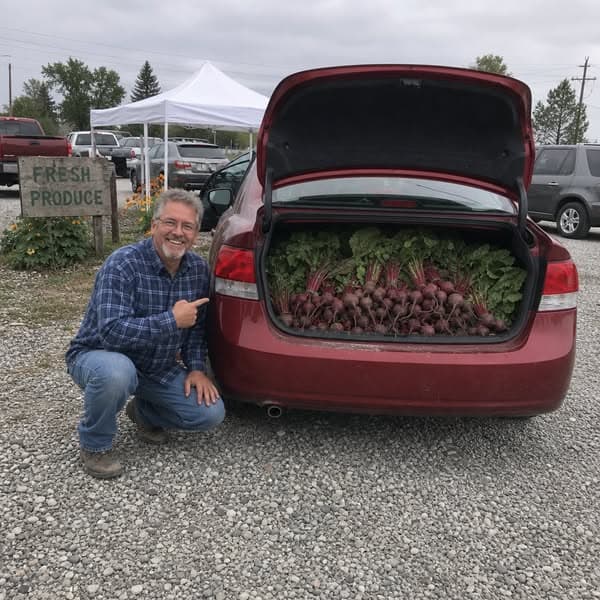

I wrote over 300 of those prescriptions before I wrote one for me.
Fourteen months later I was on the floor of my own bathroom at 3:07 in the morning with a heart rate of 38 and a blood pressure of 82 over 54, my wife on the phone with 911, being told by a paramedic that if my pulse dropped any further they were going to have to pace me in the ambulance.
I was 56 years old.
I am a board-certified cardiologist. Twenty-two years of practice. I have privileges on every floor of the hospital where they took me.
My blood pressure on Lisinopril read 126 over 78. Everyone in my practice called it textbook.
Three months after they stopped it, my blood pressure was 168 over 98.
Higher than the day I was diagnosed.
I am writing this because I know what my colleagues will say when they read it. I have already heard some of it. I do not care.
If you are over 50 with high blood pressure, or you are on one of these medications right now, or your doctor is talking about adding another drug to the stack, or someone you love is — please read all of it.
I know it is long. I know you are scrolling. I know you have somewhere to be.
Two years ago I would have paid anything for a physician with my credential to sit me down and explain what I am about to explain to you.
Nobody did.
I was diagnosed with high blood pressure at 50. Sitting reading 158 over 94. Standing reading 162 over 96.
It did not surprise me. My father had high blood pressure, managed on a beta blocker and a statin for eleven years, and he died of a stroke at 63 in a hospital twenty minutes from the one where I trained.
My entire career was built on the belief that I would prevent for my patients what nobody had prevented for him.
I did exactly what a cardiologist would do.
Lisinopril at diagnosis. Metoprolol the following year when my readings crept past 150 over 95 despite the Lisinopril. A statin the year after that when my LDL hit 152.
Three medications. All three of which I had personally prescribed to hundreds of patients who looked like my father.
I walked every morning. I lifted three days a week. I cut sodium down to almost nothing. I lost 14 pounds and held it.
By year four I was still climbing. Blood pressure averaging 154 over 92. Weight 228.
So I did what the entire field does when an ACE inhibitor and a diuretic are not enough.
I added a beta blocker.
I want to be honest about how good the numbers looked.
Within two weeks my blood pressure dropped to 126 over 78. My resting heart rate went from 74 to 56. The readings were perfect. On paper, I was a textbook case. My triglycerides fell 42 points. My internist said we had finally found the right combination. My pressure looked better than it had in years.
I stood in front of our cardiology group that November and showed my own readings as a case study.
I told a room of nine physicians that we needed to be more aggressive about adding beta blockers early instead of waiting for patients to fail on two drugs first.
Then I went back to my clinic and wrote it for everybody.
Post-stent patients. Pre-hypertensives. Patients whose systolic was 135 and who had never taken anything in their lives. If they had a reading I could justify, I wrote it.
Over 300 prescriptions in twelve months.
Here is what happened to me.
I did not notice it at first because it happened slowly.
By month three I was falling asleep in my chair after dinner every night. I blamed the long shifts.
By month five I could not hold a conversation without losing my train of thought. I blamed stress.
By month eight my hands were cold all the time. My wife said I felt like a different person. I told her I was fine. Just tired.
By month eleven I had not been intimate with my wife in four months. I had no interest. Not just sexually. I did not want to hold hands. Did not want to talk. Did not want to do anything except sit in a room and wait for energy that never came back.
I told myself this was what 56 felt like.
On February 8th at 3:07 AM I stood up from bed to use the bathroom and the room went black.
I woke up on the tile floor with my wife screaming my name and blood running from a gash on my forehead where I had hit the vanity on the way down.
The paramedics found a heart rate of 38. Blood pressure 82 over 54. They started an IV and put the pacing pads on my chest before they moved me.
The emergency physician who admitted me was a woman I had trained during her residency three years earlier. She stood at the foot of my bed with my monitor tracing on the screen and she could not look directly at me.
She said, "Dr. Ashford, I need to be straight with you. If your heart rate drops below 35 tonight we are putting in a temporary pacing wire."
I spent three days on that floor. My heart rate came back after they stopped the beta blocker. They never restarted it.
And then the part nobody warned me about started.
My blood pressure came back.
Not gradually. Within about four weeks it climbed past where it had been before I started the medication. And then it kept climbing.
I want to be precise about those numbers because they matter. My blood pressure did not return to 158 over 94. It settled at 168 over 98.
Ten points higher on the systolic than the day I was diagnosed.
I had spent fourteen months on the most commonly prescribed cardiovascular drug in my profession, and I came out the other side worse than I went in.
That is when I ordered the test that broke my career in half.
I asked our vascular lab for an endothelial function study. A flow-mediated dilation test. It measures how well your blood vessel lining can relax and expand when blood flows through it. I had one on file from May of 2023, four months before I started the beta blocker, because I had been running myself as my own case study for the group presentation.
I put the two studies side by side on my office monitor at 6 PM on a Thursday.
Before the beta blocker, my flow-mediated dilation was 5.2 percent. Below optimal for my age, but functional. My blood vessels could still relax.
After fourteen months on the beta blocker and three months off it, my flow-mediated dilation was 2.8 percent. Severely impaired. My blood vessels had lost nearly half of their ability to respond.
Net result. My blood pressure was ten points higher than the day I started and my blood vessels were nearly half as responsive as they had been when I was diagnosed at 50.
I sat in that office and I did the arithmetic that I should have done before I wrote a single one of those 300 prescriptions.
Your blood vessel lining — the endothelium — is where nitric oxide is produced. Nitric oxide is the molecule that tells your blood vessels to relax and open. When it is present, blood flows through without resistance. Pressure stays normal.
I had spent fourteen months making my vessels worse.
The beta blocker slowed my heart. A slower heart pushes less blood through the vessels. Less blood flowing across the vessel lining means less stimulation for the cells that produce nitric oxide. Less nitric oxide means stiffer, tighter vessels. And stiffer vessels mean higher blood pressure the moment you take the drug away.
I ran the rest of the workup on myself over the following six weeks. I did not want to. I did it because I knew that if I did not, somebody at an outside institution would be reading my chart in three years and I would not be there to explain it.
Brain. An MRI showed white matter changes in both hemispheres. Small vessel disease. The early structural damage that explains why I could not hold a thought for the previous eight months and had blamed stress. Nobody had ordered a brain MRI because my blood pressure had read fine during the drug year and a man who says he is tired does not trigger an imaging order.
Eyes. Retinal arteriolar narrowing and arteriovenous nicking in both eyes. Early hypertensive retinopathy. I had been holding echo reports at arm's length for six months and blaming my glasses.
Kidneys. My eGFR was 74. It had been 92 four years earlier. Early hypertensive nephropathy. Nobody had flagged it because my blood pressure had read fine during the drug year and a creatinine of 1.1 does not trigger a referral under the algorithm I had signed off on for our department.
Heart. My own department. Echocardiogram showed left ventricular hypertrophy and grade 1 diastolic dysfunction. My heart muscle had thickened from years of pumping against stiff, resistant vessels. BNP mildly elevated.
Peripheral circulation. Ankle-brachial index 0.84 in both legs. Reduced blood flow to my lower extremities. I had been waking with cold, numb feet since the previous summer and blaming my running shoes.
Five organs.
Every one of them showing the exact pattern I had spent twenty-two years watching in other people's bodies.
I sat at my desk on a Tuesday night in April with all five reports fanned out in front of me and I finally understood something I had spent my entire career not understanding.
The Lisinopril was relaxing one set of blood vessels through one chemical pathway.
The diuretic was reducing fluid volume to lower the pressure inside the vessels.
The statin was managing my LDL.
And the beta blocker had been forcing my heart to pump slower and weaker so the number on the chart would drop.
Four drugs. Four ways to push a reading down. Not one of them had repaired the damage to the vessel lining that was causing all five organs to deteriorate at the same time.
I opened my laptop at 11 PM and I did something I had not done since my fellowship.
I searched for the mechanism. Not the outcome trials. Not the prescribing data. The mechanism.
I read until 3 in the morning.
What I found was not hidden. It was sitting in Hypertension and Circulation and the New England Journal — journals I had subscribed to for twenty-two years.
Here is what is actually happening inside the body of every person with high blood pressure.
Your blood vessel lining — the endothelium — produces nitric oxide. That molecule keeps your vessels relaxed and open. When you have enough of it, blood flows freely, pressure stays normal, and every organ gets the circulation it needs.
After age 40, nitric oxide production drops roughly 10 percent every decade. By 55, most people have lost nearly half of what they had at 30.
As nitric oxide drops, your vessels stiffen. Stiffer vessels mean more resistance. More resistance means the heart has to push harder. That is high blood pressure.
But that is only the first half.
The high-pressure blood flow pounding through stiff vessels generates something. Free radicals. Oxidative stress. The most destructive molecules the human body produces.
The papers described what they do.
They attack the vessel lining. The same lining that produces nitric oxide. They grind through the endothelial cells. They damage the filtering units in kidneys. They break down the tiny vessels in the retina. They degrade nerve sheaths. They destroy the small vessels feeding the brain.
I sat at my desk at 1 AM and I connected each line of the research to one of the five reports fanned out in front of me.
The small vessels feeding my brain. The white matter changes on the MRI.
The vessels feeding the filters in my kidneys. The eGFR dropping while nobody flagged it.
The vessels in the back of my eyes. The reports I could not read without holding them at arm's length.
The blood vessels feeding my heart muscle. The thickening on the echocardiogram. The early signs of a heart being worked too hard for too long.
And the vessels in my legs and feet. The cold, numb feet I had been waking up with for a year.
Five organs. Same free radicals. Same destruction of the same vessel lining. And not one drug in the sequence — Lisinopril, the diuretic, the statin, the beta blocker — had ever addressed it.
The Lisinopril had managed one constriction pathway. The diuretic had managed fluid volume. The statin had managed the cholesterol. And the beta blocker had managed my heart rate.
Four drugs managing four measurements. The oxidative damage to the vessel lining underneath all of them, untouched, for six years.
But the damage was not even the entire picture. There was a second part the research described, and it was the part that connected all five reports.
The free radicals were destroying the endothelial cells — the cells that produce nitric oxide. Year after year, the oxidative damage was killing the cells responsible for making the one molecule that keeps your blood vessels relaxed and open.
Less nitric oxide meant stiffer vessels. Stiffer vessels meant higher pressure. Higher pressure meant more endothelial damage. Which meant even less nitric oxide.
A cycle. The damage destroys the cells that produce nitric oxide. The lost nitric oxide stiffens the vessels. The stiff vessels raise the pressure. The raised pressure creates more damage. And round it goes.
I sat at my kitchen table at 2 AM and I finally saw the full picture.
Your blood pressure reading is a number. Doctors watch the number. They adjust medications until the number goes down. But the number is not the problem. The number is a symptom of vessels that have lost the ability to relax.
The Lisinopril blocks one constriction signal. But the vessel lining keeps being destroyed. The diuretic drains fluid volume. But the vessel lining keeps being destroyed. The beta blocker slows the heart so it pushes less blood through the stiff vessels. But the vessels stay stiff. And the destruction continues.
And the beta blocker does something worse than leaving the damage alone. By slowing the heart, it reduces blood flow. Reduced blood flow means less stimulation for the vessel lining. The vessel lining needs that stimulation to produce whatever nitric oxide it can still make. The drug takes away the one thing the vessels need to maintain what little function they have left.
That is why blood pressure comes back higher after you stop. The vessels are in worse condition than they were before the drug.
Four drugs. Four ways to push a number down on a chart. No way to stop the damage to the vessel lining. No way to restore the nitric oxide the body needs to keep the vessels relaxed on its own.
I did not close the laptop that night.
I went through everything I could find. The alternatives. The supplements. The protocols.
Salt reduction. Lowers fluid volume slightly. Reduces the load on stiff vessels. Does not repair the vessel lining. Does not restore nitric oxide.
Exercise. Temporarily increases blood flow and stimulates some nitric oxide production. But if the vessel lining is already severely damaged, exercise alone cannot rebuild what the damage has destroyed. I had been exercising for six years and it had not stopped any of what was happening to me.
Magnesium. A mild muscle relaxant. May relax smooth muscle in vessel walls slightly. Does not reach the endothelial cells where nitric oxide is actually produced. Does not stop the oxidative damage.
CoQ10. Potassium. Garlic extract. The supplements on the pharmacy shelf that promise cardiovascular support. They work at the margins of muscle relaxation and electrical function. They have never been inside the endothelial cell where nitric oxide is supposed to be produced. They have never reached the vessel wall where the free radicals are doing the damage.
Turmeric. Vitamin C. Vitamin E. General antioxidants. They flood the body and neutralize every free radical they touch — including the ones your immune system needs to fight off infection. And their molecules are too large to cross cell membranes. They work in the bloodstream. The damage is happening inside the cells, inside the vessel walls, inside the endothelium. Those antioxidants cannot reach it.
The beta blocker. I had personal experience with that one. It pushes the number down by forcing the heart to pump slower. It makes the vessel lining worse in the process. It does not stop the damage. It does not restore nitric oxide.
I sat at my kitchen table at 4 AM with my laptop still open and every option crossed off, and I understood why my father had died at 63 despite never missing a dose.
Nobody had ever stopped the damage to his vessel lining. Nobody had ever restored his nitric oxide. Eleven years of managed numbers while the free radicals destroyed his blood vessel lining from the inside and the endothelial cells that were supposed to keep those vessels relaxed died off one by one while nobody checked whether they were still functioning.
The medication kept the number down. The vessels were being destroyed the entire time.
I found the research on betalains two nights later, still reading at 1 AM. University studies from Germany, Italy, the Netherlands. Published in journals I had subscribed to for twenty-two years.
The subject was a pigment. The deep red in a beet. The stain that won't scrub off your cutting board. It has a name. Betalains.
It is a selective antioxidant — it does not neutralize everything in its path. It targets only the specific free radical reaction that does the damage — the one that was destroying my vessel lining, my brain's small vessels, my kidneys, my retina — and leaves the beneficial free radicals the immune system needs completely alone. It targets the destructive ones and leaves the beneficial ones untouched.
And it gets inside. Carried into the bloodstream, absorbed through the gut wall, reaching the cells where the damage is actually happening — the places where turmeric and Vitamin C and every capsule on a pharmacy shelf have never been because the molecules are too large to cross the membrane.
Betalains cross. They reach the endothelial cells. They reach the vessel walls. They reach the small vessels feeding every organ in your body. They get to the damage at the source and they stop it.
That was the first job. Stop the oxidative damage to the vessel lining.
The second job came from the same root. The beet carries something else — dietary nitrates. The body converts them into nitric oxide — the exact molecule the oxidative damage had been destroying for years. The molecule that tells the vessels to relax and open. The molecule that every blood pressure drug manages around but none of them actually restore.
Nothing in any pharmacy does both. Every drug in the sequence manages one measurement. Every supplement on a shelf addresses one pathway. This root does two things at once — stops the damage and restores the nitric oxide. There is no pharmaceutical version of that. There is no synthetic equivalent. There is this root, or there is the damage continuing and the nitric oxide staying gone.
But here is the part that stopped me.
The beet in the studies was not the beet in the store. The modern grocery beet has been bred for a hundred years to be bigger, sweeter, easier to ship. Every time you breed a beet for sugar, you breed the betalains — the pigment, the entire medicine — down. The beet that used to be medicine became a sugar crop.
But not everywhere.
A handful of Amish families in Lancaster County, Pennsylvania have been saving the seed of the original strain by hand for over 150 years. Blutwurzel — blood root. Never crossed it with the sugar beet. Never needed it to be sweet. While the rest of the world bred the medicine out, these families kept it alive — the same way they keep everything alive, by hand, by habit, by refusing to let go of what works.
That old strain carries roughly ten times the betalain concentration of anything in a grocery store. And ten times the dietary nitrates.
The deep crimson of that beet — the red so dark it is almost violet, the stain that bleeds through everything it touches — that color IS the medicine. The pigment is the compound. The red that won't come off your cutting board is the molecule that stops the free radicals from destroying the lining of your blood vessels.
I sat at my kitchen table and I understood that the answer to the damage running through five of my organs had been growing in the same soil for a century and a half, kept alive by people who use no electricity, while the entire pharmaceutical industry I had trained inside had never once looked at it.
I sat there and I heard myself. I heard how it sounded. A cardiologist with twenty-two years of practice, privileges on every floor of the hospital that nearly put a pacing wire in him, telling himself that a pigment from a beet root was the answer to a problem that four prescription drugs had failed to fix.
It sounded exactly the way it sounds to you right now.
But I had been trained to trust scale. The bigger the drug, the bigger the effect. The more expensive the intervention, the more serious the medicine. I had taken a drug that forced my heart to beat slower and presented my own blood pressure readings as proof that scale works.
Scale put me on the floor of my own bathroom at 3 AM. Scale made my vessel lining worse and gave me back a higher number than I started with. Scale had never once, in any form, at any dose, at any price, stopped the oxidative damage inside my vessel walls or restored the nitric oxide my body needed to keep the vessels relaxed on its own.
The beta blocker was the most commonly prescribed cardiovascular drug in my profession. It never reached the vessel lining. A pigment from an heirloom root does.
Every drug in the sequence managed a number by suppressing something. The Lisinopril suppressed a constriction pathway. The beta blocker suppressed my heart rate. The diuretic suppressed fluid volume. This root does not suppress. It gives back — the nitric oxide the damage destroyed, the protection the damage burned through. For the first time in six years something was restoring instead of managing.
That is when I stopped hearing how it sounded and started reading what it did.
But I did not know the right product yet. Not in the way that mattered.
Because I did what any reasonable person would do. I ordered beetroot capsules from Amazon.
First brand that came up. Decent reviews. Decent price. Figured a beet was a beet.
I took them every morning for three weeks. Two capsules. A glass of water. By day four I felt a slight something — a marginal lift in the afternoons.
I told myself the research was right.
At week three I ran a blood pressure test.
Blood pressure: 164 over 96. It had been 168 over 98 in March. Two points on the systolic. Nothing on the diastolic.
The mechanism was right. The product was wrong. A physician with twenty-two years of training had been fooled by a label and a star rating.
I went back to the research and confirmed what I should have checked before I ordered. The Amazon capsule was the grocery beet — bred for sugar, spray-dried at high heat. Heat kills betalains. What reaches the capsule is brown dust. Dead before the cap was sealed.
The slight lift I had felt — that was real. Even weak beetroot increases blood flow a little. That is the fastest thing a beet does, and it is why cheap products can fool you. You feel a slight something and believe the vessel lining is being repaired. It is not. The feeling is not the proof. The numbers are the proof.
And my numbers said two points on the systolic in three weeks. The vessel lining had not been touched.
I had the right mechanism and the wrong product and I did not know where to go next.
That was the week Margaret Olsen came in for her quarterly.
Margaret had been my patient for four years. High blood pressure, cardiac patient, 61 years old. Lisinopril and a diuretic. Her husband had died of a stroke at 64 — a hypertensive stroke, the kind I see the aftermath of in my catheterization lab. She had been holding steady for years. Blood pressure between 148 over 90 and 154 over 94. Managed.
I pulled up her new panel expecting the same.
Her blood pressure was 122 over 74.
I looked at the number. Looked at her chart. Looked at the number again.
Her resting heart rate was 64. Down from 78 four months earlier.
Her triglycerides had dropped 68 points. Her blood pressure, which had been sitting at 152 over 92 on Lisinopril, was 122 over 74.
I scrolled back through four years of panels. Nothing like this had ever happened in her chart. Nothing like this had happened in any chart in my practice without a major medication change.
"Margaret." I turned the screen toward her. "Your numbers moved."
"I know."
"They moved a lot."
"I know that too."
"Did Dr. Keller change your medication?" Keller was her internist.
"No. Same dose. Same everything."
I looked at the screen again.
"What changed?"
She opened her purse and took out a bottle. Set it on my desk.
"My daughter found this. After Ray died, she started reading everything she could find about what high blood pressure actually does to your blood vessels. She was afraid of losing me the way we lost him."
She pushed the bottle toward me.
"It's a beetroot capsule. But not the kind from a store. My daughter drove to Lancaster County. She found a woman at a farm stand — Amish — who told her about an old strain of beet they've been growing for over a hundred years. The woman said most beets in stores have been bred for sugar until there's nothing left in them. She said the old strain is different."
I picked up the bottle. Read the label. Rosabella. Heirloom Blutwurzel beetroot. 1,300 milligrams.
"She's been sending me a bottle every month since February."
I thought about the Amazon bottle in my trash can. The brown dust. The two points.
"Margaret, do you mind if I open one of these?"
"Go ahead."
I twisted a capsule open over a piece of white paper on my desk.
Deep crimson. Almost violet. Nothing like the dull brown powder I had been swallowing for three weeks.
I tipped a drop of water from my glass onto it. It spread red across the paper immediately.
I sat there looking at the difference between what I had been taking and what was sitting on my desk, and I understood the distance between a product and the medicine.
"How long have you been taking this?"
"Four months. Two capsules every morning."
"And you felt something?"
She looked at me the way patients look at you when they have been waiting for you to ask.
"Dr. Ashford, I felt it the first day. Twenty minutes after the first capsule. A warmth that moved down my arms. The heaviness I'd been carrying behind my eyes for years — it cleared. I thought it was in my head. But it happened the next morning too. And the next."
She paused.
"The headaches stopped in the second week. I had been waking up every morning with pressure behind my temples for three years. Ray used to have the same thing. I thought it was something that just happened to us."
She looked at the panel on my screen.
"I didn't come here to convince you of anything. I came here because my daughter asked me to show you the numbers. She said the numbers are the language doctors trust."
Her daughter was right.
That night I sat at my kitchen table with Margaret's panel and the bottle she had left me and my laptop open and I verified everything.
The Blutwurzel strain I had read about at 1 AM — Margaret's bottle was it. The old seed line, never crossed with the sugar beet. Shade-dried, never heated — so the crimson reaches the capsule alive. 1,300 milligrams per capsule — the dose in the studies that worked. And a Certificate of Analysis published on the site — an outside lab testing the actual batch, posting the betalain content and the purity for anyone to read.
I ran the Amazon brand against those four criteria. It failed every one. Margaret's bottle — Rosabella — passed all four.
I ordered it that night.
When my own bottle arrived, I did the saucer test again. Twisted a capsule open over a white dish. Same deep crimson Margaret's capsule had shown me. Same violet bleed when the water touched it.
I took two capsules with a tall glass of water and sat down at the same kitchen table where I had read until 3 AM the week I found the damage nobody was treating.
Twenty minutes.
That is when I felt it. Not the slight lift I had gotten from the cheap brand. This was different in kind, not degree.
Warmth moving down my forearms and into my hands — hands that had been cold for over a year on the beta blocker. Exactly what Margaret had described. Exactly what her daughter had driven to Lancaster County to find.
I want to be precise about this because I am a physician and I will not overstate anything. That twenty-minute warmth is not the blood pressure benefit. Repairing the vessel lining takes weeks and shows up on a blood pressure monitor, not at a kitchen table.
What I felt in twenty minutes was the nitric oxide taking effect — the nitrates reaching the vessel lining, the vessels beginning to relax, blood moving through pathways that had been constricted for years.
Proof of delivery. Not proof of cure. The cure comes on paper.
But I knew. Not the way I had hoped cheap beetroot was working and then watched two points on a lab sheet tell me the truth. This was the real thing reaching where it needed to go.
Week one.
My afternoon energy came back. I had been putting my head down on my desk between two and three o'clock every day since the beta blocker. On the fifth day I read three weeks of accumulated journals in one sitting at 4 PM and did not once feel my eyes go heavy.
Week two.
My hands were warm for the first time in over a year. My wife held them at dinner and did not say a word. She did not need to.
The brain fog started to lift. I could hold a conversation without losing my train of thought. I could remember what a patient had told me two rooms earlier without checking the chart.
Week three.
I ran home blood pressure readings twice daily. Readings that had been sitting at 164 to 168 over 94 to 98 since March started coming in at 152 over 90, then 146 over 86, then 140 over 84. I ran them a second time each morning because I did not believe the first.
Week four.
Blood pressure 136 over 82. I ordered a full panel through our outpatient lab. Triglycerides down 48 points from my March labs.
Week six.
Blood pressure 128 over 78. I had not seen a reading that low without medication since before my diagnosis.
Week eight.
Blood pressure 122 over 76.
Week twelve.
Full panel. Metabolic, lipid, renal, vascular.
Blood pressure 118 over 72.
Resting heart rate 62. Strong and steady. Not the drugged 56 the beta blocker had forced it to.
Endothelial function — flow-mediated dilation — improved from 2.8 percent to 5.6 percent. My blood vessels were more responsive than they had been before I ever started the beta blocker.
eGFR climbed from 74 to 84.
ALT back in normal range for the first time in three years.
Blood pressure 118 over 72 with no change to my remaining medication.
And then the one I have thought about every day since.
I ordered a repeat brain MRI. The white matter changes had not progressed. The small vessel disease had stabilized.
I ordered a follow-up on my ankle-brachial index. It had improved from 0.84 to 0.96. Blood flow to my legs was returning.
And the cold, numb feet I had been waking up with for over a year were warm at night. I pulled the blanket over them and slept through.
The damage was being stopped. The nitric oxide was being restored. And the five organs that had been quietly deteriorating under six years of managed numbers were, for the first time, moving in the other direction.
I printed the March panel and the twelve-week panel and I walked them into my practice partner's office. Richard. Another cardiologist, fourteen years in, a man I had helped recruit.
I put both sheets on his desk and I did not say anything.
He read them twice. Then he looked up at me.
"David. What did you do."
I told him. The syncope. The bathroom floor. The pacing pads. The endothelial function test. The five reports. The research at 3 AM. The damage nobody was treating. The nitric oxide nobody was checking. The cheap beetroot that did nothing. Margaret's impossible panel. The heirloom strain from Lancaster County. Rosabella. All of it.
He listened for the better part of an hour and did not interrupt once.
When I finished he said, "I was not trained on any of this either. Send me the name. I want to watch it in my own patients."
He has been running it alongside standard treatment with seventeen of his hypertensive cardiac patients for three months. He called me twelve days ago. Twelve of them have shown measurable improvement in blood pressure readings. Eight have had reductions their internists called significant.
Three have been taken off their beta blockers entirely at their primary care physician's recommendation — not Richard's, not theirs. Their doctors looked at the numbers and made the call.
And not one of them has reported the exhaustion, the brain fog, the cold hands, the sexual dysfunction, the emotional flatness that I spent fourteen months living through on the drug that was supposed to be the answer.
Three weeks ago I sat down at a restaurant with my wife and I stayed awake past 9 PM for the first time in two years. We talked for three hours. She held my hands across the table and said they were warm.
My most recent blood pressure reading, taken nine days ago, was 116 over 70.
Lower than any reading I have had since my early forties.
I am 58. I have my blood vessels working again. I have my practice. I have warmth back in my hands and feeling coming back in my feet. I have watched five organs in my own body turn around in a direction I have not seen a chart move in twenty-two years of cardiology.
And two weeks ago Richard stood in my doorway holding my latest panel, and he used the word I had been waiting six years for somebody to use about me.
Improving.
Not managed. Improving.
If you have high blood pressure, or your husband does, or your mother does, and you have been told your numbers look controlled while your body quietly comes apart underneath them, I need you to hear the mechanism and not the marketing.
Your blood pressure reading is a symptom. Not the disease. The disease is the oxidative destruction of the endothelial cells that produce nitric oxide. That destruction is what makes your vessels stiff. That stiffness is what raises the pressure. And that raised pressure creates more destruction. Around and around, year after year, while every drug in the pharmacy manages a different number and none of them stop the cycle.
The beta blocker slows your heart. It does not stop the damage to the vessel lining. It does not restore nitric oxide. And for a great many people it takes the blood flow the vessel lining needs to function with it on the way through, which is why the number comes back higher when you stop.
Lisinopril manages one constriction pathway. It does not stop the damage. It does not restore nitric oxide.
Cutting salt does not stop the damage. I did that for six years and it did not stop one thing that was coming for me.
There is a pigment in an old heirloom beet that does two things no drug in the sequence has ever done. It stops the oxidative damage to the vessel lining — selectively, targeting only the destructive radical, leaving the beneficial ones alone. And it carries the raw material your body needs to rebuild the nitric oxide that keeps your vessels relaxed and open.
Stop the damage. Restore the nitric oxide. Two jobs. One root.
Rosabella. Heirloom Blutwurzel beetroot from a handful of Amish families in Lancaster County who have been saving this seed line by hand for over 150 years. Shade-dried, never heated, so the betalains and the nitrates reach you alive. 1,300 milligrams per capsule — the dose in the studies that worked. Third-party tested. Certificate of Analysis published for every batch.
Two capsules. One glass of water. Every morning.
90-day money-back guarantee, and there is a reason it is ninety days and not thirty. Blood vessel remodeling takes time. Endothelial cells need weeks to regenerate. Nitric oxide production needs time to rebuild. Ninety days is the shortest honest window in which a real change can show up consistently on a blood pressure monitor. If your numbers have not moved by then, you pay nothing.
The system that trained me had twenty-two years to hand me this and it never did.
Margaret's daughter found it by driving to a farm stand.
It is reaching you now.
https://track.tryrosabella.com/cdc16426-3e48-40a7-9fad-21098084f6cf
P.S. — My father had high blood pressure, managed on a beta blocker and a statin for eleven years, and he died of a stroke at 63. He was told he was controlled at every visit for a decade. I built my whole career on the promise that I would catch for my patients what nobody caught for him, and then I spent fourteen months taking a drug that made my vessel lining worse while the oxidative damage continued underneath. I got a warning at 3:07 in the morning in February. My father never got one. Rosabella is heirloom Blutwurzel beetroot — shade-dried, never heated, 1,300 milligrams per capsule, with the Certificate of Analysis posted on the site. My father's pharmacy never published a lab report on what was in the bottle. Rosabella does. And they stand behind it with a 90-day money-back guarantee. The system does not do refunds. Please do not wait for the warning my father never received.
P.P.S. — You will feel it within twenty minutes of your first capsule. Not a jolt, not a caffeine rush. A quiet shift. Warmth moving down your arms and into your hands. The heaviness behind your eyes thinning out. That is not the blood pressure benefit — that takes weeks and shows up on a monitor, not at a kitchen table. What you feel in twenty minutes is the nitrates reaching your vessel lining and the betalains reaching your endothelial cells — something your beta blocker has never done and never will, because beta blockers work by suppressing your heart and have never once reached the vessel lining where the damage is happening. Something no ACE inhibitor has ever done because those molecules manage one constriction pathway and never touch the oxidative damage. If you have tried beetroot before and felt nothing, you bought the wrong beet. The grocery beet. The dust. Twist a Rosabella capsule open over a white saucer. If the powder is deep crimson — almost violet — and bleeds red when water touches it, the betalains are alive. If your last beetroot was brown, it was dead before you swallowed it. The feeling is not the proof. The proof comes on paper. Check your blood pressure.
P.P.P.S. — About your medication. Do not stop it. Start Rosabella alongside whatever you are currently taking — Lisinopril, the beta blocker, a diuretic, both, anything. That is exactly what Richard is doing with his seventeen patients. All of them still on their medication. All being monitored monthly. Three of their primary care physicians have voluntarily removed the beta blocker based on the improved numbers. That decision came from their doctors, not from them. Not from Richard. That is how you do this correctly. Let the numbers make the case. Your doctor trained on the same system I did. The numbers are the language he trusts. Give him numbers he cannot argue with, and he will adjust the plan himself.
P.P.P.P.S. — For the woman reading this whose husband is the one on the medication. Or the one who falls asleep in his chair before 8 PM every night. Or the one whose hands are cold when you reach for them. Or the one who does not seem like the man you married anymore. I know what it looks like from your side because my wife has been watching it from hers for six years. You see the exhaustion. You see the blank stare when you try to talk to him. You see the man who used to have energy and opinions and warmth, reduced to someone who shuffles through the house and says he is fine. You see the man behind the number — the one the chart does not measure. The damage works the same in men as it does in women. Rosabella is not a men's product or a women's product — it is a human product. Two capsules, one glass of water. If your husband is the one with the high blood pressure, give him the glass. If you are the one whose doctor says the number is controlled while you feel worse every year — trust what your body has been telling you. The doctor watches the chart. You live in the body. You are closer to the truth than the chart is.
P.P.P.P.P.S. — Rosabella is a small company. They cannot scale a 150-year-old seed line. It is one heirloom strain, grown by a handful of Amish families in Lancaster County, hand-harvested after the first frost. When a season's batch is gone, it is gone until the next harvest. Shade-drying takes weeks, not hours, and the third-party testing adds time to every batch. I tried to reorder after my first month and waited eleven days for a restock. I keep two bottles in my house now. They have a Buy 3 Get 3 Free offer right now. If you have a doctor's appointment coming up in the next 30 to 60 days and you want to walk into that appointment with real numbers instead of the same managed conversation you have been having for years — check availability now. Do not wait for the next harvest.
https://track.tryrosabella.com/cdc16426-3e48-40a7-9fad-21098084f6cf
~ Dr. David Ashford, MD, FACC, age 58, cardiology
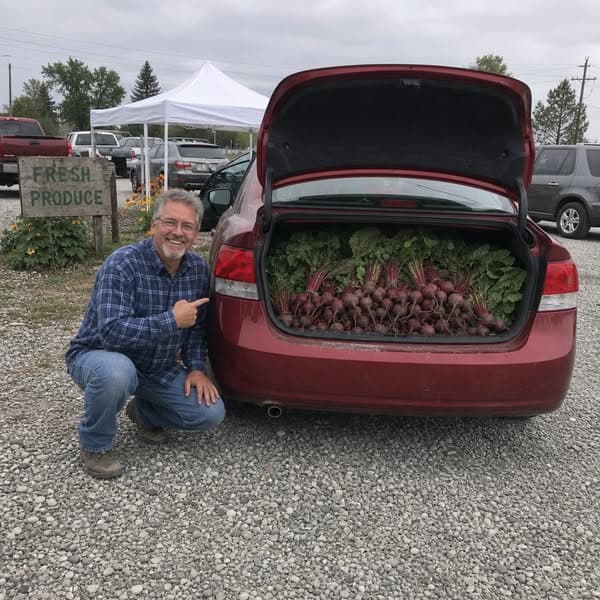

Why settle for produce that’s lost half its nutrients before it reaches your plate? With The Farmstand, your food is picked minutes before you eat it—zero waste, zero mystery, 100% fresh.

Locale meals pack 40-60g of protein per meal with organic produce, grass-fed beef and wild-caught fish. No seed oils, no bloat-inducing filler, zero cooking.
Fresh meals delivered across the Bay Area. See this week's menu.

Locale meals pack 40-60g of protein per meal with organic produce, grass-fed beef and wild-caught fish. No seed oils, no bloat-inducing filler, zero cooking.
Fresh meals delivered across the Bay Area. See this week's menu.

Then I spent a week in Lancaster County. Where the families eat scrapple, sausage, potatoes, and butter on everything, three meals a day.
What I found there broke everything I thought I knew.
Let me back up.
I run a kidney clinic at a large hospital. Doctors send patients to me when their GFR has been sliding for years under monitoring, or when the chart says controlled and the number keeps falling anyway.
Patients who have done everything they were told and are now sitting in front of a specialist wondering why.
By the time a chart hits my desk, I already know what it is going to say. Because it always says the same thing.
Patient presents with reduced kidney function. Doctor's notes: cut the protein. Drink more water.
Patient returns. GFR down another three points. Doctor's notes: start lisinopril 10 milligrams to protect the kidneys. Try harder on the diet.
Patient returns. Ankles swelling by evening. Fatigue that sleep does not fix. Doctor's notes: probably age. Add a water pill.
Patient returns. Foam in the urine. Itching with no rash. Doctor's notes: we will monitor. Recheck in 90 days.
Patient returns. GFR 24. Brain fog. Wife is worried. Doctor's notes: discuss dialysis access at next visit.
Patient does not make the next visit.
He is brought in on a stretcher at 4 AM. Fluid on his lungs. Potassium at the ceiling. Emergency dialysis through a catheter in his neck. His wife is crying in the waiting room.
Five visits. Five years. Five dismissals. And a sixth visit he did not walk into on his own.
Then the renal ultrasound lands on my screen, the full panel open beside it.
I pull it up. And in under a minute I see what explains every one of those visits.
Filter mesh eaten through. Millions of microscopic units with holes where the mesh should hold. That is the protein in the foam.
Pressure pounding what was left, the survivors working double. That is the GFR sliding two points every six months.
Waste backing up in blood the filters could no longer clear. That is the fatigue. The itch. The fog.
Fluid he could not clear, settling into his ankles by evening. That is the swelling they called age.
And one night it goes to the lungs instead. That is the 4 AM stretcher. "Nobody saw it coming."
Except it was clear as day. Every visit. And nobody ever bothered to look.
I see this every single day. It never changes.
So when I was invited to a nephrology meeting in Philadelphia last spring, I added a week. Something had been bothering me for years.
There is a county west of that hotel where the Plain families eat heavy. Scrapple. Sausage. Potatoes. Butter on everything. Pie after supper. Close to the exact diet I tell my patients is wearing out their kidneys.
A Penn State study of that county found a cardiovascular death rate seventy-four percent lower than the rest of Pennsylvania. That is a cardiovascular number, not a kidney number.
But cardiovascular disease is what kills more kidney patients than anything else on earth, and the diet was the same diet.
Based on my training, that county should be feeding dialysis chairs.
I wanted to see the charts myself.
After the meeting I drove west instead of home, to spend three days shadowing a physician a colleague had introduced me to.
His name is Dr. Anders Rosling. He is 68 years old.
Still practicing four days a week at a clinic outside Lancaster where he has been for over 30 years. His father was a doctor in the same county before him and lived to 92 on his own feet.
Dr. Rosling is precise. Sharp. Not the warm handshake type. He shook my hand at the front of the clinic and told me to stay quiet, watch, and ask questions in the coffee break.
I sat in on his morning appointments. What I saw shocked me.
Patient after patient came in with numbers that would have earned an American escalation in ten minutes. GFR in the forties. Protein in the urine. Family history. The pattern I know cold.
Dr. Rosling did not reach for the prescription pad once.
He asked about their meals. He asked about their sleep.
He asked what their kidneys were asked to do every day. And in every consultation he pulled out two photographs, a clean filter mesh and a corroded one, and pointed at the difference.
"Your GFR is not the disease," he told a 61-year-old man in the second appointment I sat in on. "The number is how much filter you have left."
He tapped the corroded photograph. "The disease is what is eating it.
Nobody has stopped that in you for twenty years. We start with this today."
At the coffee break I could not hold my questions anymore.
"Anders, how are your patients not on lisinopril?"
He looked at me for a moment. Then he laughed. Actually laughed.
"Of course some are. When the filter is under enough pressure that we cannot wait, yes.
But most of my patients? No. Because we stop what is eating the filter first.
The number holds on its own once the filter stops losing ground."
He gestured for me to sit down.
"In thirty years treating these families I have sent a handful of them to dialysis. A handful."
"Do you know why they eat scrapple and potatoes and butter and keep their kidneys into their eighties? Because food is not the enemy of a kidney.
Corrosion is. A meal comes and goes.
A filter that is being eaten stays eaten for decades if nobody stops it."
He shook his head.
"In America you have taken the number on the chart and made it the enemy. So you spend every visit turning the pressure down.
Here we take the filter and make it the priority. We ask what is eating it.
We stop that. Then the number takes care of itself."
"You must turn the pressure down AND stop the corrosion. Two jobs. Always."
I sat there staring at him. I have spent 12 years studying kidney disease.
Published on oxidative injury in the glomerulus. And this 68-year-old man had just described in one sentence what the entire protocol I was trained in misses.
He continued.
"Lisinopril turns down the water pressure. Yes.
Good. But it does not stop the bleach.
Every one of my colleagues in the cities knows the number keeps falling anyway and keeps prescribing exactly what you prescribe. Because there is no drug for the corrosion."
He reached into his desk drawer and pulled out a bottle. Beetroot, heirloom, grown eleven miles from that clinic by the families in his waiting room.
"This," he said. "This is what I take every morning.
What my father took. What half the people in this building take.
Not the beetroot powder from the grocery store. That is a decoration.
This is the root with the two things the filter actually needs."
He set the bottle on the desk between us.
"There are two things in this beet. Not one. Two. And they do two different jobs. Which is why one alone will not work, and why the pill your colleagues want to prescribe will not either."
"The first is the nitrate. This root is one of the richest dietary sources there is.
Your body turns nitrate into nitric oxide, and nitric oxide is the signal that tells a vessel to relax. The pressure pounding those filters comes down.
That is your lisinopril's whole job, done by a root."
"The second is the pigment. The deep red-violet that stains your hands."
He said it slowly. He knew I was a nephrologist and he knew I would want to hear it exactly.
"A strained filter throws off free radicals. Bleach, essentially.
They eat holes in a mesh that does not grow back. And every filter that goes hands its work to the ones still standing, which strain harder and throw off more.
That is the slope you have been documenting and calling the natural course. The pigment is called betalains, and it neutralizes the exact radicals doing the eating.
That is the half nothing in your prescription pad touches."
He picked up the bottle.
"Two things. From one root.
One does what your drug does. The other does the one thing your drug cannot.
That is why the men in these families are still on their own feet at eighty-five with the kidneys they were born with. Not because we prescribe better pills.
Because a kidney with two problems needs two answers."
I sat there for a long time.
Because I had spent 12 years watching a number fall while two things in a root grown eleven miles from that desk were doing the two jobs my prescription pad could not.
I drove home the following week.
I had known about beetroot academically for years. Nephrology journals ran papers on dietary nitrate and the kidney. I skimmed them for headlines and never opened them.
I opened them that week.
A randomized trial out of London. Six hundred and forty patients whose kidney function was already reduced, given dietary nitrate — the compound the beet delivers — against placebo.
Kidney injury cut by about seventy percent. Major adverse kidney events cut sixty-two percent over the following year.
It was not a cure for chronic kidney disease. Nobody is claiming reversal. It was protection — measured, published protection over kidneys already under strain. Which is more than I have ever been able to offer anybody.
And the pigment had its own file. In animal models of kidney injury, beetroot extract cut oxidative damage to the kidney by about fifty-eight percent and brought renal inflammation down with it.
Animal work, and I read it as such. But it pointed at the same thing Rosling had pointed at with two photographs.
Two things. Two jobs. From one root.
I sat at my desk with the studies open and thought about the man on the stretcher at 4 AM. Every patient whose GFR I documented for years while the mesh went on dissolving underneath.
There was something that could have been protecting them this whole time.
And nobody told them.
There is something I have not told you.
Four years ago my own draw came back at 63. A little low. We'll keep an eye on it.
Two years ago it was 57.
This spring it was 53. Creatinine 1.4.
I did not tell my wife. I did not tell the colleague down the hall who signs my labs. I put it where everybody puts it and said to myself the line I have said nine hundred times.
We'll keep an eye on it.
Before you go and buy beetroot capsules from the drugstore, I tried that first. Here is what happened.
I bought two brands from Amazon my first month back. Highly rated. Thousands of reviews.
Six weeks. My creatinine did not move.
I was ready to conclude that Dr. Rosling had oversold it.
Then I actually looked at what I had bought.
Almost everything sold as beetroot in America is the grocery beet. We have bred it for sugar for over a century, sweeter every decade, until the medicine was bred right out.
The pigment and the nitrate are the two things you are buying, and they are the two things the breeding took out.
And even when the seed line is right, most of it is spray-dried — run through heat to turn it into powder. Heat destroys the pigment and the nitrate together, before the bottle is ever sealed, which is why what comes out is brown.
Real beet powder is deep crimson, almost violet. Brown means it was cooked on the way to you.
The two brands I tried had failed for one reason or both.
I needed a real heirloom seed line, dried without heat, at a real dose, printed on the label and proven on a lab sheet.
The brand Dr. Rosling named when I called him from home was Rosabella.
I called the company directly before I ordered. That is how I was trained.
You do not put your name behind a supplement the way you would not put your name behind a medication. You verify the source.
You read the lab work.
I asked for the certificate of analysis. I asked for the seed line. I asked how they dry it. I asked the dose per capsule. They sent me everything within the day.
Heirloom Blutwurzel, six generations on the same Lancaster County fields, never hybridized. Hand-harvested after the first frost.
Shade-dried and cold-extracted, never high-heat spray-dried. Roughly ten times the betalains and nitrates of a grocery beet.
Thirteen hundred milligrams per capsule. Third-party tested, the certificate of analysis published for anyone to read.
That was the brand I ordered.
I started the following Monday. One capsule with breakfast. That was the whole protocol.
Week 1. About seventeen minutes after the first one, warmth came into my hands and feet and something lifted behind my eyes — blood moving, the fastest thing a beet does, and nothing to do with your kidneys.
What mattered came later: the four o'clock wall stopped arriving, gone inside four days, and I slept through the night.
Week 2. Three trips between midnight and five became one. My ankles were softer by evening.
Week 4. The foam was thinner, and then it was not there. The itch on my shins, the one I had called dry skin for two years, was gone.
Week 6. I drew early because I could not wait. GFR 53. Creatinine down from 1.4 to 1.3.
Unchanged. And for the first time in four years, unchanged was the whole point. The slope I had been documenting on other people's charts, and quietly on my own, had stopped.
Week 12. The draw.
I sat in my office and pulled it up on the screen. I stared at it for a full minute before I believed what I was looking at.
GFR 57. Up four points.
Creatinine 1.2.
The protein in my urine down by about half.
I brought it to the colleague down the hall who signs my labs. He looked at it. Then he looked at me. Then he looked at it again.
"What did you do?"
I told him. One capsule every morning with breakfast. That was it.
He listened without interrupting. Then he wrote it down. Then he said the thing I have said to maybe four patients in twelve years.
"Whatever you're doing, keep doing it."
I am seven months in. My last draw was three weeks ago.
GFR 58. Creatinine 1.2.
The protein still down. The foam has not come back.
When my colleague went back through where my numbers had been, he wanted to start me on lisinopril that afternoon. We agreed to watch the number first instead, and the number did the rest.
He moved my recheck from three months to six.
I am writing this because after 12 years of watching the same blind spot hurt the same people I cannot stay quiet.
If your GFR keeps sliding no matter what you cut. If you are on the pill that was supposed to protect your kidneys and the number still goes one direction.
If your ankles hold a thumbprint at bedtime and your doctor calls it age. If you have been told this is manageable and something in you knows better.
I hear you. I told my patients that line for 12 years before I understood what I was missing.
Rosabella. One capsule every morning with breakfast. It supports the two things a decade has been quietly taking apart in you. The corrosion eating the filter mesh. And the pressure pounding what is left.
Rosabella has a 90-day money-back guarantee. If you do not see a difference, you get a full refund, no questions asked.
In 12 years of medicine I have never seen a drug company offer to give your money back if their medication did not work. Think about that for a second.
Here is what I would do with that guarantee. Get your creatinine and your GFR drawn this week, before you start.
Then again at twelve weeks. You will know, with a number, whether it worked.
And if it has not moved, you send the bottles back and every dollar comes back.
That is what "we'll monitor it" never gives you. Ninety days of waiting and no way to tell whether anything is happening.
Rosabella is small and they sell out. One heirloom seed line, a handful of Lancaster County fields, harvested once a year after the first frost, and when a season's batch is gone it is gone until the next.
They have a buy three, get three free running now.
If you have a nephrology appointment or a lab draw in the next 30 to 60 days and you want to give your kidneys a real shot first, check availability now. Do not wait.
Every day the corrosion goes on is another day of filter you do not get back, and another day closer to the chair, three mornings a week, four hours, for the rest of your life.
You still have time. Do not wait until the conversation with your doctor is about the access in your arm instead of the number.
~ Dr. Matthew Walker, MD, Nephrology, 12 years
P.S. About the wrong beetroot. Almost all of it on Amazon and at the drugstore is the sugar-bred grocery beet, spray-dried at a heat that kills the pigment and the nitrate together, which is why what comes out of the capsule is brown instead of crimson.
Twenty of those do not add up to one of the real thing. Do not think you are doing what I did by buying the cheap version.
You are swallowing a decoration while the corrosion goes on.
P.P.S. Do not stop your lisinopril on your own if you are on one. Tell your nephrologist you are adding Rosabella and ask them to recheck your creatinine and GFR in twelve weeks.
The point is not to fight your doctor. The point is to give your body the one thing the prescription pad was never designed to reach.
The filter itself.
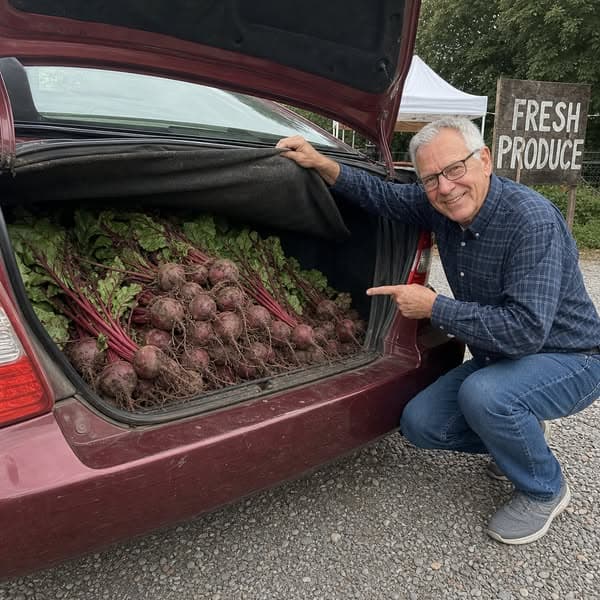

Then I spent a week in Lancaster County. Where the families eat scrapple, sausage, potatoes, and butter on everything, three meals a day.
What I found there broke everything I thought I knew.
Let me back up.
I run a kidney clinic at a large hospital. Doctors send patients to me when their GFR has been sliding for years under monitoring, or when the chart says controlled and the number keeps falling anyway.
Patients who have done everything they were told and are now sitting in front of a specialist wondering why.
By the time a chart hits my desk, I already know what it is going to say. Because it always says the same thing.
Patient presents with reduced kidney function. Doctor's notes: cut the protein. Drink more water.
Patient returns. GFR down another three points. Doctor's notes: start lisinopril 10 milligrams to protect the kidneys. Try harder on the diet.
Patient returns. Ankles swelling by evening. Fatigue that sleep does not fix. Doctor's notes: probably age. Add a water pill.
Patient returns. Foam in the urine. Itching with no rash. Doctor's notes: we will monitor. Recheck in 90 days.
Patient returns. GFR 24. Brain fog. Wife is worried. Doctor's notes: discuss dialysis access at next visit.
Patient does not make the next visit.
He is brought in on a stretcher at 4 AM. Fluid on his lungs. Potassium at the ceiling. Emergency dialysis through a catheter in his neck. His wife is crying in the waiting room.
Five visits. Five years. Five dismissals. And a sixth visit he did not walk into on his own.
Then the renal ultrasound lands on my screen, the full panel open beside it.
I pull it up. And in under a minute I see what explains every one of those visits.
Filter mesh eaten through. Millions of microscopic units with holes where the mesh should hold. That is the protein in the foam.
Pressure pounding what was left, the survivors working double. That is the GFR sliding two points every six months.
Waste backing up in blood the filters could no longer clear. That is the fatigue. The itch. The fog.
Fluid he could not clear, settling into his ankles by evening. That is the swelling they called age.
And one night it goes to the lungs instead. That is the 4 AM stretcher. "Nobody saw it coming."
Except it was clear as day. Every visit. And nobody ever bothered to look.
I see this every single day. It never changes.
So when I was invited to a nephrology meeting in Philadelphia last spring, I added a week. Something had been bothering me for years.
There is a county west of that hotel where the Plain families eat heavy. Scrapple. Sausage. Potatoes. Butter on everything. Pie after supper. Close to the exact diet I tell my patients is wearing out their kidneys.
A Penn State study of that county found a cardiovascular death rate seventy-four percent lower than the rest of Pennsylvania. That is a cardiovascular number, not a kidney number.
But cardiovascular disease is what kills more kidney patients than anything else on earth, and the diet was the same diet.
Based on my training, that county should be feeding dialysis chairs.
I wanted to see the charts myself.
After the meeting I drove west instead of home, to spend three days shadowing a physician a colleague had introduced me to.
His name is Dr. Anders Rosling. He is 68 years old.
Still practicing four days a week at a clinic outside Lancaster where he has been for over 30 years. His father was a doctor in the same county before him and lived to 92 on his own feet.
Dr. Rosling is precise. Sharp. Not the warm handshake type. He shook my hand at the front of the clinic and told me to stay quiet, watch, and ask questions in the coffee break.
I sat in on his morning appointments. What I saw shocked me.
Patient after patient came in with numbers that would have earned an American escalation in ten minutes. GFR in the forties. Protein in the urine. Family history. The pattern I know cold.
Dr. Rosling did not reach for the prescription pad once.
He asked about their meals. He asked about their sleep.
He asked what their kidneys were asked to do every day. And in every consultation he pulled out two photographs, a clean filter mesh and a corroded one, and pointed at the difference.
"Your GFR is not the disease," he told a 61-year-old man in the second appointment I sat in on. "The number is how much filter you have left."
He tapped the corroded photograph. "The disease is what is eating it.
Nobody has stopped that in you for twenty years. We start with this today."
At the coffee break I could not hold my questions anymore.
"Anders, how are your patients not on lisinopril?"
He looked at me for a moment. Then he laughed. Actually laughed.
"Of course some are. When the filter is under enough pressure that we cannot wait, yes.
But most of my patients? No. Because we stop what is eating the filter first.
The number holds on its own once the filter stops losing ground."
He gestured for me to sit down.
"In thirty years treating these families I have sent a handful of them to dialysis. A handful."
"Do you know why they eat scrapple and potatoes and butter and keep their kidneys into their eighties? Because food is not the enemy of a kidney.
Corrosion is. A meal comes and goes.
A filter that is being eaten stays eaten for decades if nobody stops it."
He shook his head.
"In America you have taken the number on the chart and made it the enemy. So you spend every visit turning the pressure down.
Here we take the filter and make it the priority. We ask what is eating it.
We stop that. Then the number takes care of itself."
"You must turn the pressure down AND stop the corrosion. Two jobs. Always."
I sat there staring at him. I have spent 12 years studying kidney disease.
Published on oxidative injury in the glomerulus. And this 68-year-old man had just described in one sentence what the entire protocol I was trained in misses.
He continued.
"Lisinopril turns down the water pressure. Yes.
Good. But it does not stop the bleach.
Every one of my colleagues in the cities knows the number keeps falling anyway and keeps prescribing exactly what you prescribe. Because there is no drug for the corrosion."
He reached into his desk drawer and pulled out a bottle. Beetroot, heirloom, grown eleven miles from that clinic by the families in his waiting room.
"This," he said. "This is what I take every morning.
What my father took. What half the people in this building take.
Not the beetroot powder from the grocery store. That is a decoration.
This is the root with the two things the filter actually needs."
He set the bottle on the desk between us.
"There are two things in this beet. Not one. Two. And they do two different jobs. Which is why one alone will not work, and why the pill your colleagues want to prescribe will not either."
"The first is the nitrate. This root is one of the richest dietary sources there is.
Your body turns nitrate into nitric oxide, and nitric oxide is the signal that tells a vessel to relax. The pressure pounding those filters comes down.
That is your lisinopril's whole job, done by a root."
"The second is the pigment. The deep red-violet that stains your hands."
He said it slowly. He knew I was a nephrologist and he knew I would want to hear it exactly.
"A strained filter throws off free radicals. Bleach, essentially.
They eat holes in a mesh that does not grow back. And every filter that goes hands its work to the ones still standing, which strain harder and throw off more.
That is the slope you have been documenting and calling the natural course. The pigment is called betalains, and it neutralizes the exact radicals doing the eating.
That is the half nothing in your prescription pad touches."
He picked up the bottle.
"Two things. From one root.
One does what your drug does. The other does the one thing your drug cannot.
That is why the men in these families are still on their own feet at eighty-five with the kidneys they were born with. Not because we prescribe better pills.
Because a kidney with two problems needs two answers."
I sat there for a long time.
Because I had spent 12 years watching a number fall while two things in a root grown eleven miles from that desk were doing the two jobs my prescription pad could not.
I drove home the following week.
I had known about beetroot academically for years. Nephrology journals ran papers on dietary nitrate and the kidney. I skimmed them for headlines and never opened them.
I opened them that week.
A randomized trial out of London. Six hundred and forty patients whose kidney function was already reduced, given dietary nitrate — the compound the beet delivers — against placebo.
Kidney injury cut by about seventy percent. Major adverse kidney events cut sixty-two percent over the following year.
It was not a cure for chronic kidney disease. Nobody is claiming reversal. It was protection — measured, published protection over kidneys already under strain. Which is more than I have ever been able to offer anybody.
And the pigment had its own file. In animal models of kidney injury, beetroot extract cut oxidative damage to the kidney by about fifty-eight percent and brought renal inflammation down with it.
Animal work, and I read it as such. But it pointed at the same thing Rosling had pointed at with two photographs.
Two things. Two jobs. From one root.
I sat at my desk with the studies open and thought about the man on the stretcher at 4 AM. Every patient whose GFR I documented for years while the mesh went on dissolving underneath.
There was something that could have been protecting them this whole time.
And nobody told them.
There is something I have not told you.
Four years ago my own draw came back at 63. A little low. We'll keep an eye on it.
Two years ago it was 57.
This spring it was 53. Creatinine 1.4.
I did not tell my wife. I did not tell the colleague down the hall who signs my labs. I put it where everybody puts it and said to myself the line I have said nine hundred times.
We'll keep an eye on it.
Before you go and buy beetroot capsules from the drugstore, I tried that first. Here is what happened.
I bought two brands from Amazon my first month back. Highly rated. Thousands of reviews.
Six weeks. My creatinine did not move.
I was ready to conclude that Dr. Rosling had oversold it.
Then I actually looked at what I had bought.
Almost everything sold as beetroot in America is the grocery beet. We have bred it for sugar for over a century, sweeter every decade, until the medicine was bred right out.
The pigment and the nitrate are the two things you are buying, and they are the two things the breeding took out.
And even when the seed line is right, most of it is spray-dried — run through heat to turn it into powder. Heat destroys the pigment and the nitrate together, before the bottle is ever sealed, which is why what comes out is brown.
Real beet powder is deep crimson, almost violet. Brown means it was cooked on the way to you.
The two brands I tried had failed for one reason or both.
I needed a real heirloom seed line, dried without heat, at a real dose, printed on the label and proven on a lab sheet.
The brand Dr. Rosling named when I called him from home was Rosabella.
I called the company directly before I ordered. That is how I was trained.
You do not put your name behind a supplement the way you would not put your name behind a medication. You verify the source.
You read the lab work.
I asked for the certificate of analysis. I asked for the seed line. I asked how they dry it. I asked the dose per capsule. They sent me everything within the day.
Heirloom Blutwurzel, six generations on the same Lancaster County fields, never hybridized. Hand-harvested after the first frost.
Shade-dried and cold-extracted, never high-heat spray-dried. Roughly ten times the betalains and nitrates of a grocery beet.
Thirteen hundred milligrams per capsule. Third-party tested, the certificate of analysis published for anyone to read.
That was the brand I ordered.
I started the following Monday. One capsule with breakfast. That was the whole protocol.
Week 1. About seventeen minutes after the first one, warmth came into my hands and feet and something lifted behind my eyes — blood moving, the fastest thing a beet does, and nothing to do with your kidneys.
What mattered came later: the four o'clock wall stopped arriving, gone inside four days, and I slept through the night.
Week 2. Three trips between midnight and five became one. My ankles were softer by evening.
Week 4. The foam was thinner, and then it was not there. The itch on my shins, the one I had called dry skin for two years, was gone.
Week 6. I drew early because I could not wait. GFR 53. Creatinine down from 1.4 to 1.3.
Unchanged. And for the first time in four years, unchanged was the whole point. The slope I had been documenting on other people's charts, and quietly on my own, had stopped.
Week 12. The draw.
I sat in my office and pulled it up on the screen. I stared at it for a full minute before I believed what I was looking at.
GFR 57. Up four points.
Creatinine 1.2.
The protein in my urine down by about half.
I brought it to the colleague down the hall who signs my labs. He looked at it. Then he looked at me. Then he looked at it again.
"What did you do?"
I told him. One capsule every morning with breakfast. That was it.
He listened without interrupting. Then he wrote it down. Then he said the thing I have said to maybe four patients in twelve years.
"Whatever you're doing, keep doing it."
I am seven months in. My last draw was three weeks ago.
GFR 58. Creatinine 1.2.
The protein still down. The foam has not come back.
When my colleague went back through where my numbers had been, he wanted to start me on lisinopril that afternoon. We agreed to watch the number first instead, and the number did the rest.
He moved my recheck from three months to six.
I am writing this because after 12 years of watching the same blind spot hurt the same people I cannot stay quiet.
If your GFR keeps sliding no matter what you cut. If you are on the pill that was supposed to protect your kidneys and the number still goes one direction.
If your ankles hold a thumbprint at bedtime and your doctor calls it age. If you have been told this is manageable and something in you knows better.
I hear you. I told my patients that line for 12 years before I understood what I was missing.
Rosabella. One capsule every morning with breakfast. It supports the two things a decade has been quietly taking apart in you. The corrosion eating the filter mesh. And the pressure pounding what is left.
Rosabella has a 90-day money-back guarantee. If you do not see a difference, you get a full refund, no questions asked.
In 12 years of medicine I have never seen a drug company offer to give your money back if their medication did not work. Think about that for a second.
Here is what I would do with that guarantee. Get your creatinine and your GFR drawn this week, before you start.
Then again at twelve weeks. You will know, with a number, whether it worked.
And if it has not moved, you send the bottles back and every dollar comes back.
That is what "we'll monitor it" never gives you. Ninety days of waiting and no way to tell whether anything is happening.
Rosabella is small and they sell out. One heirloom seed line, a handful of Lancaster County fields, harvested once a year after the first frost, and when a season's batch is gone it is gone until the next.
They have a buy three, get three free running now.
If you have a nephrology appointment or a lab draw in the next 30 to 60 days and you want to give your kidneys a real shot first, check availability now. Do not wait.
Every day the corrosion goes on is another day of filter you do not get back, and another day closer to the chair, three mornings a week, four hours, for the rest of your life.
You still have time. Do not wait until the conversation with your doctor is about the access in your arm instead of the number.
~ Dr. Matthew Walker, MD, Nephrology, 12 years
P.S. About the wrong beetroot. Almost all of it on Amazon and at the drugstore is the sugar-bred grocery beet, spray-dried at a heat that kills the pigment and the nitrate together, which is why what comes out of the capsule is brown instead of crimson.
Twenty of those do not add up to one of the real thing. Do not think you are doing what I did by buying the cheap version.
You are swallowing a decoration while the corrosion goes on.
P.P.S. Do not stop your lisinopril on your own if you are on one. Tell your nephrologist you are adding Rosabella and ask them to recheck your creatinine and GFR in twelve weeks.
The point is not to fight your doctor. The point is to give your body the one thing the prescription pad was never designed to reach.
The filter itself.
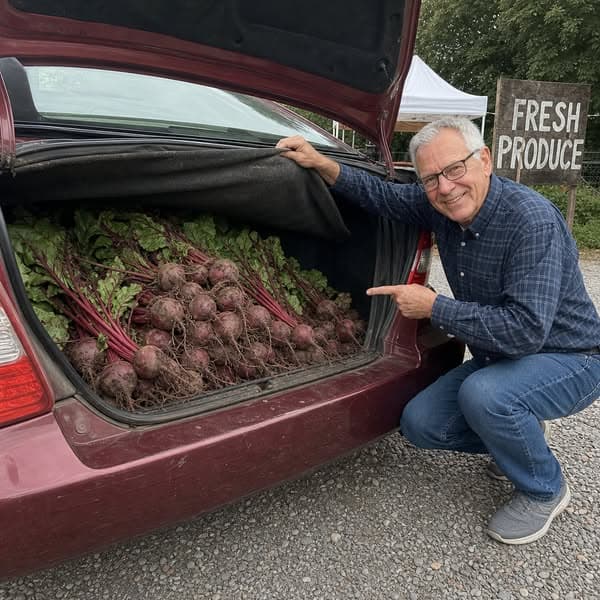
Atria AI helps you to find the best performing Ads on Meta for Food & Fresh Produce products. Discover winning ads on Meta on Nov 22, 2026. With AtriaAI, you can effortlessly explore a vast library of top-performing Food & Fresh Produce ads on Meta and derive actionable insights to enhance your ad campaigns. Our robust analytics tools enable you to never create Food & Fresh Produce ads on Meta blindly, offering instant reviews of key ad metrics and performance topics for data-driven decisions. Gain a competitive edge with powerful research and analysis features, including competitor analysis for Food & Fresh Produce ads on Meta. Our platform also provides endless inspiration from over 100 million winning ads, customizable ad creation tools, and ready-made templates to streamline your creative process. Transform your Food & Fresh Produce advertising strategies with AtriaAI and achieve unparalleled success in your campaigns.