
I've held the creative strategist title across brand and agency accounts, and no two job descriptions ever looked the same. One manager wanted me to build briefs. Another wanted me to run the whole account.
That inconsistency confuses people on both sides of the hiring table. After years of watching the role stretch and shrink depending on the team, I've got an answer for what it actually involves.
What is a creative strategist?
A creative strategist is a marketer who turns ad account data into creative briefs, tests, and reports that keep performance climbing. The role exists between the numbers and the people making the ads, translating what's working (and what isn't) into direction the creative team can use.
💡Tip: If you want the deeper mechanics of how research turns into a testing loop, check out our creative strategy guide.
Creative strategist vs. content strategist vs. creative director
People often mix the creative strategist title up with two others, but each differs in distinct ways:
| 🧠Creative strategist | 📝Content strategist | 🎬Creative director | |
|---|---|---|---|
| Focus | Paid social performance | Organic content and distribution | Visual identity and execution |
| Owns | What to make, and why it should convert | What to publish, and when | How the work looks once it's greenlit |
| Lives in | Meta and TikTok ad accounts | Blog calendars, SEO, email sequences | Brand guidelines, mood boards |
| Measured by | ROAS, CPA, hook rate | Traffic, rankings, engagement | Brand consistency, craft |
I've sat in rooms where a creative director pushed back on a concept because it didn't fit the brand's visual identity, while my job was arguing for it because the data said it would convert. Both roles matter; they're just answering different questions.
What does a creative strategist do?
A creative strategist's week splits across 5 connected jobs, and each one feeds the next:
1. Research
A creative strategist starts by pulling data from their own ad account, competitor accounts, and customer reviews to find what's working and what's missing. This stage often gets the least credit of the 5, but I'd argue it decides whether everything after it is worth doing.
A brief built on thin research produces creative that tests nothing new. But a brief built on real findings, like a hook a competitor is scaling, gives the rest of the loop something worth testing.
AI tools for creative analysis handle most of the grunt work now, pulling competitor angles and flagging patterns across an ad library in minutes instead of hours. The judgment call on what matters still sits with the strategist.
2. Briefing
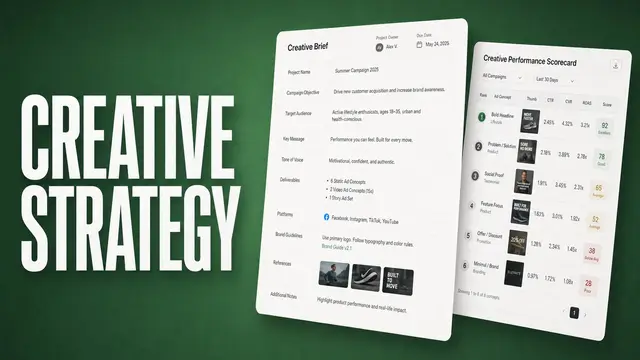
A good brief turns research into direction the creative team can use, like specific hooks, angles, and personas to test, laid out clearly enough that a designer or copywriter can work from it without asking what I meant.
This stage often takes more time than people expect. Translating a research finding into something a designer can execute means picking the angle and persona worth testing, then writing it down with enough detail that nobody has to interpret it.
For example, if reviews keep mentioning a product's smell, I have to turn that into an actual angle for the brief. I’d lead with the scent as the hook, so the designer knows exactly what to build.
3. Testing
This stage gets the creative live and lets the account prove what's actually working.
In my experience, people often rush this stage. Budgets get thin, timelines slip, and testing turns into "launch it and check back next week" instead of a structured comparison.
I'd rather launch 3 ads testing 1 clear variable, like hook copy against the same visual, than 10 ads that each change 5 things at once. When everything's different, a winner doesn't tell you why it won.
4. Reporting
Good reporting pulls performance data and turns it into a clear answer that tells you what won, what lost, and why.
Reporting is the input for the next round of research. For instance, a report that explains why a testimonial-style static beat a polished product shot tells you what to test next.
I keep creative tagged by hook and persona going into this stage, since sorting by name alone leaves you re-discovering patterns you already found last month. That habit turns a report into something worth acting on, with real reasons behind the numbers.
5. Iterating
The last stage takes what reporting showed and feeds it straight back into the next brief, so the next round of creative starts with more to build on than the last one had.
I've worked accounts where reporting and briefing never talked to each other, and every new brief started from a blank page even though the account had months of answers sitting in past reports. Connecting those two stages is the whole point of iterating.
What skills do creative strategists need?
These 4 skills make the biggest difference in how well a creative strategist performs:
- Data literacy: Reading a performance report and knowing which number matters. This means telling a real signal apart from noise in a small sample, so you don't chase a result that won't hold up once spend scales.
- Briefing: Turning a research finding into direction someone else can execute without follow-up questions. This is closer to writing than people expect, and it's the skill I'd hire for first if I had to pick one.
- Pattern recognition: Spotting the thread across dozens of ads, reviews, or competitor accounts. Meta’s Andromeda algorithm rewards accounts with creative variety, so this skill decides whether an account keeps finding fresh angles or keeps recycling the same 3 ideas.
- Taste under pressure: Holding a point of view on what will convert even when a client, manager, or the room disagrees, and being willing to defend that call before the data proves you right.
Is creative strategist a good career move?
Creative strategist is a strong move if you want a marketing career built on measurable impact.
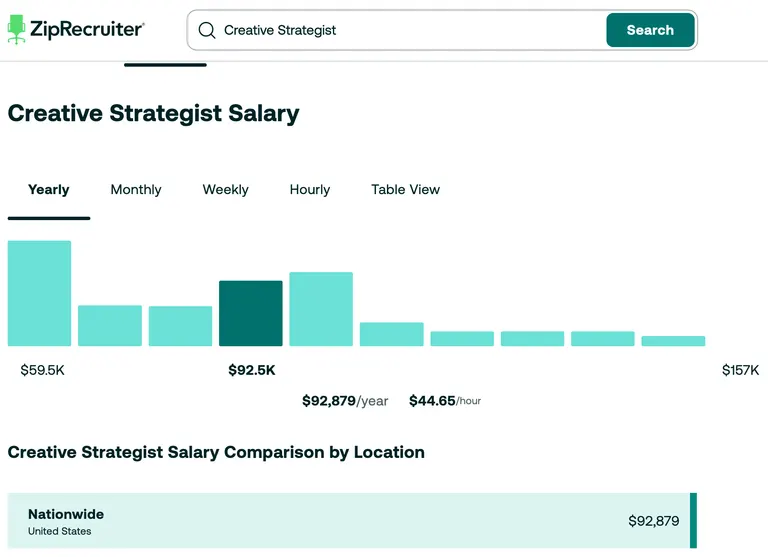
Salaries accurate as of writing in September 2026. Verify current figures before citing.
The national average is $92,879 a year in the US, according to ZipRecruiter, with the middle 50% of earners landing between $68,100 and $101,800 and the top range reaching $157,000.
The path forward usually runs toward senior creative strategist, then head of creative strategy or a strategy-lead role at an agency. The skills carry over well, too.
Pattern recognition, briefing, and reading performance data transfer to broader marketing strategy roles if someone eventually leaves paid social entirely.
That said, AI brings uncertainty into this role. Shorter workweeks and faster research are the upside, but some companies may decide they don't need to hire for the role once enough of it runs on its own.
If you choose this career, keep in mind that this job rewards people who like being wrong in public. Every test result is visible, and a losing hook doesn't stay hidden the way a mediocre blog post might.
Brief and grade your creative with Atria
Every research finding needs to become a specific brief before anyone can act on it, and every ad that goes live needs to get graded against what it was supposed to prove.
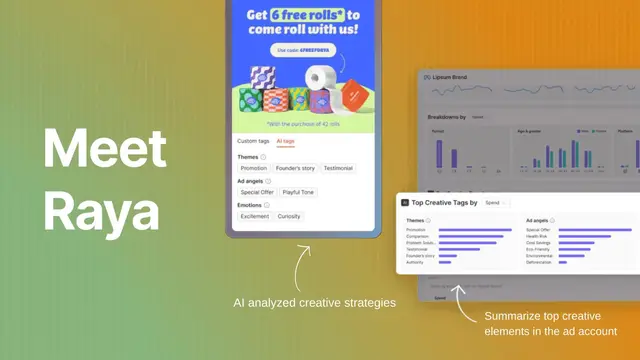
Raya, Atria's AI creative strategist, lives in Slack and pulls competitor and category ads to brief against, so the angle you're building comes from the winning formulas already working in your market.
Once the ad launches, Radar, Atria's creative intelligence layer, benchmarks it against those winning ads and flags decay while the campaign is still running, so problems show up before budget's already spent.
Once the ad launches, Radar, Atria's grading engine, checks it against those benchmarks and flags decay while the campaign is still running, so problems surface before the budget's already spent.
Rubix, a performance marketing agency running creative across several client accounts, put this to the test. Using Atria, they made creative analysis 40% faster, lifted ROAS 15%, and cut CPA 20%.
Want to see what your own account's research and reporting are missing? Try Atria for free.
Frequently asked questions
Do you need a degree to become a creative strategist?
No, you don't need a degree to become a creative strategist. Many employers prioritize a portfolio of tested ad performance and platform fluency over formal education, though a background in marketing, communications, or digital media can help.
Entry often comes through junior social media, media buying, or copywriting roles.
Can creative strategists work remotely?
Yes, creative strategists can work remotely, since most day-to-day work happens in ad platforms, spreadsheets, and Slack.
Agencies and DTC brands hiring for this role commonly offer remote or hybrid setups, though some agencies still prefer 2 to 3 in-office days a week for team collaboration.
Who is responsible for creative strategy at a company?
A creative strategist or the person running paid social strategy owns this at most companies, sitting between the account's data and the team producing creative. Smaller teams often split the job across a performance marketer and a designer instead of hiring a dedicated title.
Is creative strategist a stressful job?
Yes, creative strategist work involves ongoing pressure, since results are visible in the account and tied directly to ad spend.
The pressure comes from tight testing cycles, competing stakeholder opinions, and reporting on losses as often as wins. Job satisfaction tends to stay high due to creative variety and visible impact.